When Bulls Stop Answering in Late Archery
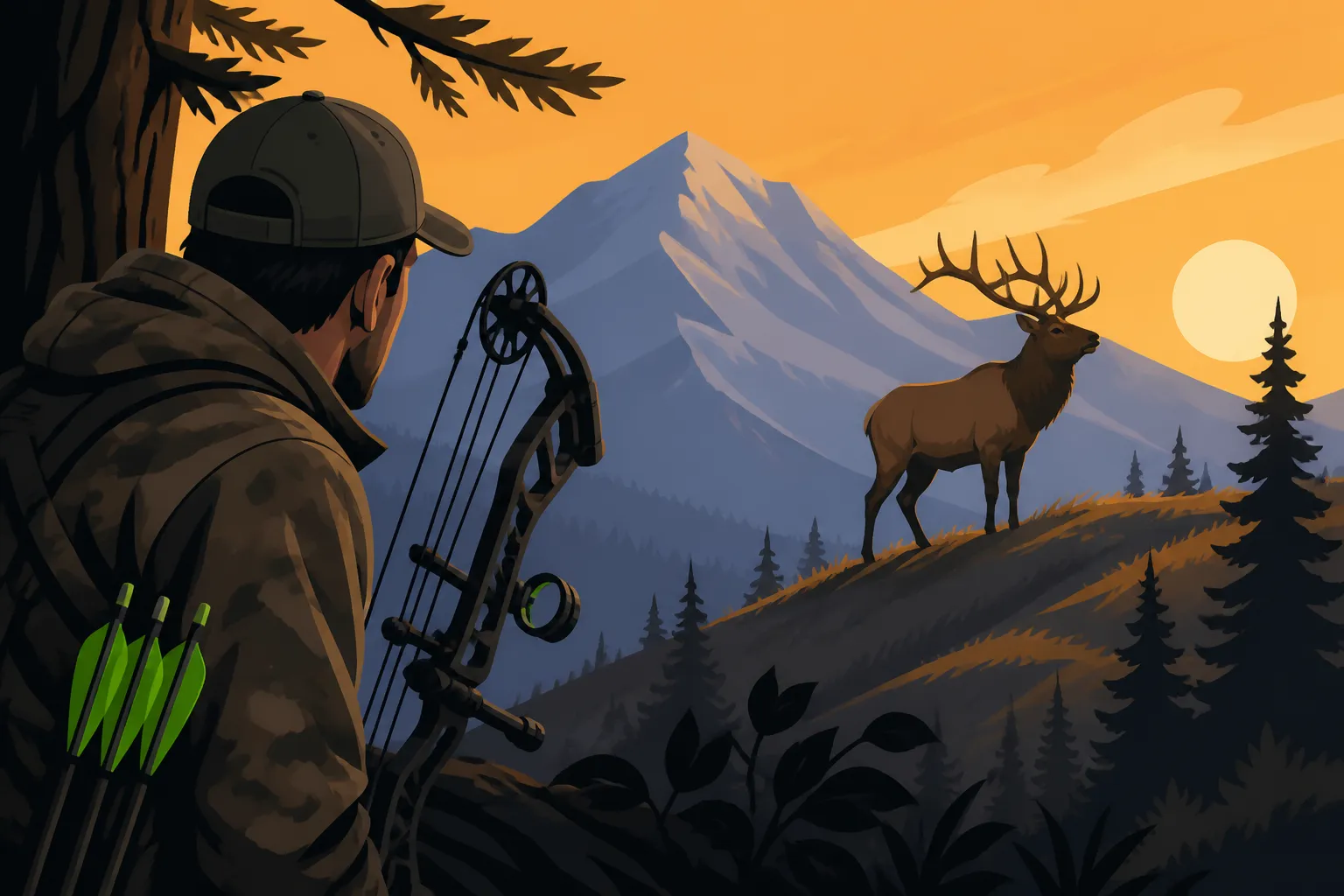
It’s a scenario many Washington archery hunters know all too well: the September bugle fest dies down, the woods get eerily quiet, and those boisterous bulls you heard tearing up the mountainside just a week ago suddenly seem to vanish into thin air. This can be incredibly frustrating, leaving you wondering if you missed your window or if the elk simply moved on. This guide will delve into the critical factors that cause bulls to go silent in late archery season and equip you with the knowledge to adapt your hunting strategies to find success when the woods fall quiet.
Understanding the Transition: Why Bulls Go Quiet in Late Archery
The shift from the vibrant, vocal peak of the rut to the more subdued late archery season can feel like flipping a switch. One day, you're hearing bugles from every ridge; the next, you're walking through silent timber. This dramatic change isn't random; it's a direct response to a combination of biological and environmental cues that fundamentally alter a bull's behavior.
The Peak Rut Hangover
During the peak of the rut, bull elk are driven by one overwhelming instinct: reproduction. They expend massive amounts of energy bugling, fighting, chasing cows, and asserting dominance. This period of intense activity takes a significant toll on their body condition. Bulls can lose hundreds of pounds, deplete their fat reserves, and become physically exhausted. As the majority of cows are bred, the biological imperative to constantly bugle and challenge other bulls wanes. They simply don't have the energy, nor the primary motivation, to continue such vocal displays. It's like the party's over, and they're left with a massive hangover, needing to recover.
Once the cows are bred, the herd dynamics start to shift. Bulls that were once fiercely protective of their harems may begin to separate, seeking solitude and security to regain their strength. The testosterone levels that fueled their aggression and vocalizations begin to drop, leading to a much more subdued demeanor. This recovery phase is crucial for their survival through the upcoming winter and can last well into the late season. Hunters who understand this shift know that the bugling that was so effective earlier in the season becomes far less reliable, if not counterproductive, as the bulls prioritize rest and nutrition over vocal challenges.
Shifting Social Structures
With the rut winding down, the once-tight social structure of a breeding herd begins to dissolve. Satellite bulls, which were previously lurking on the fringes hoping for an opportunity, no longer have a reason to stay close to the main herd. The herd bulls themselves, drained from the breeding season, might shed their cows or simply become less attentive to keeping them tightly grouped. Often, you'll see bulls start to form small bachelor groups again, seeking out other weary males to recuperate with. These smaller groups are typically much more wary and less vocal than a rutting herd.
This shift means that locating elk becomes less about following the sounds of a large, vocal herd and more about understanding where smaller, quieter groups or solitary bulls might seek refuge. They're no longer broadcasting their location with constant bugles, making them significantly harder to pinpoint. This is why tactics popular during Archery Elk Hunting in Washington's September Season, which heavily rely on locating vocal bulls, need to be reevaluated. These post-rut bachelor groups will seek out dense cover and often move to higher elevations or areas with less disturbance, making stealth and keen observation paramount.
Food and Security Priorities
As the rut fades, a bull's priorities immediately shift to two things: replenishing lost calories and finding security. They need to put weight back on before winter sets in, which means extended periods of feeding. However, they also become incredibly wary. The constant pressure from hunters, combined with their post-rut exhaustion, makes them hypersensitive to disturbance. They will seek out areas that offer both abundant forage and dense cover where they can feed undisturbed and bed down safely.
This often means moving to different types of habitat than they occupied during the rut. While they might have been in more open areas to display during the rut, they now crave the thickest timber, steep north-facing slopes, or remote pockets of public land that offer maximum security. They might feed heavily during low-light hours and spend the majority of the day bedded in nearly impenetrable cover. Understanding these changing priorities is key to finding them. You need to think like a tired, hungry, and very nervous elk, focusing your efforts on prime feeding grounds that are adjacent to thick, secure bedding cover.
Environmental and Pressure Factors Contributing to Bull Silence
Beyond the physiological changes in bulls, several external factors play a huge role in why they become so quiet and elusive in the latter half of the archery season. Washington's diverse landscapes, from the dense western timber to the open eastern breaks, present unique challenges that further drive this silent behavior.
Increased Hunter Pressure
Washington is home to a dedicated and passionate hunting community, and as the season progresses, more hunters often take to the field. Even if an area isn't "crowded," the sheer presence of human activity – hikers, mushroom pickers, other hunters – can push elk into deeper, more secure cover. During the early rut, bulls might tolerate some level of human presence due to their intense breeding drive, but once that drive subsides, they revert to their naturally wary instincts. They learn quickly where hunters are active and will vacate those areas, often moving to places that are difficult to access or rarely disturbed.
This pressure teaches bulls to be silent. A bugle that once attracted cows (and hunters!) now often attracts danger. Bulls that survive multiple seasons quickly learn that being vocal can lead to trouble. This means that by late archery, the resident bulls in heavily hunted areas are extremely educated. They will ghost through the timber, using every bit of cover to their advantage, making very little noise. You might not hear them, but they are absolutely hearing and smelling you. Tactics for Public Land Scouting in Washington Before Opening Day become even more critical, as you need to find those overlooked pockets where weary elk might be hiding.
Changing Weather Patterns
Late archery season in Washington often brings a distinct shift in weather. The warm, dry days of early September can give way to colder temperatures, rain, and even early snow in higher elevations. These changes directly impact elk behavior and vocalizations. During wet, stormy weather, elk often move less and seek shelter in dense timber. The rain and wind can also dampen sound, making it harder for calls to carry and for you to hear distant bugles.
Conversely, a cold snap after a period of mild weather can sometimes invigorate elk, prompting some late bugling as a last gasp of rutting activity, especially from younger bulls. However, this is often short-lived. More commonly, consistently wet or cold conditions will make bulls conserve energy and move more cautiously. They might still feed, but they'll do so with extreme stealth, often preferring to move under the cover of a storm when human presence is reduced. Understanding how to adapt to conditions, such as mastering Layering for Wet Cold Weather and choosing appropriate Boots for Steep Eastside Country, becomes paramount when the weather turns.
Habitat Shifts
As the season progresses, the availability and quality of forage can change, prompting elk to move to different parts of their range. In some areas, early season forage might dry up or become less palatable, pushing elk towards wetter meadows or south-facing slopes that still offer green feed. In other regions, particularly the high country of Eastern Washington, early snows can make high-elevation feed inaccessible, forcing elk to migrate to lower wintering grounds. These migrations, while not always dramatic, often happen quietly.
During these habitat shifts, elk are less likely to be vocal as they are focused on efficient movement and finding new food sources and security. They're not looking for a fight; they're looking for survival. This is where diligent scouting, utilizing tools like those found on GoHunt, becomes indispensable. Hunters need to pay attention to elevation changes, the presence of specific forage, and the availability of dense thermal cover. Bulls will often seek out thick reprod or old growth timber that offers both concealment and protection from the elements, as detailed in guides like Setting Up on a Herd Bull in Dark Timber.
Adapting Your Tactics for Silent Washington Bulls
When the bugles cease and the woods go quiet, throwing your hands up in despair isn't an option for a determined Washington archery hunter. This is where your skills of observation, patience, and adaptability truly shine. You have to pivot from a calling-centric approach to one focused on finding and intercepting animals that are actively trying not to be found.
Prioritizing Still-Hunting and Glassing
With bulls no longer advertising their presence, the name of the game shifts from calling to stealth. Still-hunting becomes an incredibly effective, albeit physically and mentally demanding, tactic. This involves moving slowly, taking only a few steps at a time, and then pausing for extended periods (5-10 minutes or more) to scan, listen, and simply soak in the environment. You're not just looking for an elk; you're looking for a flick of an ear, a patch of hide, the faint outline of a body in the shadows. Pay close attention to subtle sounds—a twig snap that isn't yours, the rustle of leaves that's too heavy for a squirrel, or the gentle swish of an elk walking through wet brush. This slow, deliberate approach is very similar to what's described in Still-Hunting Blacktails in Wet Washington Brush, emphasizing patience and acute awareness.
In more open terrain, particularly in Eastern Washington, serious glassing from a vantage point becomes paramount. Instead of covering ground quickly, find a spot that overlooks potential feeding areas, bedding slopes, or migration corridors. Use high-quality optics, like a good set of 10x or 15x binoculars on a tripod, and systematically pick apart every patch of cover. Bulls often emerge into the open during the last hour of light to feed, or are bedded on shaded slopes during the day, nearly invisible. Patience here is key; you might need to sit and glass for hours, even all day, focusing on the subtle movements or colors that break up the natural patterns of the landscape. Platforms like GoHunt offer excellent mapping tools that can help identify these vantage points and potential travel routes before you even step foot in the woods.
Subtle Calling and Decoying Strategies
Just because bulls aren't bugling doesn't mean calling is entirely useless, but the approach needs to change dramatically. Aggressive bugling will likely be met with silence or, worse, cause a wary bull to bolt. Instead, focus on very soft, subtle cow and calf sounds. Think about mimicking the contented mews and chirps of a small group of cows, or the soft estrus whines of a lone cow looking for company. These sounds are less threatening and can sometimes pique the curiosity of a bull that's looking to rejoin a group of cows or simply checking for other elk in the area.
Decoys can also play a role, especially if you're hunting with a partner. A cow or calf decoy set up downwind can be just enough visual to draw a silent bull into range, especially if paired with soft calls. The key is subtlety and realism. If a bull approaches, he's likely doing so cautiously, circling downwind to get your scent. Having a partner make soft calls from behind the decoy, while you are positioned to shoot, can sometimes draw a curious bull into view. Remember, these bulls are often tired and cautious, so they're not looking for a fight but might still be receptive to the illusion of an easy female. For more insights on this, consider exploring Cow Calls That Pull a Bull Off His Herd.
Targeting Bedding Areas and Escape Routes
When bulls go silent, they spend a significant amount of their time bedded in thick, secure cover. Identifying these preferred bedding areas and the escape routes they might use is a highly effective late-season tactic. Look for north-facing slopes with dense timber, particularly old growth or thick reprod, that offer thermal cover and maximum concealment. Steep terrain, deep canyons, and remote benches are often favored spots. These are the places where a bull feels safest, where he can rest and digest, and where he has the advantage of sight, sound, and smell over anything approaching him.
Once you identify potential bedding areas, the challenge is approaching them without being detected. This requires an ultra-stealthy approach, using wind to your advantage, and moving incredibly slowly. You're essentially stalking a bedded animal. Additionally, pay attention to the trails and natural funnels that elk use to move from bedding to feeding areas, or as escape routes when pressured. Setting up on these pinch points, particularly in the last hour of daylight or first hour of dawn, can intercept a moving bull. They often use the same paths consistently, making these ambush points highly productive. Understanding Shot Placement on a Quartering Elk becomes crucial when these opportunities arise, as they might be fleeting.
The Importance of Persistence and Off-Season Preparation
Hunting late archery season when bulls go silent can be grueling, both physically and mentally. It tests your resolve and patience in ways that the frenetic early rut often doesn't. Success in this challenging period often boils down to sheer persistence and the groundwork you lay long before the season even begins.
E-Scouting for Late-Season Holds
Before you even tie on your boots, much of your success in finding silent bulls can be determined by how thoroughly you e-scout. Digital mapping platforms, like those offered by GoHunt, allow you to analyze terrain features, identify potential food sources, locate dense bedding cover, and mark historical elk movements from the comfort of your home. Look for remote basins, steep north-facing slopes with heavy timber, and areas with limited road access – these are often overlooked by other hunters and provide the security silent bulls crave.
Pay attention to elevation changes and how they might relate to thermals and shifting winds. Identify areas where different habitat types meet, creating "edge" environments that elk frequently utilize. You can also cross-reference public land boundaries with private timber lands, noting areas that might see less pressure due to difficult access. E-Scouting Washington GMUs Before the Draw isn't just for drawing a tag; it's a year-round activity that continually refines your understanding of your hunting units, giving you a massive advantage when the general season rolls around and bulls go quiet.
Mental Fortitude and Patience
Perhaps the greatest gear you can bring to a silent bull hunt is an abundance of mental fortitude and patience. You will walk miles without seeing or hearing an elk. You will sit for hours on a hillside, glassing until your eyes ache, only to see squirrels. The temptation to give up, to walk faster, or to start bugling out of frustration will be strong. Resist it. Understand that success in late archery often comes from a single, quiet encounter after days of painstaking effort.
Embrace the silence as an opportunity to truly connect with the woods. Learn to appreciate the subtle signs—fresh tracks, rubs that indicate a bull passed through quietly, faint droppings, or even the smell of elk on the breeze. Each sign tells a story and provides a piece of the puzzle. Maintain a positive attitude, reminding yourself that the elk are there, they're just not broadcasting it. Your job is to be quieter, slower, and more observant than them. This type of hunting is a marathon, not a sprint.
Learning from the Silent Times
Every hunt, whether successful or not, offers valuable lessons. When bulls go silent, it’s an opportunity to learn deeply about elk behavior under pressure and in changing conditions. Keep a hunting journal, noting specific locations where you found fresh sign but no elk, the types of cover they were using, the prevailing winds, and the time of day. Over time, these observations will build a comprehensive mental map of how elk utilize a unit when they are not vocal.
Don't be afraid to experiment. Try different still-hunting routes, approach bedding areas from various angles, or sit on a glassing point for longer than you think is reasonable. The "silent times" are not failures; they are master classes in advanced elk hunting. By understanding why bulls stop answering and adapting your approach, you not only increase your chances of success but also deepen your appreciation for the complex, challenging, and incredibly rewarding pursuit of elk in Washington's diverse landscapes. Even when the bugles fall silent, the hunt is far from over.
Here's a quick comparison of early vs. late archery season characteristics:
| Characteristic | Early Archery Season (Peak Rut) | Late Archery Season (Post-Rut/Recovery) |
|---|---|---|
| Bull Behavior | Highly vocal, aggressive, chasing cows, actively bugling. | Mostly silent, wary, focused on recovery, re-forming bachelor groups. |
| Primary Motivation | Reproduction, herd dominance. | Replenishing calories, security, survival. |
| Calling Effectiveness | High, aggressive bugles and cow calls can draw bulls. | Low for aggressive calls; soft, subtle cow/calf calls may work sparingly. |
| Hunter Pressure | Moderate to high, depending on area; bulls may be somewhat tolerant. | High; bulls are highly educated and sensitive to human presence. |
| Typical Habitat | Can be more open areas for display; mixed timber and meadows. | Dense, secure timber; steep slopes; remote, less disturbed areas. |
| Locating Strategy | Listen for bugles, follow sound, use aggressive calling. | Still-hunting, extensive glassing, track reading, targeting bedding areas. |
| Physical Condition | Bulls are in peak physical condition, high energy. | Bulls are exhausted, depleted, prioritizing rest and quiet movement. |
Disclaimer
Hunting is an inherently dangerous activity. Always prioritize safety, adhere to all Washington Department of Fish and Wildlife regulations, and be aware of your surroundings. This guide provides general information and should not replace professional training or official WDFW regulations. Conditions in the field can change rapidly, and hunters are responsible for their own safety and ethical conduct.