Group Size Limits in Wilderness
There's nothing quite like heading into Washington's vast wilderness, imagining yourself deep in elk country, miles from the nearest road. But for many hunters, the excitement of planning that dream trip can quickly turn into a headache when you start looking at regulations, especially when it comes to how many people you can actually bring. It’s a common frustration to realize your ideal hunting crew might be too large for the specific wilderness area you’re targeting, risking fines or even ruining the pristine experience for others. This guide is here to clarify those often-confusing group size limits in Washington's wilderness areas, helping you plan a compliant and enjoyable hunt.
The Core Philosophy Behind Wilderness Group Size Limits
Before we dive into the nitty-gritty numbers, it’s really helpful to understand why these limits are in place. It’s not just about creating hoops for hunters to jump through; there’s a deeply rooted environmental and experiential philosophy guiding these rules. When you grasp the "why," it often makes the "what" a lot easier to accept and follow.
Protecting Wilderness Character
Washington's wilderness areas, like the Glacier Peak Wilderness or the Norse Peak Wilderness, are designated specifically to preserve their wild, untrammeled character. This means minimizing human influence to the greatest extent possible. Large groups, by their very nature, leave a larger footprint. Imagine a dozen hunters and their stock animals moving through a fragile meadow or setting up a sprawling camp. That kind of activity can quickly degrade the very wildness these areas are meant to protect. The rules are designed to ensure that when you step into one of these special places, it still feels like wilderness, not a busy campground or a well-worn path.
When you're packing into a remote basin, looking for elk, part of that experience is the sense of solitude, the feeling that you're truly out there in nature on its terms. Large groups can disrupt that for everyone. The rules aim to maintain the ecological integrity of these sensitive ecosystems, preventing erosion, minimizing vegetation damage, and ensuring that wildlife isn’t unduly displaced or disturbed by excessive human presence. It’s a collective effort to keep these places wild for generations to come, and understanding that helps us all play our part.
Minimizing Human Impact and Leave No Trace
The principles of Leave No Trace are fundamentally intertwined with wilderness group size limits. A bigger group invariably means a bigger impact. More boots on the ground means more soil compaction and erosion, especially on trails and at campsites. More people generate more waste, even when diligently packing it out. More campfires, more cooking, more noise – it all adds up. The idea is to spread out the impact as much as possible, or rather, to keep individual impacts small enough that the wilderness can recover naturally.
Think about it this way: a small group of two or three hunters can often find a discreet spot for their tent, build a small, contained fire (if allowed), and move through the landscape almost imperceptibly. A group of twelve, however, requires a much larger footprint for camping, cooking, and simply existing. The land might struggle to recover from that larger impact, leading to visible scars on the landscape. These limits are a direct application of the "travel and camp on durable surfaces" and "minimize campfire impacts" Leave No Trace principles, acknowledging that a smaller group size inherently makes it easier to adhere to these practices and leave no lasting evidence of your passage.
Ensuring Solitude for Others
Another critical aspect of wilderness designation is providing opportunities for solitude. For many, escaping the hustle and bustle of everyday life and finding peace in nature is the primary draw of wilderness areas. Imagine hiking for hours, finally reaching a breathtaking vista, only to find a large group of hunters or backpackers already there, their chatter echoing through the basin. It immediately shatters that sense of quiet contemplation and remoteness.
Group size limits are in place to preserve that precious opportunity for solitude. They ensure that even if you encounter another party, they’re likely a smaller, less obtrusive group, allowing you to still feel a sense of wildness and quiet. This benefits not just other hikers or campers, but also other hunters. Nobody wants to feel like they’re hunting in a crowd. These rules help maintain the quality of the wilderness experience for everyone, reinforcing the idea that these shared wild spaces are meant for quiet enjoyment and respectful interaction with nature.
Washington's General Wilderness Group Size Regulations
Okay, so we understand why these rules exist. Now, let’s get down to the practical details of what they actually are in Washington. While there are federal guidelines, it’s important to remember that specific wilderness areas or their managing national forests can implement stricter local rules. Always do your homework!
The Standard Federal Guideline and Washington's Application
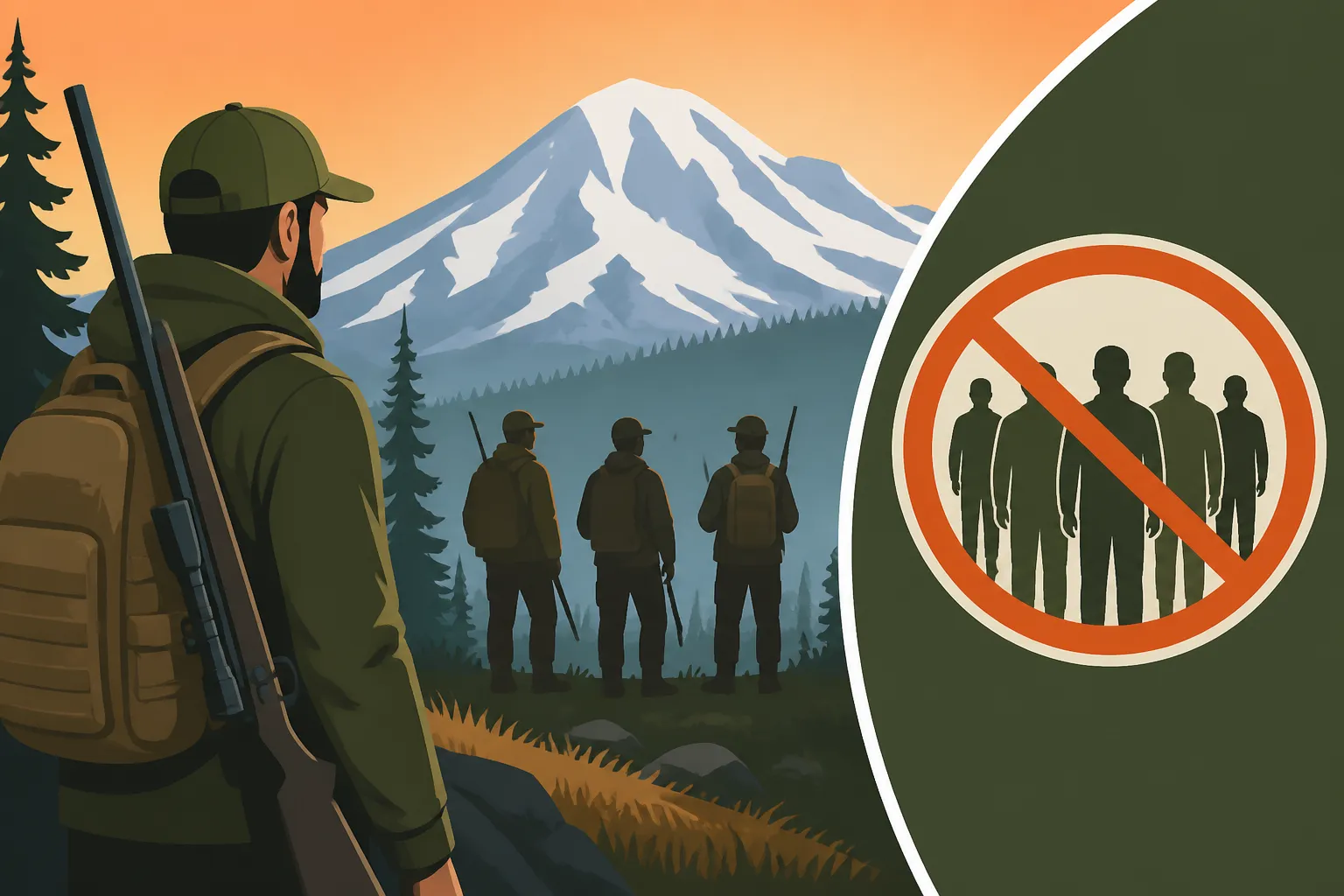
For most federally designated wilderness areas in Washington, which are predominantly managed by the US Forest Service, the general rule of thumb is a maximum group size of 12 people and 12 head of pack stock (like horses or llamas). This is the widely accepted default for many wilderness areas across the country. This isn't just a suggestion; it’s a regulation, and breaking it can lead to fines or being asked to leave the area.
When Washington hunters are looking at spots like portions of the Gifford Pinchot National Forest or the Okanogan-Wenatchee Forest that contain wilderness areas, this 12-person, 12-stock rule is a good starting point. It allows for a decent-sized hunting camp, perhaps a main group with a few support individuals or a couple of smaller hunting teams working in concert. However, as we’ll discuss, "standard" doesn't always mean universal, and it’s critical to verify for your specific destination. Knowing this general rule helps you begin to scope out your options and decide who is coming on the hunt. Resources like GoHunt are fantastic for researching specific GMUs and cross-referencing with wilderness area regulations.
Specific Wilderness Areas with Stricter Rules
Now, here's where it can get a little tricky, and where a lot of hunters can inadvertently run afoul of the rules. Some wilderness areas, especially those that see very high use or are particularly sensitive ecologically, have implemented stricter group size limits. The most prominent example of this in Washington is often the Alpine Lakes Wilderness, where the limit is frequently 8 people and 8 head of stock. This lower number is a direct response to the immense popularity of the area and its relatively fragile high-alpine ecosystems.
It’s not just the Alpine Lakes; other wilderness areas might have slightly different rules based on their specific management plans. For instance, while the Pasayten Wilderness is vast and generally adheres to the 12/12 rule, even within a large wilderness, certain popular trailheads or zones might have special considerations. This variation is why simply knowing the "federal rule" isn't enough. Before you commit to a hunting plan or even send out the invitations to your buddies, make sure you've checked the specific regulations for the wilderness area you intend to hunt. The Forest Service websites for the relevant national forest (e.g., Okanogan-Wenatchee National Forest for Pasayten or Alpine Lakes) are your primary source for this information. This is where getting familiar with things like checking Washington Fire Closures Before You Go also becomes vital, as closures or restrictions can often be tied to specific areas.
Counting People and Pack Stock
It might seem obvious, but who counts in these group size limits? Everyone. This includes all hunters, support personnel, camp cooks, and anyone else who is part of your party entering the wilderness. If you have two groups that plan to travel together or camp adjacent to each other, even if they operate somewhat independently, they are generally considered one group for the purpose of these regulations if their activities are closely linked.
The same goes for pack stock. Each horse, mule, or llama counts towards the stock limit. If you have a group of 6 hunters and 7 pack animals, you're fine under a 12/12 rule. But if you have 10 hunters and 10 stock, you'd be over the limit for a hypothetical 8/8 rule area. The intent is to limit the total collective impact. It’s not just about the number of people or the number of animals; it's the combined footprint. Always consider the total number of individuals and stock animals that will be together as a single unit or closely associated in the wilderness.
Here's a quick look at common Washington wilderness group size limits:
| Wilderness Area Category | People Limit | Stock Limit | Common Administering Agency | Notes for Hunters |
|---|---|---|---|---|
| General USFS Wilderness | 12 | 12 | US Forest Service | Most Washington wilderness areas fall under this. Always double-check specific area rules. Suitable for moderate hunting parties with pack support. |
| High-Use/Fragile Wilderness (e.g., Alpine Lakes) | 8 | 8 | US Forest Service | Stricter limits to protect sensitive ecosystems and preserve solitude in popular areas. Requires smaller hunting groups. |
| National Park Wilderness | Varies | Varies | National Park Service | Hunting is generally not allowed in National Parks. Check specific park rules if you're near a boundary, but plan on no hunting within park wilderness. |
What These Limits Mean for Your Washington Hunting Party
Understanding the rules is one thing, but figuring out how they actually impact your carefully planned hunt is another. These limits aren't just arbitrary numbers; they directly influence how you assemble your crew, set up your camp, and even how you approach the wilderness itself.
Planning Your Hunting Group's Composition
This is often the first hurdle. You’ve got a core group of hunting buddies, maybe some family, and suddenly the numbers add up. If you're planning a trip into a wilderness area with an 8-person limit, and you routinely hunt with a crew of 10, some tough decisions need to be made. It might mean splitting into two smaller, independent groups that are spaced out both in travel and camping, or perhaps some friends simply can't join that particular trip.
This isn't to say it's easy – nobody wants to leave a hunting partner out. But compliance is key. When you’re putting together your team, consider the target wilderness area's limits right from the start. If you’re dead set on hunting a specific GMU that overlaps with the Alpine Lakes Wilderness, then your group size immediately shrinks. This might even influence your decision on Choosing a Weapon Season for a Washington Elk Tag, as a smaller group might be more nimble for archery or muzzleloader hunts, while a larger rifle season group might need more space. It's a pragmatic challenge that requires early communication and flexibility among your hunting partners. Utilizing resources like GoHunt can help you identify areas with group limits before you even start coordinating with your crew.
Camp Setup and Spread
Group size limits don't just apply to the number of people walking in; they also apply to your footprint once you've set up camp. A larger group, even if within the legal limit, naturally requires more space for tents, cooking areas, and general activity. When you’re limited to 8 or 12 people, your camp will be more compact and have less overall impact than a sprawling encampment. This aligns perfectly with the principles we discussed about protecting wilderness character.
This means you need to be intentional about your Backcountry Camps in Washington Wilderness. Instead of everyone bringing their own massive tent, maybe a couple of smaller tents or a shared wall tent (if appropriate and allowed) becomes the norm. Spreading out too much can sometimes be interpreted as two separate groups if not managed carefully, or simply creates an unnecessarily large impact. Focus on keeping your camp tight, on durable surfaces, and minimizing visible disturbance. This might mean foregoing some luxuries or consolidating gear, but it's all part of embracing the wilderness ethic.
Navigating Access and Trailheads
Even getting to the trailhead can involve group size considerations. While the actual trailheads usually aren't within the wilderness boundary themselves, if your large group monopolizes parking or creates excessive noise at the entry point, it sets a negative tone. Remember, the spirit of the rule is to minimize impact. If you have multiple vehicles, try to consolidate when possible or carpool to the trailhead.
Also, be mindful of how your group travels on the trails. A string of 12 people and 12 pack animals takes up a lot of space and can be intimidating to other users. Break up into smaller units on the trail if practical, especially when passing others, to reduce perceived impact. Think about how to effectively move your camp and gear when you are Packing an Elk Out of Washington's Backcountry. If your group is divided into too many small, independent units, it might be harder to coordinate the pack out. These are subtle but important aspects of respecting both the regulations and fellow wilderness users.
Avoiding Common Pitfalls and Staying Compliant
Nobody wants to get a stern talking-to from a ranger, let alone a fine, for simply not knowing the rules. The beauty of hunting in Washington's wilderness is worth the extra effort in planning. Here's how to ensure your trip is smooth and compliant.
Researching Your Specific Wilderness Area
This cannot be stressed enough: do your homework for the specific wilderness area you intend to hunt. Don't rely on general assumptions. Every wilderness area, even within the same national forest, can have slightly different regulations. The best place to find this information is on the official website of the National Forest that manages the wilderness area. For example, if you're eyeing the Wenaha-Tucannon Wilderness, you'd check the Umatilla National Forest website. For the Pasayten or Alpine Lakes, you'd be looking at the Okanogan-Wenatchee National Forest.
Look for specific pages dedicated to "wilderness regulations" or "special restrictions." These pages will outline not only group size limits but also rules regarding campfires, food storage, stock use, and even where you can camp. Printing out relevant sections or saving them to your phone for offline access is a smart move, as cell service is usually non-existent in these remote areas. Many hunters use apps like onX Hunt, which often have public land boundaries and sometimes even links to local regulations, but it's always best to cross-reference with the primary source. GoHunt also offers detailed information on specific hunt units, which can sometimes provide clues about underlying wilderness restrictions.
Communicating with Your Hunting Partners
Once you know the rules, make sure everyone in your prospective hunting party knows them too. A single person being unaware and bringing an extra friend or an unpermitted stock animal can jeopardize the entire group's compliance. Hold a pre-hunt meeting or send out a detailed email outlining all the rules, especially the group size limits, and any other specific regulations for your chosen area, like those for Washington Wilderness Rules on Motorized Carts or fire restrictions.
It’s easy for assumptions to lead to problems. Clarify expectations about camp setup, trail etiquette, and what constitutes "the group." If you're planning to split into two smaller, truly independent groups to comply with limits, ensure everyone understands what "independent" means – separate camps, separate travel routes, and no combining for extended periods. Open and honest communication upfront will prevent misunderstandings and potential conflicts in the field, ensuring everyone is on the same page about respecting the wilderness and its regulations.
The Consequences of Non-Compliance
It's tempting to think, "What's the harm in one extra person?" or "We'll just spread out if we see a ranger." But breaking these rules can have serious repercussions. The most immediate consequence is typically a verbal warning and a requirement to reduce your group size or disperse, which can significantly disrupt your hunt. However, rangers can also issue fines, which can be substantial. Beyond that, repeat offenses or egregious violations can lead to more severe penalties, including exclusion from wilderness areas.
But honestly, beyond the legal ramifications, there's a more fundamental consequence: the degradation of the wilderness itself and the impact on the experience of others. If too many groups ignore the rules, these wild places will lose their character, becoming less pristine and less capable of offering the solitude and challenge that draws us there in the first place. Adhering to group size limits, and all wilderness regulations, is a commitment to responsible stewardship, ensuring that future generations of Washington hunters can also enjoy the unparalleled experience of hunting in truly wild places. It's about preserving the privilege we all cherish.
Disclaimer
The information provided in this guide is for general educational purposes only and is not a substitute for checking current regulations. Hunting rules and wilderness restrictions in Washington are subject to change. Always consult the latest Washington Department of Fish and Wildlife (WDFW) regulations and the specific managing agency (e.g., US Forest Service) for your chosen hunting area before planning and executing your hunt.