Rattling and Grunting for Blacktails
Hunting blacktail deer in Washington can feel like chasing ghosts through a green labyrinth. These elusive bucks, masters of the dense coastal timber and thick reprod, rarely offer easy shots or prolonged sightings, making it incredibly frustrating for even seasoned hunters. This guide is dedicated to demystifying one of the most effective, yet often misunderstood, tactics for bringing these wary deer into range: rattling and grunting. We’ll dive deep into their communication, the gear, and the strategic plays that can turn a silent woods into an encounter.
Understanding Blacktail Deer Communication
Before you even think about clashing antlers or blowing into a grunt tube, you need to grasp the nuances of how Columbian blacktail deer communicate. These aren't the same as the whitetails of the Midwest; their world is thicker, wetter, and their social cues, while similar, are often more subtle and require a patient, informed approach. Understanding their language is the first step to speaking it effectively.
The Blacktail Mindset: Why They Respond to Calls
Blacktails are inherently territorial, especially the mature bucks. During the rut, a challenger entering their perceived domain can trigger a strong response. When you mimic a buck fight with rattling antlers or issue a bold challenge grunt, you're tapping into their primal instincts. They're not just curious; they're often looking to assert dominance, investigate a potential rival, or, if they're younger bucks, size up the competition from a safe distance.
The dense cover they inhabit also plays a significant role. Blacktails rely heavily on sound and scent because visual detection is often limited. A loud antler clash or a guttural grunt carries further and penetrates the thick understory in ways sight cannot. This makes calling a vital tool for pulling deer out of hiding or pinpointing their location when they're otherwise invisible. However, their cautious nature means they often circle downwind, attempting to scent-check the source of the sound before committing. This is a critical factor to remember when setting up your calling location, which we'll discuss later. Their response is often more calculated and less reckless than some other deer species, demanding your full attention and understanding of their likely approach.
Seasonal Influences on Vocalizations
The effectiveness of rattling and grunting for blacktails varies significantly with the time of year, primarily driven by their breeding cycle.
- Pre-Rut (Late October/Early November): This is often the prime time to start. Bucks are beginning to feel the urge, establishing dominance hierarchies, and searching for does. Light rattling and contact grunts can be effective as bucks are starting to get active but aren't yet fully committed to breeding. They might be more willing to investigate sparring matches. You're trying to pique their interest and make them think there's a new buck in the area.
- Peak Rut (Mid-November to Early December): This is often the sweet spot for aggressive calling. Bucks are actively chasing does, fighting, and are highly responsive to both rattling and grunting. Challenge grunts can directly challenge a dominant buck, while rattling can simulate a full-blown brawl over a hot doe. During this period, bucks are often exhausted and might respond to calls as a way to conserve energy by simply checking out the situation rather than running far to find a doe. It's a high-stakes game where aggressive calling can pay off big. Keep in mind that Blacktail Rut Timing in Western Washington can vary slightly each year based on local conditions and doe cycles.
- Post-Rut (Late December/January): As the rut winds down, bucks are often worn out and less interested in fighting. Aggressive calling is typically less effective. You might have some success with softer contact grunts or bleats if you’re trying to locate a buck, but don't expect the same charge-in responses you'd get during the peak. At this point, they're more concerned with recovering body weight and seeking shelter.
Understanding these phases is crucial. Trying to aggressively rattle a buck outside of the rut might just spook them, as it would be unnatural behavior. Timing your calls to the deer's natural inclinations drastically increases your chances of success.
Essential Gear for Rattling and Grunting
You don't need a massive amount of specialized equipment to call blacktails, but having the right tools for the job can make a significant difference. From the material of your rattling antlers to the type of grunt tube, each choice impacts the realism and effectiveness of your calling sequence.
Choosing Your Rattling Antlers
The sound of clashing antlers is meant to replicate two bucks fighting, so realism is key. There are a few main options, each with its pros and cons for blacktail hunting.
- Natural Shed Antlers: Many hunters swear by natural antlers, specifically actual blacktail or small mule deer sheds. The real bone-on-bone sound is arguably the most authentic. If you can find a matched pair, even better. The downside is they can be bulky to carry, especially in dense timber, and the points can get caught on brush. They also can be noisy if you're trying to move quietly, often clanking together if not secured properly in your pack. For Washington's west side, where you're often Still-Hunting Blacktails in Wet Washington Brush, this can be a real consideration.
- Synthetic Rattling Bags/Horns: Companies like Primos or Knight & Hale make synthetic rattling systems, often sounding like bags of small rods or synthetic antlers. These are much lighter, quieter to carry, and can produce a good range of sounds from light sparring to heavy clashing. They are a fantastic option for backpacking into remote areas where weight and bulk are critical. Some hunters find the sound isn't quite as sharp or natural as real bone, but for blacktails, which often don't respond with the same intensity as whitetails, the difference might be negligible enough to prioritize portability.
- Rattling Bags: These are pouches filled with sticks or synthetic material that you shake to create rattling sounds. They are perhaps the most compact and quietest to carry but generally produce a less intense sound, often mimicking lighter sparring. They can be very effective for subtle, soft rattles when you want to avoid over-calling or when hunting in very close quarters.
When choosing, consider the environment you'll be hunting in. If you're busting through thick salal and devil's club, a compact rattling bag or synthetic horn might be more practical than a bulky set of sheds.
Picking the Right Grunt Tube
A good grunt tube allows you to mimic various deer vocalizations, from a deep buck grunt to a more subtle doe bleat.
- Adjustable Grunt Tubes: Many modern grunt tubes feature an adjustable reed system that allows you to change the pitch and tone, letting you switch between deep buck grunts, tending grunts, and even doe bleats. This versatility is incredibly useful for blacktail hunting, as you can adapt your calling to the specific situation and time of the rut. Brands like Buck Gardner or Flextone offer tubes with good adjustability.
- Fixed-Tone Grunt Tubes: These are simpler tubes designed to produce a specific sound, usually a buck grunt. While less versatile, if they produce a realistic, consistent sound, they can be highly effective. The key is finding one that sounds natural to you and allows for varying volume and cadence.
- Fawn Distress Calls: While not strictly "grunting," a fawn distress call can sometimes pull in a blacktail buck, especially if they are protective or curious. However, it's generally used less often for active calling sequences than buck grunts or rattling.
The most important aspect of a grunt tube is its realism and your ability to control its sound. Practice at home, varying your breath pressure and timing. Listen to recordings of actual blacktail deer vocalizations to get a feel for the cadence and tone. A well-executed grunt from a simple tube will always outperform a poorly executed call from the most expensive one.
Mastering Rattling Techniques for Blacktails
Rattling is an art, not just a random clashing of antlers. To draw in a wary blacktail, you need to tell a believable story with your sounds. It's about rhythm, intensity, and understanding when to be aggressive and when to be subtle.
Mimicking a Buck Fight: The Sequence
A convincing rattling sequence isn't just a continuous noise; it's a dynamic portrayal of a fight, complete with ebbs, flows, and pauses.
- The Initial Clash (10-15 seconds): Start with an aggressive, loud clash. Imagine two bucks running into each other, antlers locking up. Grind them together, twist, and apply pressure, mimicking the struggle. This initial burst is what grabs attention and announces a fight is underway. Don't be shy here; you want that sound to carry through the thick Washington timber.
- The Grinding and Pushing (20-30 seconds): After the initial impact, transition to a less frantic, more grinding sound. Bucks don't just stand there; they push, shove, and try to gain an advantage. This part of the sequence should involve more subtle grinding, interspersed with occasional lighter clashes and maybe a deep grunt. Vary the pressure and intensity.
- Pauses and Vocalizations (30-60 seconds): This is where many hunters go wrong. Deer fights aren't constant noise. Bucks pause, size each other up, catch their breath, and often grunt or snort. Integrate these pauses into your sequence. During a pause, you can introduce a challenge grunt or a short series of tending grunts, making the scene even more realistic. Use this time to scan the area for approaching deer.
- The Retreat/Renewal (10-15 seconds): You can end a sequence with another aggressive clash, mimicking one buck disengaging or the fight flaring up again. Or, you can let it fade out with softer grinding, suggesting the bucks are still engaged but moving.
Repeat this entire sequence every 15-20 minutes for at least an hour, sometimes longer, especially during the peak rut. Blacktails are often slow to respond, circling in cautiously. Patience is absolutely critical. Imagine you're painting a sonic picture, and you want that picture to be as vivid and believable as possible.
Soft Rattles Versus Aggressive Clashing
Knowing when to be aggressive with your rattling and when to dial it back is crucial for blacktails.
- Aggressive Clashing: This is best during the peak of the rut when bucks are highly charged and looking for a fight. It's also useful when you're trying to cover a lot of ground with sound, like in larger clearcuts or more open, scattered timber. The goal is to simulate a dominant buck fight, drawing in other mature bucks who want to assert their own dominance. When you're rattling aggressively, you're looking for a direct, sometimes fast, response. This can be effective in areas where Blacktail Deer Density in Washington Timber is known to be high, suggesting more competition.
- Soft Rattles/Sparring: Earlier in the pre-rut or later in the post-rut, or when hunting in very dense cover where deer are already close, a softer, less aggressive rattling sequence might be more appropriate. This mimics two younger bucks sparring or a less intense encounter. It's designed to pique curiosity without immediately alarming deer. Think light tapping, gentle grinding, and shorter durations. If you're hunting tight pockets of reprod or dark timber, a soft rattle can prevent over-calling and drawing unwanted attention from overly cautious animals. This approach is often more suitable for the generally shy nature of Columbian blacktails. Sometimes, simply rubbing antlers on a tree branch or scraping the ground with a tine can be enough to draw attention.
Always start with the wind in your favor, positioning yourself where you have good visibility, but also where an approaching buck has natural travel lanes. Remember, blacktails often approach cautiously, using cover, so your setup needs to anticipate this. For understanding prime blacktail habitat, you might want to review resources like Reading Clearcuts and Reprod for Blacktail Bucks.
Effective Grunting and Vocalizations
Rattling grabs attention, but grunting often provides the "conversation" that convinces a blacktail buck to commit. It adds another layer of realism to your calling scenario and can be incredibly effective when used correctly.
Buck Grunts and Challenges
Buck grunts are the most common vocalizations you’ll use in conjunction with rattling. They can serve multiple purposes:
- Challenge Grunt: This is a deep, guttural "ERRRR-uh!" or "GRUNNT!" sound, often drawn out. It signals a buck's presence and challenges other bucks in the area. Use this during your rattling sequence, especially after an initial clash or during a pause. It adds realism to your "fight" and makes it sound like a specific buck is involved. A single, aggressive challenge grunt can sometimes stop a buck in its tracks or turn one that's walking away.
- Tending Grunt: A series of shorter, softer grunts ("grunt-grunt-grunt") often made by a buck actively pursuing a doe. These can be effective for drawing in a buck that might be trailing a doe or simply cruising for companionship. It suggests there's a doe nearby, and another buck is trying to "tend" to her, which can trigger a competitive response.
- Contact Grunt: A soft, single "grunt" used by bucks and does to communicate their presence. It's less aggressive and more of a locator call. This can be useful if you're still-hunting and want to gently announce your "presence" without being confrontational, or if you're trying to get a buck to reveal itself without committing to a full charge.
When grunting, vary the volume and cadence. Don't make every grunt sound identical. Real deer vocalizations have variations. If you get a response, pay close attention to the sound and try to mimic it.
Other Vocalizations: Fawn Distress and Doe Bleats
While not the primary focus for rattling and grunting strategies aimed at bucks, understanding other blacktail vocalizations can still be beneficial.
- Doe Bleats: A soft, drawn-out "Maaaaah!" or "Maaaaaah-aaah!" sound made by a doe. These can sometimes draw in bucks looking for companionship, especially during the rut. If you're trying a less aggressive approach or simply trying to locate a buck, a doe bleat followed by a soft grunt can be effective. However, be cautious not to overdo it, as some bucks might become suspicious if they don't immediately see a doe.
- Fawn Distress: A high-pitched, insistent "WAAAH-WAAAH-WAAAH!" This sound indicates a fawn in trouble. It can attract does who are protective of their young, but also curious bucks or even predators like cougars. While it can sometimes draw a buck, it's generally not the go-to for rut-focused calling unless you suspect a protective buck is nearby. It’s a call that should be used sparingly and with caution, as it can often bring in animals you weren't targeting.
Remember, practice makes perfect. Spend time listening to actual blacktail vocalizations online or through hunting videos. Recreate those sounds with your grunt tube until they sound natural and convincing.
Situational Strategies and Common Mistakes
Calling blacktails effectively involves more than just making the right sounds; it's about executing a solid strategy that accounts for their cautious nature and the challenging Washington terrain. Even with the best gear, a poor setup or execution can send a buck running.
Setting Up Your Calling Stand
Your position is paramount. Blacktails, like many deer, are masters of using cover and wind to their advantage.
- Play the Wind: Always, always have the wind in your face or quartering to you. Blacktails will almost always circle downwind to scent-check the source of the sound. If your wind is blowing towards their approach, they'll bust you every time. This is perhaps the single most critical factor in blacktail calling. Use scouting tools like GoHunt to analyze prevailing winds and terrain features before you even head out.
- Cover and Visibility: Find a spot with good cover that breaks up your outline, but also provides decent shooting lanes in the direction you expect deer to approach. A thick cedar or a cluster of reprod can offer excellent concealment. Look for natural funnels, saddlebacks, or edges of clearcuts where deer are likely to travel. Blacktails are notorious for being Why Blacktails Are Hard to See, so having good cover for yourself is key.
- Elevation Advantage: A slight elevation can give you a better vantage point, allowing you to see deer approaching from a distance. However, be mindful of your skyline and don't silhouette yourself.
- Backdrop: Position yourself against a solid backdrop like a large tree trunk, a rock face, or thick brush. This helps you blend in and prevents deer from spotting you easily from behind.
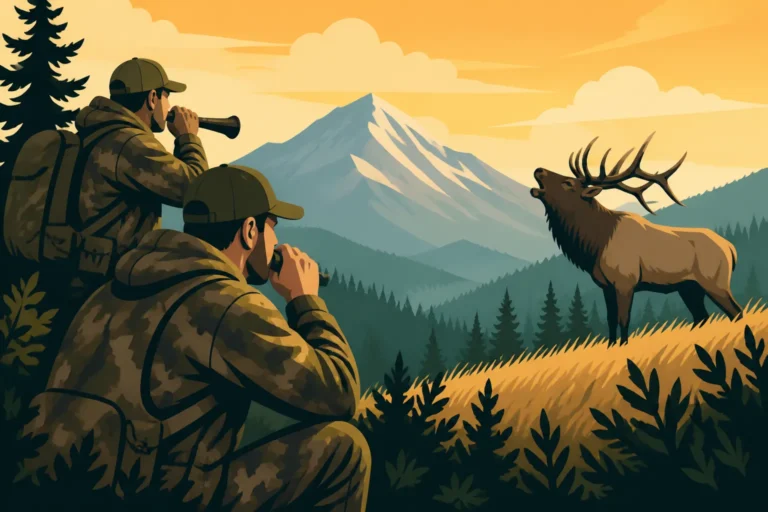
- Buddy System: If hunting with a partner, set up so the caller is slightly behind and to the side of the shooter. The caller can provide the sound, drawing the buck's attention, while the shooter remains motionless and ready. The buck will focus on the sound, often ignoring the silent, still hunter.
A good calling stand in Washington's varied terrain might be along a ridge line overlooking a reprod patch, on the edge of a mature timber stand near a known travel corridor, or inside a small opening within dense timber. Scouting with tools like GoHunt can help identify potential ambush points and escape routes for deer, enabling a more strategic setup. Consider checking out Public Land Scouting in Washington Before Opening Day for more general scouting tips.
Reading Blacktail Reactions and Adjusting Your Calls
Blacktails are not always going to charge in headfirst. Learning to read their subtle reactions is crucial for success.
- Cautious Approach: Many blacktails will respond by slowly creeping in, using every bit of cover available. They might stop, stare, listen intently, and then take a few more steps. If you see this, remain absolutely still. Don't call again until they either move out of sight or appear hesitant. A soft grunt might be all it takes to reassure them or draw them a bit closer.
- Circling Downwind: As mentioned, this is their default. If a buck appears and then disappears, he's likely circling. Anticipate this by setting up near natural barriers or openings that might force them to expose themselves, even briefly.
- Standing Off: A buck might come to within 100-200 yards, stand there, and simply stare in your direction. He knows something is there, but he's not sure what, or he's waiting for more clues. This is when a soft, reassuring grunt or a light rattle can sometimes draw them closer. If they don't respond, try switching up your call intensity or type.
- No Response: Sometimes, despite your best efforts, a blacktail simply won't respond. Don't take it personally. They might have a hot doe, they might have been spooked previously, or they might just not be in the mood. Move on to another location after a patient wait (at least an hour).
Adjust your calling based on the buck's reaction. If he's charging, get ready! If he's hesitant, back off the aggression and try softer, more inquisitive calls. If he's circling, hold your ground and wait for him to complete his loop, hoping he comes into your shooting lane.
Common Mistakes to Avoid When Calling Blacktails
Even experienced callers can make mistakes. For blacktails, these errors are often magnified due to their wary nature.
- Over-Calling: This is perhaps the most common mistake. Don't call constantly. Let your calls breathe. Give the deer time to respond. Too much noise can sound unnatural and scare them off. A good rule of thumb is to call for a minute or two, then be silent and observe for 5-10 minutes before calling again.
- Ignoring the Wind: As already emphasized, this is a hunt-ender. No matter how good your calling, if the wind betrays you, the blacktail will be gone before you even know they were there.
- Impatience: Blacktails are rarely impulsive. They take their sweet time. If you call for 10 minutes and nothing happens, don't pack up. Give it at least 45 minutes to an hour, especially in thick cover. Deer can take a long time to pinpoint the source of a sound and approach cautiously.
- Poor Concealment/Movement: If a blacktail is looking in your direction, any movement will give you away. Remain absolutely still during and after your calling sequence. Wear good camouflage that blends with the Washington Elk Hunting Tactics by Weapon Season and other local foliage.
- Not Hunting the Call's Conclusion: Just because you finished your sequence doesn't mean the show's over. A buck might be approaching silently, or he might have been just out of sight when you made your last sound. Stay vigilant for at least 15-20 minutes after your last call. Many bucks are killed simply by a hunter being ready when the deer finally commits.
- Assuming All Blacktails Are the Same: Not every buck will respond to every call, or in the same way. What works for one blacktail in the Willapa Hills might not work for another in the Olympic Peninsula. Adapt your strategy, and always be learning from your experiences.
By understanding these nuances, equipping yourself with the right gear, and patiently executing your calling strategy, you can significantly increase your odds of turning a frustrating blacktail hunt into a memorable success. Remember, every time you call, you're interacting with a wild animal on its terms. Learning that language is the ultimate reward. For broader context on managing your hunt, familiarizing yourself with Washington Game Management Units Explained can also be beneficial.
| Call Type | Primary Purpose | When to Use (Blacktails) | Notes |
|---|---|---|---|
| Aggressive Rattling | Simulate dominant buck fight, challenge rivals | Peak rut, pre-rut, higher deer density areas | Loud, intense clashes; best for drawing in mature, aggressive bucks |
| Soft Rattling | Mimic sparring, pique curiosity | Pre-rut, post-rut, dense cover, close ranges | Gentle tapping, light grinding; less alarming, more subtle |
| Challenge Grunt | Assert presence, directly challenge a buck | Peak rut, in conjunction with rattling | Deep, guttural, drawn-out; effective for stopping or turning a buck |
| Tending Grunt | Buck pursuing a doe | Peak rut, searching for does | Series of short, soft grunts; implies a doe is nearby |
| Contact Grunt | Locate deer, announce presence | Any time, in still-hunting or blind calling | Soft, single grunt; less aggressive, more inquisitive |
| Doe Bleat | Attract bucks looking for does | Peak rut, less aggressive calling | Soft "Maaaaah!"; use sparingly to avoid suspicion |
Disclaimer
Hunting is an inherently dangerous activity that carries risks including, but not limited to, serious injury or death. Always prioritize safety, follow all local, state, and federal hunting regulations, and ensure you have the proper licenses and tags. The information provided in this guide is for informational purposes only and should not be considered a substitute for professional instruction or personal judgment. Always hunt ethically, respect wildlife, and obtain landowner permission when hunting on private property.