Boots for Steep Eastside Country
Oh, the Eastside of Washington. If you've spent any time chasing mule deer or Rocky Mountain elk in places like the Colockum or the Blue Mountains, you know exactly what I'm talking about when it comes to terrain. It's beautiful, rugged, and absolutely brutal on your feet and footwear. Many hunters find their "do-it-all" boots failing them halfway through a season, leading to blisters, instability, and a hunt that's just plain miserable. This guide is all about helping you understand why specific boots are crucial for Eastern Washington's steep, rocky landscapes and how to choose a pair that will truly support your hunt.
The Unforgiving Reality of Eastern Washington Hunting Terrain
Let's be real, Eastern Washington isn't just "different" from the Westside; it's a completely different beast underfoot. If you're used to the soft, wet duff and mud of the Olympic Peninsula or the Gifford Pinchot, prepare for a rude awakening when you hit the basalt breaks and sagebrush flats. This landscape demands a specific kind of footwear, and overlooking that can turn a dream hunt into a painful slog.
Basalt, Scree, and Sagebrush: Abrasive and Treacherous Ground
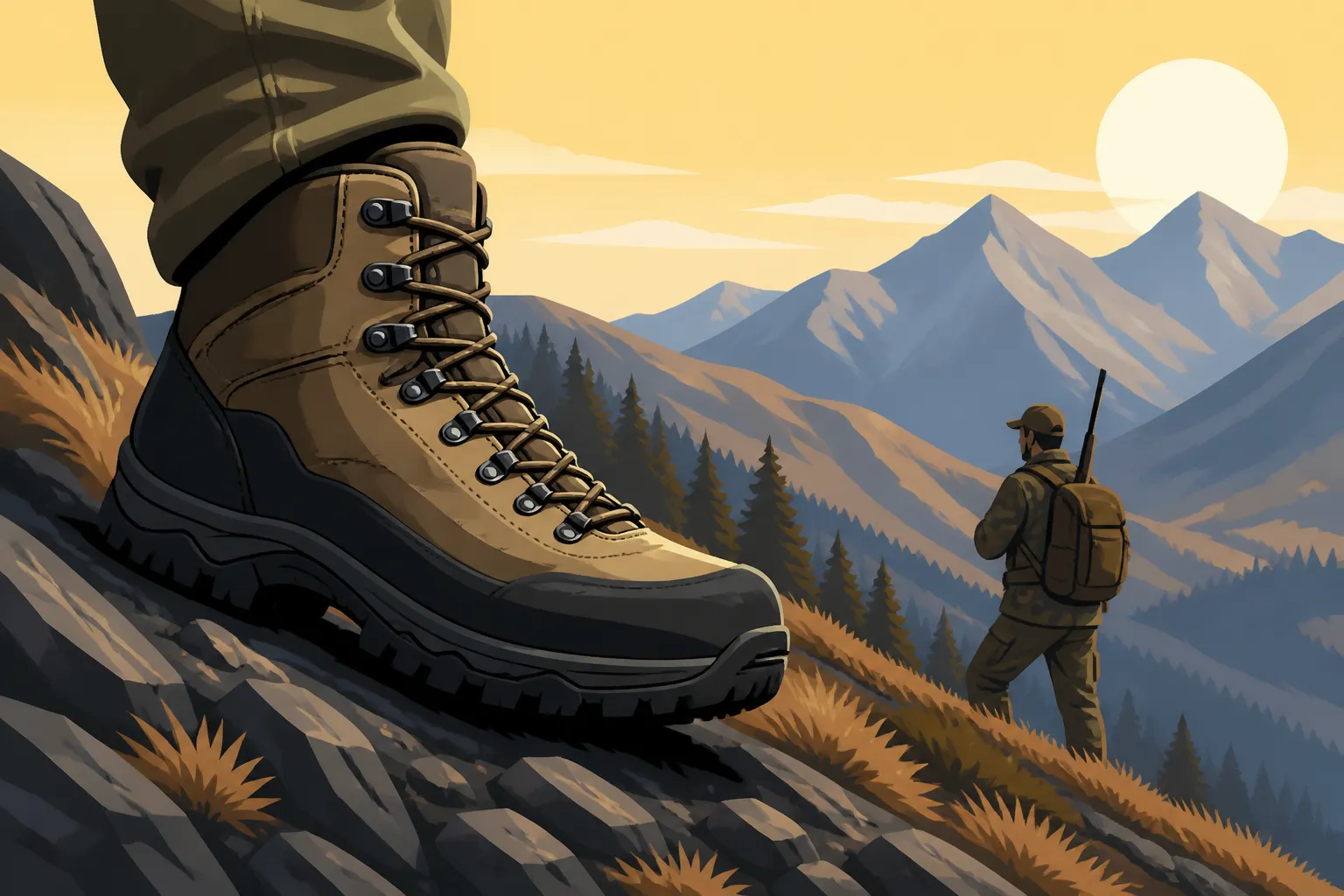
When we talk about Eastside terrain, we're talking about a geology that's designed to eat boots alive. You'll encounter vast expanses of basalt rock, which is incredibly sharp and abrasive. Imagine miles of walking over what feels like broken glass, constantly grinding away at your boot's outsole and rand. Then there's the scree – those loose, small, angular rocks that slide out from under you with every step on a steep slope. It's a two-steps-forward, one-step-back dance that requires maximum grip and stability.
Beyond the rock, you've got the ubiquitous sagebrush and bitterbrush. While not as overtly sharp as basalt, their woody stems and often thorny nature can poke and scrape at lighter boot materials, eventually leading to tears and compromised waterproofing. Even a seemingly gentle hillside can hide unexpected rocks, uneven ground, and ankle-rolling hazards. When you're glassing Eastern Washington breaks for mule deer, you'll spend hours on these slopes, often traversing horizontally or making steep ascents and descents that demand every bit of performance your boots can offer.
Why Your Everyday Boots Won't Survive
Many hunters try to get by with their general hiking boots or even the softer, more flexible models designed for comfortable walking on easier trails. This is a common mistake that quickly leads to frustration. Softer soles, while comfortable for a Sunday stroll, simply can't handle the Eastside's relentless abrasion. They'll wear down unevenly, losing their grip on loose rock, and offer little to no protection against sharp impacts. We've all seen guys who blow out a sole or rip a seam mid-hunt, and it's almost always because their footwear wasn't up to the task.
Furthermore, the lack of rigidity in these everyday boots means your feet and ankles are doing all the work to stabilize you on uneven ground. Think about traversing a steep sidehill covered in scree – without a stiff midsole and solid ankle support, your feet will be constantly fighting to stay level, leading to agonizing fatigue and a much higher risk of a sprained ankle. Your body might be capable of packing an elk out of Washington's backcountry, but if your feet are trashed, that monumental task becomes even harder. The frustration of feeling every sharp rock through a thin sole or having your ankle constantly trying to roll is a common refrain among hunters who underestimate the Eastside's demands. It’s not just about comfort; it's about safety and endurance in rugged country.
Essential Features for Eastside Hunting Boots
To truly conquer Eastern Washington's rugged terrain, you need boots built for battle. It's not just one feature that makes a boot suitable; it's a combination of robust design elements working together to provide protection, stability, and enduring comfort. Forget about fashion trends; here, function reigns supreme.
Uncompromising Support and Stability
When you're navigating basalt fields or scrambling up steep, loose slopes, foot and ankle support are non-negotiable. The number one reason hunters choose specialized Eastside boots is for their superior stability.
- High-Cut Ankle Support: Look for boots that extend well above the ankle bone. This high cuff provides crucial lateral stability, helping to prevent twists and sprains when traversing uneven ground or stepping awkwardly. A properly cinched high-cut boot acts like a brace, protecting your joint from the constant forces of a challenging hike.
- Stiff Midsoles and Shanks: This is perhaps the most critical difference between an Eastside boot and a general hiker. A stiff midsole, often reinforced with a full-length shank (made of nylon, fiberglass, or even carbon fiber), prevents your foot from flexing excessively over sharp rocks and uneven surfaces. This rigidity distributes pressure evenly across your foot, drastically reducing fatigue, especially when you're carrying a heavy pack. Imagine balancing on the edge of a rock; a stiff sole allows you to "edge" without your foot folding over, giving you more control and less strain. This feature is particularly vital when you're facing long days of climbing in areas where mule deer numbers in Eastern Washington are high.
Bulletproof Durability and Relentless Traction
The Eastside will test the limits of any material, so durability is key. You need boots that can withstand constant abuse from rocks, thorns, and dry, abrasive dirt.
- Robust Materials and Protection: Full-grain leather, often combined with high-denier synthetic fabrics, forms the backbone of durable boots. Look for boots with a substantial rubber rand – that protective rubber strip that wraps around the base of the boot, often extending up the sides. This rand is your boot's armor against sharp rocks, scree, and impact, preventing cuts, tears, and delamination where the sole meets the upper.
- Aggressive Outsole Patterns: Traction is paramount on loose dirt, gravel, and slick rock. The best Eastside boots feature deep, multi-directional lugs on their outsoles, designed to bite into soft earth and grip firmly on rocky surfaces. Brands like Vibram are renowned for their durable rubber compounds and effective tread patterns. These outsoles should also be relatively stiff to provide a stable platform for edging on small footholds. When you're tracking bucks in fresh Eastern Washington snow or climbing out of a canyon, reliable grip makes all the difference.
- Waterproofing That Still Matters: While Eastern Washington is drier than the Westside, don't skimp on waterproofing. Unexpected rain, early-season snow, morning dew in tall grass, and stream crossings are all realities. Plus, a good waterproof membrane (like Gore-Tex or similar proprietary technologies) also keeps fine dust and grit out, preventing internal abrasion and hotspots. Even a little moisture inside your boot can lead to painful blisters.
Precision Fit and Enduring Comfort
Even the most rugged boot is useless if it causes debilitating blisters. Comfort comes from a precise fit, not just soft padding.
- The Cruciality of Proper Fit: This cannot be stressed enough. A boot that is too large allows your foot to slide, causing friction and blisters. A boot that is too small will pinch and create hot spots. Your toes should not touch the end when kicking downhill, and your heel should lift minimally. Spend the time to get professionally fitted, and always try boots on with the specific hunting socks you intend to wear. Many hunters swear by double socks, a thin liner and a thicker merino outer, to prevent friction.
- Breaking-In: No Shortcuts: Do not buy boots a week before your hunt and expect them to perform. High-quality, stiff hunting boots require a significant break-in period. Start with short walks around the house, then progress to longer hikes on varied terrain, gradually adding weight to your pack. This allows the boots to mold to your feet and prevents misery in the field. Think of it as pre-season conditioning for your feet.
- Effective Lacing Systems: Look for lacing systems that allow for precise adjustments. Locking eyelets near the ankle are excellent for keeping the forefoot and ankle areas independently tensioned, preventing slack and ensuring a secure, customized fit that won't loosen over a long day.
- Weight Considerations: There's always a trade-off between durability/support and weight. While a heavier boot offers more protection, it can also contribute to fatigue over many miles. You need to find a balance that suits your physical conditioning and typical hunt style. For example, a multi-day trip involving backpack camps in Washington wilderness will justify a heavier, more supportive boot than a quick day hunt.
Top Boot Categories for Eastside Hunts
When you're staring down another brutal climb in the Colockum Elk Herd Numbers unit, you'll be glad you invested in the right footwear. There are a few categories of boots that consistently perform well in Eastern Washington, each with its own strengths and considerations.
Heavy-Duty Mountaineering and Backpacking Boots
These are the big guns, often overkill for casual hiking but absolute workhorses for serious backcountry hunting. They are designed for alpine environments, carrying heavy loads, and tackling technical terrain.
- Characteristics: Expect extremely stiff soles, high ankle cuffs, robust full-grain leather or cutting-edge synthetic uppers, and often full rubber rands. Many are crampon-compatible, which speaks to their rigidity. Brands like La Sportiva, Scarpa, and Lowa often feature prominent models in this category.
- Pros: Unmatched ankle and foot support, exceptional durability against abrasion and impact, superior load-carrying capability for when you're quartering and packing an elk solo. They provide the best platform for stable shooting on uneven ground, which is a key part of a solid rifle setup for Washington elk and deer.
- Cons: They are heavy, typically the most expensive, and demand a significant break-in period. Their stiffness can feel clunky on flat ground, and some hunters find them too rigid for their hunting style. They also might be too warm for early-season hunts when temperatures can still be quite high.
Dedicated Stiff Hunting Boots
This category represents the sweet spot for many serious Washington hunters. These boots are purpose-built for the rigors of hunting, blending durability and support with features tailored for the field.
- Characteristics: These boots strike a balance between mountaineering boots and lighter hiking models. They feature stiff to moderately stiff midsoles, high-quality leather and/or synthetic uppers, and substantial rubber rands. They are designed to carry moderate to heavy loads over varied, challenging terrain. Brands like Kenetrek, Crispi, Zamberlan, and Schnee's are leaders in this space, offering models specifically tuned for hunting.
- Pros: Excellent ankle support and foot protection without being overly cumbersome. They are built to withstand abuse from thorns, rocks, and miles of trekking. Many offer insulation options for colder late-season hunts or uninsulated versions for earlier, warmer weather. They are designed for silence and traction, important for hunters.
- Cons: Can still be heavy and require a good break-in. They are an investment, though often a bit less expensive than their mountaineering counterparts. Finding the perfect fit is crucial for comfort over long distances.
Balancing Conditions: Insulation and Breathability
Even on the Eastside, conditions vary wildly through the seasons.
- Insulation: For early season deer hunts (often in September and early October when it's still warm and dry), uninsulated or lightly insulated boots are usually preferred to prevent overheating and sweaty feet. However, if you're venturing out for late-season hunts, especially when tracking bucks in fresh Eastern Washington snow, insulated boots become a necessity to prevent frostbite and maintain comfort. Many popular hunting boot models offer both insulated and uninsulated versions.
- Breathability: In the hot, dry stretches of early Eastside seasons, managing foot sweat is crucial. While waterproof membranes are great, they can reduce breathability. Look for boots that balance waterproofing with good moisture-wicking properties and consider the materials of the upper. Quality merino wool socks are your best friend here, as they manage moisture far better than cotton.
When you're doing your research, you might find resources like GoHunt helpful for reviews and comparisons of different boot models. They often provide insights from hunters who've put these boots through their paces in environments very similar to Eastern Washington.
| Boot Type | Stiffness Level | Ideal Terrain | Key Advantages | Common Trade-offs |
|---|---|---|---|---|
| Mountaineering/Expedition | Very Stiff | Extremely Steep, Rocky, Alpine | Max support, durability, load carrying, edging | Heavy, long break-in, expensive, can be overkill |
| Dedicated Stiff Hunting | Stiff | Steep, Rocky, Varied Off-Trail | Excellent support/durability, purpose-built features | Still heavy, requires break-in, investment |
| Heavy Backpacking | Moderately Stiff | Rugged Trails, Off-Trail | Good support, comfortable, durable | Less extreme protection/stiffness than above |
| Light Hiking/Trail | Flexible | Defined Trails, Easier Off-Trail | Lightweight, comfortable out of the box | Lacks support/durability for Eastside rock/scree |
Prepping Your Boots and Feet for Eastside Success
Getting the right boots is just the first step. To ensure they perform when it matters most, you need to properly prepare them and your feet for the unique challenges of Eastern Washington. Skipping these steps is like heading into a difficult unit without doing any E-Scouting a Washington GMU from home – you're setting yourself up for a struggle.
The Non-Negotiable Break-In Process
I cannot emphasize this enough: new, stiff boots are not meant to be pulled from the box and taken on a grueling hunt. They need to be broken in. This process allows the boot materials to flex and mold to the unique contours of your feet, preventing hot spots and painful blisters that can quickly end a hunt.
- Start Small, Go Big: Begin by wearing your new boots around the house for short periods. Then, move to short walks around your neighborhood. Gradually increase the distance and difficulty, incorporating hills and varied terrain if possible. Before your hunt, you should be able to comfortably walk several miles with a weighted pack in your boots. This is crucial if you plan on covering serious ground, especially when accessing remote areas where you might also be checking Washington road closures before you go.
- Mimic Hunt Conditions: Wear the same socks you'll wear during the hunt. If you plan to carry a heavy pack, wear it during your break-in hikes. This simulates the pressure and friction your feet will experience in the field. Ignoring this is a recipe for disaster.
- Listen to Your Feet: Pay attention to any hot spots or discomfort during the break-in period. Address them immediately with moleskin or athletic tape. It's far better to identify and resolve these issues at home than to suffer through them deep in the backcountry. A good rule of thumb: if it hurts during a short training hike, it will be unbearable on a multi-day hunt.
The Science of Socks and Foot Care
Even with the perfect boots, the wrong socks or poor foot hygiene can ruin your hunt. Your socks are the critical interface between your foot and the boot.
- Merino Wool Reigns Supreme: Ditch the cotton socks – they absorb moisture, stay wet, and cause friction, leading to blisters. Merino wool socks are a hunter's best friend. They wick moisture away from your skin, regulate temperature (keeping you warm when wet and cool when hot), and are naturally odor-resistant. Brands like Darn Tough or Smartwool are staples for good reason. Consider a layering system: a thin merino liner sock to wick moisture directly from your skin, and a thicker merino cushion sock over it for padding and warmth.
- Try Before You Buy: Always try on prospective boots with the exact socks you intend to hunt in. The thickness of your socks can significantly impact the fit of the boot.
- Field Foot Care is Key: Even with the best socks and boots, long days on steep terrain can take a toll. Bring a small foot care kit with moleskin, athletic tape (such as Leukotape), and perhaps some anti-chafing balm. At the end of each day, take off your boots and socks, air out your feet, and inspect them for any redness or hot spots. Address these proactively before they become full-blown blisters. If you notice a particular area of friction, apply tape before it turns into a blister. Staying on top of foot care allows you to focus on the hunt, rather than agonizing over every step.
By giving your boots the break-in they deserve and treating your feet with the respect they command, you'll be much better prepared to handle the relentless demands of Eastern Washington's steep, unforgiving country. These details are just as important as choosing the right gear, like understanding how to use your GoHunt app for e-scouting or picking out a good tripod for glassing. Don't let your feet be the weakest link in your hunting chain!
Disclaimer
Hunting is an inherently dangerous activity. The information provided in this article is for informational purposes only and should not be considered a substitute for professional training, personal experience, and thorough research of current regulations. Always prioritize safety, understand local laws and regulations, and be prepared for rapidly changing conditions in the field.