Judging Bear Size at Distance
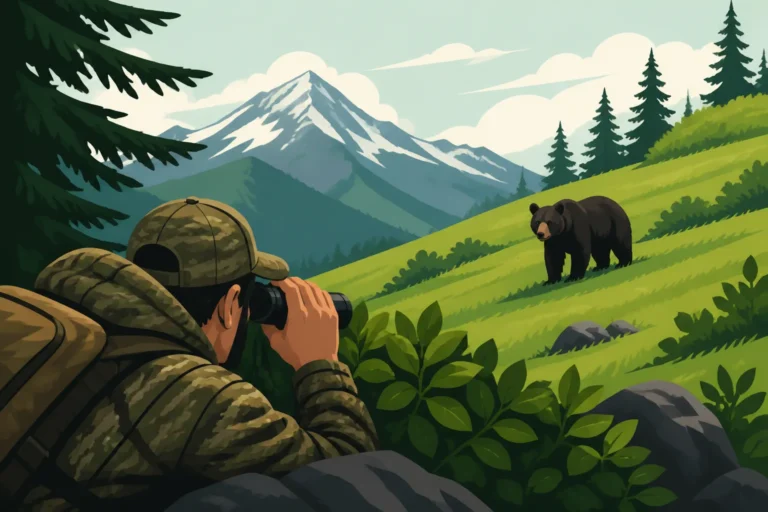
There's nothing quite like that surge of adrenaline when you spot a black bear in Washington's vast backcountry, whether it's an old bruin nosing through a huckleberry patch on a steep slope or a sleek, dark form moving through timber. But let's be honest, judging a bear's size accurately at a distance is one of the trickiest skills to master, often leading to either overestimating a younger bear or, worse, misidentifying a sow with cubs, which can put you in a tough ethical and legal spot. This guide is all about helping you sharpen your eye, offering practical tips and techniques to confidently judge bear size before you ever raise your rifle or bow.
The Frustrations of Judging Bears at a Distance
If you’ve spent any time hunting Washington’s black bears, you know the struggle is real. What looks like a giant through your binoculars can shrink into a much smaller animal once you finally get a closer look, or vice-versa. It’s a common frustration, and it's not just about ego; it’s about making responsible decisions in the field.
Why Bears Are So Deceptive
Bears, especially black bears, are masters of optical illusion. Their thick, shaggy fur can add significant perceived bulk, making a relatively small bear look like a substantial animal. This effect is even more pronounced when their winter coat is in prime condition. Add to that the varied terrain of Washington—from dense coastal rainforests to open eastern slopes and high mountain meadows—and you’ve got a recipe for misjudgment. A bear seen on a flat, open hillside might appear small, while the same bear crossing a steep, brush-choked ravine can look massive as it struggles through obstacles. The angle of the sun, shadows, and the distance itself all conspire to play tricks on your eyes, making it incredibly difficult to get a true sense of scale.
Even their posture can throw you off. A bear standing up on its hind legs to get a better scent or to look around might seem incredibly tall, but it’s an unreliable indicator of its actual body mass when on all fours. They can also appear much larger when standing sideways than when facing directly towards or away from you. Understanding these inherent deceptions is the first step in learning to overcome them.
The Ethical and Legal Imperative
Beyond the desire for a trophy, there's a serious ethical and legal component to accurately judging bear size. In Washington, it’s illegal to harvest sows with cubs, and while most hunters want to avoid this anyway, in the heat of the moment, it can be easy to make a mistake. A cub might be obscured by brush or lagging behind, making a lone bear appear legal. Misjudging an animal's maturity can also lead to taking a younger animal when you're specifically targeting a mature one, which many hunters prioritize for conservation and personal satisfaction.
Furthermore, a well-placed shot is always paramount for a quick, humane harvest. If you misjudge the distance or size, you might miscalculate your shot placement, leading to a wounded animal and a difficult, potentially unsuccessful, tracking job. This is especially true when hunting in Washington's thick cover, where Blood Trailing in Salal and Devil's Club can be an absolute nightmare. Taking the time to properly assess the bear means you’re not only adhering to regulations but also honoring the animal with a clean, ethical harvest.
Key Indicators for Estimating Bear Size
Learning to judge a bear at a distance comes down to recognizing specific physical traits and behaviors. It’s about building a mental checklist and running through it every time you spot a bear.
Body Proportions
This is arguably the most crucial indicator. Young bears tend to look "leggy" with larger heads relative to their bodies. Think of a teenager: all arms and legs, a bit awkward. A mature bear, on the other hand, will appear more compact and muscular, with a blockier head that seems small in comparison to its massive body.
- Head-to-Body Ratio: A truly big bear will have a relatively small head for its body, almost as if it's too small. Its head will be broad, but it won't dominate the animal's silhouette. Younger bears, even those with good fur, will have a head that looks proportionally larger.
- Ear Size: Another excellent indicator is ear size. On a big, mature bear, the ears will appear relatively small and set wide apart on its broad head. On a younger bear, the ears often look larger, more prominent, and sometimes closer together, giving it a somewhat "foxy" or "puppy-like" appearance. Keep in mind that ear size can also vary slightly by subspecies, but for Washington black bears, this rule generally holds true.
- Leg Length and Thickness: As mentioned, younger bears often look leggy. Their legs might seem long and slender for their body size. Mature bears, especially old boars, will have thick, muscular legs that appear shorter and stockier in proportion to their deep, powerful chest and hindquarters. They have a more "bulldog" stance.
Belly Sag and Overall Mass
Once you get past the initial head-and-ears check, start looking at the bear's overall mass, particularly its belly and hindquarters.
- Belly Sag: This isn't always present, but a prominent belly sag, especially on an older bear, can be a great sign of age and body condition. It indicates years of feeding and a well-developed digestive system. However, a bear that has recently fed heavily might also have a distended belly, so use this in conjunction with other indicators. A bear whose belly line is almost touching the ground as it walks is often a mature animal.
- Overall Bulk and Shape: A big bear will have a noticeable "pot belly" or a deep, sagging belly line, especially when walking. Its shoulders will be broad and often humped, and its hindquarters will be massive and powerful. Younger bears tend to have a flatter belly line and a more cylindrical, less robust body shape. Look for that heavy, sway-backed appearance in the midsection, contrasted with thick, powerful legs and shoulders. Their movements will be slow and deliberate, a testament to their bulk.
Behavior and Gait
How a bear moves can tell you a lot about its age and maturity. This is where patience really pays off.
- Slow, Deliberate Movements: Big bears often move with a slow, almost ponderous gait. They're confident and rarely seem rushed unless startled. A mature bear isn't typically sprinting everywhere unless it's genuinely trying to escape or making a sudden charge. Younger bears, conversely, tend to be more energetic, playful, and often move with a quicker, lighter step, sometimes even darting around.
- Head Position: A big boar will often carry its head low, almost as if it's perpetually sniffing the ground, with a thick, muscular neck. Smaller bears, especially cubs, tend to hold their heads higher, looking around more frequently with a more upright posture. When a bear stands up on its hind legs, observe how it moves. A big bear will look truly imposing and stable, while a smaller bear might look more gangly or less coordinated.
- Checking for Cubs: This is critical. Always, always scrutinize the area around any bear you're trying to judge for the presence of cubs. They can be incredibly hard to spot in dense cover or if they're directly behind the sow. Watch for a bear's behavior that might indicate cubs: looking back frequently, stopping to wait, or even letting out low grunts. Remember that Washington has strict rules against harvesting Sows With Cubs and the Legal Line, so confirm before you commit. If you see even a hint of a small bear nearby, assume it's a sow with cubs and let them walk.
Using Environmental Cues and Optics
Even with a keen eye, you'll need external help to truly master judging bears at a distance. Your surroundings and your gear are your best friends.
Benchmarking Against Known Objects
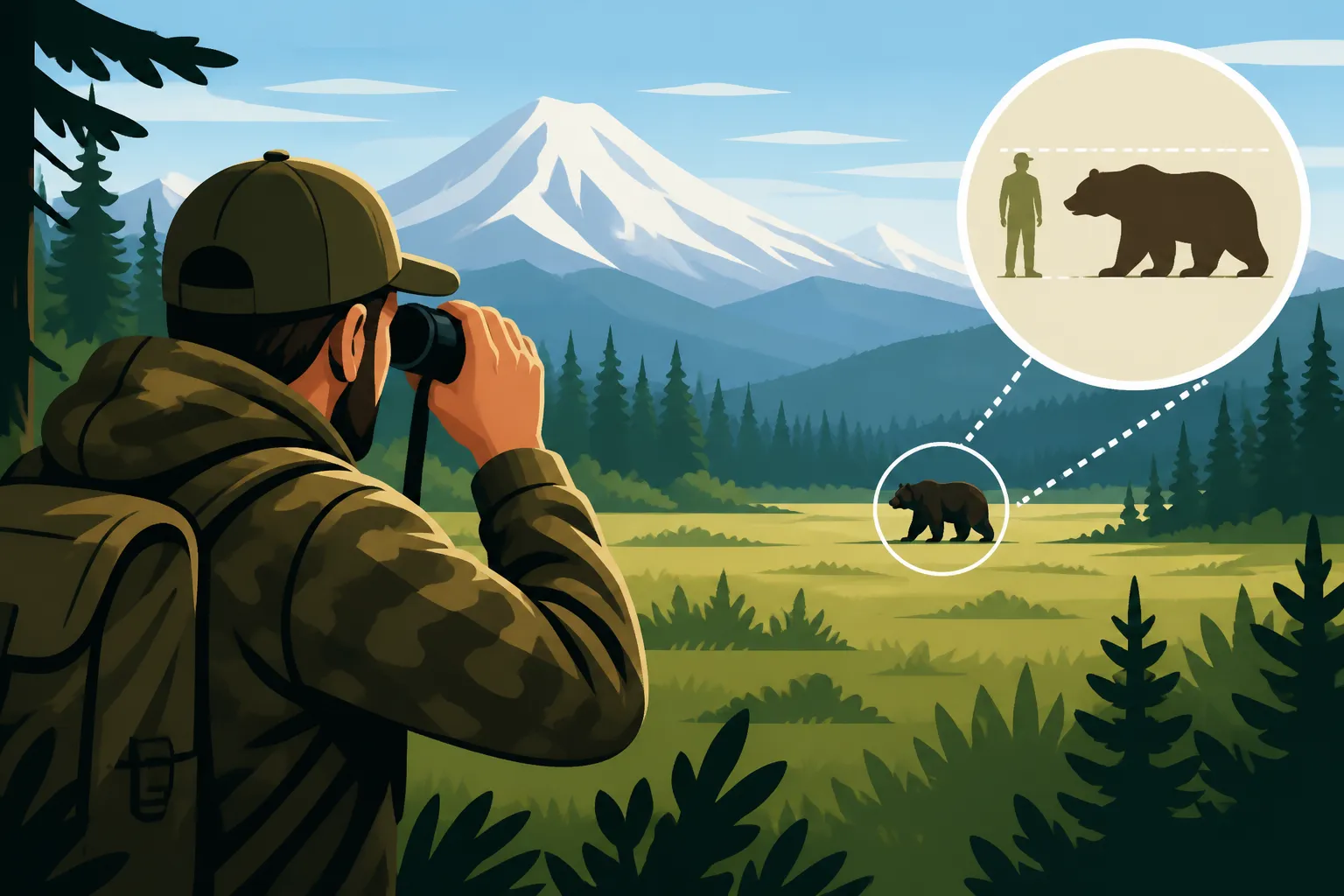
One of the most effective ways to estimate size is to compare the bear to objects in its environment whose size you do know or can estimate.
- Trees and Bushes: A bear moving past a tree trunk, a particular rock, or a distinctive bush can give you a vital reference point. Try to find a tree or object you can put into perspective. Is the bear taller than that stump? Does its back reach halfway up that fir sapling? Mentally "measure" the bear against these static objects. Before your hunt, take some time to Public Land Scouting in Washington Before Opening Day in your chosen GMU. Identify common tree species, rock formations, and undergrowth sizes so you have a baseline for comparison.
- Other Animals: If you're lucky enough to spot the bear near deer or elk, use them as a living benchmark. A mature black bear, especially a boar, can be surprisingly large, often rivaling the size of a cow elk or a large deer. Compare its height at the shoulder, its overall body length, and its perceived weight to these other animals. This is especially helpful if you're trying to judge a bear on a game trail where you know the average size of other critters.
The Role of Quality Optics
Your binoculars and spotting scope are not just for finding animals; they are indispensable tools for judging them. Don't skimp here.
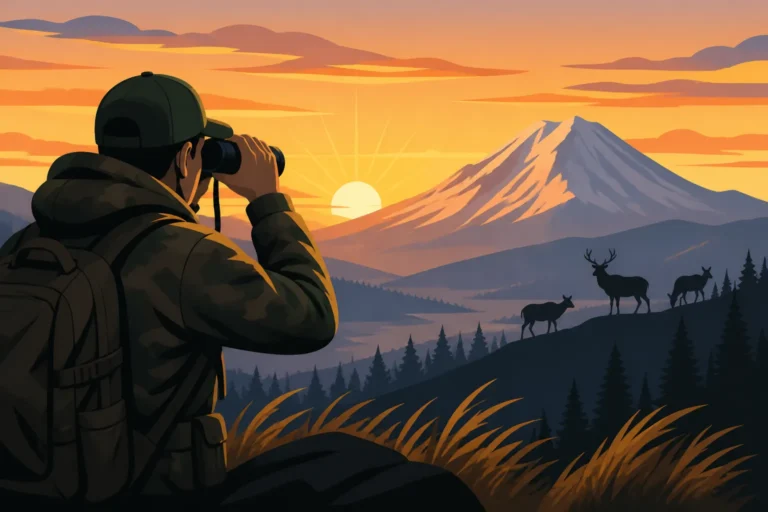
- Binoculars: A good pair of 10×42 binoculars is often considered the standard for Western hunting, offering a great balance of magnification and field of view. For bears, clarity and light-gathering capability are crucial, especially when they're in timber or during low light conditions. The ability to resolve fine details like ear size, head shape, and fur texture at a distance is paramount. For open country, some hunters might even prefer 12x or 15x magnification to really reach out and analyze an animal. Learn more about Choosing Binoculars for Washington Glassing to make an informed decision.
- Spotting Scopes: When a bear is truly far away, across a canyon, or tucked into a distant avalanche chute, a high-quality spotting scope becomes essential. A 60-80mm objective lens with variable magnification up to 60x can bring a distant bear "up close" enough to discern those critical details. Paired with a sturdy tripod, a spotting scope allows for prolonged, steady viewing, which is necessary for careful judgment. If you're planning on Spotting Bears on Avalanche Chutes in Eastern Washington, a spotting scope is a non-negotiable piece of gear. This prolonged observation time also lets you patiently check for cubs or other subtle cues.
- Rangefinders: While not directly for judging size, a rangefinder is vital for determining the exact distance to the bear and the reference objects around it. Knowing the exact distance helps calibrate your perception. A bear at 100 yards will always look bigger than the same bear at 300 yards. By knowing the exact yardage, you can better apply your judging criteria. Many modern rangefinders, like those offered by companies like Vortex or Leupold, also come with angle compensation, which is incredibly useful in Washington's steep terrain.
Digital Scouting Tools and Practice
Technology can give you a significant edge in learning how to judge bears.
- E-Scouting Platforms: Tools like GoHunt provide invaluable satellite imagery and topographic maps that you can use to scout potential bear habitat before you ever set foot in the woods. By studying aerial photos, you can identify open slopes, clearcuts, and berry patches where bears might be feeding. More importantly, you can use these maps to find unique landmarks—prominent rock outcrops, distinct tree lines, or old logging equipment—that can serve as known reference points. Mark these points on your GoHunt map and mentally practice estimating distances and sizes in your living room. Understanding the lay of the land, and knowing where bears generally tend to congregate based on their diet through the Bear Diet Through the Washington Seasons, can help you anticipate where to look and what reference points might be available.
- Practice, Practice, Practice: The best way to get better at judging bears is to practice. Every time you see an animal—deer, elk, even cattle—practice estimating its size and comparing it to nearby objects. When you're out scouting or just enjoying the outdoors, bring your optics and treat every sighting as a judging exercise. Take photos or videos and review them later. Compare your initial estimates with what you learn upon closer inspection or from others. The more you consciously practice this skill, the better your eye will become. Even watching nature documentaries with a critical eye, pausing to "judge" animals, can help train your brain.
Avoiding Common Mistakes and Making the Shot Decision
Even with all the knowledge, making the final decision is often the hardest part. Avoiding common pitfalls and adhering to an ethical standard is crucial.
The "Lone Bear" Fallacy
One of the most dangerous assumptions hunters make is that a bear traveling alone must be a boar or a solitary sow without cubs. This is not always the case. Cubs, especially older cubs in the late season, can be quite independent and may not be right on their mother's heels. They might be bedded in thick brush nearby, out of sight, or just lagging a hundred yards behind.
Always give a bear plenty of time and observe it intently, even if it appears to be by itself. Use your best optics to scan the surrounding area, especially any dense cover. Look for any hesitation in its movement, or subtle calls that might indicate a cub is present. Many experienced hunters will spend 15-20 minutes, or even longer, observing a potential target if there's any doubt, especially when hunting Washington Black Bear Season Dates in the early season when cubs are still small. If you can't definitively confirm the absence of cubs, it's always best to pass.
The "Big Head, Small Body" Myth
While a small head relative to a large body is a great indicator of a big bear, don't fall into the trap of thinking a bear with a seemingly "big head" automatically means it's a small bear. This can be misleading in certain situations, especially if the bear is facing you head-on or if it's a younger bear with an unusually large skull for its age. The key is to look at the proportions between the head and the entire body, not just the absolute size of the head. A genuinely massive boar will still have a broad, blocky head, but its sheer body mass will dwarf it.
Remember to consider the angle of the animal and your perspective. A bear quartering toward you can make its head seem larger than it is compared to its visible body, while a bear quartering away might hide the full breadth of its chest. Always try to observe a bear from multiple angles if possible, or wait until it turns to give you a better side profile. This is where patience and persistence become vital.
When in Doubt, Don't Shoot
This is perhaps the most important rule in all of hunting, and it applies especially to judging bear size. If you have any doubt whatsoever about a bear's size, its age, or the presence of cubs, do not take the shot. It’s far better to pass on an animal than to make an unethical or illegal harvest. There will always be another bear, another opportunity. Hunting is about the experience, the challenge, and the connection to nature, not just pulling the trigger.
Taking the time to be absolutely certain before you shoot reflects respect for the animal, respect for the rules, and respect for yourself as a hunter. Carry your ethical compass with you every time you step into Washington's woods.
Here’s a quick comparison of common characteristics:
| Characteristic | Younger Bear (Cub/Yearling) | Mature Bear (Boar/Old Sow) |
|---|---|---|
| Head-to-Body Ratio | Head appears large relative to body | Head appears small and blocky relative to massive body |
| Ear Size & Placement | Ears look larger, often closer together | Ears look smaller, wider set on broad head |
| Legs | Appear longer and more slender | Appear shorter, thicker, and more muscular |
| Body Shape | More cylindrical, less mass, flatter belly | Deep chest, broad shoulders, often pot-bellied or saggy |
| Shoulder Hump | Less pronounced or absent | Often a noticeable hump or muscular development behind head |
| Movement | More energetic, quicker, sometimes playful | Slower, more deliberate, ponderous gait |
| Facial Profile | Often more pointed or "foxy" muzzle | Broader, more blunt muzzle, sometimes scarred |
| Overall Impression | "Leggy," "puppy-like," awkward | "Bulldog," powerful, compact, solid |
Disclaimer
Always consult the most current Washington Department of Fish and Wildlife (WDFW) regulations before hunting. Hunting rules and seasons can change, and it is your responsibility to be informed and compliant.