Reading a Three-Year-Old Clearcut for Bucks
Hunting blacktail deer in Washington's vast timber country can feel like searching for a needle in a haystack, especially when those haystacks are dense, regenerating clearcuts. It's frustrating when you know the bucks are there, using the thick cover, but you just can't seem to find them or get a shot. This guide is dedicated to helping you decipher the often-overlooked secrets of three-year-old clearcuts, transforming them from intimidating tangles into prime hunting grounds where blacktail bucks thrive.
Understanding the Blacktail Haven: Why Three-Year-Old Clearcuts Are Key
Many hunters focus on older timber or fresh clearcuts, but often overlook the sweet spot that a three-year-old clearcut represents for blacktail deer. By this stage, the landscape has transformed significantly from the initial logging, creating a perfect storm of food, cover, and security. It's a goldilocks zone where conditions are "just right" for a reclusive blacktail buck.
The Dynamic Balance of Food and Cover
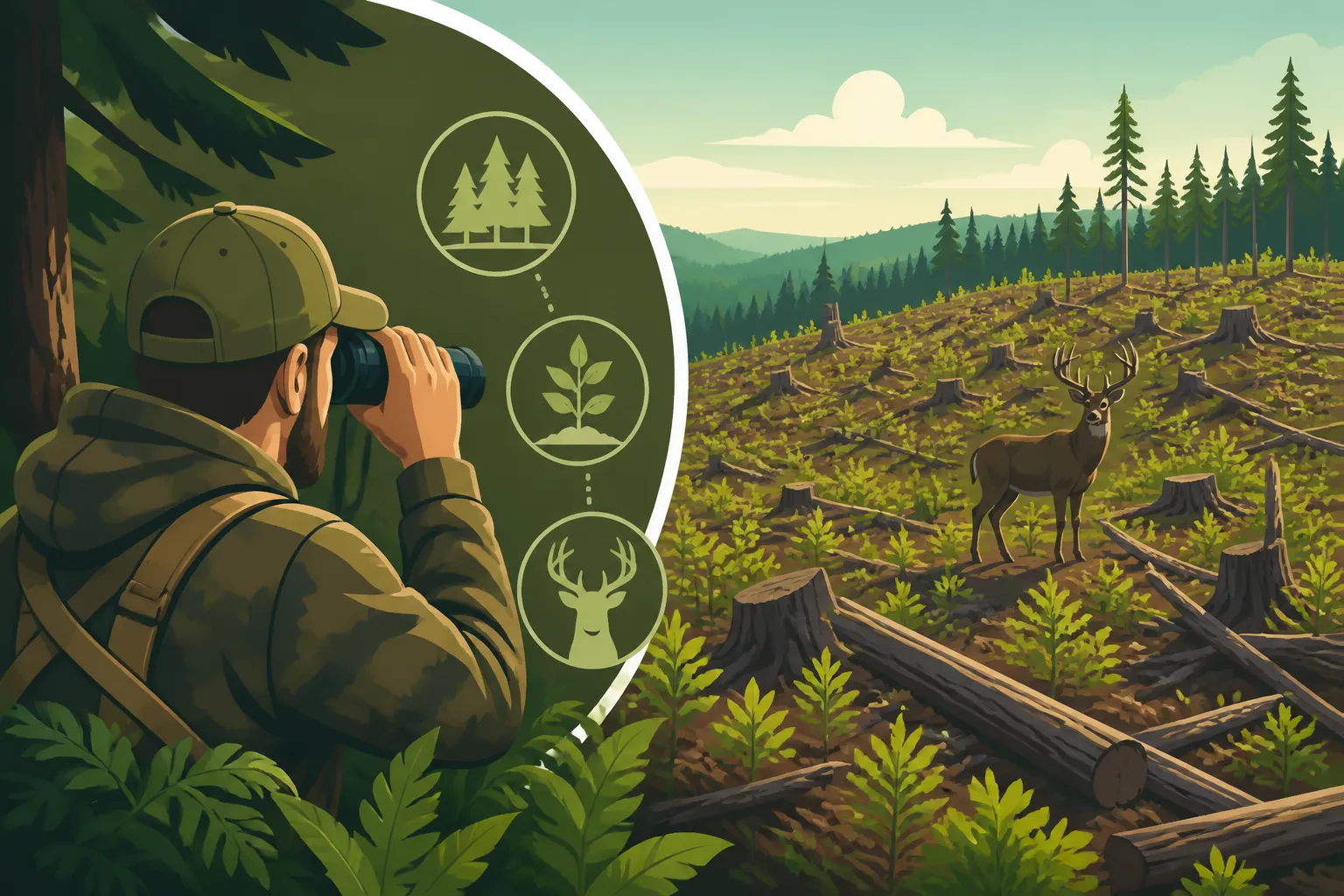
When a clearcut is just a year old, it’s often too open, leaving deer exposed and wary. While browse is abundant, the lack of overhead cover makes it less appealing for bucks during daylight hours. By the time a clearcut hits the three-year mark, a critical shift has occurred. The new growth – often a mix of Douglas fir, hemlock, alder, salal, huckleberry, and a smattering of devil's club – has really started to explode. This provides an incredible smorgasbord of nutrient-rich forage that blacktails absolutely crave. More importantly, this growth is now tall and thick enough to offer substantial concealment.
Think about it: a buck doesn't want to stand out in the open, even for a tasty bite. In a three-year-old clearcut, the young trees and brush are often waist to chest high, sometimes even taller, forming a dense tapestry that allows a buck to feed undetected. They can move through these areas with confidence, knowing they're largely invisible from above or at a distance. This is why you'll find them actively browsing here throughout the day, not just at dawn and dusk. The balance between accessible food and secure cover makes these areas highly attractive, especially when other food sources might be scarce or less protected.
Security and Escape Routes in Regenerating Stands
Beyond just offering good browse and concealment, a three-year-old clearcut starts to develop significant security features. The dense undergrowth naturally creates intricate networks of game trails that bucks use to navigate their world. These aren't always obvious to the human eye, but deer know every twist and turn. These clearcuts often abut older timber or thicker reprod (reproduction stands), providing immediate escape cover. A buck can be feeding contently in the clearcut and, with a few bounding leaps, disappear into the impenetrable adjacent forest.
Understanding these dynamics is crucial. When you're scouting, look for where the clearcut interfaces with different types of cover. Are there fingers of timber running into the clearcut? Are there drainages or draws that funnel into it, offering natural travel corridors? These transition zones are goldmines. Deer will often stage in the heavier cover before moving into the clearcut to feed, or use these natural features as escape routes when pressured. This layered cover is exactly what a wary Washington blacktail needs to feel safe, making a three-year-old clearcut a fortress of solitude where they can live their lives largely undisturbed, despite the logging activity that created it.
Key Features to Decipher in a Three-Year-Old Clearcut
Walking into a three-year-old clearcut can feel overwhelming – a wall of green, seemingly uniform. But beneath that uniformity lies a rich tapestry of micro-habitats and subtle clues if you know what to look for. Breaking it down into distinct features can help you "read" the landscape like a deer does.
Edge Habitat and Transition Zones
The edges of a three-year-old clearcut are arguably the most critical areas to focus on. Deer, particularly bucks, are creatures of the edge. They utilize the contrast between thick, older timber and the younger, browse-rich clearcut. This edge provides immediate cover while allowing easy access to food. Look for where the clearcut meets a mature forest stand, especially if that timber offers a south-facing slope for bedding or a deep, dark drainage.
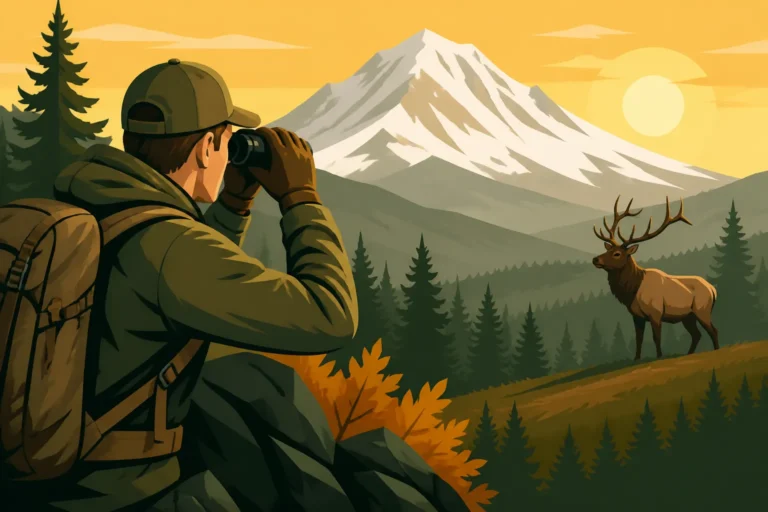
Within the clearcut itself, look for internal "edges." These could be where a patch of older, perhaps un-logged timber was left standing, or where different planting groups have grown at varying rates, creating density changes. Even subtle shifts in topography, like small knolls or benches, can create an edge where deer feel more secure. These transition zones are natural travel routes and staging areas. When approaching a clearcut, spend time glassing these edges from a distance. A good pair of 10×42 binoculars on a tripod can really help you pick apart the details, scanning for the flick of an ear or a horizontal line in a vertical world. For more general guidance on understanding clearcuts, check out Reading Clearcuts and Reprod for Blacktail Bucks.
Bedding Areas and Travel Corridors
Locating bedding areas within the clearcut can be tricky due to the density, but deer sign will give them away. Bucks often bed in the thickest pockets of new growth, especially on benches or slight rises that offer a vantage point without exposing them. Think about areas that offer thermal cover from the wind and solar exposure for warmth. These beds are usually very hard to spot until you're right on top of them. However, you'll find heavy concentrations of droppings, fresh rubs, and flattened vegetation in these zones.
Travel corridors connect these bedding areas to feeding zones and escape routes. In a three-year-old clearcut, these are typically well-worn trails weaving through the dense saplings and brush. They might follow small depressions, old skid roads that are starting to grow over, or simply be the path of least resistance. Identifying these corridors is paramount, as it tells you how bucks are moving through the clearcut. A crucial part of your scouting should involve walking these trails and identifying fresh tracks and droppings. Knowing Where Blacktails Bed in Reprod can provide even more insights into these patterns.
Sign Recognition in Dense Cover
Fresh deer sign is your bread and butter in these environments. Look for:
- Tracks: Fresh tracks in soft soil, especially where they cross an old logging road or a muddy spot, tell you exactly where deer are traveling. Pay attention to track size – larger tracks indicate mature bucks.
- Droppings: Piles of fresh droppings indicate recent activity. The frequency and location can tell you if it's a feeding area, bedding area, or travel corridor.
- Rubs and Scrapes: While the rut might still be a ways off depending on the season, bucks can make rubs year-round. Look for small saplings or brush with bark rubbed off. Scrapes, particularly during the Blacktail Rut Timing in Western Washington, are strong indicators of a buck's presence.
- Browzing: Look for nipped-off twigs and leaves. Blacktails are browsers, so identify their preferred plants like huckleberry, vine maple, and young conifer shoots. Freshly eaten browse means deer are actively feeding there.
- Trails: The most obvious sign, but in dense clearcuts, they can be subtle. Look for paths where vegetation is pushed down or bent, revealing a tunnel through the brush.
It's important to differentiate fresh sign from old. Fresh droppings will be moist and dark. Fresh rubs will show lighter wood underneath, not yet weathered. This keen observation is what separates successful hunters from those who just stumble through the brush.
| Sign Type | Typical Location | What it Tells You | Fresh vs. Old (Indicators) |
|---|---|---|---|
| Tracks | Trails, soft ground, mud | Travel routes, size of deer, recent movement | Crisp edges, visible dew/moisture |
| Droppings | Beds, feeding areas, trails | Active use, dietary habits, frequency | Moist, dark, clustered; dry, faded, scattered |
| Rubs | Small saplings, brush (vertical) | Buck activity, marking territory, pre-rut/rut | Light wood visible, sap; weathered, dark |
| Scrapes | Overhanging branches, open ground (horizontal) | Dominant buck marking, breeding activity | Fresh dirt, strong scent; overgrown |
| Browse | Huckleberry, vine maple, young conifers | Feeding activity, preferred food sources | Clean cuts, sap present; dried, frayed |
Effective Hunting Strategies for These Areas
Hunting a three-year-old clearcut requires patience, stealth, and a keen understanding of blacktail behavior. This isn't wide-open country where you can spot-and-stalk from a mile away. It's an intimate, close-quarters game.
Still-Hunting and Glassing Techniques
Still-hunting is perhaps the most effective method for tackling these dense environments. This involves moving incredibly slowly, taking one or two steps, then stopping to scan and listen for several minutes. Your eyes should be constantly searching for horizontal lines, patches of dark hide, or the subtle flick of an ear in the sea of vertical saplings. Use your binoculars even for close-range scanning, as they can help resolve details in the shadows and dense brush. Remember, blacktails are masters of camouflage, and they will often let you walk right past them if you're moving too quickly. For more details on this technique, consider how it applies to Still-Hunting Blacktails in Wet Washington Brush.
From an advantageous position, like an old logging road cut or a slight rise, glassing can also be productive. However, it's not like glassing the open plains of Eastern Washington. You'll be looking for small pieces of a deer, not the whole animal. Spend long periods slowly scanning with quality optics, breaking the clearcut into grids. Pay extra attention to pockets of slightly thicker cover, edges, and areas where sunlight penetrates to reveal potential feeding zones. Even with a good spotter or high-power binos, don't expect to see a full deer. Often, it's a leg, a rump, or just the curve of an antler.
Wind and Weather Considerations
Wind is your constant companion in Washington hunting, and in dense clearcuts, it's even more critical. Blacktails have an incredible sense of smell, and a shifting wind can instantly give away your position. Always try to hunt into the wind or with a consistent crosswind. Pay attention to thermal drafts, especially in the mornings and evenings, when air currents tend to flow downhill or uphill, respectively. Using a wind checker is not optional; it’s a necessity.
Weather, particularly the wet conditions common in Western Washington, can be both a challenge and an advantage. Rain and fog muffle sound, allowing for quieter movement, which is a huge benefit when still-hunting dense reprod. However, it also reduces visibility, making spotting deer harder. Gear is paramount in these conditions. Ensure you have reliable Rain Gear for Westside Hunting to stay comfortable and focused. Light snow can also be a game-changer, revealing fresh tracks and making blood trailing much easier. Consider Tracking a Buck After a Fresh Snow if you encounter these conditions.
Strategic Trail Camera Placement
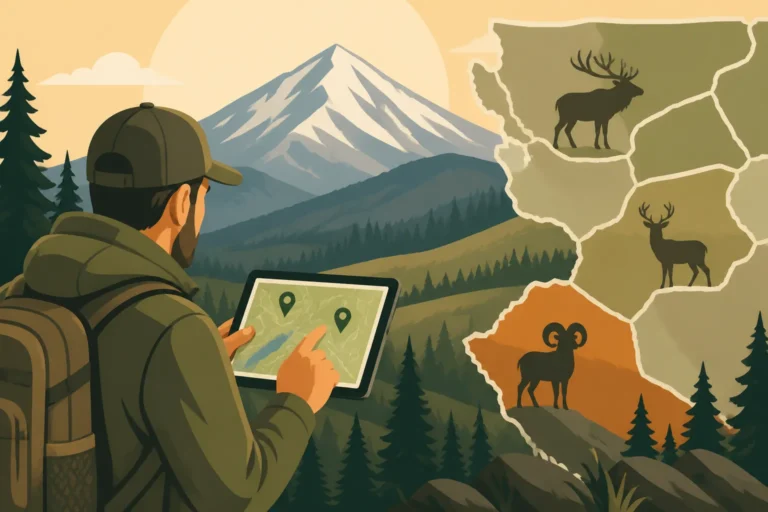
Trail cameras are invaluable tools for understanding deer movement in clearcuts, and GoHunt's mapping features can help pinpoint ideal locations. While rules for Trail Camera Rules on Washington Public Land must be followed, placing them strategically can reveal patterns you might otherwise miss. Focus on natural funnels, heavily used game trails, and the intersections of different cover types. Position cameras low to the ground, looking down a trail or into a dense pocket, as the deer will be moving through thick cover.
Baits are generally illegal on public land in Washington, so use your cameras to monitor natural travel and feeding patterns. If you're seeing consistent buck activity at a particular time or in a specific part of the clearcut, that gives you a massive advantage. Don't be afraid to move cameras if they aren't yielding results. It's a trial-and-error process, but when you hit the right spot, the data can be incredibly revealing about the deer using that three-year-old clearcut. This is where tools like GoHunt can really shine, allowing you to mark camera locations, track animal sightings, and overlay them with topography and vegetation maps to refine your strategy.
Common Mistakes and How to Enhance Your Success
Even experienced hunters can make mistakes when navigating the unique challenges of three-year-old clearcuts. Recognizing these pitfalls and having a plan to overcome them can significantly boost your odds.
Moving Too Fast and Making Too Much Noise
This is probably the most common mistake. The excitement of the hunt or the sheer difficulty of the terrain can lead hunters to push through the brush too quickly. Blacktail bucks are incredibly sensitive to sound and movement. Every snapped twig, every rustle of rain gear, every heavy footfall echoes through the dense silence of the clearcut. If you're not seeing deer, it's often because you're alerting them long before you get close.
To combat this, slow down, drastically. Practice the "ten steps, ten minutes" rule. Take ten slow, deliberate steps, then stop for a full ten minutes to scan, listen, and let the woods settle. This isn't a race; it's a chess match. Pay attention to your footwear and clothing. Soft-soled boots and quiet outer layers are essential. When you encounter exceptionally thick patches, be prepared to get down on your hands and knees or even crawl to maintain stealth. This methodical approach will allow you to slip into their world undetected, increasing your chances of a close encounter. Remember, How Close You Get in Coastal Reprod often dictates success.
Ignoring Micro-Topography and Cover Changes
It's easy to look at a clearcut as one big, uniform brush patch. However, even subtle changes in elevation, small draws, or variations in vegetation density can be critical. A buck might choose to bed on the lee side of a small knoll to escape the wind, or prefer a section of slightly thicker saplings for bedding. Ignoring these micro-features means you're walking past prime spots without realizing it.
Before you even step foot in the clearcut, use mapping tools to identify these nuances. Satellite imagery can show slight changes in vegetation height or density. Contour lines will highlight small benches or depressions. On the ground, pay close attention to where the vegetation changes: a patch of salal here, a grouping of alder there. These variations often funnel deer movement or provide preferred bedding sites. Integrate this knowledge into your still-hunting path, always checking these high-probability areas with extra care. Using resources like E-Scouting Washington GMUs Before the Draw can help identify these areas from home.
Overlooking Public Access and Timber Company Permits
Many of Washington's clearcuts, especially the productive three-year-old ones, are on public land managed by the Department of Natural Resources (DNR) or other timber companies. Assuming these areas are inaccessible or off-limits is a missed opportunity. While some timber company lands require permits, many DNR lands are open with a Discover Pass.
Before your hunt, thoroughly research the land ownership of your target clearcut. Use a tool like GoHunt or WDFW's online mapping systems to identify land boundaries. For private timberland, check company websites like Weyerhaeuser or Hancock Forest Management for permit information and sales windows. If it's Hunting Behind Timber Company Gates, be sure you understand the rules. For DNR land, learn about Washington DNR Land Open to Hunting and what passes are required. Sometimes, the most productive clearcuts are those that require a little extra effort to gain access, meaning less competition from other hunters. Don't let perceived access issues deter you from exploring these prime blacktail habitats.
Disclaimer
Hunting is an inherently dangerous activity. Always prioritize safety, follow all local and state regulations, and be aware of your surroundings. This information is for educational purposes only and should not replace professional guidance or personal experience. Confirm all rules and regulations with the Washington Department of Fish and Wildlife (WDFW) before planning any hunting trip.