Solo Hunting Safety Precautions
Solo hunting in Washington State is an incredibly rewarding experience, offering a profound sense of self-reliance and connection to the wild that's hard to find otherwise. However, with that deep satisfaction comes an equally deep responsibility for your own safety, especially when you're the only one out there. The vastness of our state's wilderness, coupled with unpredictable weather and rugged terrain, means the stakes are always high. This guide is dedicated to helping you mitigate those risks, providing practical precautions and strategies to ensure your solo adventure ends not just successfully, but safely.
Preparation is Your Best Defense: Planning Before You Go
Before you even think about putting boots on the ground, the most critical safety precaution you can take as a solo hunter is thorough preparation. This isn't just about packing your gear; it's about meticulous research, proactive planning, and a deep understanding of your chosen hunting grounds. When you're solo, you are your own backup plan, and that plan starts long before you leave home.
Thoroughly Researching Your Hunting Unit
One of the biggest mistakes a solo hunter can make is underestimating the terrain or the conditions in a new area. Washington offers an incredible diversity of hunting units, from the dense, wet forests of the Olympic Peninsula to the steep, rocky breaks of Eastern Washington. Each presents its own unique set of challenges. It's imperative to spend significant time pouring over maps, satellite imagery, and even topographical data to understand elevation changes, potential water sources, and areas that might become bottlenecks or impassable. Knowing these details upfront can prevent you from getting cliffed out or stuck in thick, unforgiving brush.
Beyond the physical landscape, understanding the wildlife in your unit is also crucial. Knowing typical game travel routes, bedding areas, and feeding patterns helps you hunt smarter, but also makes you more aware of potential animal encounters beyond your target species. For instance, in areas with high bear or cougar populations, being alert and carrying bear spray isn't just good practice; it's a vital safety measure. Resources like the Washington Department of Fish and Wildlife (WDFW) website, as well as community forums and platforms like GoHunt, can offer invaluable insights into local conditions and animal behavior specific to your chosen GMU.
Always check the current and historical weather patterns for your hunting dates and location. Washington weather can be notoriously fickle, often shifting from sunny skies to torrential rain or even snow within hours, particularly in the mountains. This isn't just about comfort; it's about survival. A sudden drop in temperature combined with rain can quickly lead to hypothermia, even in early fall. Similarly, be aware of any fire restrictions, especially during dry seasons. An accidental spark could not only devastate the landscape but trap you in a dangerous situation.
Finally, confirm all access points, road conditions, and land ownership boundaries. Many areas in Washington, particularly in timber country, have gates that can close unexpectedly, leaving you stranded if you didn't plan for a walk-in. Utilizing tools for E-Scouting a Washington GMU From Home can help you identify these features. It's also critical to distinguish between public and private lands, noting any specific permits required for private timberland access. Getting turned around or finding yourself in a closed area can eat up precious time and energy, adding unnecessary risk to your solo endeavor.
Crafting a Detailed Trip Plan and Sharing It
For a solo hunter, a detailed trip plan isn't a suggestion; it's a non-negotiable safety net. This document should outline everything from your exact route and primary objective to your vehicle description, parking location, and estimated timeline. Include specifics like where you plan to camp, potential alternative routes, and bail-out points. Think of it as a blueprint for anyone who might need to come looking for you.
The importance of sharing this plan with multiple trusted individuals cannot be overstated. Give copies to family members, close friends, or even a reliable hunting buddy who isn't joining you. Make sure they understand your expected check-in times and, crucially, what to do if they don't hear from you. Emphasize that if you deviate significantly from the plan – perhaps due to weather, an unexpected animal encounter, or simply changing your mind – you will do your absolute best to notify them. Remember the advice about Leaving a Trip Plan at Home; it's literally life-saving information for those who might need to initiate a search.
Manage expectations with your contacts clearly. Instead of saying, "I'll call you when I get out," provide a more structured approach: "If you don't hear from me by X time on Y date, please call the local sheriff's department or search and rescue." This empowers them to act effectively without unnecessary panic or delay, ensuring that if something does go wrong, help can be dispatched as quickly as possible. A precise check-in schedule, even just a simple text message with a satellite messenger, can provide immense peace of mind for both you and your loved ones.
Essential Gear Checks and Emergency Supplies
Beyond your rifle or bow and your optics, a solo hunter's pack needs to prioritize safety and self-sufficiency. A comprehensive First Aid Kit for a Remote Hunt is paramount, tailored to handle everything from minor cuts and blisters to sprains, severe bleeding, and even allergic reactions. Don't just throw one together; understand what's in it and how to use every item. Combine this with multiple reliable fire-starting methods (lighter, waterproof matches, ferro rod), and compact emergency shelter like a bivy sack or lightweight tarp, even for day hunts. You never know when a twisted ankle might turn a planned afternoon outing into an unplanned overnight stay.
Redundancy in vital gear is a cornerstone of solo hunting safety. For navigation, don't rely solely on your phone or a single GPS unit. Carry a physical map of your hunting unit and a compass, and know how to use them proficiently, even in the dark or inclement weather. Batteries die, screens break, and satellites can be blocked. Having backup methods for shelter, fire, and navigation ensures that a single gear failure doesn't escalate into a full-blown emergency.
Always pack for the worst-case scenario. Imagine what you would need if you were injured, lost, or unexpectedly stranded overnight in freezing rain. This mental exercise helps you assess what's truly essential. Even if you're planning a short trip, a sudden injury could turn a simple jaunt into a dire situation. Extra layers, high-energy snacks, and water purification tablets are lightweight additions that can make all the difference in a pinch.
Given Washington's reputation for wet and wild weather, especially in the western half, proper rain gear and an effective layering system are non-negotiable. A flimsy poncho won't cut it when you're miles deep in the wilderness and the heavens open up. Invest in durable, waterproof outer layers and moisture-wicking base layers that will keep you warm even when wet. Understanding Layering for Wet Cold Weather isn't just about comfort; it's a critical strategy to prevent hypothermia, which is a significant risk in our damp climate.
Staying Connected and Communicating from Afar
When you venture into Washington's vast public lands, especially in its more remote corners, the convenience of modern communication often vanishes. Cell service is notoriously spotty or entirely non-existent in many prime hunting areas. For a solo hunter, having a reliable method to communicate with the outside world, or to call for help in an emergency, is not just a luxury—it's a fundamental safety requirement.
Reliable Communication Beyond Cell Service
Let's be realistic: unless you're hunting within sight of a major highway, your cell phone is likely to be an expensive brick for most of your trip. While you might occasionally hit a ridge with a bar or two, you absolutely cannot depend on it for consistent communication or emergency calls. This is where dedicated satellite communication devices become essential. Devices like the Garmin inReach or Zoleo offer two-way text messaging capabilities, allowing you to send messages to family and friends from virtually anywhere on Earth. Crucially, they also feature an SOS button that, when activated, directly alerts a 24/7 emergency response center, transmitting your exact GPS coordinates to search and rescue teams.
These satellite messengers differ significantly from Personal Locator Beacons (PLBs). While both have an SOS function, PLBs only transmit a distress signal and your location; they don't allow for two-way communication. A satellite messenger, on the other hand, allows you to communicate directly with rescuers, providing vital information about your situation and injuries, which can greatly expedite the rescue process. It's not just about getting found; it's about being able to tell them what is wrong and what kind of help you need. Prioritize buying one of these devices, subscribe to a suitable plan, and most importantly, practice using it before you head out into the wilderness. Understanding Satellite Messengers for Solo Washington Hunts is key to making an informed choice.
For those who might be meeting up with other hunters later, or have a distant basecamp, two-way radios can provide short-range communication. However, it's vital to remember their limitations; they typically operate on line-of-sight and have a much shorter range than satellite devices. They are excellent for coordinating within a small team or with a camp a few miles away but are utterly useless for emergencies if you're truly alone and out of range of anyone. Always have a satellite device as your primary emergency communication tool.
Battery Management for Electronic Devices
Modern hunting often relies heavily on electronic devices: GPS units, rangefinders, headlamps, and, of course, your satellite messenger. All these devices are only as good as their battery life. In the backcountry, especially when you're solo, managing power is paramount. Simple strategies can significantly extend your battery life: put your phone in airplane mode to stop it constantly searching for Getting Cell Service in a Washington Unit, turn off unnecessary apps, and dim screens. Every little bit helps.
Packing sufficient power banks is non-negotiable for multi-day trips. Choose rugged, waterproof power banks with enough capacity to recharge your critical devices multiple times. Test them at home to understand their true charging capability. It's not enough to have a small bank that only offers one phone charge; aim for enough juice to keep your satellite messenger and navigation running for the entirety of your planned trip, plus a buffer for emergencies.
Cold weather is a notorious battery killer. Temperatures plummeting overnight can drain your devices much faster than you'd expect. To combat this, keep electronic devices close to your body, ideally in an inner pocket, to keep them warm. When you sleep, tuck your phone and power bank into your sleeping bag. This simple habit can mean the difference between having a functional GPS or communication device and being left in the dark, literally and figuratively.
Emergency Signaling and Rescue Protocols
While a satellite messenger's SOS button is your primary lifeline, understanding what happens after you activate it is crucial. When you press that button, your precise location is transmitted to a monitoring center, which then contacts local search and rescue (SAR) authorities. They will attempt to communicate with you via your device to ascertain the nature of your emergency. This is why a two-way satellite messenger is so valuable – you can provide critical details about your injury, the number of people involved, and any immediate hazards.
Beyond electronic devices, traditional signaling methods still have a place in a solo hunter's arsenal. A loud whistle, for instance, carries much further than your voice and requires less energy. Three short blasts repeated is a universal distress signal. A signal mirror, when used correctly, can flash rescue aircraft or distant observers even on hazy days. Always wear at least one piece of bright orange or other high-visibility clothing during hunting season, not just for hunter safety, but to make yourself more visible to potential rescuers from the air or ground.
Perhaps the most important protocol if you become injured or truly lost and have called for help is to stay put. Resist the urge to try and self-rescue if you're seriously hurt or disoriented. Moving can exacerbate injuries, make your location harder to pinpoint, and potentially move you out of communication range. Find shelter, stay as warm and dry as possible, and conserve your energy. SAR teams are experts; trust them to find you, especially with the precise coordinates your satellite messenger provides.
On-the-Ground Awareness and Risk Mitigation
Once you're actually out in the field, solo hunting demands an even higher level of situational awareness and continuous risk assessment. Every decision you make, from navigating a steep slope to recovering a harvested animal, carries amplified consequences when you're alone. Being proactive about mitigating these risks is paramount to a safe and successful hunt.
Mastering Navigation and Understanding Terrain
Even with the best planning, once you step off a maintained trail, navigation can become a significant challenge, particularly in Washington's dense timber or vast, rolling hills. You must be proficient with multiple navigation tools. A physical map and compass are your basic, unbreakable combo. Learn how to orient a map, read contour lines to understand elevation and steepness, and take bearings with your compass. These skills are invaluable when your GPS battery dies or if satellite signals are blocked by thick canopy or canyon walls. GoHunt's detailed topographic maps are excellent for this purpose, allowing you to identify critical landmarks before you ever leave home.
Your GPS device or smartphone app (like onX Hunt or BaseMap) can be incredibly powerful, but only if you know how to use them to their full potential. Before your hunt, download offline maps for your entire hunting unit. Mark key waypoints: your truck, potential water sources, known hazards, and any Finding Old Logging Roads on Satellite you might use for access or egress. During your hunt, make it a habit to regularly check your location, especially after traversing dense brush or changing elevation. Use the "track back" feature on your GPS to retrace your steps if you get disoriented. Never assume you'll remember the way; landmarks look different when you're tired, it's dark, or the weather shifts.
The terrain itself presents constant navigational and physical challenges. Washington has everything from loose scree slopes to dense, wet coastal rainforests and deep river valleys. Learn to recognize safe passage versus dangerous ground. A steep bank might look manageable from a distance, but up close could be a treacherous mess of loose rock and slippery mud. Always err on the side of caution. If a route looks too risky, it probably is, and when you're solo, there's no one to help if you take a tumble.
Recognizing and Avoiding Environmental Hazards
Washington's natural beauty comes with a host of potential environmental hazards that solo hunters must constantly be aware of. Steep, uneven ground, especially when wet or covered in loose rock, is a constant threat for falls. A broken leg or twisted ankle miles from the nearest road can quickly turn into a life-threatening situation. Always watch your footing, use trekking poles for stability, and avoid shortcuts down overly steep slopes, particularly when carrying a heavy pack.
Weather-related hazards are another primary concern. We've talked about Hypothermia Risk on a Wet Hunt, but heat-related illnesses can also strike during early season hunts or in Eastern Washington's dry, hot summers. Carry enough water, know the symptoms of dehydration and heat stroke, and plan your physical exertion around the warmest parts of the day. Sudden storms, high winds, and rapidly changing river levels are also threats. Never attempt to cross a fast-moving, deep river alone, especially if you're unsure of the bottom.
Wildlife encounters, while rare, can also pose a threat. While bears and cougars typically avoid humans, accidental encounters can happen, especially if you surprise an animal. Always carry bear spray in an easily accessible holster, make noise while walking through thick cover, and be aware of fresh sign. Knowing what to do in a bear encounter (stand your ground for black bears, fight back if attacked by a grizzly, though grizzlies are extremely rare in Washington) or a cougar encounter (make yourself big, loud, don't run) is vital. Remember, you're in their home, and respecting their space is key.
Handling Game Recovery Safely When Alone
You've made the shot, and your animal is down. This is an exciting moment, but for the solo hunter, it's also when the hardest and most dangerous work begins. Recovering a downed animal, especially a large one like an elk, demands immense physical exertion and careful planning. Prioritize safety over speed. Rushing into thick cover or down a steep ravine to find your animal can lead to injury or getting lost, compromising everything you've done to that point.
Once you find your animal, take a moment to assess the situation. Mark the location carefully with your GPS, and if possible, with flagging tape. If it's getting dark, make the decision to return in the morning rather than attempting a recovery in the dark, which significantly increases the risk of injury, getting lost, or spoiling meat. Blood Trailing in Thick Understory can be incredibly challenging, so proceed slowly and methodically.
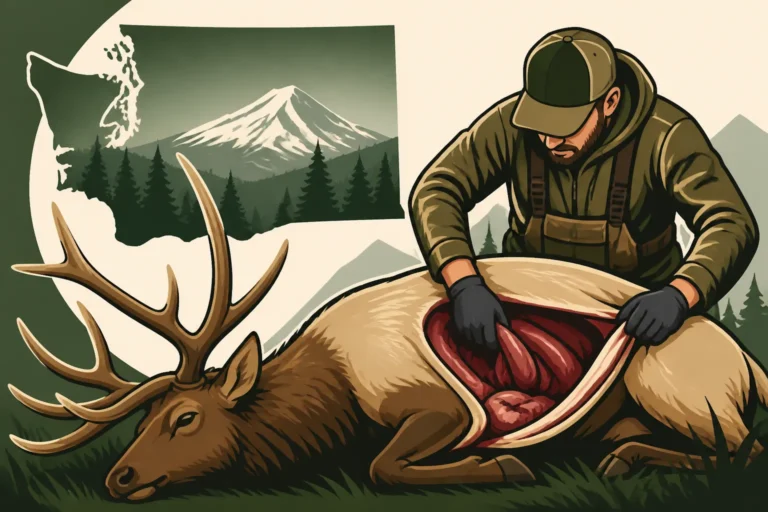
Field dressing and quartering the animal is a monumental task alone. If you're physically capable and have practiced it, the "gutless method" can be a lifesaver. It involves skinning and quartering the animal without removing the internal organs, saving a lot of weight and time, and avoiding the need to roll a heavy carcass. Always use a sharp knife and exercise extreme caution to avoid cuts, which can become infected and debilitating in the backcountry. Once the meat is quartered, focus on Getting a Carcass Cooled Fast, especially in warmer weather, to preserve it.
Packing out an animal solo is arguably the biggest challenge. Be realistic about how much weight you can carry on a single trip. A mature bull elk can easily be 300-400 pounds of boned-out meat. That's usually 4-5 trips for a strong solo hunter, even with a sturdy frame pack. Break the animal down into manageable loads. Internal link Pack Weight One Hunter Can Carry outlines typical expectations. Don't be a hero; multiple, lighter trips are far safer than one or two trips that push you to your physical limits, increasing your risk of falls or injury. If you have to leave meat overnight, hang it high to protect it from scavengers.
Mental Fortitude and Physical Readiness for Solo Success
Solo hunting isn't just a gear list and a map; it's a profound test of your physical and mental capabilities. When you're the only one out there, your body and mind become your most important tools. Developing both physical endurance and psychological resilience is crucial for overcoming the inevitable challenges that arise when you're alone in the wilderness.
Physical Conditioning for Demanding Hunts
Washington's hunting units are rarely flat or easy. Whether you're chasing Roosevelt elk through the steep, brushy mountains of Western Washington or pursuing mule deer in the expansive, broken country of the Eastside, physical exertion is a constant companion. Your physical condition is, in essence, a primary safety precaution. Being in good shape means you'll have the stamina to navigate difficult terrain, climb steep inclines with a loaded pack, and react quickly to unexpected situations. Fatigue is the enemy of good decision-making and often precedes accidents.
Your training should mimic the demands of your hunt. Don't just run on a treadmill; hike with a weighted pack, climb hills, and incorporate exercises that build core strength and stability. Think about the specific movements you'll be making: stepping over logs, scrambling up rocky sections, and maintaining balance on uneven ground. Practice with the footwear you intend to use. Boots are incredibly important for safety and performance; understanding the nuances of Boots for Steep Eastside Country or wet timber boots can prevent painful blisters or devastating falls.
The ability to maintain a strong physical output for days on end, often in adverse weather, directly impacts your safety margin. If you're physically exhausted, your judgment becomes impaired, you're more prone to making navigational errors, and your capacity to handle an emergency — like an injury or a downed animal recovery — diminishes significantly. Investing time in your physical fitness before the season is an investment in your safety.
Cultivating a Resilient Solo Hunter Mindset
Beyond the physical, solo hunting is a deep dive into your own mental landscape. It's often a solitary experience, with long hours of quiet introspection punctuated by moments of intense focus. Learning to be comfortable with solitude, to manage fear, and to push through moments of doubt are essential skills. When something goes wrong—a missed shot, a lost trail, an unexpected storm—there's no one else to lean on immediately. Your ability to calmly assess the situation and formulate a solution is paramount.
Cultivating a positive self-talk habit and strong problem-solving skills will serve you well. Instead of panicking, train yourself to break down problems into smaller, manageable steps. If you're momentarily lost, don't let anxiety take over; stop, consult your map and GPS, and calmly determine your next move. Acknowledge your fears, but don't let them paralyze you. Remind yourself of your preparation, your gear, and your capabilities. GoHunt's detailed unit statistics and maps can help you visualize the challenges of your chosen GMU beforehand, mentally preparing you for what's ahead.
Finally, a resilient mindset includes knowing when to call it quits. There's an immense pressure, especially for solo hunters, to push harder, go further, and succeed. But true resilience also means recognizing your limits and having the wisdom to turn back if conditions become too dangerous, if you're injured, or if you're simply too exhausted to continue safely. There's no shame in ending a hunt early to prioritize your well-being. The mountains will always be there, and living to hunt another day is the ultimate victory for any solo adventurer.
Disclaimer
The information provided in this article is for educational purposes only and is not a substitute for professional instruction, local regulations, or personal judgment. Always consult current WDFW regulations, practice safe hunting methods, and seek expert advice for wilderness preparedness and first aid. Your safety is ultimately your responsibility.