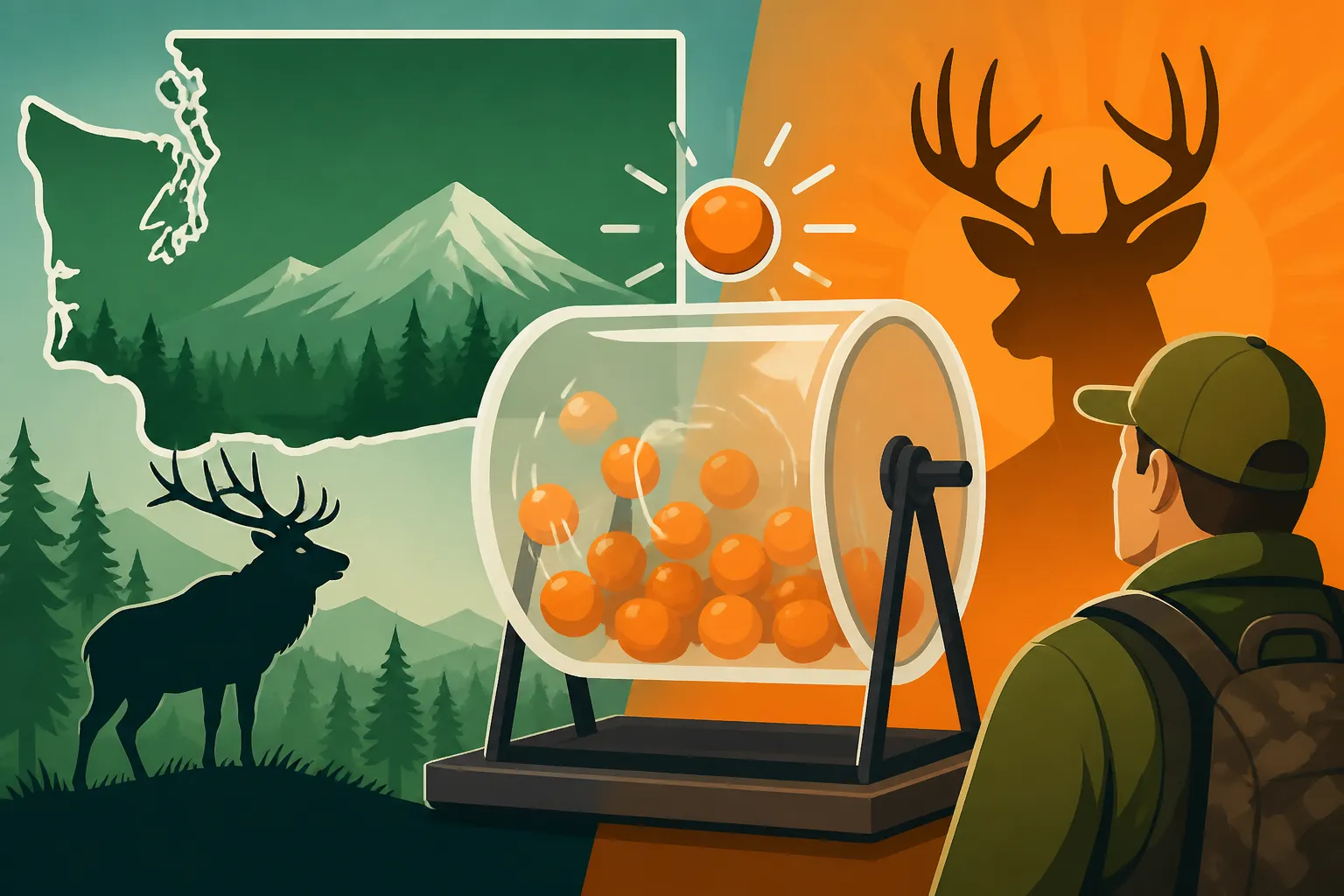
Why Washington Uses a Random Draw
It's incredibly frustrating, isn't it? You spend hours poring over the Washington Fish and Wildlife Department's (WDFW) hunting regulations, dreaming of that special permit, only to find out you've struck out yet again in the random draw. It can feel like an unfair gamble, especially when you hear about other states offering preference points. This guide is going to pull back the curtain on why Washington uses a random draw, explain how it actually works, and offer some real-world strategies to help you navigate this unique system and improve your chances of punching that coveted tag.
The Philosophy Behind Washington's Random Draw
Many hunters in Washington feel the sting of applying year after year, only to come up empty in the special permit draw. It's easy to get discouraged and wonder why WDFW doesn't just use a preference point system like so many other Western states. That feeling of "what's the point?" after a decade of applying for a specific quality elk tag, only to see a newcomer draw it, is a valid one. However, the core idea behind Washington's pure random draw is actually rooted in a principle of equal opportunity for every hunter.
Fairness and Equal Opportunity for Every Hunter
The most significant philosophical underpinning of Washington's random draw is that every applicant, whether it's their first time applying or their thirtieth, theoretically has the same chance in the annual draw. This means you don't build up points that increase your odds over time. While this can feel disheartening when you're consistently striking out, it also means that a new hunter, or someone just starting to apply for a coveted unit, has the exact same mathematical probability of drawing that dream tag as a seasoned veteran who has been putting in for years. It removes the often excruciatingly long wait times that can plague preference point systems, where some tags might take decades to draw.
Think of it like a genuine lottery for every single hunt choice. You buy your ticket (submit your application), and it goes into the hat with everyone else's. There are no bonus tickets for previous years' participation, no "veteran status" that gives you a leg up. For a young hunter just getting into the sport, or someone who recently moved to Washington, this can be incredibly appealing, as it gives them immediate access to potentially high-quality hunts without a multi-year waiting period. It truly levels the playing field, in a way.
This approach is designed to give everyone a shot at a great hunt, rather than solely rewarding longevity within the system. It fosters a sense that any given year could be your year, regardless of how many times you've applied previously. While it might not feel fair when you've invested years, it’s intentionally built to ensure that the opportunity is refreshed annually for all. To get started, make sure you understand the basics of the "Washington Special Hunt Permits and How to Apply" process.
Managing Demand for Limited Resources
Washington's big game populations, especially for species like moose, bighorn sheep, mountain goat, and even quality deer and elk, are carefully managed to ensure healthy herds and sustainable hunting opportunities. This often means there are far more hunters interested in specific units or species than there are available tags. A random draw is a straightforward and administratively simple mechanism to allocate these highly limited resources. It avoids the complexities of tracking a massive points system over generations of hunters.
If WDFW were to implement a preference point system, it would create an immediate backlog of demand. Hunters would start accumulating points, knowing it might take 10, 15, or even 20 years to draw a specific quality elk tag. This would artificially inflate demand and lead to an even longer wait for tags, essentially pushing many hunters out of the opportunity for a significant portion of their hunting career. The random draw, while sometimes frustrating in its unpredictability, keeps the system from getting completely clogged with a mountain of accumulated points. It ensures that the current pool of applicants has a reasonable chance, even if that chance is small for certain coveted tags.
Furthermore, a pure random draw simplifies the administrative burden for the state wildlife agency. A system that doesn't need to track individual preference points for hundreds of thousands of applicants over decades is inherently less complex to manage. While modern technology certainly makes tracking easier, the WDFW has clearly prioritized a system that is transparent in its randomness and doesn't require intricate algorithms to manage point values, point transfers, or tie-breaking procedures. This keeps the focus on providing current hunting opportunities rather than managing a vast historical database of applicants. This system is why "Washington's Random Draw and No Preference Points" is a core tenet of our state's hunting regulations.
How Washington's Random Draw Works in Practice
Understanding the "why" is one thing, but knowing the "how" can help you strategize within the system. Washington's special permit draw operates on a relatively simple, though often opaque, set of rules once you get past the application stage.
The Application Process and Hunt Choices
When you apply for a Washington special permit, you typically get to list up to four hunt choices. This is where strategic thinking starts to come into play. You're essentially telling WDFW, "Here are my top four dream hunts, in order of preference." Many hunters tend to put their absolute dream hunt in the first slot, even if the odds are abysmal, because, well, you never know when luck might strike. This is your chance at that truly unique opportunity.
The WDFW system then processes these choices sequentially. It attempts to draw your first choice. If you're successful, congratulations! Your journey for that species ends there. If not, the system moves on to your second choice, then your third, and so on. This continues until you're either drawn for one of your choices or you're unsuccessful for all of them. Unlike some states where drawing your second choice might burn your points just like a first choice, in Washington's random draw, each choice is essentially a separate chance to be drawn, with no penalty to future years if you strike out. The key is that once you do draw, your application for that species is fulfilled for the year.
It's crucially important to remember that once you're drawn for any of your choices, your application process ends for that species for the year. You can't be drawn for a lower preference choice after being successful on a higher one. This means your choices truly matter, and thinking through them, considering both your wildest dream hunts and more realistic, higher-odds options, is paramount. This multi-choice option is a unique aspect of "How to Apply for a Washington Special Hunt Permit" and allows for some clever planning. You really need to consider all "Four Hunt Choices on a Washington Application" carefully before submitting.
Understanding Draw Mechanics and Odds
The WDFW draw uses a computerized random number generator, just like a state lottery. Imagine every single eligible application for a specific hunt choice being assigned a unique number. Then, the computer randomly selects numbers until all available tags for that hunt choice are allocated. This process is repeated for each hunt choice, working its way down the preference list for all applicants. It's a true roll of the dice, with the computer blindly picking winners.
Because it's a pure random draw, previous application history doesn't factor into your current odds. This is the biggest difference from preference or bonus point systems. Every year, you start fresh, with the same "weight" as everyone else's application. While this can feel like a disadvantage for long-time applicants who feel they've "earned" a tag, it also keeps the door open for everyone, every single year. Tools like GoHunt's historical draw odds data, along with WDFW's own harvest reports, can be incredibly valuable here. They allow you to research success rates from previous years, helping you make more informed decisions about which units to apply for. This kind of data can illuminate the true competition you face.
The actual odds for each hunt choice are a simple calculation: total tags available divided by the total number of applicants for that specific choice. These numbers can vary wildly. A highly sought-after permit for a trophy bull elk in a premier unit like the Blue Mountains might have odds in the hundreds or even thousands to one, while a general antlerless permit in a less popular unit might be almost a sure thing. Understanding these odds, as detailed in resources like "Washington Draw Odds for Quality Elk", is essential to managing expectations and making strategic choices when you're filling out your application online in your WILD account, hoping for positive news from "Washington Special Permit Results in Your WILD Account".
Washington's Approach Compared to Point Systems
When hunters discuss frustration with Washington's random draw, the conversation almost always turns to comparing it with states that utilize point systems. It's important to understand the distinctions to fully grasp Washington's chosen path.
The Preference Point Model
Many hunters who express frustration with Washington's random draw often point to preference point systems used in states like Wyoming, Colorado, or Nevada. In these systems, for every year you apply unsuccessfully, you accumulate a point. When you apply again, you add those points to your current application, effectively increasing your chances of drawing a tag. The more points you have, the better your odds become. It's a system designed to reward persistence.
The major benefit of preference points is predictability. If you consistently apply, year after year, you can generally estimate how many years it will take you to draw a highly desired tag. This allows hunters to plan their "big hunts" years in advance, budget for them, and prepare specifically for the terrain and challenges of that long-awaited unit. It feels like a clear progression, rewarding loyalty and dedication to the application process. For many, this structured path provides a sense of control and future planning that the random draw lacks.
However, preference point systems aren't without their downsides. They can create a phenomenon known as "point creep," where the number of points required to draw a coveted tag steadily increases each year. This means the estimated wait time for a given tag can stretch out indefinitely, pushing that "once-in-a-lifetime" hunt further and further into the future. New hunters, or those just starting to apply in a point state, face a daunting prospect of waiting many, many years to even have a competitive chance at desirable tags. It also discourages applying for "filler" hunts, as you usually want to save your precious points for the best opportunities, meaning fewer hunting trips overall. This is a stark contrast to Washington's system, where we have no such thing as "Does Washington Have Preference Points?".
Bonus Point and Hybrid Systems
Beyond simple preference points, some states employ "bonus point" systems. In a bonus point system, each point you accumulate gives you an additional "entry" into the draw, rather than directly increasing your rank. So, if you have 5 bonus points, your name theoretically goes into the hat 6 times (your application plus 5 additional entries), significantly increasing your odds compared to someone with no points. This is still a random draw at its core, but one where your history gives you a multiplier, making your chances better each year. It still retains an element of chance but heavily skews it towards those with more points.
Other states use hybrid systems, cleverly combining elements of both. For example, a certain percentage of tags might be allocated purely via a random draw, ensuring some immediate opportunity, while another percentage is set aside for the highest point holders, rewarding those who have patiently accumulated points over time. This attempts to balance the needs and desires of new applicants with the desires of long-time participants who have invested years into the system. It seeks to offer the best of both worlds, creating a more dynamic and, arguably, fairer distribution of limited tags.
Washington has consciously opted out of these more complex systems, sticking to its pure random draw. This decision streamlines the process, keeping the application process, the draw, and the release of "Washington Special Permit Results in Your WILD Account" relatively quick and straightforward. While a bonus point system might seem more "fair" to some due to the increased odds for persistence, it still introduces layers of complexity that WDFW has chosen to avoid, preferring simplicity and immediate equal opportunity for all. This is the heart of "Washington's Random Draw and No Preference Points" as a policy.
| System Feature | Washington (Random Draw) | Preference Point System (e.g., Colorado) |
|---|---|---|
| Fairness Principle | Equal chance for all, every year | Rewards longevity and persistence |
| Predictability | Low, purely luck-based | High, can estimate wait times |
| Application Cost | Application fee + license | Application fee + license + point fee (often) |
| New Hunter Access | Immediate, same odds as veterans | Often requires long waits for desirable tags |
| Complexity | Simple to understand and administer | More complex, requires point tracking |
| Point Creep | Not applicable | Common issue, extending wait times |
Strategies for Navigating Washington's Special Permit Draw
Even though Washington uses a random draw, smart research and application strategies can absolutely improve your chances of punching a tag. Don't just pick units based on a whim or a rumor; arm yourself with knowledge.
Researching Units and Understanding Odds
Even without preference points, intelligent research is your most powerful tool in the Washington draw. Don't just pick units based on a whim or a rumor; you need to dig into the WDFW hunting prospects and harvest reports. These documents provide invaluable, publicly available data on success rates, hunter numbers, and tag allocations for various Game Management Units (GMUs). They show you, year over year, how many people applied for a particular tag and how many tags were issued. This data is the closest you'll get to understanding your odds.
Tools like GoHunt's insider information or similar online resources can become your best friend here. They often compile historical draw odds, harvest statistics, and even map overlays that show public land boundaries, road systems, and wilderness areas, helping you visualize the hunting opportunities. Knowing that a specific unit might have 10 tags for 500 applicants (1 in 50 odds) versus another with 5 tags for 5,000 applicants (1 in 1,000 odds) is critical for strategic application. This kind of platform can help you with "E-Scouting a Washington GMU From Home" and provides detailed insights into various units.
Consider not just the raw draw numbers but also the type of hunt. Is it a general season tag with potentially high hunter pressure, or a limited-entry special permit for a specific GMU? Are you looking for a branch-antlered bull, or is a spike-only tag acceptable? Are you targeting elk or deer in a particular region? The more specific you get with your research, the better you can tailor your four choices to align with realistic expectations and your personal hunting goals. Understanding "Washington Game Management Units Explained" is paramount here, as each unit can offer vastly different experiences and opportunities.
Crafting a Smart Application Strategy
With four hunt choices available, you have an opportunity to craft a truly strategic application, rather than just throwing darts at a map. A common strategy, especially for highly desired elk or quality deer hunts, is to put your "dream hunt" as your first choice, even if the odds are long. This is your lottery ticket for that truly once-in-a-lifetime opportunity. It's okay to swing for the fences with your first choice, but then for your subsequent choices, consider hunts with progressively better odds to increase your chances of drawing any tag.
Your second and third choices could be for units or seasons that are still appealing but have slightly more achievable draw odds. This might mean looking at a less popular GMU that still holds good animals, considering a different weapon type if you're proficient with multiple, like a "Choosing Archery Over Modern Firearm" hunt, or perhaps opting for a spike-only elk tag instead of a branch-antlered one. The goal here is to maximize your chances of drawing any tag and getting into the field, not just your top pick. This balance is key to staying engaged and active in Washington's diverse hunting landscape.
Your fourth choice should ideally be a hunt with very high draw odds, almost a guaranteed tag if your primary goal is simply to hunt a specific species that year. This might be an antlerless permit in a high-population area or a general season hunt that has historically high success in the draw. It acts as a safety net, ensuring you get something for your efforts. Remember to pay close attention to the "Washington Special Hunt Application Deadline" and ensure all your choices are entered correctly. Additionally, exploring options like "Washington Multi-Season Deer and Elk Tags" can offer even more opportunities within the random draw system.
Persistence and Continuous Learning
The most important strategy in a random draw system is, without a doubt, persistence. It's incredibly easy to get discouraged after several unsuccessful years, but remember, every year is a new, fresh chance. Many hunters give up, thinking it's impossible, but those who consistently keep applying eventually hit the jackpot. Your odds don't improve each year, but the cumulative effect of playing the lottery means you'll eventually win if you keep playing. Think of it as a long-term investment in your hunting future.
Beyond just applying, continuously learn and adapt your strategy. Read the annual "Washington Big Game Pamphlet Release" as soon as it comes out, typically in late spring. This is your bible for understanding any rule changes, new GMU boundaries, or emerging opportunities. Pay attention to harvest reports and population trends—maybe a unit that was previously poor is now seeing an increase in game numbers, making its tags more desirable. Staying informed is half the battle.
Don't limit yourself to just one species or one type of tag. If drawing a quality elk tag feels perennially out of reach, consider expanding your applications to black bear, cougar, or even specific deer hunts. Washington offers a wide array of hunting opportunities, and exploring these other options can significantly increase your overall success in drawing a tag, keeping you engaged and passionate about hunting in Washington. Checking out "Washington Bear and Cougar Seasons" is a great way to explore these diverse options, and always remember your "Washington Harvest Reporting Requirements" for any tags you do fill.
Disclaimer
The information provided in this article is for general guidance and informational purposes only. Hunting regulations and seasons in Washington are subject to change. Always consult the official Washington Department of Fish and Wildlife (WDFW) regulations pamphlet, website, and any emergency rule changes before planning and engaging in any hunting activity. It is the hunter's responsibility to know and follow all applicable laws and regulations.