Bear and Cougar Tags in the Washington Combo
Navigating Washington's hunting regulations can feel like trying to untangle a knot of fishing line after a long day on the water – complicated, frustrating, and sometimes you just want to cut it all loose. Many hunters dream of adding bears or cougars to their annual pursuits, but wonder if it means buying a separate license for every single species. This guide is here to simplify that process, explaining how the Washington Big Game Combination license often bundles these predator tags right into your general big game purchase, making it easier than you think to expand your hunting horizons.
Understanding the Washington Big Game Combination License
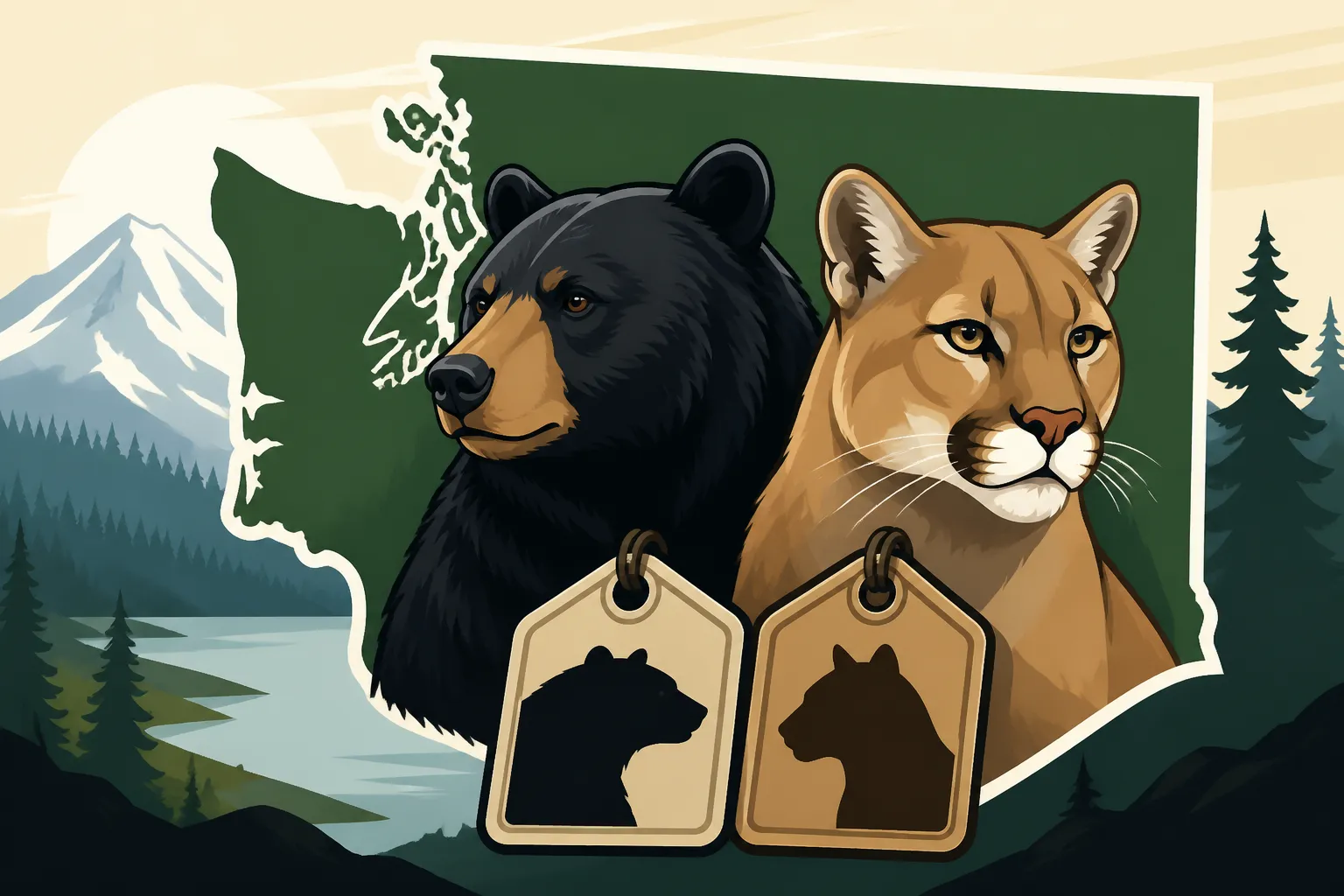
The Washington Department of Fish and Wildlife (WDFW) offers a few different licensing options, and for most big game hunters, the Big Game Combination license is the bread and butter. It’s designed to be a one-stop shop, covering your general deer and elk tags, and crucially, often includes tags for both black bear and cougar. This is a huge relief for hunters who don't want to track multiple purchases or worry about missing out on an opportunity because they didn't buy a separate tag beforehand.
What the Combo License Includes
When you purchase a Washington Big Game Combination license, you're not just getting your general season deer and elk tags. You’re also typically set up with a black bear tag and a cougar tag. This means that if you're out chasing a bull elk in the Blue Mountains or still-hunting blacktails in coastal timber, and a legal bear or cougar presents itself, you're already licensed and ready to go. It's a fantastic value and encourages opportunistic hunting, which is a big part of predator management in the state. Remember, while the combo license covers the tags themselves, you still need to adhere to all specific season dates, bag limits, and reporting requirements for each species. It’s not a free-for-all, but it certainly streamlines the licensing process. This comprehensive approach is part of why understanding the Washington Big Game Licence and Tag Costs is so important for planning your season.
Who Benefits Most from the Combo
This license option is a game-changer for several types of hunters. First, for those who primarily hunt deer or elk but are open to taking a predator if the chance arises, it’s perfect. You don't have to make a separate purchase or a dedicated hunt plan just for bear or cougar. Second, it's highly beneficial for hunters who want to actively pursue multiple species within their general season. If you're planning a trip where you might be Spot-and-Stalk Bear Hunting in Washington Without Bait, but also want to keep an eye out for elk, the combo license ensures you're covered for both. Lastly, it’s a cost-effective choice. Buying separate tags for each species would often be more expensive than the combined package, especially for residents. Non-residents also find great value in the combo, as it simplifies their hunting endeavors across multiple species in Washington. Tools like GoHunt can be incredibly helpful for planning these multi-species hunts, overlaying season dates and unit boundaries to help you maximize your combo license.
Specifics of Bear Tags in the Combo
Washington's black bear season is a popular time for many hunters. These animals offer a challenging hunt and provide excellent meat. When you have the combo license, your bear tag is active during the general bear season dates, which usually open in early August in some units and run through November, depending on the Game Management Unit (GMU) and specific regulations.
Season Dates and Bag Limits
Washington's black bear seasons vary significantly across the state, with different opening and closing dates depending on the specific GMU. Generally, the seasons open earliest in Western Washington, often in early August, and later in Eastern Washington. Most seasons run into November, though some may close earlier. The bag limit for black bear in Washington is typically one bear per hunter per license year. It’s critical to consult the most current WDFW Big Game Hunting Seasons and Regulations pamphlet for the exact dates and unit-specific rules before you head out. These regulations also include important details like legal hunting hours and acceptable methods of take. Missing these details can quickly turn an exciting hunt into a costly mistake.
Why Washington Has No Spring Bear
Many hunters from other states are surprised to learn that Washington does not have a spring bear season, and this is a common point of discussion and frustration. The absence of a spring bear hunt is primarily a management decision aimed at protecting breeding sows and ensuring cub survival. In the spring, sows often emerge from their dens with new cubs, and it's challenging to differentiate between male and female bears, or a sow with cubs, when they are covered in thick hair or at a distance. To minimize the risk of accidentally harvesting a sow with dependent cubs, the WDFW focuses bear hunting pressure on the fall seasons. This policy helps maintain healthy bear populations and aligns with conservative wildlife management principles. Therefore, when planning your bear hunt with your combo tag, focus entirely on the fall opportunities. For deeper insights into bear behavior and habits in late summer and early fall, understanding Where Bears Feed in Early Fall can be invaluable.
Planning Your Bear Hunt with the Combo
With your combo license in hand, planning your bear hunt involves focusing on fall seasons and bear foraging behavior. Black bears are highly opportunistic feeders, and their movements are largely dictated by the availability of food. In early fall, they often concentrate on berry patches, such as huckleberries or blackberries, and then shift to hard mast like acorns as the season progresses. Areas with recent clearcuts, riparian zones, and avalanche chutes can be prime locations. Using tools like GoHunt can help you identify public land access, timber company roads, and even scout for these food sources using satellite imagery before you ever step foot in the woods. Remember to prioritize safety: always carry bear spray, make noise in thick cover, and be aware of your surroundings, especially in dense habitat where bears may be feeding.
Specifics of Cougar Tags in the Combo
Cougar hunting in Washington presents a unique challenge and opportunity. These elusive predators are spread across much of the state, and your combo license includes a tag to pursue them. However, cougar hunting comes with its own set of distinct regulations, particularly regarding harvest guidelines.
Season Length and Harvest Guidelines
Washington's cougar season typically runs from September 1st through December 31st as a general season, with a secondary season that can extend into spring (January 1st through April 30th) if harvest guidelines aren't met in specific GMUs. This is where things get a bit more complex. Unlike deer, elk, or bear, cougar harvest is managed by specific guidelines for each GMU, rather than strict bag limits. Once a certain number of cougars (the harvest guideline) are reported taken in a particular GMU, that unit may close early. This means you need to constantly check the WDFW's website or calling hotline for real-time cougar harvest numbers and potential closures. For instance, the Washington Cougar Season and Harvest Guidelines section of the WDFW website is a must-bookmark for any cougar hunter. Failing to check these updates could lead to unknowingly hunting in a closed unit, which carries serious penalties. The bag limit for cougars is one per license year, but the fluctuating season length due to guidelines makes it a dynamic hunt.
Calling and Tracking Strategies
Since the use of hounds for cougar hunting is prohibited in Washington (a direct result of Cougar Hunting in Washington After the Hound Ban), hunters must rely on alternative strategies. Calling, particularly with fawn distress calls or other predator calls, can be highly effective. Finding a good vantage point overlooking likely cougar travel corridors, dense bedding areas, or areas with high deer/elk populations can pay off. Still-hunting through prime cougar habitat, particularly after a fresh snow, can also be successful. Reading Cougar Sign in the Snow can give you an incredible advantage, allowing you to follow tracks to a kill site or bedding area. When calling, position yourself with good cover and a clear shot lane, and be prepared for a quick, close encounter. Patience is paramount, as cougars are notoriously cautious.
Reporting Requirements for Cougars
This is arguably the most critical aspect of cougar hunting in Washington. Due to the GMU-specific harvest guidelines, every cougar harvest must be reported to the WDFW within 48 hours of kill. This isn't just a suggestion; it's a mandatory requirement. You'll need to report the harvest online or by phone. Additionally, the entire cougar carcass (excluding internal organs) must be presented to a WDFW representative within five days of harvest for inspection and tagging. This inspection often involves pulling a tooth for age analysis and may include collecting tissue samples for disease monitoring. This strict reporting protocol is essential for WDFW to manage cougar populations effectively and determine when individual GMUs need to close to prevent overharvest. Always confirm the current Washington Harvest Reporting Requirements to ensure compliance.
Here's a quick reference table for bear and cougar tags under the Washington Big Game Combination license:
| Feature | Black Bear | Cougar |
|---|---|---|
| Included in Combo? | Yes | Yes |
| General Season Dates | Aug-Nov (varies by GMU) | Sept 1 – Dec 31 (primary), Jan 1 – Apr 30 (secondary) |
| Bag Limit | One bear per hunter per license year | One cougar per hunter per license year |
| Spring Season | No spring bear season | Secondary season possible if harvest guidelines not met |
| Harvest Guidelines | No specific GMU harvest guideline closures | Yes, GMU-specific harvest guidelines trigger early closures |
| Mandatory Reporting | Yes, general big game harvest reporting deadline | Required within 48 hours of kill |
| Mandatory Inspection | No | Required within 5 days of kill (carcass presented) |
| Hound Hunting | Prohibited | Prohibited |
| Baiting | Prohibited | Prohibited |
Maximizing Your Combo License for Predators
Having both bear and cougar tags included in your big game combo license opens up a world of possibilities, but it also means being prepared and strategic. It's about being opportunistic while staying legal and ethical.
Scouting for Multiple Species
One of the greatest advantages of the combo license is the ability to scout for multiple species simultaneously. When you’re out looking for deer or elk sign, keep an eye out for bear scat, rubbed trees, or cougar tracks. These predators often frequent the same areas as their prey. For instance, areas with dense timber and water sources that attract deer will also likely hold cougars. Early season scouting for Using Trail Cameras to Find Washington Bulls can also provide valuable intelligence on bear activity. Black bears will often be found near abundant food sources, while cougars will be wherever their primary prey, like deer and elk, are concentrated. Utilize mapping apps like GoHunt to mark potential hot spots for all three species during your scouting trips. This way, you're not just scouting for one animal; you're building a multi-faceted understanding of your chosen GMU.
Ethical Hunting and Conservation
When pursuing any animal, especially predators, ethical hunting practices and a strong commitment to conservation are paramount. This includes proper shot placement to ensure a quick, humane kill, knowing your target and what's beyond it, and understanding the role predators play in the ecosystem. Washington's cougar management, with its dynamic harvest guidelines, is a direct reflection of a data-driven approach to conservation. By following all reporting requirements and understanding the rationale behind the regulations, hunters become vital partners in wildlife management. This also extends to proper meat care and salvage. While bear and cougar meat are often overlooked, they are excellent table fare when properly handled. Learning Field Dressing in Warm Early-Season Weather for your deer or elk can also apply to bears, ensuring the meat stays cool and clean. Remember, your participation in these hunts contributes directly to conservation efforts through license fees and data collection, reinforcing the notion that hunters are indeed conservationists.
Disclaimer
The information provided in this article is for general guidance only and is not a substitute for the official Washington Department of Fish and Wildlife (WDFW) hunting regulations. Hunters are responsible for knowing and adhering to all current regulations, season dates, bag limits, and reporting requirements. Always consult the most recent WDFW Big Game Hunting Seasons and Regulations pamphlet or the WDFW website before planning and executing any hunt. Regulations can change annually, and staying informed is crucial for a legal and successful hunt.