Cougar Hunting in Washington After the Hound Ban
For many Washington hunters, the thought of pursuing cougars without the aid of hounds feels like navigating a dense forest blindfolded. The ban on hound hunting, brought about by Initiative 655 decades ago, fundamentally reshaped what it means to chase these elusive predators in our state. This guide aims to shed light on realistic, ethical, and effective strategies for hunting cougars in Washington, focusing on the methods available to us today and helping you understand the immense challenge and unique rewards of such a pursuit.
Understanding Washington's Cougar Hunting Regulations
Let's face it, trying to keep up with hunting regulations in Washington can feel like a full-time job. With changes happening, it’s crucial to understand the rules of the game, especially when it comes to cougars, where the rules were so drastically altered years ago.
The Impact of Initiative 655
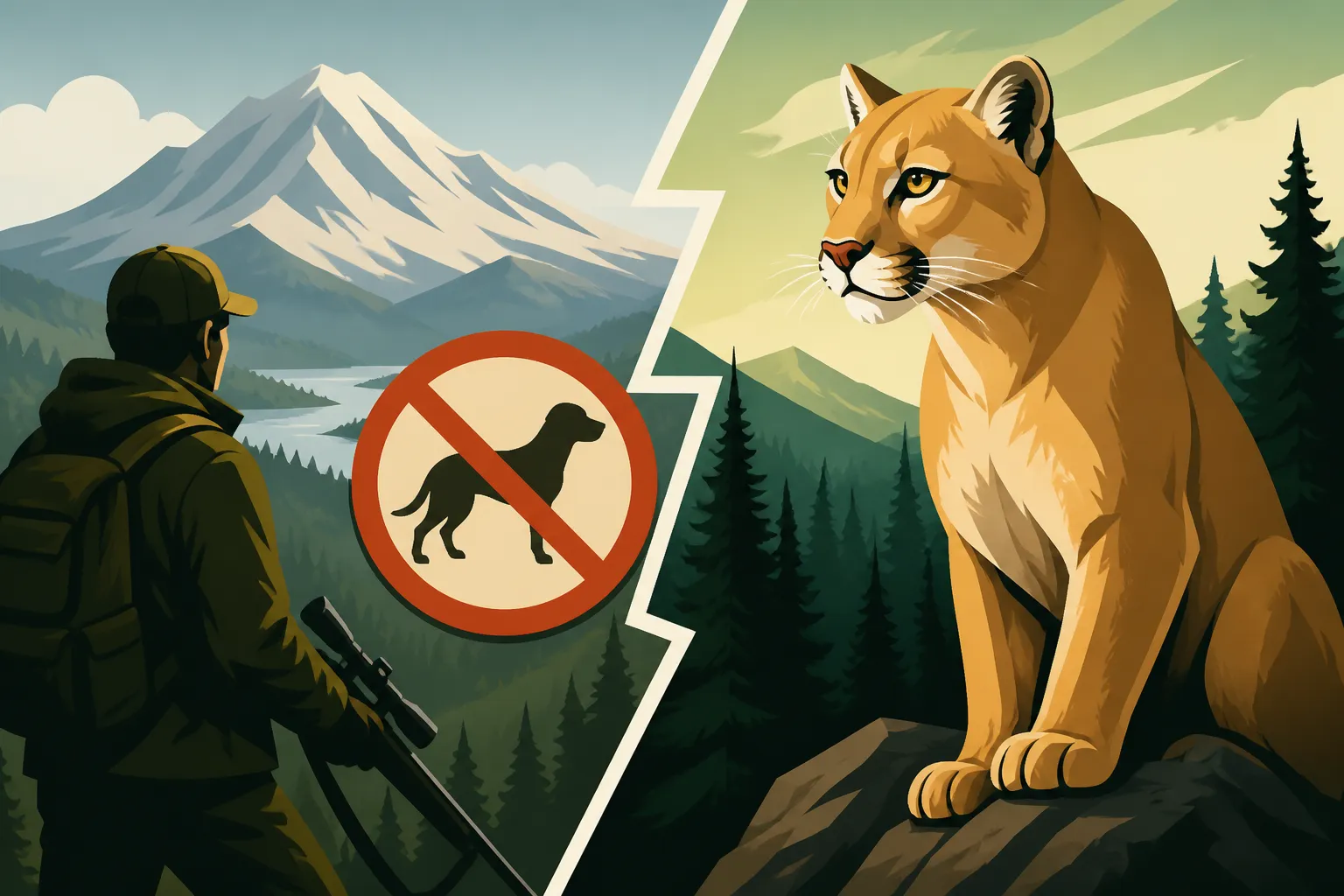
Back in 1996, Washington voters passed Initiative 655, a move that fundamentally changed the landscape of cougar hunting in our state. The most significant aspect of this initiative was the statewide ban on using hounds to pursue cougars. Prior to this, hound hunting was a primary method, relying on specially trained dogs to track and tree cougars, allowing hunters to then approach for a shot. The ban meant that traditional methods, ingrained in hunting culture for generations, were suddenly off-limits. This shift forced hunters to adapt dramatically, moving from a pursuit aided by canine senses to one relying entirely on human tracking, woodsmanship, and sheer persistence. It wasn't just a rule change; it was a complete paradigm shift for anyone interested in cougar hunting. If you're curious about the specifics of what was outlawed, you can learn more about What I-655 Banned for Cougar Hunters.
The reasoning behind the ban was complex, driven by public perception and concerns about fair chase and animal welfare. Regardless of one's personal stance on the issue, the reality for Washington hunters is that cougar hunting became an infinitely more challenging endeavor overnight. It placed cougars firmly in the category of big game species that must be tracked, called, or spotted and stalked, much like deer or elk, but with an animal that is notoriously secretive and difficult to find. This historical context is vital because it explains why our approach to cougar hunting in Washington is so different from many other states that still permit the use of hounds.
Current Season Dates and Harvest Guidelines
Washington's cougar seasons are designed with a careful balance in mind, aiming to manage populations while providing hunting opportunities. Typically, the general season runs for an extended period, often from September 1st through the end of the following March, sometimes even extending into April, depending on the specific Game Management Unit (GMU) and statewide harvest guidelines. However, these dates are never set in stone, and it is absolutely imperative to check the most current WDFW Hunting Regulations pamphlet each year. Changes in population estimates, previous harvest numbers, and public input can all influence season lengths and specific unit closures.
What makes Washington's cougar season particularly dynamic are the "harvest guidelines." Unlike many other species with fixed bag limits, cougar management in Washington often utilizes a harvest quota system for specific GMUs or regions. This means that a season in a particular area can be closed early if a predetermined number of cougars have been harvested. Imagine spending weeks scouting, finally getting a solid lead, only to find out the season closed yesterday because enough cougars were taken. It's a real frustration many hunters face. This dynamic closure system necessitates staying incredibly vigilant. The WDFW website typically has a dedicated "cougar harvest statistics" page or similar portal where they update harvest numbers in near real-time, allowing hunters to track progress toward quotas. For more detailed information on current seasons and guidelines, you should check the official WDFW site for Washington Cougar Season and Harvest Guidelines right before you head out.
Legal Equipment and Reporting Requirements
Just like any other big game species, cougar hunting in Washington comes with specific legal equipment requirements. For firearms, you're generally looking at centerfire rifles of at least .24 caliber, shotguns using slugs or buckshot, or muzzleloaders of .45 caliber or larger. Archery hunters must use bows with a minimum draw weight and broadheads that meet specific width and sharpness criteria. One unique aspect for cougars is the allowance of .22 centerfire rifles, which are typically prohibited for other big game animals in Washington. This exception recognizes the often-close range nature of calling setups and the smaller body size of cougars compared to elk or deer. However, it’s critical to confirm all these specifics in the current regulations, as rules can and do change. For a comprehensive overview of general rules, check out Washington's Legal Equipment Rules by Weapon.
Beyond the weapon itself, there are also rules around things like electronic calls – they are generally legal for cougars, unlike for some other species. The use of artificial lights to locate or shoot cougars is strictly prohibited, as is the use of bait. These regulations are designed to ensure fair chase and reflect the spirit of hunting without hounds. Once you are successful, the reporting requirements are non-negotiable and extremely important for wildlife management. Every harvested cougar must be presented to WDFW for inspection within a specified timeframe, usually within a few days of harvest. This involves checking the carcass, pulling a tooth for aging, and sometimes inspecting the stomach contents. Failing to report a harvest or not presenting it correctly can result in fines or loss of hunting privileges. It’s not just a bureaucratic hoop; it’s how WDFW gathers vital data to manage the cougar population effectively. Always carry your tag, proper identification, and be ready to follow all reporting protocols to the letter.
Essential Cougar Biology and Behavior for Washington Hunters
To have any hope of consistently hunting cougars without the aid of dogs, you absolutely have to understand these animals from the ground up. They are incredibly intelligent, adaptable, and masters of stealth.
Cougar Territories and Movement Patterns
Cougars are solitary creatures, and their lives revolve around vast territories they patrol. A male cougar might have a home range of 50 to 150 square miles, sometimes even larger in less productive habitats, while a female's territory is typically smaller, perhaps 20 to 60 square miles, often overlapping with several males. Understanding these home ranges is crucial because it tells you that a specific set of tracks might belong to "your" cat, and it will likely be back through that area again. These ranges aren't just random spaces; they're defined by available prey, water sources, and denning sites. Cougars are constantly moving within these boundaries, often traveling several miles in a single night as they hunt. They'll typically use ridge lines, game trails, old logging roads, and creek bottoms as their highways, which are key areas for you to focus your efforts.
Their movement is highly dictated by prey availability. If deer or elk herds move to winter range, the cougars will often follow. This means your scouting efforts for deer and elk can directly inform your cougar hunting. They are most active during crepuscular hours – dawn and dusk – but can and do hunt at any time, especially if prey is scarce. Understanding the intricate details of Cougar Territory and Movement is paramount. They’re not going to be sitting out in an open field waiting for you; they’ll be moving through dense cover, along the edges of clearcuts, or through thick timber, using topography and vegetation to their advantage. Their exceptional ability to remain unseen, even in relatively open country, is why still-hunting and careful observation are so critical.
Diet, Prey Selection, and Kill Habits
Cougars are apex predators, and their diet primarily consists of ungulates – deer, elk, and moose where available. In Washington, blacktail deer and mule deer are primary food sources, with elk also featuring prominently, especially where herds are concentrated. They are opportunistic hunters, though, and will take smaller prey like rabbits, raccoons, and even domestic livestock if the opportunity arises. This is important for hunters because it tells you where to look for them: wherever their primary food source is. A strong deer population in a GMU usually means a healthy cougar population. Interestingly, cougars are known to cache their kills. After making a kill, often by ambushing and delivering a powerful bite to the neck or spine, they’ll drag the carcass to a secluded spot and cover it with leaves, dirt, and debris. They'll return to this kill over several days, feeding on it until it's consumed or spoiled.
Finding a cached kill is like striking gold for a cougar hunter. These caches, often recognizable by tracks around them and the tell-tale covering, are prime locations for an ambush. However, approaching a fresh kill site must be done with extreme caution. A cougar defending its food can be a dangerous animal. Identifying a cougar kill versus a wolf or bear kill is also a valuable skill. Cougars tend to cover their kills more meticulously than bears, and their feeding patterns on the carcass are distinct. Bears will often tear into the chest cavity, while cougars are more precise, often starting at the hindquarters. Understanding their impact on prey species can also help. WDFW continually monitors Cougar Predation on Washington Deer Herds to understand ecosystem health. By studying these habits, hunters gain insight into the cougar's daily life, which is essential for predicting where they might be.
Reading Cougar Sign in the Snow and Other Substrates
Without hounds to do the tracking, your eyes become your most valuable tool. Learning to read cougar sign is an art form, and it's the closest thing we have to a roadmap in their world. Tracks are the most obvious sign, but they tell a story far beyond just "a cougar was here." Look for a cat track's distinctive characteristics: no claw marks (unless in a very fast sprint or on ice), four toes, and a large, usually asymmetrical heel pad with three lobes at the rear. Compare this to a canine track, which typically shows claw marks and a more symmetrical heel pad. In fresh snow, you might even be able to tell the direction of travel and get a sense of the cat's stride and pace. Snow is often the best medium for tracking, but cougars leave sign on bare ground too, in soft dirt, mud, or even dust.
Beyond tracks, look for "scrapes" – small piles of dirt, leaves, or needles that cougars create by scraping their hind feet backward, often containing urine or scat. These are territorial markers, like a billboard saying, "I'm here!" These scrapes are often found along ridge lines, game trails, or prominent features within their territory. You might also find kill sites, as mentioned before, identified by disturbed ground, dragged carcasses, and the cached remains. Look for hair on branches, claw marks on trees (especially small cedars used for stretching), and scat. Cougar scat is typically segmented, often contains hair and bone fragments of their prey, and can vary in size. The fresher the sign, the warmer the trail. Learning Finding Cougar Tracks Without Hounds and Reading Cougar Sign in the Snow are skills that take years to hone, but they are absolutely non-negotiable for success in Washington. Every piece of sign is a breadcrumb leading you closer to your quarry.
Strategies for Hunting Cougars Without Hounds
Hunting cougars in Washington is a chess match against one of the most skilled predators on the continent. Without hounds, it truly becomes a test of your woodsmanship and patience.
Still-Hunting and Tracking Techniques
Still-hunting is perhaps the most difficult and rewarding method for pursuing cougars in Washington. It's a slow, methodical walk through likely cougar habitat, moving maybe 50 yards in an hour, pausing frequently to scan, listen, and simply observe. You're not looking for the whole cat, but rather a flicker of movement, an unnatural shape, or an ear twitch in the dense undergrowth. This technique requires immense patience and an understanding of how cougars use the terrain. Focus on areas with good cover, transition zones between timber and clearcuts, and ridges that provide good vantage points or travel corridors. The goal is to move so slowly and deliberately that you might catch a cougar unaware before it catches you.
Tracking, on the other hand, is about following fresh sign, primarily tracks, often in snow or soft dirt. This isn't just about putting one foot in front of the other; it’s about interpreting the story the tracks tell. Is the cougar moving fast or slow? Is it feeding or traveling? Where is it headed? A hot track, ideally less than 12 hours old, is your best bet. When tracking, you need to stay alert and ready for a shot at all times, as the cougar could be bedded just ahead. One popular technique for tracking in fresh snow is to have one person follow the tracks while another, positioned slightly to the side and ahead, glassing likely bedding areas or escape routes. This can prevent walking directly into a bedded cat that then silently slips away. Still-hunting and tracking are intrinsically linked, often morphing from one to the other as conditions or sign dictate.
Predator Calling for Cougars
Predator calling for cougars is an exciting and often effective method, capitalizing on the cougar's predatory instincts. The most common calls used imitate distressed prey animals, such as a fawn distress, rabbit distress, or even bird distress calls. The idea is to sound like an easy meal. Electronic calls are legal for cougars in Washington and can be very effective due to their ability to produce realistic and sustained sounds. Brands like Foxpro and Lucky Duck offer calls with specific cougar sounds, as well as a variety of distress calls. When setting up a call, think about wind direction – you want the scent to blow away from your calling setup and not directly into the area you expect the cougar to approach from. Also, consider concealment; cougars have incredible eyesight.
Set up with a good backdrop, broken by vegetation, allowing you to see 360 degrees if possible, or at least a wide arc in front of you. A good calling sequence might start with a soft, intermittent distress call, gradually increasing in volume and intensity, mimicking a struggling animal. You need to be patient; cougars don't always come running in immediately. They often circle downwind to get a scent, so keep scanning your surroundings, especially behind and to the sides. You could sit on a stand for 30 minutes to an hour, even longer if you're patient and the conditions are right. For specific tips on how long to sit a stand, you might find How Long to Sit a Cougar Stand useful. Remember, sometimes silence after a calling sequence is just as important, as an approaching cougar might be listening intently before making its final move. Learning Calling Cougars Without Dogs in Washington effectively takes practice, but it's a powerful tool in your arsenal.
Spot-and-Stalk in Open Country and Timber
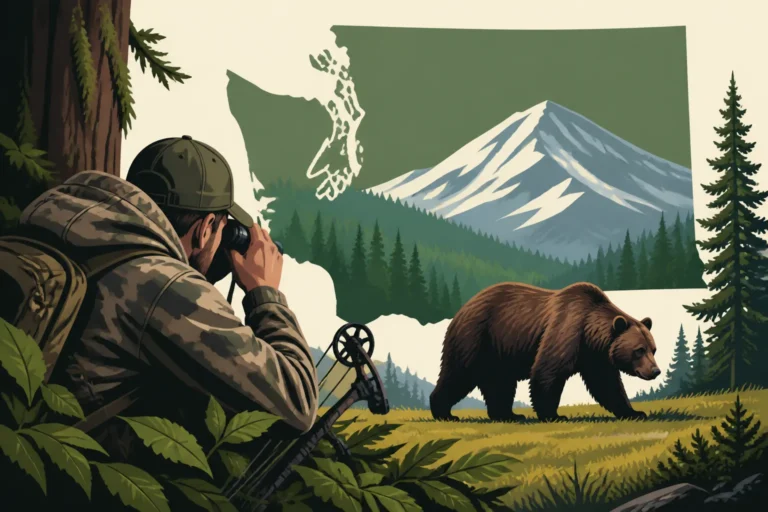
While cougars are often associated with dense cover, spot-and-stalk can be a viable strategy, particularly in eastern Washington's more open, rugged country, or along the edges of vast clearcuts and timber plantations in western Washington. This method relies heavily on good optics and patience. You'll spend hours, even days, glassing large areas from a high vantage point, much like you would for mule deer. Look for any movement, a patch of tawny fur, or an unnatural shadow. Use quality binoculars and a spotting scope to pick apart distant terrain.
Once a cougar is spotted, the real work begins. The stalk is a careful, calculated approach, using terrain features, shadows, and vegetation to remain unseen. Wind direction is critical; cougars have an exceptional sense of smell, so always try to approach from downwind. This can mean taking a much longer, circuitous route to get into position. In timber, spot-and-stalk often transitions into still-hunting, moving slowly from cover to cover. Focus on areas where cougars might sun themselves on rocky outcrops, or where they might be bedded during the day, especially after making a kill. This method requires excellent physical conditioning, map reading skills, and the ability to move silently through varied terrain. Spot-and-stalk is a low-percentage method for cougars, but it's not impossible, and the reward for success is immense.
Scouting and Locating Productive Cougar Habitat
Finding cougars without hounds means you need to become a master scout. You're essentially building a profile for the animal you're chasing, predicting where it will be based on terrain, prey, and past observations.
E-Scouting for Cougar Hotspots
Before you ever set foot in the woods, the best cougar hunters are spending hours staring at screens, e-scouting from home. Tools like GoHunt, OnX Hunt, or even Google Earth are invaluable. Start by identifying GMUs with known cougar populations. Then, zoom in on satellite imagery to find key features. Look for dense timber stands adjacent to open clearcuts or meadows – these are transition zones where deer and elk feed, and cougars hunt. Identify prominent ridge lines, drainage systems, and steep, rugged terrain that offers good cover and travel corridors. Cougars prefer areas with escape cover, so avoid wide-open, flat landscapes. Also, pay attention to potential access points, roads, and trail systems. The less human disturbance, often the better for cougars.
Focus on areas that are difficult for people to access, like roadless areas, steep canyons, or units requiring longer hikes. GoHunt’s detailed mapping features, for example, can highlight public land boundaries, private timber holdings, and topography, giving you an edge in identifying overlooked spots. Look for bottlenecks or pinch points where game might concentrate, as these are natural ambush sites for cougars. Identifying these potential hotspots on a map allows you to prioritize your in-field scouting efforts, saving you countless hours of wandering aimlessly. You can delve deeper into this by reviewing tips on E-Scouting Washington GMUs Before the Draw. Remember, the more information you gather from your armchair, the more efficient your time in the field will be.
Identifying Key Terrain Features and Travel Corridors
Once you’ve done your e-scouting, it’s time to hit the ground and confirm your suspicions. The ground doesn't lie. Key terrain features for cougars include dense thermal cover on north-facing slopes, sunny south-facing slopes for bedding, rocky outcroppings, and steep draws. They love areas that provide both concealment and a good vantage point over prey animal movements. Look for saddles between ridges, which act as natural highways for both predators and prey. Creek bottoms and riparian zones are also critical, providing water, cover, and often connecting different parts of their territory.
Travel corridors are the routes cougars habitually use. These could be subtle game trails through the brush, the edges of old logging roads that have grown in, or even the top of a beaver pond dam. While deer and elk trails can give you clues, cougars often prefer their own, more discrete paths, especially when hunting. They often parallel game trails rather than walking directly on them. During your scouting, look for any of the cougar sign we discussed earlier – tracks, scrapes, scat, and especially cached kills. Finding a fresh cache is undeniable proof of a cougar in the area, and it gives you a precise location to focus your efforts. Keep a detailed log of all sign you find, noting dates, locations, and conditions. This helps build a pattern for the individual cougar or cats in that area.
Public Land Access and Timber Company Permits
Navigating land access in Washington can be tricky, but it's an essential part of scouting for cougars. Washington offers vast amounts of public land, including National Forests (like the Gifford Pinchot or Okanogan-Wenatchee), DNR lands, and BLM properties. These lands are generally open to hunting, but it's vital to know the specific rules for each agency, especially regarding vehicle access and camping. Many areas have "Green Dot" road systems that regulate motorized access, and understanding these is key.
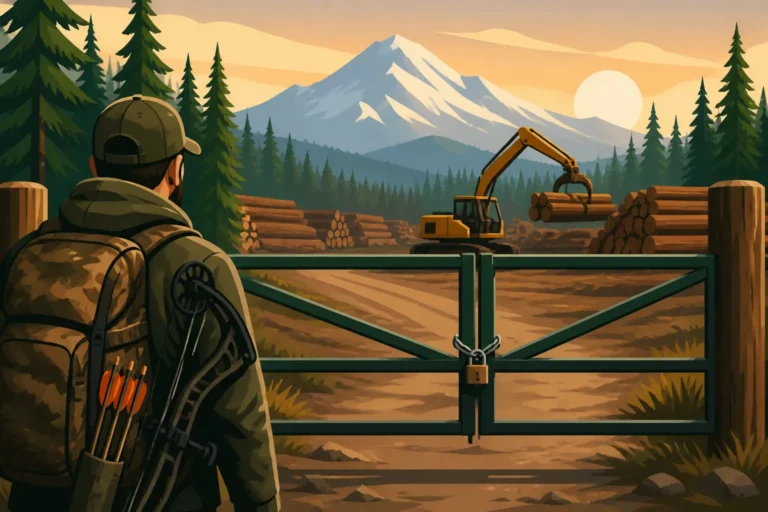
However, a significant portion of prime cougar habitat, particularly in western Washington, is managed by private timber companies such as Weyerhaeuser or Hancock Forest Management. Many of these companies require permits or charge access fees to hunt on their lands. These permits are often limited in number and can be expensive, but they can unlock access to areas with less hunting pressure and excellent cougar potential. It’s crucial to research these companies well in advance, as their permit application windows open early and close quickly. Knowing the boundaries of these private lands and understanding their access rules is non-negotiable. For many hunters, obtaining a permit for Hunting Behind Timber Company Gates is the best bet for increasing their odds. Always respect private property boundaries, even if you don't have a permit for that specific parcel. Ignorance of boundaries is not an excuse for trespass, and it can quickly shut down access for everyone.
Gear Essentials for the Solo Cougar Hunter
Hunting cougars solo and without hounds demands a specific set of gear. You'll often be deep in the backcountry, relying solely on what you can carry.
Optics for Locating and Confirming Cougars
Given the secretive nature of cougars and the often-dense terrain they inhabit, high-quality optics are not just helpful; they are absolutely essential. Your primary tool will be a good pair of binoculars, ideally 10×42 or 10×50, offering a balance of magnification and field of view. These will be used for hours on end, so comfort and optical clarity are paramount. Look for brands known for their low-light performance, as cougars are most active at dawn and dusk. A binocular harness is also a must-have, keeping your optics secure and easily accessible while distributing the weight evenly across your shoulders.
In more open country or when glassing vast clearcuts, a spotting scope becomes invaluable. A 15-45x or 20-60x scope allows you to pick apart distant terrain, confirm faint movements, and sometimes even identify a cougar before a long stalk. A sturdy tripod is required for any spotting scope and can also be used with your binoculars for extended glassing sessions. Finally, a good rangefinder with angle compensation is critical for ethical shot placement in steep, broken cougar country. Knowing the exact distance and angle to your target eliminates guesswork, which is crucial for a clean kill. Investing in quality glass might feel like a splurge, but it's an investment in your success and ethical hunting. For a deeper dive into choosing the right glass, consider reading about Choosing Binoculars for Washington Glassing.
Weapon Choices and Shot Placement Considerations
Your weapon choice for cougars should prioritize accuracy, sufficient power, and reliability in all weather conditions. For rifle hunters, anything from a .243 Winchester up to a .30-06 or .300 Winchester Magnum is more than adequate. The key is shot placement. Cougar vitals are relatively small, and they are incredibly tough animals. A well-placed bullet is far more important than raw power. Bring a rifle you are proficient with, one you can shoot accurately under pressure, possibly after a long hike or a tense calling sequence. Shot placement on a cougar will typically be broadside, aiming for the shoulder or just behind it, to hit the heart and lungs. A quartering-away shot also presents a good opportunity to target the vitals.
Archery hunters face an even greater challenge due to the close range required. A modern compound bow with a draw weight suitable for elk (typically 60-70 lbs) is appropriate, paired with sharp, legal broadheads. Fixed-blade broadheads are often preferred for their reliability and penetration, especially through thick hide and bone. Given the relatively small size of a cougar's vitals, precision is absolutely critical. Muzzleloader hunters also have excellent options, with .45 caliber or larger typically being the minimum. Regardless of your chosen weapon, extensive practice with your exact hunting setup is paramount. You need to be able to make a precise shot, quickly and under pressure. This is not the time for a marginal hit. While specific to elk, the principles of Shot Placement on a Quartering Elk can offer valuable insights into vital anatomy and aiming points that apply broadly across big game.
Packing and Cold Weather Gear
Hunting cougars without hounds often means deep backcountry trips, sometimes in challenging late-season weather. Your pack is your lifeline. You'll need a quality backpack, ideally an internal or external frame pack with a capacity of 4,000 to 6,000 cubic inches, capable of comfortably carrying all your day gear plus an entire boned-out cougar if you're successful. Look for packs with good suspension, hip belts, and compression straps to secure your load. A pack with a dedicated meat shelf or expandable capabilities is a huge plus.
Layering is key for Washington's variable weather. Start with a moisture-wicking base layer (merino wool or synthetic), add an insulating mid-layer (fleece or puffy jacket), and top it with a waterproof and windproof outer shell. Conditions can change rapidly, from crisp autumn days to freezing rain and snow. Warm, waterproof boots with good ankle support are non-negotiable, especially when tracking through wet timber or across slick rock. Don't forget gaiters to keep snow and debris out of your boots, and good gloves that remain functional when wet. Carrying a first-aid kit, a headlamp with spare batteries, a fire-starting kit, water filter, and enough food for at least an extra day are vital safety precautions, especially when you're hunting alone in remote areas. You can also review general advice on Layering for Wet Cold Weather to prepare for Washington's unpredictable conditions.
Mental Fortitude and Safety in Cougar Country
Hunting cougars without hounds is as much a mental game as it is a physical one. It tests your patience, resilience, and attention to detail like few other hunts.
Patience and Persistence
If there's one trait that defines a successful houndless cougar hunter, it's patience. These animals are masters of elusion. You might scout for days, hike for miles, and sit on calling stands for hours without seeing anything more than tracks. It's easy to get discouraged, to feel like you're chasing ghosts. But every piece of fresh sign, every scrape, every track you find is a small victory, a clue that you're in the right area. The hunt is often about grinding it out, putting in the time when others have given up. This means going out in less-than-ideal weather, pushing through thick brush, and being willing to sit still for extended periods.
Persistence also means adapting. If a calling spot isn't working, move to another. If the tracks lead into impenetrable thickets, try to circle downwind and anticipate where the cougar might emerge. The ability to stay mentally focused, to continually analyze the situation, and to maintain an optimistic outlook despite repeated setbacks is crucial. This isn't a hunt for instant gratification; it's a marathon that demands unwavering dedication.
Solo Hunting Safety Precautions
Many cougar hunters in Washington operate solo, which adds another layer of responsibility and risk management. When heading into remote cougar country by yourself, safety must be your absolute top priority. Always let someone know your detailed hunt plan: where you're going, your exact route, when you expect to return, and what vehicle you're driving. Give them a "not-to-exceed" time when they should initiate a search if they haven't heard from you. Carrying a satellite messenger or a personal locator beacon (PLB) like a Garmin inReach is highly recommended, especially in areas with no cell service. These devices can send emergency messages or allow you to check in with loved ones.
Beyond communication, be prepared for emergencies. A well-stocked first-aid kit, emergency shelter, fire-starting materials, and extra food and water are non-negotiable. Pay attention to weather forecasts and be ready to turn back if conditions become too dangerous. Be aware of your surroundings at all times; a cougar can be anywhere. While attacks on humans are rare, they do happen. Carry bear spray and know how to use it. If you encounter a cougar, make yourself look big, make noise, and never run. For a broader overview of crucial safety measures, you can refer to Solo Hunting Safety Precautions. Hunting alone is a profound experience, but it requires meticulous planning and a strong commitment to self-reliance and safety.
What to Do After a Harvest
Successfully harvesting a cougar without hounds is an incredible achievement, but the work isn't over. First, confirm the animal is deceased and approach with extreme caution. Once safe, tag your animal immediately and note the time of harvest. Cougar meat is excellent table fare, so proper field care is essential. The gutless method works well for cougars, allowing you to quarter the animal and remove the meat without gutting it, especially helpful if you're alone. Take care to save all parts required for WDFW inspection, including the hide with proof of sex attached, and the skull with teeth.
Begin cooling the meat as quickly as possible. Get it into game bags and hang it in the shade, allowing air to circulate. If the weather is warm, you’ll need to work fast to prevent spoilage. Plan your pack-out route carefully, considering the weight and terrain. Cougar can be surprisingly heavy, and a fully loaded pack can be a grueling test. Once you're out, remember the strict WDFW reporting requirements. You'll need to present the carcass, hide, and skull within the specified timeframe. This typically involves making an appointment with a WDFW biologist or officer. They will collect samples, take measurements, and verify the harvest. This final step is crucial for both legal compliance and for contributing valuable data to cougar management efforts in Washington.
Realistic Expectations and Ethical Considerations
Let's be honest: hunting cougars in Washington after the hound ban is not for the faint of heart. It demands a level of dedication and persistence that few other hunts do.
Low Success Rates Without Hounds
It's vital to set realistic expectations from the outset. The success rate for cougar hunters in Washington, using the methods available to us, is inherently low. Without hounds, which dramatically increase the odds by treeing an animal, hunters are relying on subtle signs, vast amounts of scouting, and a great deal of luck. Many dedicated cougar hunters will go years without even seeing a cougar, let alone harvesting one. This isn't a reflection of poor hunting skills; it's a testament to the cougar's incredible stealth, intelligence, and the vast, often rugged, terrain they inhabit.
This low success rate means the reward of a successful hunt is that much sweeter. It’s a hunt where the journey, the learning, and the time spent in cougar country are often the true trophies. Don't go into it expecting to fill a tag every year, or even every five years. Go into it with a hunger to learn, to challenge yourself, and to immerse yourself in the world of one of North America's most magnificent predators. Embrace the difficulty, because it's precisely what makes this pursuit so unique and respected.
| Hunting Method | Primary Tools | Pros | Cons | Ideal Conditions |
|---|---|---|---|---|
| Still-Hunting | Eyes, ears, patience, light firearm/bow | Deep immersion, intimate knowledge of terrain, high reward | Extremely slow, low visibility, very low success rate, highly dependent on hunter skill | Dense timber, mixed terrain, quiet |
| Tracking (Snow) | Eyes, boots, map, ready weapon | Direct pursuit, high confidence on fresh sign, can lead to quick shot | Requires fresh snow, physically demanding, dangerous if cat beds close, easy to lose trail | Fresh, consistent snow |
| Predator Calling | Electronic/mouth calls, good camouflage | Can draw cougar into range quickly, covers more ground than tracking | Cougar may circle downwind (detect hunter), requires good setup/concealment, not always effective | Calm wind, good cover |
| Spot-and-Stalk | High-power optics, rangefinder, agile boots | Covers large areas from vantage, can find unsuspecting animals | Very low success on cougars, requires extremely careful approach, challenging in dense cover | Open country, clearcuts, broken terrain |
Respecting the Animal and the Hunt
The ethics of hunting cougars without hounds extend beyond simply following the regulations. It involves a deep respect for the animal itself, for the challenge it presents, and for the wilderness it calls home. This means pursuing cougars with a commitment to fair chase, ensuring that any shot taken is ethical and maximizes the chance of a clean, humane kill. It means spending countless hours understanding their biology and behavior, not just looking for a target.
It also means respecting the land and other users. Pack out everything you pack in, and leave no trace. Be mindful of property boundaries and other hunters. The pursuit of a cougar is a privilege, not a right, and maintaining that privilege requires all hunters to act as responsible stewards of the resource and respectful ambassadors of our hunting heritage. Every interaction, every decision, reflects on the entire hunting community.
Contributing to Conservation Efforts
Even though cougar hunting without hounds is difficult, your participation plays a vital role in wildlife conservation in Washington. Hunting license and tag fees directly fund WDFW's management efforts, including cougar research, population surveys, and habitat protection. By harvesting a cougar and diligently reporting it, you are providing crucial data to biologists, helping them assess population health, track harvest trends, and make informed management decisions.
In some areas, cougar harvest can also help manage prey populations, especially if deer or elk herds are experiencing significant predation pressure. While WDFW often relies on specialized cougar removal efforts in response to livestock depredation or human safety concerns, regulated hunting contributes to overall population management. It's about being an active participant in the ecosystem, contributing to the health of the wildlife and wild places we cherish. Your efforts, however challenging, are part of a larger conservation picture, ensuring healthy cougar populations and balanced ecosystems for generations to come.
Disclaimer
Please be aware that hunting regulations, seasons, and access rules can change frequently. Always consult the most current Washington Department of Fish and Wildlife (WDFW) regulations pamphlet and official website before planning any hunt. This guide is for informational purposes only and does not constitute legal advice. It is the hunter's sole responsibility to know and comply with all applicable laws and regulations.