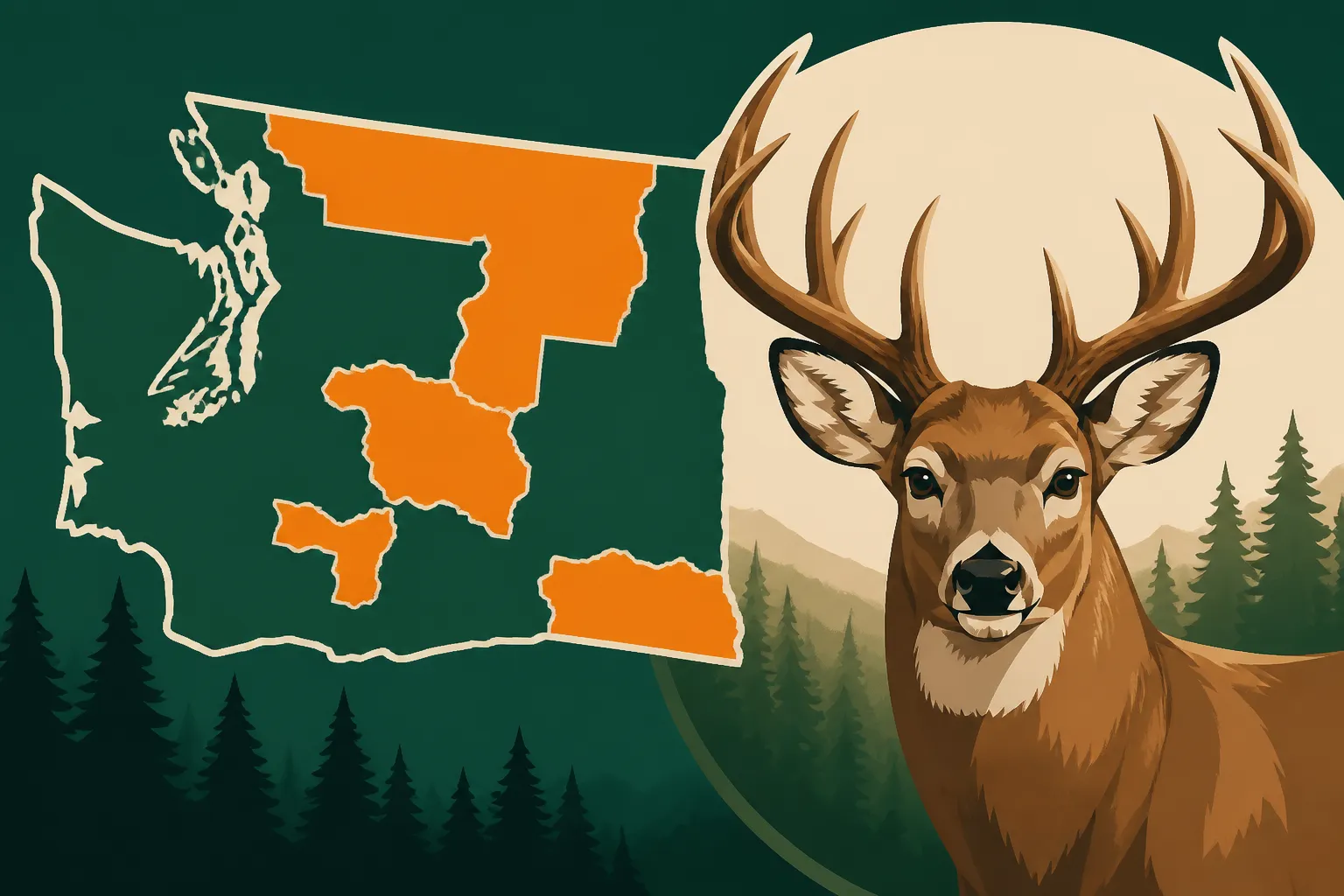
Where Washington Has No Antler Restriction
It's incredibly frustrating, isn't it, trying to navigate Washington's deer hunting regulations and figure out exactly what's legal to harvest when you finally get an opportunity in the field? One minute you're counting points on a buck trying to remember if it's a three-point minimum unit, and the next you're wondering if you can even shoot a fork-horn. This guide is here to untangle that knot, specifically focusing on the areas and situations where Washington deer hunters face no antler restriction, giving you a clearer picture of when and where you can pursue any legal buck.
Understanding Washington's Antler Point System
Before we dive into where the antler restrictions don't apply, it's really important to understand why they exist in the first place and what they generally mean. Many hunters, myself included, have spent countless hours poring over regulations, squinting at distant deer, and second-guessing our decisions because these rules can feel like a minefield.
Why Antler Restrictions Exist
Antler restrictions aren't just there to make our lives complicated, even though it often feels that way! They're primarily a wildlife management tool used by the Washington Department of Fish and Wildlife (WDFW) for a few key reasons. First, they help protect younger bucks, allowing them to mature, increase herd age structure, and potentially grow larger antlers in subsequent years. This can contribute to a healthier, more balanced deer population with a better buck-to-doe ratio. In some areas, it's also about managing hunter expectations and experiences, aiming for more mature bucks on the landscape. For instance, in areas like the Blue Mountains or some quality mule deer units, these restrictions are meant to foster older age classes of bucks.
The "Three-Point Minimum" Rule
The most common antler restriction you'll encounter in Washington for deer is the "three-point minimum" rule. This means that for a buck to be legal, it must have at least three points on one side of its antlers. And when we say "point," we're talking about a projection at least one inch long. This rule is widespread, especially in many of Western Washington's blacktail units and some of the more managed mule deer areas in Eastern Washington.
The real challenge, and where a lot of hunter frustration comes in, is accurately judging those points in the field, often at a distance, in low light, or through thick cover. Is that brow tine long enough? Did I miss a kicker? It's a skill that takes practice, and mistakes can be costly. If you want to dig deeper into the specifics, check out our guide on Washington's Three-Point Rule and What Counts for a more detailed breakdown. Learning to precisely identify and count points is crucial, and it’s a subject we explore further in Counting Points on a Live Buck.
Spike-Only or Branch-Antlered Elk Regulations
While our focus here is on deer, it's worth noting that elk also have antler restrictions, but they operate under a different set of rules. For elk, you might encounter "spike-only" units where only a bull with unbranched antlers (a spike) is legal, or "branch-antlered bull" units, which require a certain number of points or branching. These rules are distinct from deer regulations and reflect different management goals for elk herds. For more on elk regulations, you can refer to resources like Washington Spike-Only Elk Units and Washington Branch-Antlered Bull Permits.
General Seasons and Antlerless Opportunities with No Restrictions
The good news is that not every deer hunt in Washington comes with an antler restriction for every type of tag. There are certainly opportunities to hunt deer where the focus is more on general harvest and filling the freezer, rather than strictly on antler size.
Anywhere is "No Restriction" for Antlerless Deer
This is perhaps the most straightforward way to bypass antler restrictions: hunt with an antlerless tag. When you draw an antlerless permit – whether it's for a doe, a cow elk, or a specific type of antlerless deer – the antler point rule simply doesn't apply. The goal with these tags is often population control or herd management, allowing hunters to harvest females or young animals to keep the population healthy and within carrying capacity. These tags are usually acquired through the special permit draw process, which is a fantastic way to secure a hunting opportunity that often comes with less pressure and a higher chance of success for filling the freezer. Our guide on Washington Special Hunt Permits and How to Apply can help you navigate that system.
General Season Deer Hunts Without Antler Rules
While many general season buck hunts have a three-point minimum, there are specific Game Management Units (GMUs) in Washington that offer "any buck" or "any deer" opportunities during general seasons. These are golden tickets for hunters who prioritize meat and a less restrictive hunt. These units often exist where deer populations are robust, and managers want to encourage general harvest, or in areas where specific antler restrictions aren't deemed necessary for population health. You'll typically find more "any buck" opportunities in parts of Northeast Washington for whitetail deer, and sometimes in certain agricultural fringe areas or less popular units across the state for mule deer or even blacktails.
For example, some of the GMUs with high whitetail densities, particularly in the northeastern corner of the state, might have "any buck" seasons. These are areas where the whitetail population can sustain a higher harvest rate on younger bucks. Similarly, certain areas might offer "any deer" during specific youth or late-season hunts, again, aimed at broad harvest objectives.
Finding "Any Deer" or "Any Buck" GMUs
So, how do you find these elusive "any buck" opportunities? The definitive source is always the annual WDFW Big Game Hunting Seasons and Regulations pamphlet. You'll need to meticulously go through the deer tables for each GMU and weapon season. Look for language like "any deer" or "any buck" instead of "three-point minimum" or "spike-only."
It's tedious work, I know. That's why many hunters, including myself, lean on online tools to help. Platforms like GoHunt offer incredible filtering capabilities that allow you to quickly search for specific regulations, including antler restrictions, across all GMUs and weapon types. This can save you hours of flipping pages and make your hunt planning much more efficient. By using an e-scouting tool like this, you can narrow down your options from home before ever setting foot in the woods, something we discuss in detail in E-Scouting a Washington GMU From Home.
Specific GMUs or Regions with "Any Buck" Opportunities
Let's get a bit more specific about where you might actually find these less restrictive hunts. While regulations can shift annually, certain regions historically offer more flexible opportunities for deer hunters.
Northeast Washington Whitetail Hunts
When it comes to "any buck" opportunities for deer, Northeast Washington is often the first place hunters think of. The whitetail populations in Pend Oreille, Stevens, and Spokane counties are generally strong, and WDFW management in these areas often aims to maintain healthy populations through a more liberal harvest of bucks. Many of these GMUs, particularly during the general modern firearm season, have allowed hunters to take "any buck," meaning a fork-horn or even a spike whitetail is legal.
This can be a fantastic opportunity, especially for new hunters or those looking to secure venison without the added pressure of antler point counting. Whitetail hunting in this region can be quite different from chasing blacktails in the thick timber of Western Washington. These areas often feature a mix of dense forest, agricultural fields, and river bottoms where whitetails thrive. If you're interested in pursuing these plentiful deer, our article on Whitetail Numbers in Northeast Washington can give you more insight into their distribution and population. Understanding the Whitetail Rut Timing in Washington can also greatly improve your success here.
Certain Eastern Washington Mule Deer Units
While many of the prime mule deer units in Eastern Washington are managed under specific antler restrictions to grow bigger, older bucks, there can be exceptions. Sometimes, during late-season hunts or in specific GMUs that might be less popular or have different management objectives, you might find an "any buck" rule for mule deer. These instances are less common than with whitetails but do exist. These hunts are often designed to target specific areas or alleviate population pressures. Always, always verify the specific GMU and season dates in the WDFW hunting pamphlet. Don't rely on past years' regulations or word-of-mouth; regulations are dynamic. Using tools like GoHunt or the WDFW online hunt planner can significantly streamline the process of finding these specific unit-by-unit exceptions.
Private Lands and Damage Hunts
Another significant area where antler restrictions often don't apply is on private land with specific permits or through damage hunts. When deer, particularly deer, are causing agricultural damage or other issues on private property, WDFW may issue special permits that allow the harvest of "any deer" to mitigate the problem. These hunts are generally aimed at reducing deer numbers, so antler size becomes irrelevant.
Accessing these opportunities usually requires a bit more legwork. You might need to contact landowners directly to inquire about permission, or apply for specific damage hunt permits that WDFW occasionally offers. These permits are usually very limited and are designed to address a specific local issue, so they're not always widely publicized or easy to come by. However, if you're dedicated, it can be a rewarding way to hunt without antler restrictions. Our guide on Getting Written Permission on Private Land details how to approach landowners, and you can also look into Washington Damage Hunt Opportunities for more information.
Navigating Regulations and Maximizing Your Opportunities
Understanding where antler restrictions don't apply is only half the battle. The other half is effectively navigating the Washington hunting regulations to confidently identify and secure these opportunities.
The Importance of the Current WDFW Pamphlet
I cannot stress this enough: the WDFW Big Game Hunting Seasons and Regulations pamphlet is your bible. Regulations can and do change every year. What was an "any buck" unit last year might be a "three-point minimum" this year. Before you even think about buying a tag or heading into the field, you must read the current year's pamphlet for your chosen species, GMU, and weapon season. Pay close attention to the small print, the footnotes, and the specific rules listed under each GMU. Our post on Washington Big Game Pamphlet Release can help you stay on top of when the new regulations drop.
Why it matters: Misinterpreting a rule, even unintentionally, can lead to a citation, a fine, and the loss of your harvested animal. It's a heavy price to pay for not doing your homework.
Using Online Tools and Resources
While the printed (or PDF) pamphlet is the authoritative source, digital tools make the research process much more manageable.
- WDFW Website: The official WDFW website has an excellent online hunt planner that allows you to search for regulations by species, GMU, and weapon type. You can often filter for specific antler point rules. This is a powerful, free resource.
- Third-Party Platforms (like GoHunt): As mentioned earlier, advanced platforms like GoHunt really shine here. They consolidate all the WDFW data into an easily searchable and filterable database. You can literally click a box to see only "any buck" or "no antler restriction" units for deer, view draw odds for special permits, and access detailed maps overlaying land ownership, GMU boundaries, and more. This kind of platform can dramatically cut down on your research time and help you discover opportunities you might have missed poring over static tables.
These tools are not just for finding new spots; they're essential for verifying regulations for areas you already know and love.
Strategic Planning for Antlerless Tags
If your primary goal is to put meat in the freezer and you want to completely avoid antler point stress, strategically planning for antlerless tags is your best bet.
- Apply for Special Permits: Many GMUs offer special permits for antlerless deer, often through a draw system. These tags are usually easier to draw than buck tags and provide a high-confidence opportunity for harvest. While it costs a small application fee (which we discuss in Washington General Season Versus Special Permit Hunts), the payoff is often a less crowded hunt and a greater chance of success.
- General Season Antlerless Opportunities: Some GMUs might have general season antlerless opportunities, particularly late in the season or in specific areas with overpopulation concerns. Again, consult the pamphlet carefully for these.
- Focus on Meat, Not Horns: With an antlerless tag, your focus shifts entirely to ethical harvest and meat care. This can be incredibly liberating for many hunters, removing the pressure of trophy hunting and allowing for a more relaxed, productive experience.
Here's a quick summary table of common scenarios where you might find "no antler restriction" opportunities for deer in Washington:
| Type of Hunt / Tag | Typical Antler Restriction Status | Common Species / Locations | Primary Benefit | How to Find Opportunities |
|---|---|---|---|---|
| Antlerless Tags | No Restriction (by definition) | All deer species, statewide (via special permit) | Higher success rates, focus on meat | WDFW Special Permit applications, online planner, GoHunt |
| General Season "Any Buck" | No Restriction | Whitetail in NE Washington, some E-WA Mule Deer | Less pressure on judging, broader harvest | WDFW Pamphlet, WDFW online planner, GoHunt filters (check "any buck" or "any deer") |
| Private Land / Damage Hunts | No Restriction | Localized areas, any species | Specific problem resolution, potential access | Contact landowners, WDFW damage hunt listings (limited availability) |
| Youth Hunts | Often No Restriction for deer | Specific youth seasons and units | Mentoring new hunters, increased success rate | WDFW pamphlet, special youth hunt provisions |
Navigating Washington's hunting regulations can feel like a full-time job, but knowing where and when antler restrictions are lifted can open up a whole new world of hunting opportunities. Whether you're chasing whitetails in the northeast, applying for antlerless permits, or exploring specific general season "any buck" units, putting in the homework will pay off with a more confident and successful hunt.
Disclaimer
Please remember that hunting regulations in Washington can change annually. The information provided in this guide is for general informational purposes only and is not a substitute for reviewing the current official Washington Department of Fish and Wildlife (WDFW) Big Game Hunting Seasons and Regulations pamphlet. Always consult the most up-to-date WDFW regulations before planning or undertaking any hunting activity.