Which Washington GMUs Require Three Points
Navigating Washington's deer hunting regulations can feel like trying to solve a puzzle with half the pieces missing, especially when you're trying to figure out which specific Game Management Units (GMUs) have those tricky three-point minimum antler restrictions. It's easy to get confused and make a mistake that could cost you a tag, or worse, put you on the wrong side of the law. This guide is here to untangle the complexities, clearly outlining which GMUs require that three-point minimum and helping you understand exactly what it means for your next hunt.
Understanding Washington's Antler Point Restrictions
Antler Point Restrictions (APRs) are a common tool used by wildlife management agencies, and in Washington, they're in place for very specific reasons. They're not just arbitrary rules designed to make your life harder, though it can certainly feel that way when you're trying to make a split-second decision in the field. Understanding the why behind these regulations is the first step in mastering them.
The Rationale Behind Antler Point Restrictions
The primary goal of APRs, especially a three-point minimum, is often to manage the age structure and quality of a deer herd. By protecting younger bucks, the Washington Department of Fish and Wildlife (WDFW) aims to allow more bucks to survive to older age classes, theoretically leading to a more balanced buck-to-doe ratio and the opportunity for bucks to grow larger antlers. In theory, this can lead to a more robust and resilient deer population over time.
However, the real-world application can be a mixed bag. Some argue that these rules can lead to "high-grading," where hunters selectively harvest older, larger-antlered bucks while leaving behind smaller, genetically inferior bucks that still meet the three-point criteria. This is a complex topic with ongoing debate among biologists and hunters alike. Regardless of the debate, these rules are in place, and as responsible hunters, it's our job to understand and follow them to the letter. These regulations are often found in specific GMUs where biologists are trying to improve herd health or manage hunter pressure on certain segments of the population.
How to Interpret the "Three-Point Minimum" Rule
This is where many hunters get tripped up. When the regulations state a "three-point minimum," it refers to three points on one side of the antler, often excluding the eye guard (brow tine) unless specifically stated otherwise in the regulations. A point is typically defined as an antler projection at least one inch long. This means if a buck has a brow tine, a G2 (second point), and a G3 (third point) on one side, it's a legal animal if the unit has a three-point minimum. If a buck has, say, a brow tine and two other points on one side, but the third point is broken off or simply not there, it would not meet the requirement, even if the other antler has multiple points.
It's absolutely crucial to study the WDFW hunting pamphlet for the current year, as definitions can occasionally shift or be clarified. Always refer to the official document to ensure you're interpreting the rules correctly. The pressure of the moment, especially when a buck is on the move, can make accurate counting incredibly difficult, which is why practicing Judging Antler Points Before the Shot is such a valuable skill to hone before the season ever begins. Don't rely on guesswork when the consequences are so significant.
Key Washington GMUs With Three-Point Rules
Washington is a diverse state, and its deer populations vary widely, as do the hunting regulations. The three-point minimum rule is not universal across all GMUs. Instead, it's applied strategically to specific areas, primarily for Columbian Blacktail deer in Western Washington and some Mule Deer units in Eastern Washington.
Westside Blacktail Zones
Western Washington, with its dense timber, wet climate, and elusive Columbian Blacktail deer, is where you'll encounter most of the three-point minimum rules for general season deer hunting. These restrictions are often implemented to help manage the blacktail population, which can be particularly vulnerable to overharvest of younger bucks due to their often smaller home ranges and the habitat they inhabit.
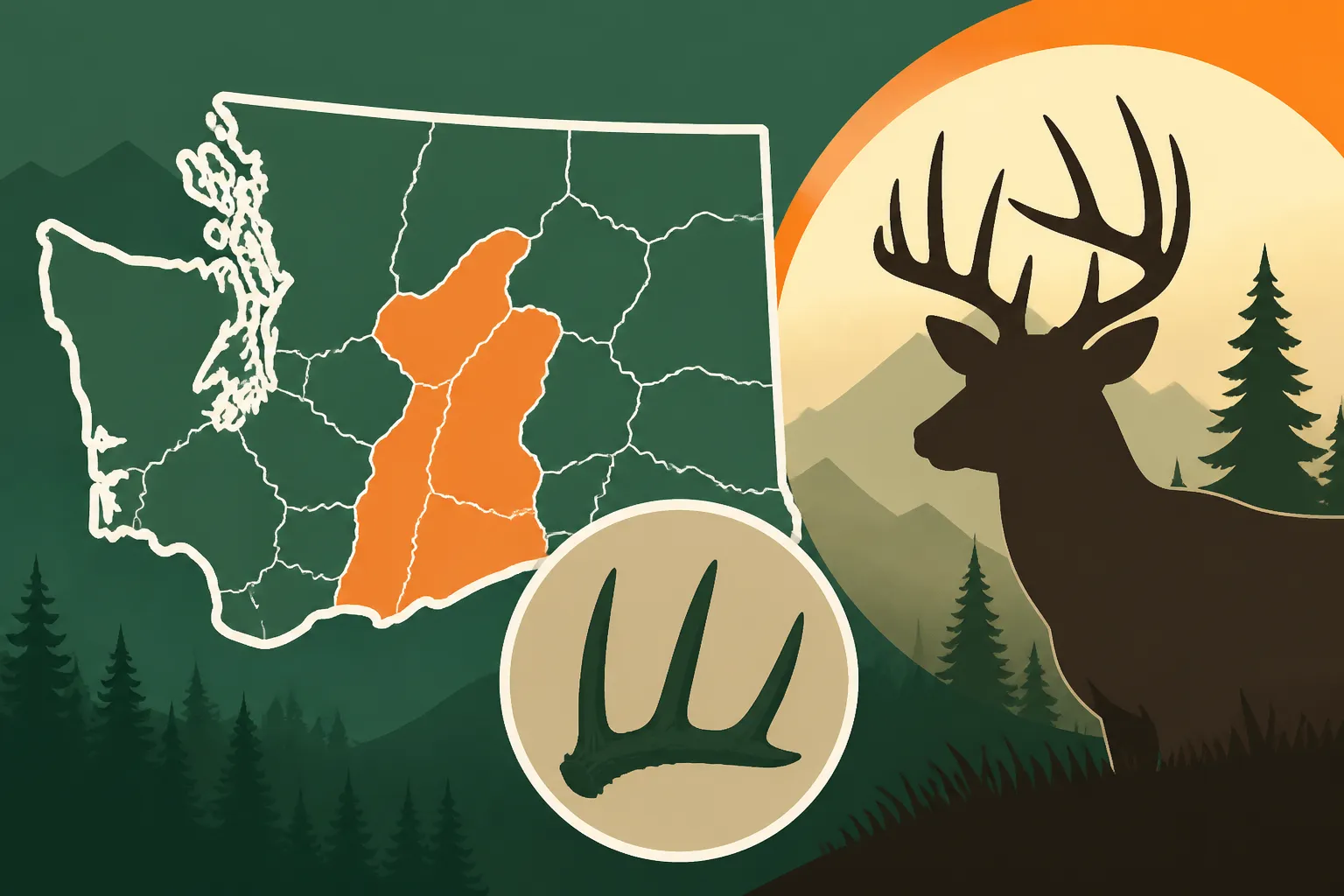
Here are some of the prominent GMUs on the Westside that have historically implemented a three-point minimum rule for general season modern firearm deer hunts. Please always cross-reference with the current WDFW regulations for any changes or updates.
- GMU 407 (North River): Located in Grays Harbor and Pacific Counties, this unit is classic blacktail country, a mix of private timberlands and some public access. The three-point minimum here aims to protect younger bucks in a unit that sees significant hunter pressure.
- GMU 410 (Minot): Another Grays Harbor unit, similar in character to North River, with extensive timber holdings. Hunters often find themselves navigating challenging terrain and dense cover, making accurate antler assessment crucial.
- GMU 437 (Mason Lake): Situated in Mason County, this unit is a popular blacktail hunting destination. The three-point rule here is a key component of its deer management strategy.
- GMU 454 (Island): Comprising Whidbey and Camano Islands, this unit is unique for its island ecosystems. While deer populations can be robust, the limited habitat means careful management, including the three-point rule, is often in effect.
- GMU 501 (Lincoln): This unit spans parts of Lewis and Grays Harbor counties and is a core blacktail area. It's characterized by managed timber forests and steep, brushy terrain.
- GMU 506 (Skookumchuck): Located in Lewis County, this is another heavily timbered unit where the three-point rule helps manage the buck population. Access can be a mix of Weyerhaeuser permits and DNR lands.
- GMU 530 (Ryderwood): Primarily in Cowlitz County, this unit is known for its dense young timber and clearcuts, classic blacktail habitat where bucks can be incredibly hard to spot and judge quickly.
- GMU 560 (Lewis River): Stretching across Skamania and Cowlitz counties, this unit encompasses a diverse landscape from lower elevations to mountainous terrain. The three-point rule applies here to promote older age class bucks.
- GMU 603 (Puyallup): Covering parts of Pierce and King counties, this unit includes a mix of urban interface and more rural timberland.
- GMU 612 (Kapowsin): Another Pierce County unit that is heavily managed timberland, offering good blacktail hunting but with the strict three-point minimum.
- GMU 658 (Capitol Peak): Located in Thurston and Grays Harbor counties, this unit features extensive DNR lands, popular with hunters.
- GMU 660 (Minot Peak): A unit in Pacific County.
- GMU 666 (Boomerang): In Pacific County, offering blacktail hunting in varied terrain.
- GMU 681 (Klickitat): While the Klickitat area is often associated with Mule Deer, this specific unit on the Westside part of the county primarily holds blacktails and can have three-point restrictions.
Many hunters will combine their research with scouting tools like GoHunt or other mapping applications to visually identify these GMU boundaries, helping them stay compliant. It can be a real challenge to hunt Still-Hunting Blacktails in Wet Washington Brush while also constantly trying to count points, but it’s an essential part of the game in these units.
Eastside Mule Deer and Whitetail Considerations
While the three-point rule is far more common on the Westside for blacktails, there are certain Eastern Washington GMUs that can also have antler restrictions, sometimes including a three-point minimum, especially for quality Mule Deer units or those specifically managed for older age class bucks. These units are less numerous but just as important to recognize.
- Some Quality Deer Hunts: Certain special permit hunts or specific portions of general seasons in Eastern Washington might also have three-point or even four-point minimums to protect younger Mule Deer bucks. These are typically announced with the special permit regulations. For instance, some units aiming to produce larger Mule Deer may implement such rules. Always check the specific GMU regulations, especially for zones known for trophy potential, as they often have more restrictive rules.
- General Seasons for Mule Deer: For general season Mule Deer hunting in Eastern Washington, "any buck" or "spike bull or antlered deer" rules are more common. However, the WDFW regulations are dynamic. It's not out of the question for a three-point rule to be added to specific GMUs if local herd management goals change. For example, some units on the fringe of Mule Deer and Whitetail range, or those with significant road access, might see new restrictions to reduce pressure on younger bucks.
It is rare to find a three-point minimum for Whitetail deer in Northeast Washington during general seasons, as management for Whitetails often focuses on herd health and population control rather than specific antler criteria. However, as noted, specific areas can always have unique rules. Hunters who frequent Eastern Washington units should always consult the WDFW annual hunting pamphlet carefully. When you're Glassing Sage and Wheat Edges for Washington Mule Deer, being confident in your regulations and your ability to count points is just as important as your glassing technique.
Here's a quick summary table of common three-point minimum units. Remember, this is a general guide and the official WDFW pamphlet is your final authority.
| GMU Number | GMU Name | Location (Primary County) | Deer Species | Common Antler Restriction for General Season Buck | Notes |
|---|---|---|---|---|---|
| 407 | North River | Grays Harbor | Blacktail | 3-Point Minimum | Dense timber, high hunting pressure. |
| 410 | Minot | Grays Harbor | Blacktail | 3-Point Minimum | Similar habitat to North River. |
| 437 | Mason Lake | Mason | Blacktail | 3-Point Minimum | Popular blacktail unit, often timber company lands. |
| 454 | Island | Island | Blacktail | 3-Point Minimum | Island ecosystems, limited habitat. |
| 501 | Lincoln | Lewis/Grays Harbor | Blacktail | 3-Point Minimum | Mixed public/private timber. |
| 506 | Skookumchuck | Lewis | Blacktail | 3-Point Minimum | Heavily managed timber, challenging terrain. |
| 530 | Ryderwood | Cowlitz | Blacktail | 3-Point Minimum | Young timber, clearcuts, dense cover. |
| 560 | Lewis River | Skamania/Cowlitz | Blacktail | 3-Point Minimum | Diverse landscape, from lowlands to mountains. |
| 603 | Puyallup | Pierce/King | Blacktail | 3-Point Minimum | Urban interface, rural timberlands. |
| 612 | Kapowsin | Pierce | Blacktail | 3-Point Minimum | Managed timberland. |
| 658 | Capitol Peak | Thurston/Grays Harbor | Blacktail | 3-Point Minimum | Extensive DNR lands, popular access. |
| 660 | Minot Peak | Pacific | Blacktail | 3-Point Minimum | Coastal blacktail habitat. |
| 666 | Boomerang | Pacific | Blacktail | 3-Point Minimum | Varied terrain. |
| 681 | Klickitat (West) | Klickitat | Blacktail | 3-Point Minimum | Westside portion of Klickitat County. |
Note: Eastern Washington Mule Deer and Whitetail units rarely have general season 3-point minimums but can have them for specific special permit hunts. Always verify with current WDFW regulations.
Navigating the Regulations and Avoiding Mistakes
The regulations, while sometimes frustrating, are a fundamental part of responsible hunting. Making a mistake can lead to fines, loss of hunting privileges, and ethical concerns. It's your responsibility to be informed and prepared.
Essential Tools for Compliance
Staying on the right side of the rules means being proactive. Don't wait until opening morning to skim the pamphlet.
- Official WDFW Hunting Pamphlet: This is your bible. Available online on the WDFW website or at license vendors, it contains all the current regulations, season dates, and GMU-specific rules. Download it, print it, read it front to back, and highlight key sections relevant to your chosen GMUs. Pay close attention to the "General Hunting Rules," "Deer Hunting," and the specific GMU sections. Any special seasons or weapon restrictions, like those for Washington Muzzleloader Hunting's Special Seasons, will be detailed here.
- WDFW "GoHunt" Planner and Mapping Tools: Digital mapping tools like GoHunt (and others such as onX Hunt) are invaluable. They allow you to overlay GMU boundaries, public and private land ownership, and often display specific regulations linked to those areas. Many experienced hunters use tools like GoHunt to conduct E-Scouting Washington GMUs Before the Draw and throughout the season, not just for finding animals, but for confirming regulations. You can mark specific areas you plan to hunt and double-check the rules for those polygons directly on your phone or computer. Having these maps offline on your device is critical when you lose cell service in the backcountry.
- Pre-Season Research and Calls: If you're genuinely confused about a specific regulation, don't guess. Call the WDFW regional office that oversees the GMU you plan to hunt. They are there to help clarify rules and ensure compliance. Talking to experienced hunters in the area can also provide valuable context, but always verify anecdotal information with official sources.
Common Pitfalls and How to Avoid Them
Even seasoned hunters can make mistakes. Being aware of the common traps can help you avoid them.
- Field Judging Under Pressure: This is perhaps the biggest pitfall. A buck can look like a legal three-point when it's moving quickly through thick brush, but upon closer inspection, it might only have two. The dense cover of Western Washington, in particular, makes How Close You Get in Coastal Reprod even more critical for accurate judgment.
- Solution: Practice, practice, practice. Use binoculars to count points on every buck you see during scouting or even just driving around. Carry a rangefinder and use it to gauge distances, which helps in judging size. If there's any doubt, let the buck walk. A missed opportunity is far better than a violation.
- Misinterpreting "Point": As discussed, a point needs to be at least one inch long. A small bump or a broken tine that's less than an inch doesn't count. Understand this definition perfectly.
- Solution: Review the definition in the pamphlet. Look at diagrams if available. If a point looks questionable, assume it doesn't count.
- Ignoring GMU Boundaries: Regulations can change abruptly at GMU lines. You might be hunting in a "any buck" unit, cross a road, and suddenly be in a three-point minimum unit without realizing it.
- Solution: Use your mapping app religiously. Keep it open on your phone or GPS device. Know your boundaries, especially where they intersect with roads, trails, or drainages. Mark these boundaries on your physical maps too. Don't take chances when hunting near a Washington Tribal Land Boundary or a Washington National Park Hunting Closure line, as regulations can vary significantly or hunting may be completely prohibited.
- Outdated Information: Regulations can change year to year. Relying on last year's pamphlet or what a buddy told you five years ago is a recipe for disaster.
- Solution: Always get the current WDFW hunting pamphlet for the current season. Re-read it every year, even if you think you know the rules. Things can change, and it's your responsibility to be up-to-date. The WDFW often has rule changes published well in advance, so keeping an eye on their website is good practice.
By diligently studying the regulations, utilizing modern mapping tools, and exercising caution and restraint in the field, you can confidently pursue deer in Washington's three-point minimum GMUs and enjoy a successful, legal hunt.
Disclaimer
The information provided in this guide is for general informational purposes only and is not legal advice. Hunting regulations in Washington State are subject to change. Always consult the official Washington Department of Fish and Wildlife (WDFW) hunting regulations pamphlet for the current year, and any emergency rule changes, before heading afield. It is the hunter's sole responsibility to know and comply with all applicable laws and regulations.