Whitetail Numbers in Northeast Washington
For many hunters, pinning down the exact number of whitetail deer in the vast, varied landscape of Northeast Washington feels like trying to count raindrops in a downpour. It’s a common frustration to hear whispers of "more deer than ever" one season and "where did they all go?" the next. This guide aims to pull back the curtain on how whitetail populations are assessed and what critical factors truly influence their presence in our cherished northeastern corner of the state.
Understanding Whitetail Population Dynamics in Northeast Washington
Let's be honest, trying to get a precise, real-time count of every single whitetail deer in Northeast Washington is practically impossible. Deer are masters of camouflage and cover, constantly on the move, and our forests are dense. What wildlife agencies, like the Washington Department of Fish and Wildlife (WDFW), do is employ a mix of methodologies to estimate populations and track trends, rather than giving a definitive, fixed number. These estimations help inform hunting seasons and management strategies.
One primary source of information comes from hunter harvest reports. Every time you successfully fill a tag and report your harvest, you're contributing valuable data. This aggregated information, over time, helps biologists gauge success rates, age classes of harvested animals, and general distribution patterns. While not a direct count, a steady increase or decrease in reported harvests can signal shifts in the overall population. However, harvest data alone doesn't tell the full story, especially if hunting pressure changes or reporting compliance varies.
Aerial surveys are another tool, particularly useful in areas with good snow cover, which makes deer more visible. Biologists fly transects over specific Game Management Units (GMUs) to count deer. The challenge in Northeast Washington, with its often thick timber and diverse topography, is that these surveys can be difficult to conduct effectively, and the visibility can be inconsistent. You can imagine trying to spot a ghost-like whitetail amidst the shadows of a pine forest from a helicopter; it's a monumental task. The best results usually come from agricultural interfaces or more open winter range where deer are more concentrated.
Finally, field observations from biologists, landowners, and even dedicated hunters using tools like trail cameras all contribute to a broader understanding. When you're trying to figure out where the deer are, especially on your specific hunting grounds, gathering local intelligence becomes key. Many seasoned hunters will track their own observations year over year, noting things like Trail Camera Placement on Ridge Saddles or changes in deer sign, which helps them build a personal picture of local population health. This combination of scientific method and boots-on-the-ground intel paints the most accurate picture we can hope for.
Key Factors Influencing Whitetail Numbers in the Northeast
The whitetail populations in Northeast Washington are a delicate balance, swayed by a multitude of environmental and human-related factors. It's rarely one single thing that dictates whether deer numbers are up or down in a given season, but rather a complex interplay.
Habitat Quality and Availability
Whitetail deer are creatures of edge habitat and dense cover. They thrive where forests meet agricultural fields, where brushy draws offer concealment, and where clearcuts provide new forage growth. In Northeast Washington, the mosaic of timberland, private farms, and riparian areas along rivers and creeks creates ideal conditions. Areas with consistent timber management, which creates different age classes of forest, often support robust whitetail numbers because they offer both food and sanctuary. A clearcut from a few years back, for instance, might be teeming with browse, while mature timber nearby offers bedding and thermal cover. When these elements are close together, deer don't have to travel far, reducing energy expenditure and exposure to predators.
Conversely, extensive wildfires can temporarily decimate habitat, burning away crucial forage and cover, though new growth in subsequent years can eventually create improved conditions. Drought conditions can also stress populations by reducing the quality and quantity of natural forage, making deer more reliant on agricultural crops or less nutritious browse.
Predation and Winter Severity
The presence of predators, particularly cougars and increasingly wolves, plays a significant role in whitetail population dynamics. While deer are resilient, consistent predation, especially on fawns, can suppress population growth. Northeast Washington is home to several wolf packs, and while their primary prey is often elk, they will certainly take deer. Understanding the local predator pressure is an ongoing challenge for wildlife managers. Cougars, being solitary and elusive, are constant deer predators across their range. For hunters interested in contributing to predator management, understanding strategies like Predator Calling for Coyotes in Eastern Washington can be beneficial, as coyotes also impact fawn survival.
Winter weather is arguably one of the most critical natural filters for whitetail numbers. Deep snow that persists for weeks or prolonged periods of extreme cold can severely impact deer survival, particularly fawns and older animals. When snow cover is deep, deer must expend more energy to move and access limited forage. This can lead to malnourishment, making them more susceptible to disease or predation. A mild winter can see a significant boost in fawn survival, leading to a bump in overall numbers the following year, while a harsh winter can have the opposite effect.
Disease and Hunting Pressure
Just like any wildlife population, whitetails are susceptible to various diseases. Epizootic Hemorrhagic Disease (EHD) and Adenovirus Hemorrhagic Disease (AHD) can cause localized die-offs, especially in drier years or areas with high deer densities, as the disease is spread by biting midges. The WDFW closely monitors for these outbreaks and other potential threats, including Chronic Wasting Disease (CWD), which fortunately has not been detected in Washington to date. Disease can act as a sudden and severe check on population growth, sometimes more impactful than hunting in certain localized areas.
Hunting pressure and regulatory frameworks also directly influence whitetail numbers. WDFW sets season dates, bag limits, and antler restrictions to manage populations at sustainable levels. For instance, antlerless permits are often issued when populations are deemed healthy and need to be reduced to balance herd numbers with available habitat. Conversely, restrictive antler-point rules, such as Washington's Washington's Three-Point Rule and What Counts, aim to allow younger bucks to mature, influencing the buck-to-doe ratio and overall herd genetics. Hunters actively engage in the process by reviewing the Washington Big Game Pamphlet Release for rule changes and season structures.
Where Whitetails Thrive: Habitat and Distribution
Northeast Washington is essentially prime whitetail country, differing significantly from the open sagebrush of the central basin or the dense, wet forests of the west side. This region provides a distinct mix of habitat that whitetails absolutely love, making it a reliable area for targeting these agile deer.
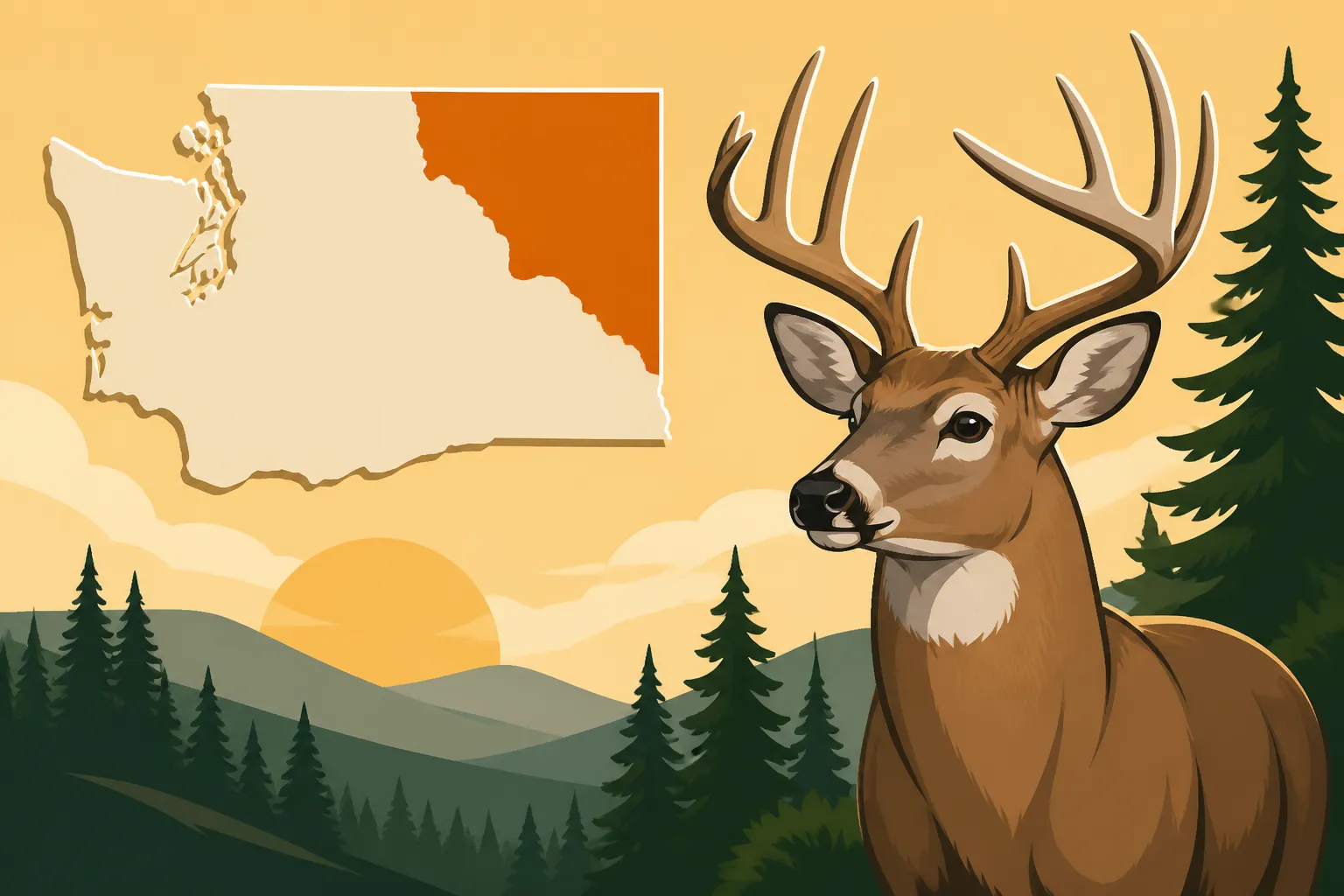
The heart of whitetail habitat in Washington typically lies within Pend Oreille, Stevens, and Spokane counties, extending into parts of Ferry and Whitman counties. Here, the landscape is characterized by rolling hills, mixed conifer forests (ponderosa pine, Douglas fir, larch), diverse deciduous tree stands (aspen, birch, cottonwood), and abundant underbrush like serviceberry, wild rose, and huckleberry. These areas often butt up against agricultural lands—wheat fields, hay meadows, and small farms—providing a crucial food source. Whitetails are often found utilizing the edges of these fields, slipping in and out of the timber cover.
Riparian zones, the areas immediately adjacent to rivers, streams, and wetlands, are also critical. The thick vegetation along waterways provides excellent cover, water, and often more succulent forage, making them natural travel corridors and bedding areas for deer. If you're E-Scouting Washington GMUs Before the Draw, pay close attention to the confluence of timber, agriculture, and water features; that's often where you'll find concentrations of deer.
Unlike mule deer, which often prefer more open country and higher elevations, whitetails are masters of the dense stuff. They're built for slipping through thickets, using their keen sense of smell and hearing to detect danger. Hunters often find them in the dense "reprod" (reproduction timber) or brushy creek bottoms where visibility is limited, making still-hunting or carefully chosen stand locations key. Many of these areas are publicly accessible through national forests like the Colville National Forest, or through WDFW Wildlife Areas, though sometimes access requires navigating private land or Hunting Behind Timber Company Gates. Understanding property boundaries with tools like GoHunt's mapping features can be a game-changer for finding these pockets of deer.
The Dynamics of Whitetail Rut Timing
Understanding Whitetail Rut Timing in Washington is critical for hunters because it directly impacts deer behavior and distribution. The rut is that magical period, typically in November in Northeast Washington, when bucks become less cautious and more focused on breeding. Their home ranges expand, they move more during daylight hours, and they actively seek out does, often appearing in areas they might avoid during the early season.
During the pre-rut, bucks are actively scraping and rubbing, marking their territory, and becoming more aggressive. As the rut peaks, bucks will chase does relentlessly. This increased activity means they are more visible, but also more unpredictable. Post-rut, bucks are often exhausted and focused on rebuilding their fat reserves before winter, which can lead to another period of increased movement as they seek out food sources.
Being aware of these seasonal shifts in behavior is paramount. A whitetail buck found in a dense, secluded bedding area in early October might be cruising the edge of an alfalfa field in broad daylight during mid-November. By timing your hunts and adapting your strategies to these behavioral patterns, your chances of encountering a mature buck significantly increase.
Challenges and Management Efforts for Northeast Whitetails
Managing whitetail numbers in Northeast Washington is a constant balancing act for the WDFW, aimed at ensuring healthy populations for future generations of hunters and wildlife enthusiasts. It’s not just about counting deer, but about managing an entire ecosystem.
One of the significant challenges is balancing public demand for hunting opportunities with the biological needs of the deer herd. Hunters naturally want to see more deer and have ample opportunities to harvest. However, allowing populations to grow unchecked can lead to overbrowsing of habitat, increased disease transmission, and more deer-vehicle collisions. WDFW employs specific tools like antlerless permits and special permits for antlered deer in certain GMUs to adjust harvest levels based on population trends and habitat conditions. They also consider factors like Washington General Season Versus Special Permit Hunts when designing hunting regulations.
Another considerable challenge is dealing with the increasing human footprint. As communities expand, deer habitat can become fragmented, leading to conflicts like garden damage or increased interactions with domestic animals. This can necessitate localized management efforts, sometimes including damage permits, to mitigate issues. On the flip side, some agricultural practices, like leaving crop residue, can provide valuable winter food sources, indirectly supporting deer populations.
The presence of large predators, as mentioned earlier, also complicates management. While wolves and cougars are natural components of the ecosystem, their impact on deer numbers in certain areas needs to be monitored to prevent localized declines. It’s a complex issue with strong opinions on all sides, and WDFW strives to balance predator conservation with prey management.
The Role of Hunter Education and Conservation
For those new to the hunting scene, or even seasoned hunters looking to sharpen their skills, programs like Washington Hunter Education and Licensing are fundamental. These courses don't just teach firearm safety; they also cover wildlife identification, conservation ethics, and the importance of responsible hunting practices. Understanding state regulations and the reasoning behind them helps hunters become better stewards of the resource.
Conservation efforts are not solely the responsibility of the state; private landowners and hunters play a vital role. Participating in habitat improvement projects, adhering to ethical hunting standards, and accurately reporting harvests are all ways hunters contribute to sustainable whitetail populations. Groups like GoHunt often advocate for hunter involvement in conservation and provide resources for understanding regional wildlife initiatives. The continued health of Washington's whitetail herds relies on a collaborative effort from all stakeholders.
Whitetail Population Indicators in Northeast Washington
To summarize, here's a quick look at some general indicators and factors that influence whitetail numbers in Northeast Washington:
| Indicator/Factor | Impact on Whitetail Numbers | Observation |
|---|---|---|
| Habitat Type | Diverse mix of timber, agriculture, riparian zones (ideal) | Look for edges, dense cover, brushy draws, clearcuts (3-10 years old), and proximity to water sources. |
| Winter Severity | Harsh winters (deep snow, prolonged cold) can reduce survival; mild winters boost survival. | Track local snowfall accumulation and duration. High fawn survival generally leads to higher populations in subsequent years. |
| Predation | Cougar, wolf, and coyote populations can impact fawn recruitment and overall deer numbers. | Listen for predator calls, look for tracks, and be aware of wolf pack territories. |
| Disease Outbreaks | EHD/AHD can cause localized die-offs; CWD monitoring is ongoing. | Report any sick or deceased deer to WDFW. Sudden drops in local populations might indicate disease. |
| Fawn Recruitment | High fawn survival rates indicate a healthy, growing population. | Observe doe-to-fawn ratios in summer and early fall. A higher ratio often means a healthier future herd. |
| Harvest Data | WDFW harvest reports, hunter success rates, and age class data reflect population trends. | Research historical harvest data for your GMU. Tools like GoHunt can help analyze this. |
| Food Availability | Abundant natural browse, mast crops, and agricultural spillover support higher densities. | Monitor acorn crops, berry production, and agricultural planting/harvest cycles. |
| Hunter Pressure | Too much pressure can make deer nocturnal or push them into thicker cover; too little might lead to overpopulation. | Observe hunter density in your chosen GMU. Consider hunting less accessible areas, especially on Walk-In Only Gates on Industrial Timber. |
Moving Forward with Whitetail Hunting in Washington
While we can't get a real-time, exact count of every whitetail, by understanding the factors that influence their populations and leveraging available resources, hunters can make informed decisions. Tools like GoHunt, along with the detailed information provided by WDFW, empower us to be more effective and responsible in the field. Remember, successful hunting isn't just about the numbers; it's about connecting with the land, understanding the animals, and contributing to the conservation efforts that keep our Washington hunting heritage strong.
Disclaimer
This article is for general informational purposes only and does not constitute professional advice. Laws, prices and regulations vary by location and change over time. Consult a qualified professional for guidance on your specific situation.