California Quail Range in Washington
Finding California quail in Washington can feel like chasing ghosts sometimes, especially if you're used to more visible game birds. These speedy little birds are masters of concealment, making it tough for hunters to pinpoint their locations and patterns year after year. This guide is going to dig deep into where California quail live across our beautiful state, what types of habitat they prefer, and how you can increase your chances of finding them, whether you're east or west of the Cascades.
Understanding California Quail in Washington
When you talk about upland bird hunting in Washington, California quail often fly under the radar compared to chukar or even pheasants. But for those who love a fast-paced hunt and the satisfaction of a well-earned flush, these birds are pure gold. Getting to know them is the first step to finding them.
Identifying California Quail and Their Habits
California quail (Callipepla californica), also known as valley quail, are easily recognizable by their distinctive forward-curling plume or "topknot" on their heads. The males boast a striking black face outlined in white, with a rich brown cap and scaling on their chest and belly. Females are a bit more subdued in color, but still carry that iconic plume. They're often heard before they're seen, with their characteristic "chi-ca-go" or "D-ca-go" call echoing through the brush, especially in the early morning or late evening. They are highly social birds, typically found in coveys ranging from a handful to dozens, sometimes even hundreds in optimal conditions.
These birds are primarily ground dwellers. They run much more often than they fly, utilizing dense cover to escape predators or hunters. When flushed, they explode into the air with rapid wing beats, flying short distances before diving back into the nearest protective cover. Understanding this behavior is crucial; if you flush a covey, mark where they land, as they're likely to regroup there. Their diet consists mainly of seeds, leaves, and insects, making them adaptable to various environments as long as those environments provide suitable food and, most importantly, dense cover.
Ideal Habitats and Why They Thrive There
California quail aren't picky about where they live as long as their basic needs are met: food, water, and plenty of escape cover. Their preferred habitats often feature a mix of open spaces for feeding and dense, brushy areas for roosting, nesting, and evading predators. Think of areas with sagebrush, bitterbrush, rabbitbrush, and various grasses, often interspersed with pockets of taller shrubs like wild rose, hawthorn, or even blackberry brambles. These dense thickets provide the crucial overhead and lateral cover they need to feel secure.
You'll frequently find them near agricultural fields, especially those growing grains, where they can forage for spilled seeds. Vineyards and orchards can also be prime locations, offering both food and escape cover within the rows of plants. Water sources are another critical component; quail need to drink regularly, so areas close to creeks, rivers, ponds, or even irrigation ditches are often magnets. Without these three elements — food, water, and cover — California quail simply won't thrive, which is why their populations are often concentrated in specific zones rather than spread uniformly across the landscape. They particularly love areas where there's a natural "edge effect," where different habitat types meet, creating a diverse landscape for all their needs.
Geographic Distribution Across Washington State
Washington is a big state with vastly different ecosystems, and the distribution of California quail reflects this diversity. While they can be found in various spots, certain regions are definite strongholds where populations are more robust.
East of the Cascades: Strongholds and Hotspots
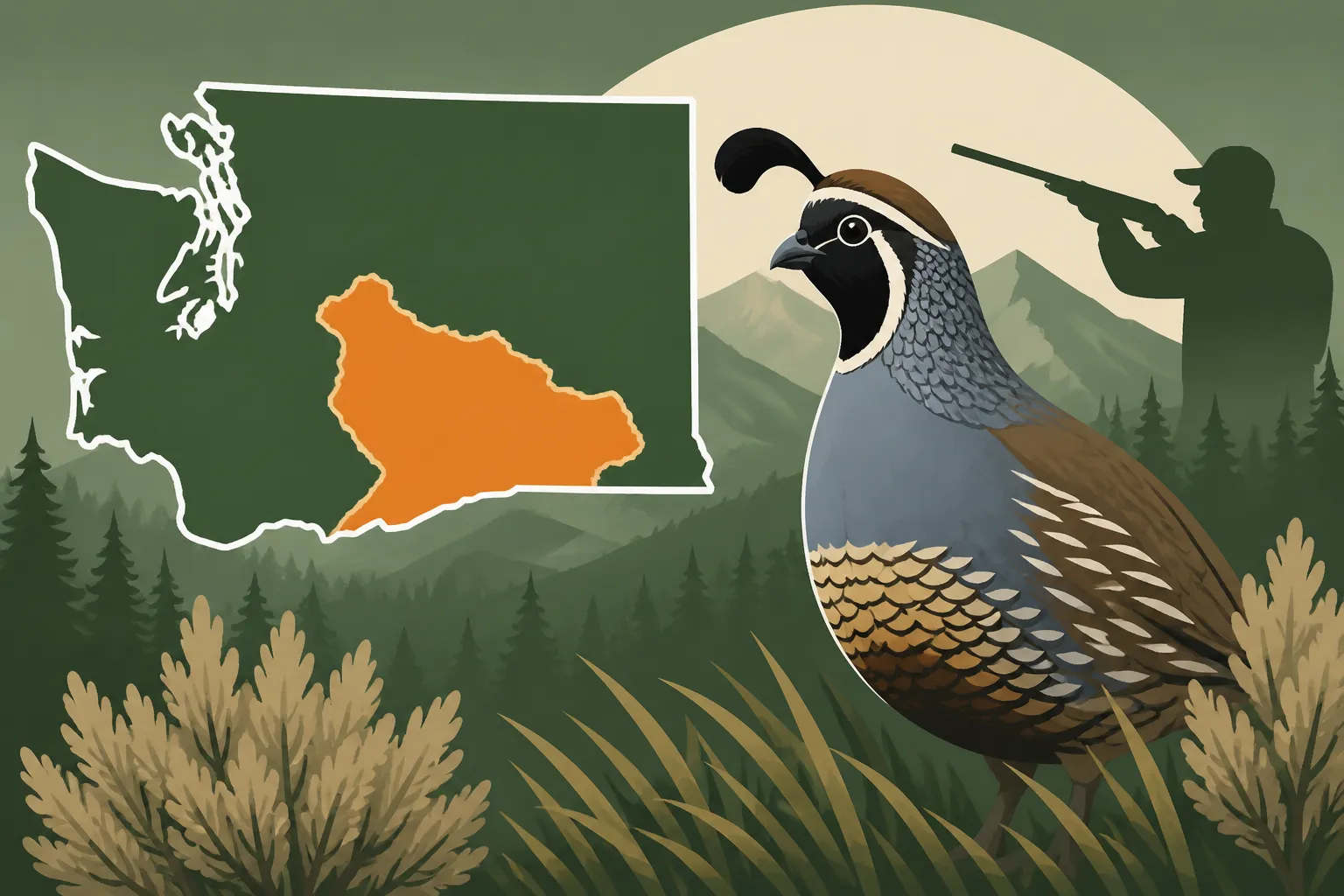
Without a doubt, the prime territory for California quail in Washington lies east of the Cascade Mountains. This drier, often more open country provides the perfect blend of shrub-steppe, agricultural lands, and riparian zones that quail adore. Large areas of the Columbia Basin, including counties like Grant, Adams, Franklin, and Walla Walla, are classic quail country. Here, you'll find them inhabiting the fringes of wheat fields, along irrigation canals, and in the draws and coulees filled with sagebrush and cheatgrass. The rolling hills and breaks offer both foraging opportunities and dense cover in the bottomlands.
Further north, in counties like Okanogan and Douglas, the habitat shifts slightly but remains productive. River valleys, particularly those of the Okanogan and Methow rivers, provide excellent quail habitat where agriculture meets brushy riverbanks. These areas often experience milder winters than the higher elevations, which helps with quail survival rates. In places like the Wenatchee and Yakima valleys, the proliferation of orchards and vineyards creates interstitial habitats that quail readily exploit. It's not uncommon to find thriving coveys right next to human activity, as long as that essential cover is present. Areas with diverse vegetation, especially those that combine agricultural waste grains with natural shrublands and a reliable water source, are your best bets in Eastern Washington. This is also prime habitat for other upland species, so you might be able to combine your efforts for Chukar, Quail and Grouse in Washington.
West of the Cascades: Pockets and Challenges
While not as widespread or abundant as their eastern counterparts, California quail do exist west of the Cascades. Their presence here tends to be more localized and often tied closely to specific microclimates and human-modified landscapes. The western side of Washington is generally wetter and features denser, conifer-dominated forests, which isn't ideal quail habitat. However, where agricultural lands, open prairies, and suburban interfaces exist, you can find pockets of these birds.
The Willamette Valley extension into Southwest Washington, particularly in Clark and Cowlitz counties, holds some populations. Here, you'll look for quail in brushy creek bottoms, old pastures that are reverting to brush, and around hobby farms or small agricultural operations. The San Juan Islands and other coastal areas can also harbor quail, especially where open grasslands meet dense thickets of salal, rose, or blackberry. These coastal populations often benefit from milder maritime climates. The key difference on the west side is that their habitat is much more fragmented. You're less likely to find vast expanses of quail-friendly country and more likely to encounter small, isolated coveys that require diligent scouting to locate. Access can also be a challenge, often requiring Getting Written Permission on Private Land or hunting Washington Wildlife Area Rules that permit upland game.
Here's a quick comparison of the general quail hunting experience across the state:
| Feature | East of the Cascades | West of the Cascades |
|---|---|---|
| Habitat Type | Drier shrub-steppe, agricultural fringes, river breaks | Fragmented farmland, coastal brush, suburban edges |
| Quail Density | Generally higher, larger coveys | Lower, smaller and more isolated coveys |
| Terrain | Rolling hills, coulees, flat agricultural land | Varied, from flat fields to brushy coastal bluffs |
| Cover | Sagebrush, bitterbrush, cheatgrass, riparian thickets | Blackberry, salal, wild rose, dense riparian brush |
| Access | Mix of public land, private land, WDFW programs | More private land, specific WDFW programs |
| Challenges | Finding water sources, wide-open spaces | Dense, difficult cover; fragmented habitat |
Scouting Strategies for California Quail
You can't just drive around hoping to stumble upon a covey of quail. Effective scouting is paramount, and it combines old-school field craft with modern technology.
Key Indicators of Quail Presence
The most obvious sign of California quail is their distinctive call. As mentioned, the "chi-ca-go" call is their signature, and listening for it at dawn or dusk can often lead you right to a covey. They are particularly vocal when trying to regroup after being scattered or when communicating their location to other covey members. Pay close attention to areas that offer the ideal trifecta: food, water, and dense cover. Look for signs like tracks in dusty areas or along water sources, dusting bowls (small depressions where they take dust baths to clean their feathers), and droppings.
A solid pair of binoculars can also be invaluable for scanning edges of fields, dense brush lines, or riparian corridors from a distance. Quail often perch on low branches or fence posts to survey their surroundings, especially in the early morning sun. If you spot one bird, chances are a whole covey is nearby. Don't be afraid to walk slowly through promising areas, pausing frequently to listen. Their explosive flush can be startling, but it tells you exactly where they've been hiding. Pay attention to south-facing slopes in colder weather, as these areas offer warmth and can concentrate birds.
Leveraging Technology for Quail Hotspots
In today's hunting world, technology can be a huge asset for scouting, even for small game like quail. Satellite imagery and digital mapping applications are incredibly powerful tools. Services like GoHunt, for example, offer detailed overlays that show public and private land boundaries, topography, and different vegetation types. This allows you to identify potential quail habitats from your couch before you even set foot in the field. Look for areas with a mosaic of habitat: open fields (food) adjacent to dense, brushy draws or riparian corridors (cover and water).
You can also use these apps to mark potential water sources like creeks, ponds, or even irrigation ditches that might not be obvious on a standard map. Combine this with public land information, which many apps have built-in, to identify accessible hunting grounds. GPS Apps and Offline Maps for Washington Units are invaluable, especially in areas with spotty cell service. Downloading maps before you go ensures you always know where you are and what the land ownership is. This digital reconnaissance, coupled with on-the-ground confirmation, can save you countless hours of unproductive walking. It helps you focus your efforts on areas that genuinely offer the right conditions for quail.
Seasonal Movements and Hunting Considerations
California quail, like most wildlife, adjust their behavior and preferred locations based on the time of year and prevailing weather conditions. Understanding these shifts can give you a significant edge.
Early Season vs. Late Season Behavior
The early season, typically beginning in late September or early October, finds quail populations generally at their highest, as the year's broods have matured. During this time, coveys tend to be smaller and more spread out. Birds will often be found near abundant food sources, such as grain fields or areas with ripe berry bushes, and close to water. The cover might still be very thick, making flushes challenging. They might be less wary as they haven't experienced much hunting pressure yet. This is a great time for walk-in hunts, covering ground with a good bird dog to locate those dispersed coveys. Remember to check Washington Small Game Season Dates to plan your outings.
As the season progresses into late fall and early winter, quail behavior shifts significantly. Coveys grow larger, sometimes consolidating into sizable groups of 50 or more birds. This larger grouping provides better protection against predators and helps them conserve warmth during colder nights. They become much more concentrated in areas with the densest, most protective thermal cover. Think thickets of blackberry, hawthorn, or heavy brush in draws and south-facing slopes that catch the sun. Food sources might be scarcer, so they'll focus on areas that still offer reliable forage, often in conjunction with their heavy cover. Hunting late-season quail can be challenging due to their wariness and the sheer density of the cover they choose, often requiring more persistent dog work or strategic blocking to get them to fly. Upland Bird Hunting After Deer Season can be a great way to extend your time afield.
Weather Impacts on Quail Location
Weather plays a huge role in where you'll find California quail. On warm, sunny days, especially in the early season, quail will often venture out into more open areas to feed, dusting themselves in sunny spots, and generally being more visible. As the day heats up, they'll retreat to shaded cover, often near water, to escape the midday sun.
Conversely, cold or wet weather will drive quail into the densest available cover. If it's raining or very windy, they'll hunker down deep in thickets, making them incredibly difficult to flush. They'll prioritize shelter over feeding during adverse conditions. After a cold snap or a significant rain, look for them seeking warmth and sun on south-facing slopes, particularly where that dense cover is still present. Snow can be a game-changer; light snow cover can make tracks easier to spot and concentrate birds, but heavy snow can bury food sources and make travel difficult for both birds and hunters. Understanding these weather-driven movements is key to adapting your hunting strategy, whether you're navigating wet coastal conditions or crisp eastern Washington mornings.
Disclaimer
This article is for general informational purposes only and does not constitute professional advice. Laws, prices and regulations vary by location and change over time. Consult a qualified professional for guidance on your specific situation.