Bighorn Pneumonia Die-Offs in Washington
It’s truly heartbreaking to witness a bighorn sheep herd, these majestic symbols of Washington’s wild ruggedness, suffer from a devastating disease like pneumonia. The sight of a once-thriving group reduced to a handful of sickly animals is a gut punch to anyone who values our wildlife. This comprehensive guide will pull back the curtain on bighorn pneumonia die-offs in Washington, exploring the insidious nature of the disease, its profound impact on our wild sheep populations, and the critical steps being taken – and what we, as responsible hunters, can do – to protect these incredible creatures.
Understanding Bighorn Sheep in Washington
Before we dive into the challenges, let's appreciate the magnificent animals we're talking about. Washington state is home to bighorn sheep, and they are a sight to behold in their rugged, often remote habitats. Their presence adds an undeniable wildness to our landscapes, and seeing them is a privilege many hunters and outdoor enthusiasts cherish.
The Different Subspecies and Their Habitats
In Washington, we're primarily dealing with two subspecies of bighorn sheep: the California bighorn sheep and the Rocky Mountain bighorn sheep. While they might look similar to the untrained eye, their geographical distribution and a few subtle characteristics set them apart. The California bighorn sheep typically occupy the drier, steeper, and more open canyonlands and mountains of central Washington, particularly around the Yakima River Canyon, Sinlahekin Valley, and Chelan areas. These herds are often found in areas with sparse tree cover, relying on their keen eyesight and incredible agility on rocky terrain to evade predators.
The Rocky Mountain bighorn sheep, on the other hand, are found in the rugged, forested mountains of northeastern Washington, particularly in the Blue Mountains in the southeastern corner of the state, bordering Oregon. These are the same animals you'd find in Idaho or Montana, adapted to higher elevations and more timbered country, though they still prefer rocky outcrops and open slopes for foraging and security. Both subspecies thrive in environments where they can access quality forage and escape predators like cougars and coyotes by retreating to precipitous cliffs. Understanding these distinct habitats is crucial when considering how diseases might spread and impact localized populations, as isolation or connectivity between these ranges plays a significant role. If you're looking to learn more about their distribution, our article on Rocky Mountain Bighorn Herds in Washington offers even greater detail.
Historical Presence and Conservation Efforts
Bighorn sheep have a long and storied history in Washington, but it hasn't always been an easy one. Historically, bighorns roamed much more widely across the state, even extending into parts of the Cascade Range. However, by the early 20th century, their numbers plummeted drastically due to a combination of factors, including unregulated hunting, habitat loss, and critically, diseases introduced by domestic livestock. It's a sad chapter in our state's wildlife history, and it serves as a stark reminder of how fragile these populations can be.
Thankfully, extensive conservation efforts over the past several decades have worked to bring them back from the brink. The Washington Department of Fish and Wildlife (WDFW) has implemented ambitious reintroduction programs, translocating bighorns from healthy populations in other states and within Washington to establish new herds and bolster existing ones. These efforts involve capturing, testing, and relocating animals, a complex and costly endeavor. They've focused on restoring habitat, improving range conditions, and carefully managing harvest through limited permit hunts. For those interested in pursuing one of these rare opportunities, understanding Washington Bighorn Sheep Permits is key. These conservation efforts have seen some success, with populations slowly recovering in several key areas, allowing us to once again marvel at these magnificent animals in their native element. However, this recovery remains tenuous, and new threats constantly emerge, testing the resilience of these hard-won gains.
The Silent Killer: Bighorn Pneumonia
Among the many challenges facing bighorn sheep, one stands out as particularly devastating: pneumonia. It's not just a bad cold; it's a deadly disease that can wipe out entire generations, leaving behind only ghosts of former herds. The frustration of watching a herd you've scouted for years slowly fade away due to an invisible enemy is something many hunters and wildlife enthusiasts have experienced firsthand.
What is Mycoplasma ovipneumoniae (M.ovi)?
When we talk about bighorn pneumonia, we're almost always referring to a respiratory disease complex primarily caused by the bacterium Mycoplasma ovipneumoniae, commonly abbreviated as M.ovi. This bacterium is the primary culprit behind the severe and often fatal pneumonia outbreaks that plague wild sheep populations across North America, including right here in Washington. What makes M.ovi so insidious is that it acts as a primary pathogen, creating the initial infection that then weakens the sheep's respiratory system, making it highly susceptible to secondary bacterial infections. These secondary infections are often what ultimately prove fatal, leading to chronic coughing, emaciation, and ultimately, death.
The frustrating part is that M.ovi can be carried by apparently healthy bighorns for long periods, making them silent spreaders. A carrier sheep might look perfectly fine, but it can still transmit the bacterium to others in the herd, triggering a cascade of illness. This asymptomatic carriage complicates management efforts immensely, as identifying infected animals isn't always as simple as spotting a sick sheep. Researchers are constantly working to better understand the nuances of M.ovi infection, including different strains and their varying virulence, to develop more effective detection and prevention methods.
How the Disease Spreads
The primary mode of M.ovi transmission is direct contact between bighorn sheep. This means nose-to-nose contact, sharing grazing areas, or even just occupying the same general vicinity where airborne droplets can be inhaled. While this direct transmission within a wild bighorn herd can lead to rapid spread and localized die-offs, the most devastating transmission events occur when wild bighorn sheep come into contact with domestic sheep or goats.
This is where the real heartache begins. Domestic sheep and goats often carry M.ovi without showing any symptoms themselves. They are essentially reservoirs for the bacteria. When a wild bighorn, perhaps a curious ram venturing onto lower ground, comes into contact with even one domestic sheep, it can pick up the M.ovi bacteria. That one wild sheep then returns to its herd, and the disease can spread like wildfire, causing mass mortality events. It's a classic case of an introduced pathogen wreaking havoc on a naive population that has no natural immunity. This unfortunate interaction is the single greatest threat to bighorn sheep recovery and survival, making habitat separation a paramount conservation strategy. Understanding Why Domestic Sheep Threaten Bighorns is foundational to grasping the complexities of this disease.
Devastating Impacts on Bighorn Herds
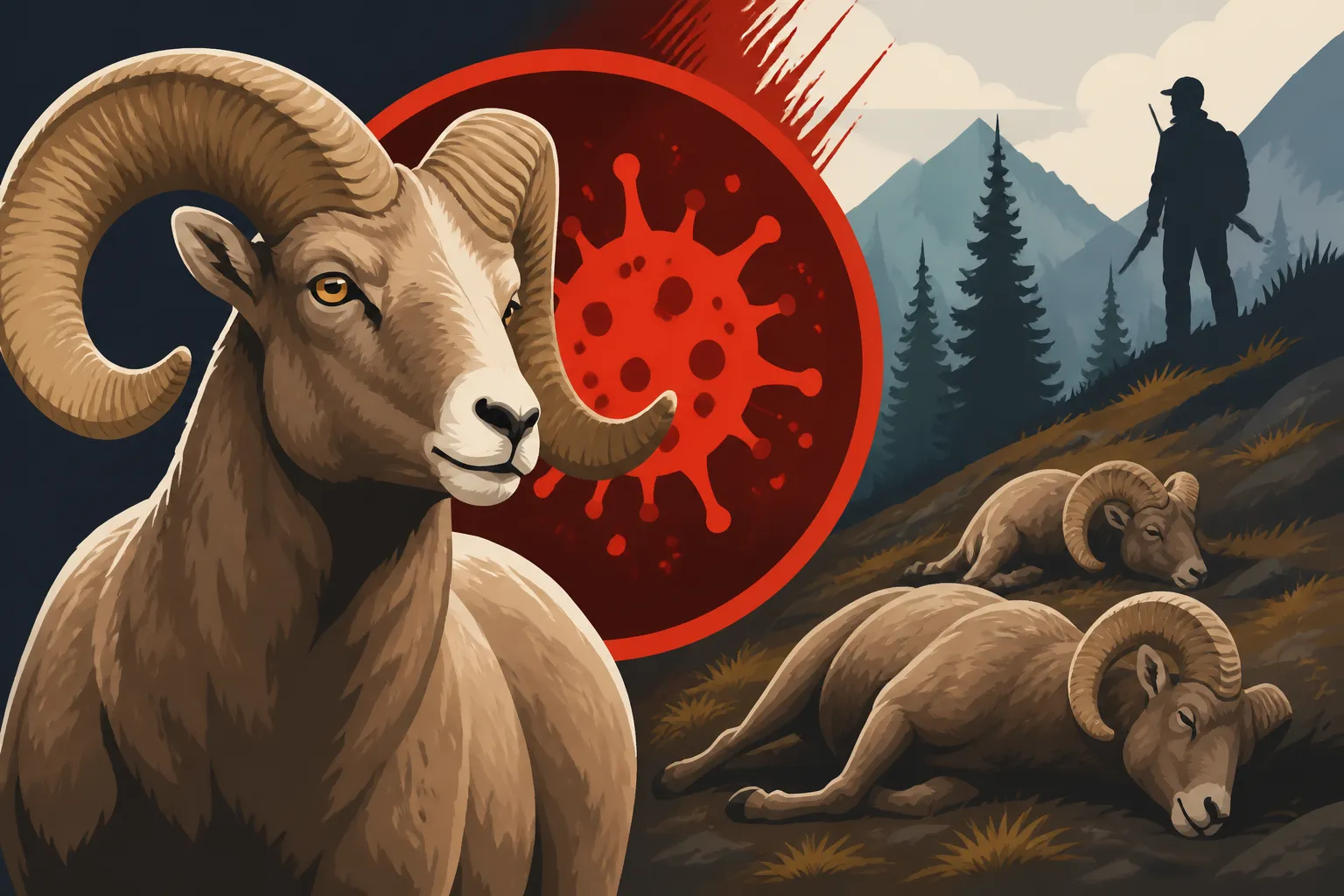
The impact of a M.ovi outbreak on a bighorn herd is nothing short of catastrophic. When the disease enters a susceptible herd, it can result in what's known as an all-age die-off. This means sheep of all ages – lambs, yearlings, ewes, and rams – succumb to the illness. Lambs are particularly vulnerable, with survival rates often dropping to near zero for several years following an initial outbreak. This "lamb recruitment failure" is especially devastating because it essentially halts the herd's ability to replace itself, leading to a rapid decline in overall population numbers.
The initial die-off event can reduce a herd's size by 50-90% in a matter of weeks or months. But the tragedy doesn't end there. Herds that survive the initial mortality event often enter a chronic phase, where M.ovi persists within the population. This leads to continued lamb mortality for many years, sometimes a decade or more, preventing the herd from ever fully recovering its former strength. You might see seemingly healthy adult sheep, but their future is dim without successful lamb recruitment. This long-term suppression of herd growth is why pneumonia is such a persistent and difficult problem to manage, leaving conservationists and hunters feeling a profound sense of frustration as they watch these herds struggle. It's not just about the numbers; it's about the loss of unique genetic lines and the vital role these animals play in their ecosystems.
The Domestic Sheep Connection
It's tough to talk about bighorn pneumonia without addressing the elephant in the room – or rather, the domestic sheep in the pasture. This connection is not about blaming ranchers, but about understanding the biological reality of disease transmission that makes coexistence between wild and domestic sheep incredibly challenging.
Why Contact Between Wild and Domestic Sheep is Critical
The scientific consensus is overwhelming: direct or even indirect contact between wild bighorn sheep and domestic sheep (or goats) is the primary pathway for M.ovi transmission into wild herds. As mentioned, domestic sheep can carry M.ovi asymptomatically, meaning they harbor the bacteria without showing any outward signs of illness. They're essentially "Typhoid Marys" for the bighorns. When a wild bighorn sheep encounters these domestic animals, whether it's by sharing a water source, grazing in adjacent fields, or a young ram wandering into a domestic flock, the bacteria can jump species.
The wild bighorns, lacking any inherent immunity to the strains carried by domestic sheep, are then highly susceptible to severe infection. This isn't just a theory; it's been repeatedly observed in the field and confirmed through extensive research. This interspecies transmission is the single most significant factor undermining bighorn recovery efforts across the West, including in Washington. It places an immense burden on wildlife managers who are constantly trying to balance agricultural interests with wildlife conservation, leading to difficult and often contentious decisions about land use and grazing permits. It's a situation that causes a lot of frustration for everyone involved.
Managing Risk: Separation Strategies
Given the severe consequences of contact, a cornerstone of bighorn sheep conservation revolves around preventing interspecies transmission. This primarily means implementing effective separation strategies between wild and domestic sheep. These strategies can take many forms, depending on the specific landscape and local context.
One common approach involves creating geographic separation, such as establishing "allotment-free zones" for domestic sheep in areas where bighorns reside or where bighorn range expansion is desired. This often requires careful planning and, at times, difficult decisions about existing grazing leases on public lands. Fencing is another tool, though it's often expensive, difficult to maintain in rugged terrain, and not always foolproof for agile bighorns. Herd management practices for domestic sheep, such as vigilant monitoring and prompt removal of any domestic animals that stray into bighorn territory, are also crucial. Some conservation initiatives involve working directly with ranchers to voluntarily remove domestic sheep from critical bighorn habitats, sometimes offering compensation or assistance with transitioning to other livestock. Organizations like the Wild Sheep Foundation and various state agencies are constantly looking for innovative ways to achieve effective separation, understanding that without it, bighorn populations will continue to face this existential threat. For hunters, being aware of these sensitive areas and supporting sound management policies is a vital part of helping our bighorns thrive.
Documented Die-Offs in Washington
Washington's bighorn populations have unfortunately not been immune to the ravages of pneumonia. Over the years, several of our cherished herds have experienced significant die-off events, setting back years of dedicated conservation work and leaving biologists and hunters reeling.
Major Outbreaks and Affected Herds
Washington has a history of bighorn pneumonia outbreaks that have severely impacted multiple herds. Some of the most notable events have occurred in both the California bighorn and Rocky Mountain bighorn populations. For instance, the Wenaha-Tucannon herd, a prime Rocky Mountain bighorn population in the Blue Mountains, has experienced several devastating pneumonia events. These die-offs have resulted in significant population declines, pushing the herd's numbers down to alarmingly low levels and significantly hindering its ability to rebound. The same can be said for various California bighorn herds in central Washington, such as those in the Tieton and Umtanum areas, where disease has repeatedly swept through, decimating lamb crops and adult animals.
These outbreaks are often characterized by a rapid initial mortality phase, followed by years of suppressed lamb survival. Imagine the frustration of seeing a healthy lamb crop one year, only to watch it vanish almost entirely in the subsequent years due to chronic disease. It’s a recurring nightmare for wildlife managers and local communities who have invested so much in these herds. Each major outbreak serves as a stark reminder of the constant vulnerability of bighorns to M.ovi and the need for persistent, proactive management.
Here's a simplified look at the devastating effects of M.ovi on bighorn herds:
| Characteristic | Healthy Bighorn Herd | M.ovi Infected Bighorn Herd |
|---|---|---|
| Lamb Survival | High (60-80% annually) | Extremely Low (0-20% for years post-outbreak) |
| Adult Mortality | Low (predation, accidents) | Elevated (50-90% initial die-off) |
| Herd Growth Rate | Positive, steady increase | Negative or stagnant for prolonged periods |
| Behavior | Active, alert, strong social cohesion | Lethargic, coughing, nasal discharge, isolated |
| Population Trend | Stable to increasing | Drastic decline, slow or no recovery |
| Management Focus | Habitat, predator balance, sustainable harvest | Disease mitigation, separation, monitoring |
Case Studies: Wenaha-Tucannon and Tieton
Let's zoom in on a couple of these areas to truly understand the on-the-ground impact. The Wenaha-Tucannon Wilderness is a stunning, rugged region in the Blue Mountains, and its Rocky Mountain bighorn herd is one of Washington's most iconic. Sadly, this herd has faced multiple pneumonia outbreaks, perhaps the most significant occurring around 2009-2010, which led to a dramatic population crash. This particular event was linked to contact with domestic sheep grazing on nearby private and public lands. The subsequent lamb recruitment failures meant that for years, very few young bighorns survived to adulthood, stunting the herd's ability to recover. This situation led to increased scrutiny of grazing practices in the region and intensified efforts to create buffer zones. Wildlife biologists and conservation groups have worked tirelessly to monitor the remaining animals, attempting to understand the chronic effects of the disease and to prevent future cross-contamination.
Similarly, in central Washington, the Tieton River bighorn herd has experienced its own share of heartbreak. Located in the beautiful, steep canyon country west of Yakima, this California bighorn herd also saw significant die-offs attributable to M.ovi. These events often spark intense debate and frustration among stakeholders, as the balancing act between ranching, recreation, and wildlife conservation becomes acutely clear. For hunters interested in these areas, resources like GoHunt can be invaluable for tracking herd health reports and understanding access regulations in affected Game Management Units (GMUs). The persistence of the disease in these herds underscores the long-term nature of the problem and the ongoing need for vigilance and adaptive management strategies. Each die-off is not just a statistical anomaly; it represents a profound loss for Washington's natural heritage.
Washington's Response and Management Strategies
The Washington Department of Fish and Wildlife (WDFW) and its partners are not sitting idly by while bighorn sheep suffer. They're actively engaged in a multi-faceted approach to combat M.ovi and support our wild sheep populations. It's an uphill battle, but one they are committed to fighting.
Testing, Surveillance, and Research
A critical component of Washington's strategy is robust testing and surveillance. When bighorn sheep are captured for relocation, research, or health checks – often part of efforts to augment herds or establish new ones – they are meticulously tested for M.ovi and other pathogens. This allows biologists to identify infected individuals and prevent the accidental spread of the disease to healthy populations. Imagine the care involved in these operations; it’s not a simple blood draw. It often involves respiratory swabs, blood samples, and careful veterinary assessment to ensure the animals are healthy enough for transport and won't introduce new problems.
Beyond individual animal testing, WDFW conducts ongoing surveillance of bighorn herds. This includes aerial surveys to count animals and assess herd health, as well as ground observations by biologists and dedicated volunteers. Any signs of illness, such as coughing or nasal discharge, are carefully noted and investigated. Furthermore, WDFW actively participates in and supports scientific research into M.ovi. This research aims to better understand the pathogen's genetics, how it evolves, why some bighorns survive while others succumb, and ultimately, to develop new tools for detection, prevention, and even treatment. This dedicated scientific inquiry is essential for informed management decisions, giving us hope that we can turn the tide on this devastating disease. This type of detailed data can sometimes be found on platforms like GoHunt, which aggregate publicly available information for hunters.
Collaborative Efforts and Future Outlook
No single agency or group can tackle a problem as complex as bighorn pneumonia alone. Washington's success in managing this issue hinges on collaborative efforts involving a wide array of stakeholders. WDFW works hand-in-hand with federal agencies like the U.S. Forest Service and Bureau of Land Management, especially concerning grazing permits on public lands that overlap with bighorn habitat. Non-governmental organizations, such as the Wild Sheep Foundation and local conservation groups, play an incredibly vital role, often providing funding for research, supporting habitat enhancement projects, and advocating for bighorn-friendly policies.
Perhaps most importantly, collaboration with private landowners and the ranching community is paramount. Finding common ground and implementing solutions that minimize the risk of contact between wild and domestic sheep, while respecting agricultural livelihoods, requires open communication, empathy, and a willingness to compromise. The future outlook for Washington's bighorn sheep is a mix of cautious optimism and persistent challenge. While the threat of M.ovi remains ever-present, the ongoing commitment to research, surveillance, and collaborative management offers the best hope for these incredible animals. Hunters, too, have a crucial role to play, not just in participating in the limited draws for Washington Mountain Goat Permits or bighorns, but also in being informed, responsible advocates for these magnificent creatures.
What Hunters Can Do to Help
As hunters, we share a deep connection to Washington's wild places and the animals that call them home. Our passion for the outdoors extends beyond the harvest; it encompasses a profound respect for wildlife conservation. When it comes to something as devastating as bighorn pneumonia, we have a vital role to play in helping these iconic animals.
Reporting Sick Animals
One of the most immediate and impactful actions a hunter can take is to report any sightings of sick or dead bighorn sheep. You are often the eyes and ears on the ground in remote areas that WDFW staff can't constantly monitor. If you're out scouting for Glassing Eastern Washington Breaks for Mule Deer or simply enjoying the backcountry, and you come across a bighorn that appears unwell – perhaps it's coughing repeatedly, has nasal discharge, seems lethargic, or is separated from its herd – it's crucial to report it. Similarly, if you discover a bighorn carcass, especially one without obvious signs of predation or injury, this information is invaluable to WDFW.
When reporting, try to gather as much detail as possible without disturbing the animal or carcass. Note the exact location (GPS coordinates are best), date, time, and a detailed description of the animal's condition or the carcass's state. Take photos or videos if possible from a safe distance. Contact your local WDFW office or the regional biologist immediately. This information allows wildlife professionals to investigate promptly, potentially identifying new outbreaks, collecting samples for testing, and understanding the scope of the problem. Your quick action could provide critical data that helps protect the rest of the herd. Knowing where to report a Washington hunt, even for an unfilled tag, connects directly to this ecosystem of data.
Best Practices for Hunters in Bighorn Country
Beyond reporting sick animals, there are several best practices that hunters should adopt when venturing into bighorn sheep country to help mitigate the risk of disease transmission. First and foremost, if you also own domestic sheep or goats, it is absolutely paramount to prevent any contact between your domestic animals and wild bighorns. This might mean adjusting grazing patterns, ensuring secure fencing, or carefully managing your livestock to avoid potential interactions. It's a small inconvenience compared to the devastating impact a disease outbreak can have.
Secondly, exercise caution with your gear. If you hunt in areas with domestic sheep and then plan to hunt bighorns, ensure your boots, clothing, and equipment are thoroughly cleaned to avoid inadvertently transporting pathogens. While the risk of M.ovi transmission via inanimate objects is considered lower than direct contact, it's a responsible precaution. Lastly, stay informed. Keep an eye on WDFW announcements regarding bighorn health, potential winter range closures that might affect access, and specific regulations for units known to harbor bighorn sheep. Using resources like GoHunt to track herd status or research specific GMUs can help you be a more informed and responsible hunter. By adhering to these practices, we contribute directly to the health and recovery of Washington's magnificent bighorn populations, ensuring future generations can experience the thrill of seeing these incredible animals in their natural habitat.
Disclaimer
The information provided in this guide is for general educational purposes only and is not intended as professional advice. Hunting regulations, seasons, and wildlife health situations in Washington can change frequently. Always consult the official Washington Department of Fish and Wildlife (WDFW) regulations, emergency orders, and local authorities before planning any hunting trip or making decisions related to wildlife. The author and publisher are not responsible for any actions taken based on the information presented herein.