Bear Colour Phases in Washington
It's an exciting moment, isn't it? You're out in the Washington wilds, maybe still-hunting through some timber or glassing a distant clearcut, and suddenly, you spot movement. A bear! But then you do a double-take. It's not the jet-black bear you always pictured; it's a rich cinnamon, or maybe even a golden blond. This can throw you off, leaving you wondering if you're looking at a different species or just an unusual variant. This guide is here to clear up that confusion, diving deep into the fascinating world of Washington's black bear color phases and helping you understand what you're seeing in the field.
The Spectrum of Washington Black Bears
When most folks think of "black bears," their mind immediately conjures an image of a sleek, midnight-black animal. And while that's certainly a common sight here in Washington, especially on the wetter west side, it's far from the whole story. Our American black bears ( Ursus americanus) are incredibly diverse in their fur coloration, displaying a stunning array of hues that can surprise even experienced hunters. Understanding this diversity is crucial for accurate identification, ethical hunting, and simply appreciating the natural beauty of these magnificent creatures.
More Than Just Black
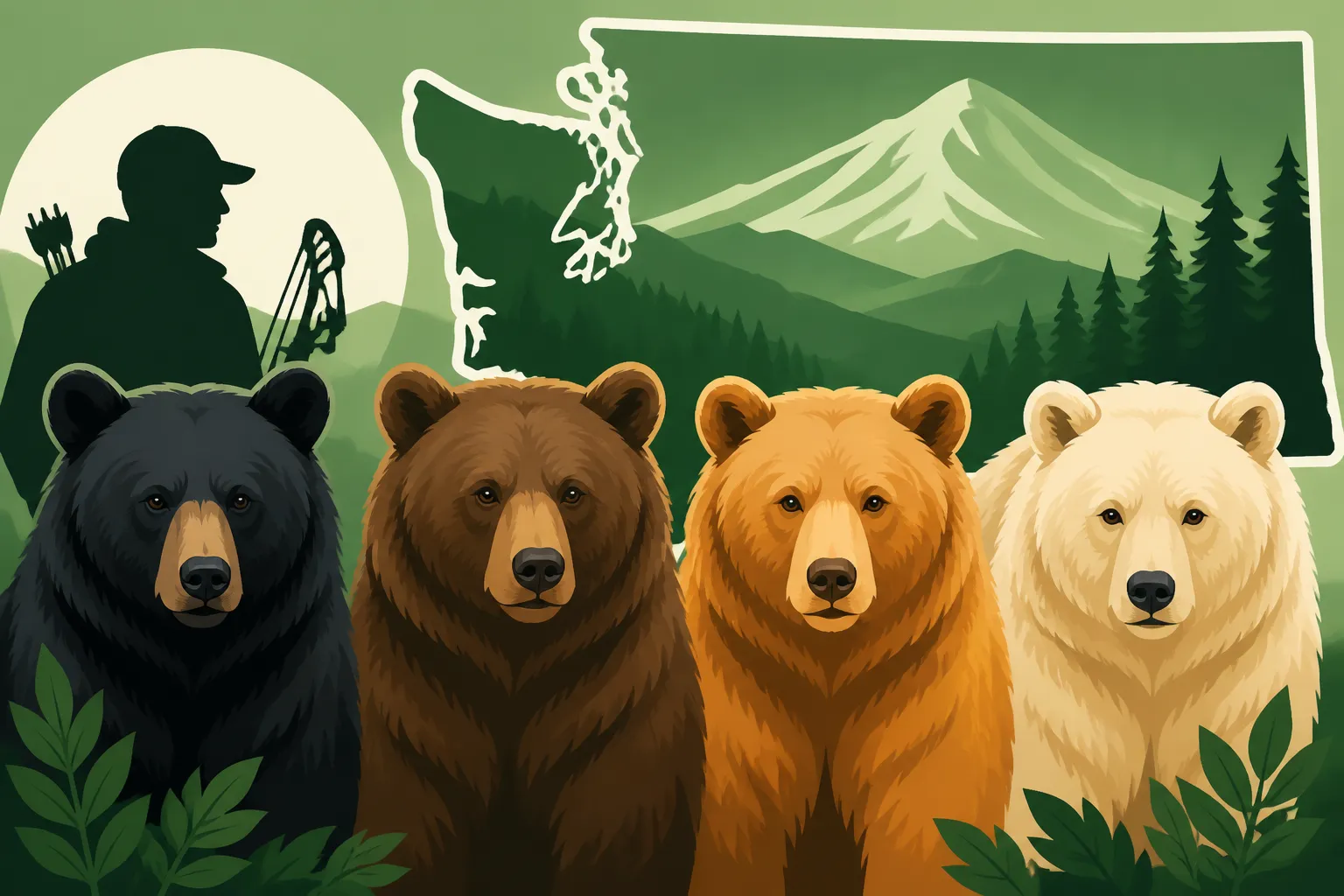
The name "black bear" is honestly a bit of a misnomer when you consider the full genetic tapestry. These bears can range from deep, glossy black to various shades of chocolate brown, cinnamon, and even a striking blond or yellowish-gold. These different colorations aren't separate species; they're all the same American black bear, just with different genetic expressions for fur pigment. Think of it like human hair color—we're all humans, but some have black hair, some brown, some red, and some blond.
This genetic variation is what makes every encounter with a Washington black bear unique. You might be hunting in the Okanogan and see several cinnamon-phase bears, then head over to the Willapa Hills and only encounter solid black ones. It's a testament to the adaptability and genetic richness of the species. Knowing this helps to dispel the common misconception that a brown bear must be a grizzly, which is a critical distinction for hunters given the protected status of grizzlies in Washington.
Why Color Matters to Hunters
Beyond just general knowledge, understanding bear color phases holds real practical significance for hunters. First and foremost, it helps with identification. Misidentifying a bear's species due to its color can lead to serious legal consequences, especially if you mistake a protected grizzly for a black bear (even though grizzlies are exceedingly rare in huntable areas of Washington). A brown-colored black bear is still a black bear and falls under the same hunting regulations.
Furthermore, a bear's color can sometimes play tricks on your eyes when you're trying to judge its size or age, a common challenge many hunters face. A light-colored bear might appear larger or smaller than it actually is, depending on the lighting and background. A dark bear in deep shadow might seem smaller. Getting accustomed to the variations helps you calibrate your visual judgment, making you a more effective and ethical hunter. Some hunters also have a personal preference for a certain color phase, perhaps seeking a cinnamon or blond bear for a unique hide, which is a perfectly valid personal goal within legal and ethical hunting boundaries. You can learn more about the overall Washington Black Bear Population Estimate to better understand bear numbers across the state.
Common Color Phases You'll Encounter
While the spectrum of black bear colors is wide, there are a few predominant phases that you're most likely to see across Washington's diverse landscapes. Getting familiar with these will make you feel much more confident when you spot a bear, whether it's through your binoculars or unexpectedly across a logging road.
The Classic Black Bear
This is probably the most recognized color phase, the one that gave the species its name. These bears have sleek, dark fur that can appear jet black, almost blue-black in certain lights. It's a deep, rich color that often seems to absorb all the light around it, making them look like moving shadows in dense timber. You'll find these bears throughout Washington, but they tend to dominate the populations in the wetter, heavily forested regions of Western Washington.
Sometimes, a black bear might have a small white blaze or patch on its chest, which is a perfectly normal variation. This "chest blaze" is often unique to individual bears and can sometimes even be used to identify a particular animal if you see it repeatedly. The fur is usually uniform across their body, though it can appear lighter or slightly sun-bleached on their flanks and belly if they've spent a lot of time in the sun.
Cinnamon and Brown Phase Bears
Moving eastward and into more open country, you'll start to encounter the beautiful cinnamon and various brown phase bears more frequently. These bears are truly striking, with fur that can range from a reddish-brown, like ground cinnamon, to a lighter, more golden brown, or even a deep chocolate hue. The coloration often varies, with some bears having lighter fur on their flanks and legs and a darker stripe down their back.
These warmer tones help bears blend seamlessly into the sun-drenched sagebrush, ponderosa pine forests, and rocky slopes of Eastern Washington. Imagine a cinnamon bear disappearing into a stand of red-barked Ponderosa—it's remarkable how effective their camouflage can be. These phases are particularly common in areas like the Okanogan, the Blue Mountains, and the Colockum. Don't be surprised if you see a sow with cubs where one cub is black and another is cinnamon, or even blond. It's all part of their genetic lottery.
Blond and Light-Colored Bears
While less common than black or cinnamon, you absolutely can find blond or yellowish-gold black bears in Washington. These animals are truly magnificent and often cause the most confusion because their light color can, at first glance, make them seem quite different from their darker kin. Their fur can be a creamy yellow, a pale blond, or even a silvery-gold, especially when sunlight catches it just right.
These lighter phases are relatively rare but do occur across the state, though perhaps a bit more often in the drier, eastern regions. They are a genetic variation, not a sign of age or diet. When you see a blond bear, it's a truly special sighting. However, because of their light color, it's especially important to remember to identify them not just by their fur, but by their body shape, facial features, and the absence of a prominent shoulder hump to confirm they are indeed a black bear and not a grizzly. This is a critical distinction for any hunter out there.
Factors Influencing Bear Coloration
The myriad of colors we see in Washington's black bear population isn't just random; it's the result of a fascinating interplay between genetics and, to a lesser extent, environmental factors. Understanding these influences can deepen your appreciation for these animals and even help you anticipate what color phases you might encounter in different parts of the state.
Genetics and Geographic Location
The primary driver behind a black bear's fur color is its genetics. A specific gene, MC1R, is responsible for controlling fur pigmentation in bears. Different alleles (variations) of this gene result in different colors. Bears inherit two copies of this gene, one from each parent, and the combination determines their coat color. For instance, two black parents can indeed produce a cinnamon or blond cub if both carry the recessive genes for those colors. It's pure Mendelian genetics playing out in the wild.
What's really interesting is how these genetic traits tend to become more prevalent in certain geographic areas. For example, populations of black bears in the drier, more open environments of Western North America, including much of Eastern Washington, often have a higher frequency of lighter color phases like cinnamon and brown. This could be due to natural selection, where lighter colors provide better camouflage in sun-drenched sagebrush or Ponderosa pine forests, giving those bears a survival advantage. Conversely, the dense, shaded rainforests of Western Washington might favor darker coats. In fact, if you explore GoHunt's extensive data or maps, you might notice regional trends where certain bear color phases are more commonly reported or observed in specific GMUs, hinting at these underlying genetic patterns.
Age, Diet, and Sun Exposure
While genetics dictate the potential color of a bear's fur, other factors can subtly influence its appearance throughout its life. For instance, a bear's fur can sometimes appear lighter or "sun-bleached" after a long summer spent foraging in open, sunny areas. Just like our hair can lighten in the sun, a bear's fur can, over time, lose some of its intensity, especially on the back and shoulders.
Diet and overall health can also play a role in the quality and luster of a bear's coat. A healthy bear with access to a rich diet—like the berries, salmon, and acorns described in "Bear Diet Through the Washington Seasons"—will generally have a thick, glossy coat, regardless of its color phase. A malnourished bear, on the other hand, might have duller, thinner fur. However, it's important to note that diet primarily affects fur health, not the underlying color phase itself. Cubs often have very vibrant, rich fur colors that might slightly soften as they mature, but their fundamental genetic color remains.
Spotting and Identifying Bears by Color
Successfully identifying bears by color in the field is a blend of keen observation, knowledge of physical characteristics, and smart use of your gear. It's not just about noting "brown," but confirming that brown belongs to a black bear. This skill is paramount for safe and legal hunting.
Distinguishing Black Bears from Grizzlies
This is perhaps the most critical distinction any hunter needs to make in Washington. While grizzly bears ( Ursus arctos horribilis) are extremely rare in huntable areas of Washington, primarily confined to remote corners of the North Cascades and Selkirk Mountains, it's still vital to know the difference. Grizzlies are federally protected, and accidentally harvesting one would have severe consequences. And here's the kicker: grizzly bears are also found in a range of colors, from blond to dark brown, so color alone is never a reliable indicator.
Instead, focus on these key physical differences:
- Shoulder Hump: Grizzlies have a prominent muscular hump between their shoulders, especially noticeable when they're standing or walking. Black bears do not have this hump; their back typically slopes straight from the neck.
- Facial Profile: Grizzlies have a dished or concave facial profile, a "roman nose" look. Black bears have a straighter, more convex or "dog-like" profile from forehead to nose.
- Ears: Grizzly ears are relatively small and rounded, almost like a bear from a cartoon. Black bear ears are typically larger and more pointed in proportion to their head.
- Claws: While hard to see in the field, grizzly claws are much longer (2-4 inches) and straighter, adapted for digging. Black bear claws are shorter and more curved, better for climbing trees. If you can see tracks, this is a dead giveaway.
Always prioritize these structural differences over fur color. If there's any doubt, do not shoot. It's simply not worth the risk.
Using Optics to Confirm Color and Features
Good optics are your best friend when it comes to bear identification, especially when trying to discern subtle color variations and crucial physical features from a distance. A quality pair of binoculars, like a 10×42 for general viewing or a 15×56 for long-distance glassing, is essential for "Spotting Bears on Avalanche Chutes" or in distant clearcuts. Use them to scan likely bear habitats slowly and methodically. Once you spot a bear, don't just glance; observe it for a prolonged period.
A spotting scope can be invaluable for detailed examination, allowing you to zoom in and clearly see the bear's profile, ear shape, and the presence or absence of a shoulder hump. Remember that lighting conditions can drastically alter how a bear's fur appears. Early morning or late evening light can make a bear's coat look darker or richer, while bright midday sun might wash out colors, making a brown bear look even blonder. This is where patience comes in—wait for the bear to move into different light, or observe it for several minutes to get a clear picture. You might even use it to confirm "Judging Bear Size at Distance" before making a move.
Regional Differences in Washington Bear Colors
Just like our landscape varies from the wet rainforests of the coast to the arid sagebrush of the interior, so too do the general trends in bear coloration across Washington. While you can find any color phase anywhere, certain regions definitely have a higher prevalence of specific hues, a detail that can be incredibly helpful for hunters targeting specific areas.
Westside Forests and the Darker Hues
Venture into the dense, often rain-soaked forests of Western Washington—think the Olympic Peninsula, the vast tracts of the Gifford Pinchot National Forest, or the heavily timbered lands around the Coweeman Unit—and you'll predominantly encounter black-phase black bears. The environment here is characterized by thick canopy cover, persistent moisture, and dark undergrowth. A deep black coat provides excellent camouflage in these shadowed environments, allowing bears to move like ghosts through the fir and hemlock.
These bears often appear larger and stockier, especially Roosevelt Elk, and their dark fur absorbs what little sunlight penetrates the canopy, which might also help them thermoregulate in the cooler, damper climate. If you're hunting black bears in this region, expect to see mostly black bears, often with incredibly thick, dark coats that gleam wetly after a typical Washington rain shower. Their typical appearance is what gives the species its common name.
Eastside Basins and the Lighter Spectrum
Cross over the Cascade crest into Eastern Washington, and the color palette shifts dramatically, both in the landscape and in the bears. In the drier, more open country of the Okanogan, the vast Blue Mountains, and the Ponderosa pine forests of the Colville National Forest, cinnamon and various shades of brown-phase bears become much more common. Here, the landscape is often bathed in sunlight, with lighter-colored soils, sagebrush, and the reddish-brown bark of Ponderosa pines.
Lighter fur coloration helps these bears blend into their surroundings, offering camouflage against predators or when stalking prey. A cinnamon bear can virtually disappear against a backdrop of golden grasses and Ponderosa bark. It's a prime example of how evolution shapes animal coloration to match their environment. If you're planning a hunt for "Spot-and-Stalk Bear Hunting in Washington Without Bait" in Eastern Washington, especially in units known for more open terrain, you're much more likely to encounter these beautiful reddish-brown and blond bears. Many hunters who actively use tools like GoHunt to scout specific areas will often see anecdotal evidence or reporting trends that highlight this regional shift in bear color prevalence, which can be a fun insight to consider while E-Scouting Washington GMUs Before the Draw.
Hunting Considerations and Ethics with Color Phases
Beyond identification, understanding bear color phases touches on important ethical considerations for hunters. Our responsibility as hunters extends to making informed, respectful decisions in the field, regardless of the animal's outward appearance.
Respecting All Color Phases
It's vital to remember that all color phases—black, brown, cinnamon, blond—are the same species: the American black bear. Therefore, they are all equally eligible for harvest under Washington's hunting regulations, provided all other legal requirements are met. There's no special tag for a "cinnamon bear" versus a "black bear." The regulations regarding bag limits, season dates, and legal hunting methods apply universally to all black bears, regardless of their coat color.
While it's natural for hunters to have preferences, perhaps seeking a unique color phase for a hide or a memory, it's important to approach all bears with the same respect and ethical considerations. The value of a bear isn't tied to the rarity or beauty of its fur color; it's an animal deserving of a clean, ethical harvest and full utilization. Focusing solely on color can sometimes distract from other crucial factors like ensuring it's a legal animal (e.g., not a sow with cubs) or making a clean shot. If you're planning on processing the meat, understanding "Field Dressing in Warm Early-Season Weather" applies to all bears equally.
The Importance of Positive Identification
This cannot be stressed enough: positive identification of your target is paramount in all hunting, but especially with bears. Color is one data point, but it's far from the only, or even the most reliable, one. Before you ever put your finger on the trigger, you must be 100% certain of what you are shooting at. This means confirming it's a black bear and not a grizzly (again, extremely rare, but the risk is not zero), and crucially, ensuring it's not a sow with cubs. "Sows With Cubs and the Legal Line" is a critical ethical and legal boundary in bear hunting.
Bear cubs can be various colors, and sometimes a cub might be a very different color from its mother. Never assume a bear is solitary based solely on its size or immediate surroundings. Take your time, observe the animal's behavior, scan the area for other bears, and use your optics to confirm all identifying characteristics. If you spot a bear and then see a small, dark shape bolt into the brush, it could be a cub, and you should hold your shot. Trail cameras can be a useful tool to get to know the bears in a specific area, allowing you to observe their color phases and behaviors without disturbing them. Good "Trail Camera Placement on Ridge Saddles" can reveal a lot about the local bear population before the season even starts. Always prioritize ethics and responsible hunting over any desire for a particular color phase.
| Bear Color Phase | Description | Common WDFW Regions | Key Characteristics |
|---|---|---|---|
| Black | Deep, glossy black, can appear blue-black | Western Washington (e.g., Olympic, Gifford Pinchot) | Most common, sometimes with a white chest blaze. Blends well in dark, dense forests. |
| Cinnamon | Reddish-brown, varying from light to dark | Eastern Washington (e.g., Okanogan, Blue Mountains) | Excellent camouflage in Ponderosa pine and sagebrush. Can have lighter flanks. |
| Brown | Various shades of chocolate or light brown | Eastern Washington, mixed | Broader category, often includes darker cinnamon tones. Good camouflage in mixed forests and open country. |
| Blond/Yellow | Creamy yellow, pale blond, or silvery-gold | Less common, statewide | Rarest phase, can be mistaken for other species. Always check structural features (no hump, straight face, larger ears). |
Disclaimer
Please note that hunting regulations and wildlife populations are subject to change. Always consult the most current Washington Department of Fish and Wildlife (WDFW) hunting regulations pamphlet and relevant emergency orders before planning and embarking on any hunting trip. This guide is for informational purposes only and does not supersede official WDFW regulations.