Which Washington Herd Is Biggest
One of the most common questions I hear from fellow hunters, especially those new to the Evergreen State, is "Which Washington elk herd is biggest?" It's a natural query. We all want to hunt where there's a strong chance of encountering elk, and herd size definitely plays a role in that. But the answer isn't always as straightforward as naming a single herd, because "biggest" can mean a few different things, and elk populations are constantly shifting. This guide aims to clear up some of that confusion, helping you understand the major players in Washington's elk world and how to use that knowledge to your advantage.
Understanding Washington's Elk Landscape
Before we dive into naming names, it’s really important to grasp that Washington isn't a monolithic elk habitat. We've got distinct regions, vastly different terrains, and even two different subspecies of elk roaming our state. This diversity is what makes hunting here so incredible, but also what complicates a simple answer to "which herd is biggest."
East vs. West: Two Subspecies, Different Worlds
First off, let's talk about the big divide: the Cascade Mountains. This natural barrier splits our state into two very distinct ecological zones, and consequently, two different kinds of elk. On the west side, we have the majestic Roosevelt elk, big-bodied and adapted to the dense, wet forests of the Olympic Peninsula and the coastal ranges. These are often the elk of legend, found in the thick timber where visibility is measured in yards, not miles. Their numbers, while healthy in many areas, are often spread out across vast tracts of private and public timberland.
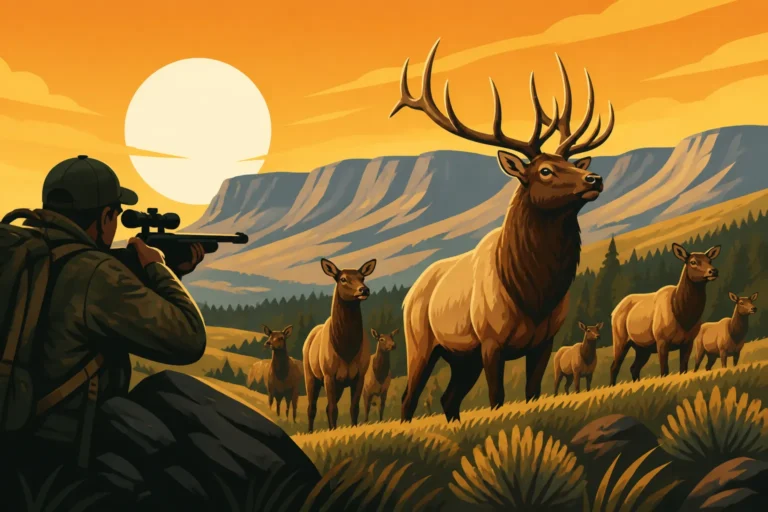
East of the Cascades, you'll find the Rocky Mountain elk. These elk thrive in the more open, arid landscapes of Eastern Washington, from the rolling hills of the shrub-steppe to the towering pines of the Blue Mountains and the Okanogan highlands. They tend to congregate in larger, more visible herds, especially during migration or on winter ranges. When people think of "large elk herds," they're often picturing these eastern populations, simply because the terrain allows for bigger gatherings and easier observation. Understanding these fundamental differences is key to appreciating why herd sizes vary and how we even go about counting them. For more on these differences, you might want to read about Roosevelt Elk of Western Washington and Rocky Mountain Elk East of the Washington Cascades.
How WDFW Counts Big Game
So, how do we even know how many elk are in a herd? It's not like they stand in a neat line for a headcount! The Washington Department of Fish and Wildlife (WDFW) uses a combination of methods to estimate big game populations, and it's a monumental task. The primary method often involves aerial surveys, where biologists fly over specific game management units (GMUs) and count visible elk, often in open areas or on winter ranges where animals are more concentrated. These surveys give them a snapshot, but they're still estimates.
Beyond aerial counts, WDFW uses harvest data, tracking how many animals are taken each year by hunters. They also employ modeling techniques, taking into account calf recruitment, survival rates, and known mortality factors like predation and disease. It's a complex science, and the numbers are always approximations, meant to guide management decisions rather than provide an exact, real-time census. This means that while we can identify generally larger herds, the precise number is always in flux, influenced by environmental factors, hunting pressure, and wildlife health. You can learn more about this process by checking out How WDFW Counts Big Game.
The Contenders: Washington's Largest Elk Herds
Now for the answer you've been waiting for! While exact figures can shift, there are a few elk herds in Washington that consistently rank as the largest, drawing the most attention and offering significant hunting opportunities.
The Yakima Elk Herd
When it comes to sheer numbers, the Yakima Elk Herd is almost universally recognized as Washington's largest. Spanning the rugged terrain of the Yakima River Canyon, the Naches, and surrounding areas, this herd is a powerhouse of Rocky Mountain elk. Its strength comes from a combination of diverse habitat, including expansive summer ranges in the high Cascades and critical winter range in the shrub-steppe, and generally effective management. This herd is a major draw for hunters, both for general season tags and highly coveted special permits.
Hunting the Yakima can be incredibly challenging, given the vastness of the landscape and the elk's ability to disappear into steep canyons and dense timber pockets. But the reward can be substantial, as this herd produces some impressive bulls. For many, drawing a quality tag in the Yakima is the pinnacle of Washington elk hunting, offering a true backcountry experience with the potential for a trophy animal. Understanding the movement patterns of this herd is crucial for success, as they can cover a lot of ground between their summer and winter habitats. You can dive deeper into the specifics of The Yakima Elk Herd in a dedicated post.
The Colockum Elk Herd
Hot on the heels of the Yakima herd, and sometimes rivaling it for top honors depending on the year, is the Colockum Elk Herd. Located east of the Columbia River, north of Wenatchee, this herd also consists of Rocky Mountain elk. The Colockum is known for its rugged, steep canyons, timbered slopes, and sagebrush flats, providing excellent habitat. It's another herd that offers incredible opportunities, but demands significant physical effort and scouting to be successful.
The Colockum is often characterized by its robust population and the challenging nature of the terrain it inhabits. Hunters who pursue elk here often speak of the vastness and wildness of the area. Like the Yakima, the Colockum is a prime destination for special permit applications, and general season hunters find plenty of ground to cover. The health of this herd is a testament to the diverse forage and cover available across its range. For more detailed insights, consider reading about The Colockum Elk Herd.
The Blue Mountains Elk Herd
Journeying further southeast, we encounter the Blue Mountains Elk Herd, another significant Rocky Mountain elk population. Nestled in the rolling, timbered hills and deep canyons of southeastern Washington, these elk are cherished by local hunters and draw interest from across the state. The Blues offer a different kind of challenge, with unique access issues, often deep snow late in the season, and a landscape that feels distinctly different from the central Washington herds.
While perhaps not boasting the absolute highest numbers of the Yakima or Colockum every single year, the Blue Mountains herd is consistently strong and vital to Washington's elk hunting tradition. Hunters here often focus on specific GMUs within the region that are known for producing quality animals. It's an area that requires specific tactics and knowledge of the terrain, which can be unforgiving. The management of the Blue Mountains herd also involves careful consideration of their winter range and interactions with private agricultural lands. Learn more about this specific region with The Blue Mountains Elk Herd.
The Willapa Hills Elk Herd
Now, let's shift gears and head to the west side. Among the Roosevelt elk, the Willapa Hills Elk Herd is widely considered the largest and most robust. Located in the southwestern corner of Washington, this herd thrives in the dense, rain-soaked timber country, clearcuts, and second-growth forests of the Willapa Hills. While their numbers might not always compete with the sheer visible mass of an eastern Rocky Mountain herd, they represent a significant population of Roosevelt elk.
Hunting Roosevelt elk, especially in the Willapa Hills, is an entirely different endeavor. Forget long-range glassing; this is up-close, personal, and often wet hunting. The elk are masters of camouflage in the thick cover, and hunters must be patient, quiet, and willing to navigate challenging terrain. The Willapa Hills provide excellent habitat with abundant forage year-round, contributing to the health and size of this herd. It's a premier destination for those seeking the unique experience of hunting Roosevelt elk. For deeper information, take a look at The Willapa Hills Elk Herd.
Factors Influencing Elk Herd Size and Dynamics
It's one thing to know which herds are generally the largest, but it's another to understand why. Elk populations are incredibly dynamic, influenced by a complex interplay of environmental factors, predator-prey relationships, and human management.
Habitat and Carrying Capacity
The health and size of an elk herd are intrinsically tied to the quality and quantity of its habitat. Think about it: elk need food, water, and cover to survive and reproduce. In Washington, this means everything from nutrient-rich grasses in eastern sagebrush country to browse and forbs in the dense western timber. A herd's "carrying capacity" is essentially the maximum number of animals that a given habitat can sustainably support without degrading its resources.
Factors like wildfire, logging practices, and human development can dramatically alter habitat. A large, productive clearcut might temporarily provide abundant forage, leading to population growth, while continued development can fragment critical migration corridors or reduce available winter range. Droughts can impact forage availability and water sources, especially in Eastern Washington, potentially leading to lower calf survival or increased stress on the herd. On the west side, the constantly changing landscape of private timberlands means elk frequently adapt to new patterns of logging and regrowth.
Predation and Disease
While many hunters focus on hunter harvest, natural factors like predation and disease play a significant role in shaping elk herd dynamics. In Washington, cougars are a primary predator of elk, especially calves and vulnerable adults. Their presence helps keep herds healthy by culling weaker animals, but high cougar densities in certain areas can put pressure on elk populations. In some parts of Eastern Washington, the re-establishment of wolf packs has introduced another layer of predation, the long-term effects of which are continuously monitored by wildlife managers.
Disease can also have a devastating impact. Elk hoof disease, which has been a concern in parts of Western Washington, can weaken animals and make them more susceptible to predation or environmental stressors. Outbreaks of other diseases, though less common, can also reduce herd numbers. Wildlife agencies closely monitor these factors, and disease surveillance is a continuous effort to understand and mitigate potential impacts on our cherished elk herds. To learn more about this, read our post on Elk Hoof Disease in Western Washington.
Hunter Harvest and Management Strategies
Hunters play a crucial role in managing Washington's elk herds. Through carefully regulated hunting seasons and permit allocations, the WDFW works to maintain healthy populations, balance herd numbers with available habitat, and achieve specific management objectives (e.g., maintaining a certain bull-to-cow ratio). General season tags provide broad hunting opportunities, while special hunt permits allow for very specific harvest goals in particular GMUs.
The number of tags issued for any given area, whether it's an antlerless permit or a quality bull tag, is directly tied to population estimates and management goals. For example, if a herd is growing beyond its carrying capacity or causing significant damage to private property, WDFW might increase antlerless tags to reduce overall numbers. Conversely, if a herd is struggling, tag numbers might be reduced to allow for recovery. This system ensures that hunting remains a sustainable activity and a vital tool for wildlife conservation. For those interested in the permit application process, our guide on Washington Special Hunt Permits and How to Apply can offer valuable insights.
Using Herd Information for Your Hunt Strategy
Knowing which herds are generally the biggest isn't just trivia; it's vital intelligence for planning a successful hunt in Washington. This knowledge can influence everything from where you apply for special permits to how you scout and hunt.
Planning Your Application Strategy
For many dedicated elk hunters in Washington, the annual special permit draw is a high-stakes affair. If your goal is to hunt a truly large herd with a higher probability of success, focusing your application efforts on the Yakima, Colockum, or Blue Mountains for Rocky Mountain elk, or the Willapa Hills for Roosevelt, makes strategic sense. These herds consistently offer more tags and, due to their size, generally present more opportunities, even if the draw odds remain challenging for quality units.
Platforms like GoHunt offer invaluable tools for analyzing draw odds, herd statistics, and harvest reports, helping you make informed decisions about your hunt choices. While there are no "guaranteed" tags, understanding where the largest populations reside allows you to put your efforts toward areas with the highest potential returns. It's about playing the long game, accumulating knowledge, and making educated guesses based on available data. Remember, every hunt choice you make on your application is an opportunity, and knowing the biggest herds helps you prioritize those choices.
Scouting and Adaptability
Even if you draw a tag in a massive herd unit, the elk won't just be waiting by the roadside. Large herds simply mean more animals somewhere in the vast landscape. This is where diligent scouting becomes non-negotiable. Begin with extensive e-scouting from home, utilizing satellite imagery, topographical maps, and WDFW GMU descriptions. Identify potential bedding areas, feeding zones, water sources, and travel corridors within your chosen unit. GoHunt's mapping features can be particularly helpful here, allowing you to mark waypoints and plan routes. For a deep dive into preparing from afar, consider our post on E-Scouting Washington GMUs Before the Draw.
Once you've done your homework digitally, nothing beats putting boots on the ground. Visit your GMU before the season opens, if possible, to verify your e-scouting findings, look for fresh sign, and get a feel for the terrain. Elk are incredibly adaptable, and their behavior can change with pressure, weather, and forage availability. A successful hunter is one who can read the landscape, understand elk movement, and adapt their strategy on the fly, even within the confines of a generally large herd. The biggest herd in the state still requires you to find your elk within it.
Comparative Overview of Major Washington Elk Herds
Here's a simplified look at the major elk herds discussed, offering a quick comparison to help solidify your understanding. Keep in mind, these are general characterizations, and specific numbers can vary year to year.
| Elk Herd | General Location | Subspecies | General Herd Size | Key Characteristics | Hunting Style |
|---|---|---|---|---|---|
| Yakima | Central WA (Naches, Yakima) | Rocky Mountain | Very Large | Diverse habitat, significant migrations, popular for special permits. | Open country glassing, backcountry, steep terrain |
| Colockum | Central WA (Wenatchee north) | Rocky Mountain | Very Large | Rugged canyons, mixed timber/sage, physically demanding hunts. | Glassing, spot-and-stalk, often remote |
| Blue Mountains | SE Washington | Rocky Mountain | Large | Rolling timbered hills, distinct seasons, snow challenges. | Timber hunting, tracking, some glassing |
| Willapa Hills | SW Washington | Roosevelt | Large | Dense coastal timber, clearcuts, wet conditions, excellent cover. | Still-hunting, tracking, close quarters |
| Other Roosevelt | Olympic Peninsula, SW WA | Roosevelt | Medium to Large | Scattered populations, often in private timber. | Still-hunting, thick brush, patient tracking |
| Other Rocky Mt. | Okanogan, NE WA | Rocky Mountain/Whitetail | Medium to Large | Mixed with whitetail deer, varied terrain, some wilderness. | Combination of glassing and timber hunting |
This table isn't about precise numbers, which are constantly changing, but rather providing a relative understanding of where the state's largest elk concentrations generally exist. Each of these areas is also part of larger Washington Game Management Units Explained, which can help in your planning.
Ultimately, while the Yakima and Colockum herds often stand out as the largest in terms of sheer numbers of Rocky Mountain elk, and the Willapa Hills for Roosevelt, every herd offers a unique and rewarding hunting experience. It's about finding the right fit for your skills, your desired challenge, and your hunting philosophy. Good luck out there!
Disclaimer
This article is for general informational purposes only and does not constitute professional advice. Laws, prices and regulations vary by location and change over time. Consult a qualified professional for guidance on your specific situation.