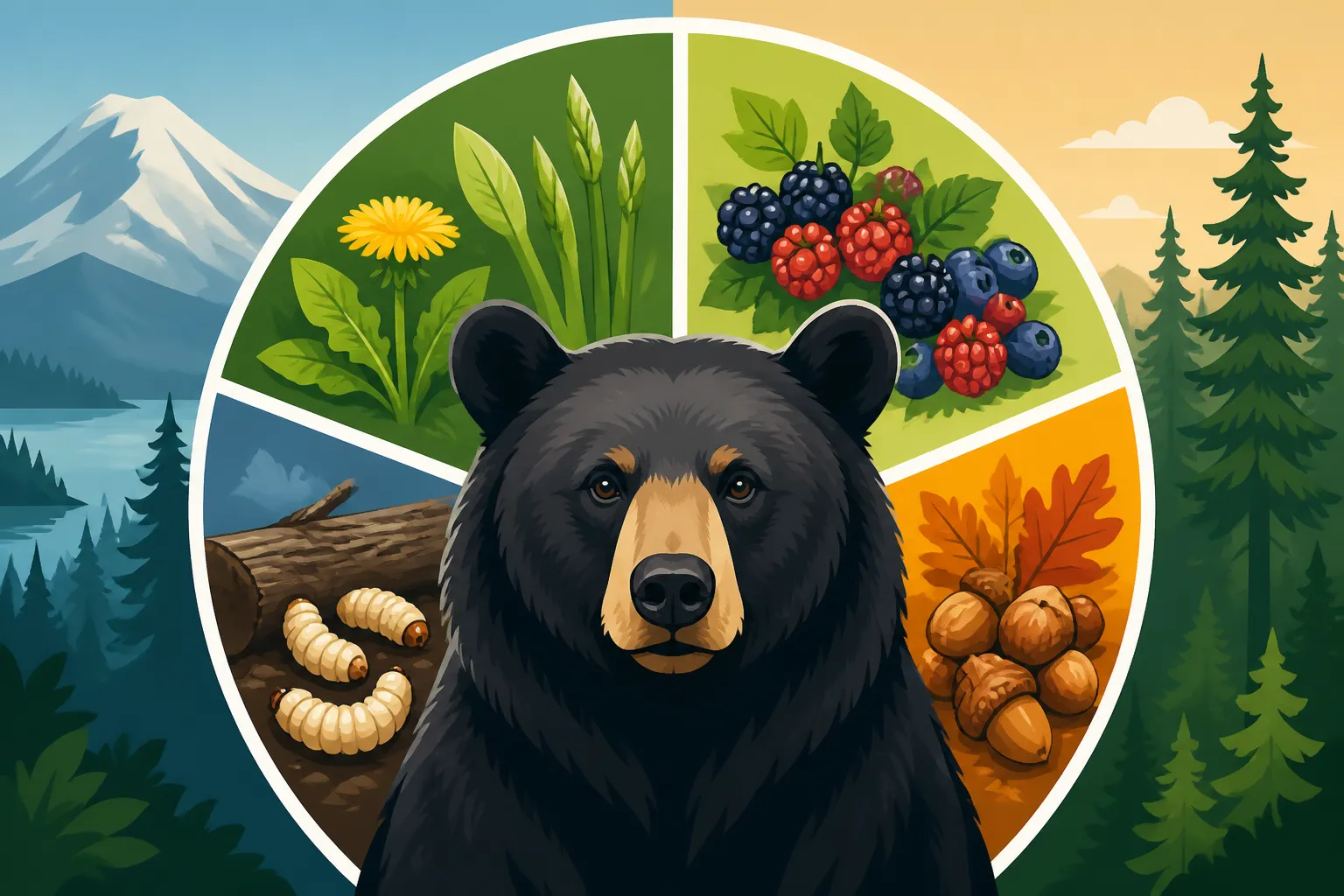
Bear Diet Through the Washington Seasons
Hunting black bears in Washington can feel like chasing a ghost if you don't understand their motivations. Bears aren't just wandering aimlessly; their entire existence revolves around finding enough calories to survive, especially as they prepare for hibernation. This guide will dive deep into the seasonal shifts of a Washington black bear's diet, giving you the critical insights needed to predict their movements and pinpoint prime hunting locations throughout the year.
The Seasonal Shift: Why Bear Diets Matter to Hunters
Understanding a black bear's dietary habits throughout the year isn't just an academic exercise; it's the cornerstone of successful bear hunting in Washington. Bears are masters of efficiency, always seeking the highest caloric return for the least amount of energy expenditure. As seasons change, so does the availability of their preferred food sources, forcing them to adapt their foraging strategies and, consequently, their locations. If you know what they're looking for, you'll know where to look for them.
Fueling Up After Winter: Spring Foraging
When bears emerge from their dens in early spring, often as early as March in some parts of Washington, they are in a serious caloric deficit. Their bodies have been running on stored fat for months, and now they need to quickly replenish those reserves. The initial goal isn't necessarily to put on massive amounts of weight, but to recover lost muscle mass and regain energy. This means they'll be seeking out the first available green-up and whatever protein they can find.
This early spring period is characterized by bears grazing much like cattle, targeting new growth that's rich in easily digestible nutrients. They'll also be extremely opportunistic, cleaning up winterkill carrion or tearing apart logs for insects. Knowing these preferences helps hunters focus on south-facing slopes, lower elevations, and areas where early vegetation thrives, often long before the rest of the forest wakes up.
Summer's Bounty: Berries and Bugs
As spring transitions into summer, the Washington landscape explodes with a diverse array of plant life, and bears shift their focus to this expanding menu. Berries, in particular, become a primary food source, providing essential sugars and carbohydrates that are crucial for weight gain. This is also a time when insects continue to be a significant, if often overlooked, part of their diet, offering vital protein.
During summer, bears can become surprisingly sedentary if they find an abundant food patch. A dense thicket of huckleberries on an old clearcut or a lush riparian zone choked with salmonberries can hold bears for days, even weeks. This makes scouting for these specific food sources in summer absolutely critical for anyone planning a fall hunt. When you're trying to figure out where bears feed in early fall, understanding these summer patterns is a huge advantage.
Fall's Feast: Hyperphagia and Fattening Up
Autumn is perhaps the most critical time for black bears, a period known as hyperphagia, where they enter an intense feeding frenzy. Their sole mission is to consume as many calories as possible to build up the thick layer of fat necessary to survive hibernation. This drive is so powerful that it dictates nearly all their movements and behaviors.
This pursuit of maximum calories often leads bears to concentrated food sources that offer high energy returns, like mast crops (acorns, hazelnuts) or spawning salmon. It's during this time that bears are often most visible and vulnerable, as their urgency to feed can override some of their natural wariness. Hunters who track these peak fall food sources are often the most successful, understanding that a bear's location is almost entirely dictated by its belly during these crucial weeks.
Spring Awakening: Green-Up and Protein Sources
When the last snows melt and the forest floor begins to breathe again, bears are ready to shake off their winter slumber. This period, roughly from March through May, is all about recovery and refueling after months of fasting. They aren't just waking up; they're actively seeking out the vital nutrients their bodies crave.
Succulent Shoots and Emerging Grasses
One of the first things a black bear will seek upon emerging is fresh, green vegetation. They'll graze on tender new shoots, sedges, and grasses that pop up on sunny slopes or along riparian areas where the snow melts earliest. Think of it like a salad bar opening after a long fast. These early greens, though not calorie-dense, are packed with water and vital vitamins and minerals that help restart their digestive systems and replenish fluids.
You'll often find bears concentrating on south-facing slopes and old avalanche chutes in the Cascades or on the early green-up slopes of the Coast Range. These sun-drenched areas warm faster, allowing vegetation like skunk cabbage, horsetails, and various grasses to emerge sooner. Observing the timing of this green-up, perhaps even noting it on a scouting app like GoHunt, can be invaluable for finding where bears are likely to be focusing their efforts in the initial weeks after den emergence.
Insect Protein: Grubs, Ants, and Carrion
While greenery is important, bears also have a significant need for protein in the spring to rebuild muscle mass. Insects provide a readily available source. Bears are expert excavators, tearing apart rotten logs and stumps to get at beetle larvae, grubs, and ant colonies. You'll often find areas that look like a war zone after a bear has gone through, systematically dismantling decaying wood for these protein-rich snacks.
Additionally, spring can still present opportunities for carrion. Winterkill deer, elk, or other animals that didn't survive the harsh season become a prime target. Bears have an incredible sense of smell and will locate these carcasses quickly. While it's not a primary food source that sustains them for long, it's a welcome protein boost. When you're Reading Cougar Sign in the Snow, keep an eye out for other winter scavenging activity that might indicate bear presence once the snow recedes.
Opportunistic Foraging and Early Season Sign
Spring bear activity is largely opportunistic. They are not picky eaters in these early weeks; if it's edible and provides energy, they'll consume it. This can include foraging for early berries like salmonberries in lower western Washington elevations, or even digging for roots and tubers. Any area that provides a diverse mix of these early food sources, especially near their denning areas, will be a high-probability spot.
When scouting, look for turned-over rocks, ripped-apart stumps, fresh tracks in mud near melting snow, and droppings full of plant fibers or insect remains. A good place to learn about the general availability of food sources by region is through WDFW pamphlets, but localized ground scouting is key. Understanding Where Bears Feed in Early Fall is important, but spring knowledge lays the groundwork for predicting those later patterns.
Summer's Sweet Tooth: Berries, Fruit, and Mast
As the long days of summer arrive in Washington, the bear's diet shifts dramatically towards carbohydrates and sugars, primarily found in the abundant berry crops. This is when they start earnest efforts to pile on fat, but it's also a period where they can become more reclusive, content to browse in dense cover.
Early Berries: Huckleberries, Salmonberries, and Serviceberries
By mid-summer, typically July and August, Washington's forests become a buffet of berries. Huckleberries are perhaps the most famous and sought-after by both bears and humans. They grow prolifically in many parts of Washington, particularly in the understory of coniferous forests in the Cascades and Blue Mountains. Bears will spend hours, even days, gorging themselves in productive huckleberry patches.
Along the wetter western side of the state, salmonberries and thimbleberries become crucial early summer fare. These grow in dense thickets in clearcuts, along riparian zones, and in disturbed areas. Serviceberries, found more on the drier eastside, also provide an important, albeit smaller, early fruit source. These fruits provide readily available sugar and energy, which are critical for the bears to begin their pre-hibernation weight gain. When scouting, focus on elevation changes; berries at lower elevations ripen first, with higher elevation patches coming on later, drawing bears upslope as the season progresses.
Later Summer Fruit: Blackberries and Elderberries
As August turns to September, and sometimes even into early October, later-ripening berries and fruits take center stage. Blackberries, particularly the invasive Himalayan variety, are incredibly prolific throughout Washington, especially in disturbed areas, old clearcuts, and along forest edges. These offer a massive caloric punch due to their sheer abundance and sugar content. Bears will absolutely hammer blackberry patches.
Elderberries also become ripe in late summer and early fall, providing another important food source. In certain areas, domestic fruit orchards (apples, pears, plums) can also become irresistible magnets for bears, leading to conflicts with landowners. Understanding the ripening schedule of these different fruits is paramount. A good mapping tool, like the public land layers available through GoHunt or OnX, can help identify areas with historical clearcuts, riparian zones, or old homesteads that are likely to hold these later-season berry patches.
Timber Management and Bear Food Production
It might not seem obvious, but timber harvesting practices have a significant impact on bear diets and distribution. Clearcuts, while initially barren, quickly regenerate with diverse vegetation, including many species bears thrive on. The early successional stages of a clearcut, typically 3 to 15 years post-harvest, are prime bear habitat, providing dense cover and abundant berry production.
Logging roads and landings also create edges that encourage berry growth. Forest thinning operations can open up the canopy, allowing more sunlight to reach the forest floor, which in turn boosts berry production. Hunters who pay attention to timber company activity and the age of different clearcuts are often rewarded. Areas that were logged 5-10 years ago are especially attractive, offering a mix of cover and food. This kind of knowledge is vital for Reading Clearcuts and Reprod for Blacktail Bucks, and equally useful for bears.
The Autumn Bulk-Up: Nuts, Fish, and Large Calories
Autumn in Washington is a period of intense urgency for black bears. With winter looming, they enter a phase of hyperphagia, meaning they eat almost constantly, driven by an instinct to store enough fat to sustain them through several months of hibernation. This is often the most productive time for hunters to target bears, as their focus on food makes them more predictable.
Hard Mast: Acorns and Hazelnuts
When available, hard mast crops are a bear's absolute gold standard for fattening up. Acorns from various oak species, particularly Oregon white oak found in the Columbia Gorge and parts of eastern Washington, are incredibly calorie-dense. Bears will spend countless hours foraging under oak trees, especially after a good mast year. Similarly, hazelnuts, found in riparian areas and forest edges, also provide a valuable, high-fat food source.
The availability of mast crops can vary drastically year to year. A banner year for acorns will often concentrate bears in specific oak stands, making them easier to pattern. Conversely, a poor mast year will force bears to travel further and rely more heavily on other food sources, spreading them out and making them harder to find. Scouting in late summer and early fall for these crops can be hugely beneficial, revealing areas where bears will congregate. This kind of specialized scouting insight can transform your hunt, similar to how detailed planning helps with Archery Elk Hunting in Washington's September Season.
Salmon Runs: A Protein Goldmine
For bears residing near Washington's salmon-bearing rivers and streams, the fall spawning runs represent an unparalleled caloric opportunity. From late summer through fall, depending on the species and river system, salmon migrate upstream to spawn and die. This influx of protein and fat-rich fish is an irresistible draw for bears. Coastal black bears, especially the larger Roosevelt elk country bears, will often abandon other food sources to feast on salmon.
Bears will congregate along stream banks, often in very specific areas where salmon are bottlenecked or where the water is shallow enough for easy predation. Look for traditional fishing holes, bends in the river, or small rapids. The smell of decaying fish will attract them from miles away. This phenomenon makes bears highly concentrated in localized areas for weeks at a time. This is a prime time for Spot-and-Stalk Bear Hunting in Washington Without Bait in these riparian zones, but be mindful of fishing regulations and human activity.
Agricultural Depredation and Conflict
The intense drive for calories in the fall can lead bears to human-occupied areas, especially agricultural lands. Orchards (apples, pears, cherries), cornfields, and even commercial berry farms can become irresistible magnets. While this can provide hunting opportunities on private land with permission, it often leads to conflict with landowners and WDFW.
Bears causing damage to crops are sometimes issued depredation permits or become targets for specific management actions. If you're looking for opportunities in the shoulder seasons or in areas with agricultural interfaces, always ensure you have explicit written permission from landowners and are aware of any special rules or restrictions. This is where understanding programs like Getting Written Permission on Private Land becomes crucial, as bears can be a serious nuisance to farmers.
Water Sources and Bear Travel Corridors
While food drives most of a bear's daily activity, water is an equally essential, though often overlooked, factor influencing their movements. Bears need consistent access to water, especially during hot summer months and when consuming dry, fibrous vegetation. Water sources often serve as natural travel corridors and congregation points, making them prime locations for scouting and hunting.
Spring Seeps and Melting Snow
In the early spring, as bears emerge from their dens, melting snow becomes a crucial water source. Higher elevation snowpacks gradually release water, creating temporary seeps, puddles, and small streams. Bears will often follow the snowline, using these ephemeral water sources as they forage on early green-up. These areas are also typically cooler, offering some relief as temperatures begin to rise.
South-facing slopes, which see the earliest snowmelt, will also have the first available running water. Knowing how to E-Scouting Washington GMUs Before the Draw by looking for drainages, high elevation snowmelt patterns, and natural springs can give you a head start on predicting spring bear movements. Areas with consistent moisture will also support lusher vegetation, providing both food and water in one go.
Summer Streams and Riparian Zones
Throughout the dry Washington summer, perennial streams, rivers, and permanent springs become vital. Bears will travel significant distances to reach reliable water sources, especially during droughts. Riparian zones – the lush vegetation along water bodies – are inherently attractive as they often provide shade, cover, and a rich diversity of food sources, including berries, insects, and tender plants.
You'll frequently find bear trails paralleling streams or leading directly to natural springs. These routes become de facto travel corridors. Setting up for an ambush near a well-used water source, especially in the late afternoon or early morning, can be a highly effective tactic during warmer months. Understanding the flow of these natural arteries of the forest is as important as knowing How Close You Get in Coastal Reprod for deer; it dictates movement.
Identifying Bear Sign Around Water
Water sources are natural places to look for bear sign. Soft mud along stream banks will often hold clear tracks, allowing you to gauge the size of bears frequenting the area and the freshness of their activity. Rub trees, often fir or cedar, are commonly found near water; bears will rub against them to scent mark, scratch, and remove shedding hair.
Beyond tracks and rubs, look for overturned rocks or ripped-apart logs near streams, indicating insect foraging. Bear scat, with its tell-tale contents of berries, seeds, or grasses, will also be more prevalent near water where bears spend extended periods. A careful examination of these signs can tell you not only that a bear is in the area but also what it’s eating and how recently it's been there.
Using Diet Knowledge to Pattern Bears for Hunting
The ultimate goal of understanding a bear's diet is to translate that knowledge into successful hunting strategies. Bears are creatures of habit driven by their stomachs, and by predicting their feeding locations, you dramatically increase your odds of finding them. This isn't about luck; it's about informed, strategic hunting.
E-Scouting for Food Sources
Before you ever step foot in the woods, modern e-scouting tools are indispensable for identifying potential food sources. Satellite imagery can reveal old clearcuts in various stages of regeneration, which are prime for berries. Look for different shades of green indicating varied vegetation types. Use public land maps (like those found on GoHunt or OnX) to identify national forest, DNR, and other publicly accessible lands where these food sources might be.
Pay attention to elevation contours and aspect. South-facing slopes warm up faster and are typically where the earliest green-up occurs in spring and where certain berries might ripen first in summer. North-facing slopes or shaded valleys might hold later-ripening berries or provide cooler bedding areas near food. Identifying historical burn areas can also be highly productive, as these zones often regenerate with abundant berry crops and diverse plant life that attracts bears. For a deeper dive into preparation, consider learning about Public Land Scouting in Washington Before Opening Day.
Ground Scouting for Seasonal Indicators
There's no substitute for boots-on-the-ground scouting. Once you've narrowed down potential areas with e-scouting, hit the woods to verify food source availability. In spring, look for the first flush of green vegetation and evidence of digging for roots or insects. Pay attention to downed timber and old stumps that have been torn apart.
As summer progresses, actively search for berry patches. Identify the species of berries and their ripeness. Are they just starting to turn, or are bears already hammering them? Look for fresh droppings filled with berry seeds – this tells you exactly what they're eating right now. In fall, scout for mast crops like acorns or hazelnuts. Examine the ground under oak trees for fresh sign of cracked shells and disturbed earth. Walk stream banks for evidence of salmon activity and bear sign near the water.
Timing Your Hunt to Peak Foraging
Knowing what bears eat is only half the battle; knowing when they eat it is the other. Your hunting timing should align with peak foraging periods for specific food sources. If it's a good huckleberry year, plan your hunt for late summer when those berries are at their peak. If there's a strong salmon run in your unit, target those river systems when the fish are concentrated.
Consider weather conditions too. A hot, dry summer might push bears to focus more heavily on water sources and any available fruit, while a wet fall might mean a more dispersed mast crop. When you’re Spotting Bears on Avalanche Chutes, remember that early season green-up is temporary; they’ll soon shift to higher calorie options. Being flexible and adaptable, driven by current food availability, is key to success. A comprehensive resource like the Washington Black Bear Season Dates can help you align your hunt with these biological realities.
| Season | Primary Food Sources | Secondary/Opportunistic Foods | Key Hunter Takeaway |
|---|---|---|---|
| Spring | Fresh green growth (grasses, sedges, skunk cabbage) | Grubs, ants, beetle larvae, carrion, early salmonberries | Focus on south-facing slopes, lower elevations, avalanche chutes, and disturbed areas with new growth. |
| Summer | Huckleberries, salmonberries, thimbleberries, serviceberries, early blackberries | Insects (ants, grubs, yellow jackets), small mammals | Target mature berry patches, clearcuts (3-15 years old), and riparian zones. |
| Fall | Blackberries, elderberries, acorns, hazelnuts, salmon | Apples, pears, corn, other agricultural crops, insects | Concentrate on hard mast stands, salmon-bearing rivers, and prolific blackberry thickets. |
Disclaimer
Please remember that hunting regulations and seasons can change. Always consult the most current Washington Department of Fish and Wildlife (WDFW) hunting regulations pamphlet before planning any hunt. This guide is for informational purposes only and does not supersede official WDFW rules.