Cartridge Choices for Washington Elk
Hunting Washington's majestic elk is an experience that calls for careful preparation, and few decisions are as critical as choosing the right rifle cartridge. It's not just about hitting your target; it's about making an ethical, clean kill on a tough, powerful animal that often lives in challenging terrain. Many hunters grapple with the sheer number of options, wondering if their favorite deer cartridge is enough, or if they need something bigger. This guide will help you sort through the popular and effective cartridge choices available, ensuring you step into the Washington woods confident in your gear.
Understanding Washington Elk Hunting Realities
Before we even talk specific cartridges, let's ground ourselves in the reality of hunting elk in Washington. This isn't a flat, open prairie hunt for antelope. We're talking about dense forests, steep mountainsides, and often unpredictable weather. Your cartridge choice needs to reflect these conditions.
Diverse Terrain and Shot Distances
Washington state offers an incredibly varied landscape for elk hunting, and these differences directly impact what kind of shot you might face. On the west side of the Cascades, you're often deep in the dark timber, thick replanted clearcuts, or dense rainforests. Here, a shot might only be 30 yards, sometimes even closer, presenting a quick, reactionary opportunity through a narrow window in the brush. You might not see an elk for long, and if you do, it's often a fleeting glimpse of a patch of hide or antler. The chance of a bullet clipping a small branch on its way to the target is a very real concern, though modern bullets are more forgiving than older designs.
Contrast that with eastern Washington, where the landscape opens up dramatically. Think vast sagebrush flats, rolling wheat fields, deep coulees, and timbered draws that run for miles. Here, you could be glassing elk across canyons at 400 yards or more. While you might try to close the distance, a 200- to 300-yard shot is far more common, and sometimes even longer shots are necessary, provided you've practiced extensively and are confident in your abilities. These different scenarios demand different ballistic profiles from your chosen cartridge, emphasizing bullet drop, wind drift, and retained energy at extended ranges. Understanding the specific Washington Game Management Units Explained you'll be hunting, perhaps with resources like GoHunt to analyze terrain, is crucial to making an informed cartridge decision.
Ethical Considerations and Bullet Performance
The paramount goal in any hunting scenario, especially with an animal as magnificent as an elk, is an ethical kill. This means ensuring your bullet delivers enough energy and penetrates deeply enough to quickly dispatch the animal. Elk are incredibly tough, with thick hides, heavy bone structure, and a large body mass that can soak up a lot of punishment. A bullet designed for thin-skinned deer might not perform adequately on a bull elk.
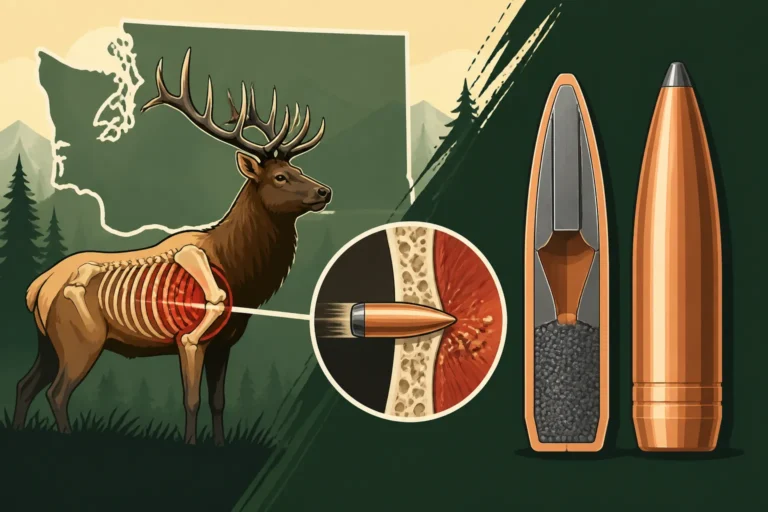
The type of bullet construction you choose is just as important, if not more so, than the cartridge itself. We're looking for controlled expansion—a bullet that expands to create a large wound channel but holds together to penetrate through muscle, ribs, and potentially shoulder bone to reach the vitals. A bullet that fragments too quickly might not reach the lungs or heart, leading to a wounded animal and a long, difficult, or even failed recovery. Conversely, a bullet that doesn't expand enough can pencil through, leaving a small wound channel and insufficient energy transfer. The aim is to create maximum tissue damage within the vitals, ensuring a swift and humane end to the hunt.
Popular Cartridges for Washington Elk
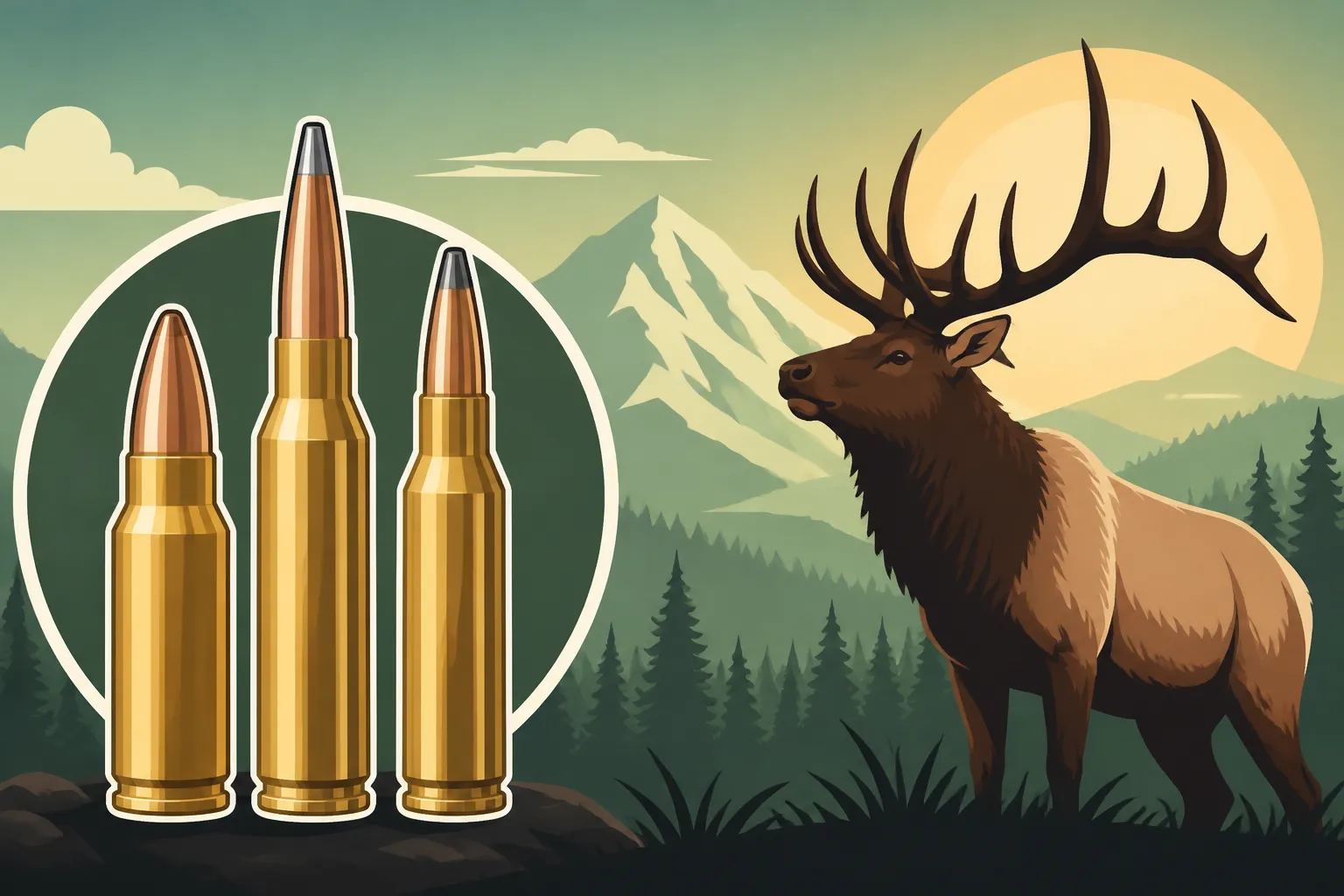
Let's dive into some of the most commonly used and highly effective cartridges for Washington elk, breaking them down by their general characteristics and ideal applications.
The Workhorse .30 Calibers
For many elk hunters across North America, and certainly in Washington, the .30 caliber cartridges are the undisputed champions. They strike a fantastic balance between power, availability, and manageable recoil for most shooters.
The .30-06 Springfield is perhaps the quintessential elk cartridge. It's been around for over a century, has taken every big game animal on the planet, and continues to be a top performer. You'll find .30-06 ammunition virtually anywhere, and a vast array of bullet weights and types are available, from 150-grain deer bullets to heavy 200-grain projectiles perfect for elk. It offers more than enough power for even the biggest Roosevelt Elk of Western Washington or Rocky Mountain Elk East of the Washington Cascades at reasonable hunting distances, typically out to 300-400 yards with proper bullet choice. Its recoil is stout but manageable for most hunters, making it a reliable and versatile choice for Washington's mixed terrain.
Then there's the .300 Winchester Magnum. This cartridge steps up the power considerably from the .30-06, pushing heavier bullets at higher velocities. This translates to more energy on target and a flatter trajectory, making it an excellent choice for longer shots often encountered in eastern Washington's open country. If you're planning on hunting the vast sagebrush of the Okanogan or the expansive breaks of the Blue Mountains, the .300 Win Mag gives you a significant edge in reach and knockdown power. However, that power comes with increased recoil, which can be a factor for some shooters. It's crucial to practice extensively with a .300 Win Mag to ensure you can shoot it accurately under pressure. Many hunters who find the .300 Win Mag a bit much often opt for a good muzzle brake or a heavier rifle to mitigate the kick.
The .308 Winchester, while often considered more of a deer cartridge, is perfectly capable of taking elk with the right bullet. It's known for its inherent accuracy, milder recoil compared to the magnums, and compact rifle platforms. For hunters who prioritize shot placement and are hunting in dense timber where shots are typically under 200 yards, a .308 with a quality 165-180 grain bonded or monolithic bullet is a very effective tool. It might not have the long-range energy of its larger .30 caliber brethren, but in the thick stuff, where shot opportunities are often fleeting and close, its quick handling and precise accuracy can be a significant advantage. It's often debated if the .308 is "enough gun" for elk, but with modern bullet technology, and assuming reasonable distances and proper shot placement, it absolutely holds its own.
Larger Calibers for Extra Punch
Sometimes, you just want more horse power, or you're specifically targeting the largest bulls in challenging conditions. This is where the larger calibers come into play, offering a significant boost in energy and penetration.
The 7mm Remington Magnum is a perennial favorite among elk hunters who want a flat-shooting cartridge with magnum power but slightly less recoil than the .300 Win Mag. It's known for its excellent ballistics, sending 150-175 grain bullets at impressive velocities. This makes it a superb choice for those longer shots across the canyons of the Colockum or Yakima units. The 7mm Mag retains energy very well at distance and provides ample penetration with proper bullet selection, making it a highly versatile option for both open country and timber edges. It's a great all-around western big game cartridge that certainly shines for elk.
Stepping up even further, the .338 Winchester Magnum is a true powerhouse, often considered by hunters who want uncompromising knockdown power. Pushing heavy 200-250 grain bullets, the .338 Win Mag delivers massive energy transfer and exceptional penetration, making it an ideal choice for large, heavy-boned bulls or when you need to break down an animal quickly. If you're concerned about potential shoulder shots or want maximum assurance, the .338 Win Mag delivers. However, be prepared for substantial recoil. This isn't a cartridge for the faint of heart, and extensive practice is mandatory to ensure accuracy. Rifles chambered in .338 Win Mag are often heavier to help absorb recoil, which can be a consideration if you're planning on long hikes into the backcountry. It's a specialized tool for serious elk hunters who prioritize raw power and ethical performance above all else.
Modern Cartridges and Efficiency
The shooting world is constantly evolving, and new cartridge designs frequently emerge, often promising improved efficiency, flatter trajectories, or better long-range performance. Some of these newer offerings have found a place in the elk hunter's arsenal.
The 6.5 PRC (Precision Rifle Cartridge) is a relatively new kid on the block that has gained considerable traction. While traditionally thought of as a long-range target cartridge, its exceptional accuracy and efficient ballistics translate very well to hunting. It can push 140-156 grain bullets at high velocities, offering a surprisingly flat trajectory and good energy retention at extended ranges. For hunters who prioritize precision and are comfortable with careful shot placement, the 6.5 PRC is a very effective elk cartridge, especially with modern, high-performance bullets designed for controlled expansion on large game. It generally has lighter recoil than the .300 magnums, making it easier for many to shoot accurately. It's a testament to how far bullet and cartridge design has come that a "smaller" caliber can be so effective on elk.
Another powerful contender in the modern magnum category is the .300 PRC (Precision Rifle Cartridge). Essentially an optimized .300 magnum designed for heavy, high-ballistic-coefficient bullets, the .300 PRC takes the excellent performance of the .300 Win Mag and refines it. It's built for extreme long-range accuracy and delivers tremendous energy, making it an exceptional choice for very long shots on elk. If you're a serious long-range shooter and your hunting style demands precision at distances few other cartridges can reliably achieve, the .300 PRC is worth considering. Its recoil will be significant, on par with or even exceeding the .300 Win Mag, so again, consistent practice and a robust rifle setup are critical. The main downside to these newer cartridges can sometimes be ammunition availability, though it's improving steadily, especially for popular options like these. When you're Rifle Setup for Washington Big Game, considering these modern calibers means exploring new rifle designs and bullet technologies.
| Cartridge | Typical Bullet Weights (grains) | Recoil Level | Typical Washington Use | Availability (Ammo) |
|---|---|---|---|---|
| .30-06 Springfield | 150-200 | Moderate | All-around, versatile | Excellent |
| .300 Winchester Magnum | 165-220 | Heavy | Open country, longer shots | Very Good |
| .308 Winchester | 150-180 | Mild-Moderate | Dense timber, shorter shots, accuracy | Excellent |
| 7mm Remington Magnum | 150-175 | Moderate-Heavy | Mixed terrain, flatter trajectory | Very Good |
| .338 Winchester Magnum | 200-250 | Very Heavy | Maximum power, heavy bone | Good |
| 6.5 PRC | 140-156 | Moderate | Long-range precision, efficient | Good |
| .300 PRC | 180-230 | Very Heavy | Extreme long-range | Fair-Good |
Bullet Selection: More Than Just Caliber
Choosing the cartridge is only half the battle. What you put in that cartridge, the bullet itself, often makes a bigger difference in terminal performance on an elk than the slight variations between similar calibers.
Construction Types for Elk
When it comes to elk, you absolutely need a premium bullet. Gone are the days when a simple cup-and-core lead bullet, designed for rapid expansion on thin-skinned deer, was considered sufficient. Such bullets can fail to penetrate deep enough or might fragment upon impact with heavy bone, leading to superficial wounds and a lost animal.
You want bullets designed for controlled expansion and high weight retention. Bonded bullets, where the lead core is chemically bonded to the copper jacket, are fantastic choices. They expand reliably but hold together, driving deep through tissue and bone. Examples include the Nosler AccuBond, Hornady InterBond, and Swift A-Frame. These offer a good balance of expansion and penetration.
Monolithic bullets, made entirely of copper or a copper alloy, are another excellent option. Brands like Barnes TSX, Hornady GMX, and Federal Trophy Copper are popular. These bullets retain almost 100% of their weight, mushrooming beautifully without shedding any material. This means maximum penetration through dense muscle and bone, making them superb for elk. They tend to create a narrower wound channel initially but drive very deep, ensuring vital organ damage.
Lastly, partition designs, like the legendary Nosler Partition, have a strong history of success on elk. These bullets have a solid web of copper that divides the lead core into two sections. The front section expands rapidly, while the rear section remains intact, ensuring deep penetration. They offer reliable expansion at a wide range of velocities, making them versatile. Understanding the nuances of Bullet Weight and Construction for Elk is paramount to success.
Bullet Weight and Velocity
The balance between bullet weight and velocity is crucial for elk. Generally, for elk, you want to lean towards the heavier end of the bullet weight spectrum for your chosen caliber. A heavier bullet carries more momentum and retains its energy better, especially at longer distances. This translates to deeper penetration and more effective energy transfer into the animal. For example, in a .30-06, a 180-grain bullet is often preferred for elk over a 150-grain, even if the 150-grain is faster. The extra mass of the 180-grain provides a greater margin of error for hitting bone or quartering shots.
Velocity is important for creating hydrostatic shock and a flatter trajectory, but it needs to be paired with a bullet that can handle that speed. A bullet that's too light or poorly constructed for high velocity might blow up on impact at close range, failing to penetrate. Conversely, a bullet that's too heavy for a slower cartridge might not expand reliably at longer distances where its velocity has dropped significantly. The goal is to find a bullet weight that gives you good downrange energy, reliable expansion at various velocities, and ample penetration for the size and toughness of an elk. For instance, while a 7mm Rem Mag shoots incredibly fast, using a 175-grain bullet often provides the best balance for elk. You'll want to practice Sighting In and Zero Distances with your chosen bullet to confirm its performance.
Matching Cartridge to Hunter and Situation
Choosing an elk cartridge isn't just about ballistic charts; it's deeply personal and depends on your comfort, skill, and the specific hunting conditions you expect to encounter.
Hunter Comfort and Accuracy
This is arguably the most important factor: can you shoot the cartridge accurately? The most powerful magnum in the world is useless if you flinch from the recoil and can't put the bullet where it needs to go. A well-placed shot from a .308 Winchester with a quality bullet is infinitely more effective than a poorly placed shot from a .338 Winchester Magnum. Elk vitals aren't huge, and precision is key for a quick, ethical kill.
Consider your comfort level with recoil. If a cartridge makes you anticipate the shot, causing you to jerk the trigger or close your eyes, it's not the right cartridge for you. It's far better to choose a cartridge you can shoot confidently and accurately, even if it has slightly less theoretical power. This often means spending time at the range, trying different calibers, and honestly assessing your ability. Modern recoil pads, muzzle brakes, and heavier rifles can help mitigate recoil, but they won't eliminate it entirely. The saying "shoot the biggest gun you can shoot accurately" really holds true, but the emphasis should be on accurately. This is why many experienced hunters stick with cartridges like the .30-06 or .308; they are inherently accurate, and most shooters can manage their recoil.
Specialized Scenarios: Timber Versus Open Country
The type of terrain you'll primarily be hunting in Washington can strongly influence your cartridge choice, though many versatile options exist.
For hunting the dense, unforgiving timber of western Washington, where shots are typically close and fast, a cartridge that can deliver substantial energy without excessive over-penetration on a close target is often preferred. The .30-06 or even a .308 Winchester with heavy, well-constructed bullets excel here. While the idea of "brush busting" bullets is largely a myth (any bullet deflected by a twig will likely lose accuracy), a heavier bullet does retain more momentum to drive through an animal if it hits bone. In these environments, quick target acquisition and a fast-handling rifle are often more critical than extreme long-range capability. If you're still-hunting the dark timber, a quick, precise shot is often the only opportunity you'll get. Understanding where Blacktail Deer Hunting in Western Washington Timber happens might give you an idea of the density you're dealing with.
Conversely, if your elk hunting takes you to the expansive, often treeless landscapes of eastern Washington, like the vast sagebrush country near Loomis or the canyons of the Blue Mountains, then a flatter-shooting cartridge with good long-range energy retention becomes a significant advantage. The .300 Winchester Magnum, 7mm Remington Magnum, or the modern 6.5 PRC and .300 PRC truly shine here. These cartridges allow you to extend your effective range, giving you more flexibility when trying to close the distance on wary elk that might be feeding far out in an open basin. In these areas, where Glassing Eastern Washington Breaks for Mule Deer is a common strategy, having a cartridge that can reliably reach out to 300-400 yards and beyond with minimal bullet drop makes a real difference. Always remember, regardless of your cartridge, a long shot should only be attempted if you've practiced extensively, know your rifle and bullet's trajectory intimately, and have a solid rest. Using mapping tools like GoHunt to virtually scout an area before your hunt can help you anticipate whether you'll be dealing with tight timber or wide-open spaces, informing your cartridge decision.
Legality and Practicalities in Washington
Beyond ballistics and personal preference, there are legal and practical aspects to consider when choosing your elk cartridge for Washington.
Washington's Minimum Caliber Rule for Big Game
Washington State has specific regulations regarding legal firearms and ammunition for hunting big game. While I can't give specific numbers, it's important to know that there's a minimum caliber requirement for rifles. Generally, any centerfire rifle cartridge with a bullet diameter of a certain size (often considered .24 caliber or 6mm and up) is legal for big game. This means your typical deer cartridges like the .243 Winchester might meet the legal minimum, but whether they are sufficient for elk is a separate ethical question often debated among hunters.
For elk, most experienced hunters would advise a caliber with a larger diameter and greater energy than the bare minimum. The cartridges discussed above—the .30-06, .300 Win Mag, 7mm Rem Mag, and .338 Win Mag—all easily exceed Washington's minimum requirements and are widely accepted as ethical choices for elk. Smaller calibers, while legal for deer, are often deemed insufficient by many hunters for the larger, tougher body structure of an elk. Always consult the current Washington Department of Fish and Wildlife (WDFW) hunting regulations pamphlet for the most up-to-date and explicit legal requirements regarding Washington's Minimum Rifle Caliber Rule for big game.
Ammunition Availability and Cost
Let's be realistic: hunting costs money, and ammunition is a significant part of that equation. When choosing a cartridge, especially if you're a new hunter or on a budget, consider the availability and cost of ammunition.
Popular cartridges like the .30-06 Springfield and .308 Winchester are almost always readily available at sporting goods stores, local gun shops, and even many larger retailers across Washington. You'll find a wide variety of manufacturers and bullet types, often at more competitive prices. This accessibility makes it easier to buy several boxes for practice and hunting, which is crucial for becoming proficient with your rifle.
Magnum cartridges like the .300 Winchester Magnum and 7mm Remington Magnum are also generally well-stocked, though perhaps with slightly fewer options and at a higher price point than their non-magnum counterparts. The newer, more specialized cartridges like the 6.5 PRC or .300 PRC might be harder to find, especially in smaller, rural areas, and they almost always command a premium price. If you choose one of these, it's a good idea to stock up when you find it, and perhaps consider reloading your own ammunition if you have the equipment and expertise.
For hunters who reload, the cost difference becomes less of a factor, as components can be sourced more economically. However, for those who rely on factory ammunition, choosing a widely available cartridge ensures you won't be scrambling for ammo right before opening day, or unable to practice sufficiently throughout the year. It's a practical consideration that directly impacts your ability to be prepared for your Washington elk hunt.
Disclaimer
This article is for general informational purposes only and does not constitute professional advice. Laws, prices and regulations vary by location and change over time. Consult a qualified professional for guidance on your specific situation.