Rocky Mountain Elk East of the Washington Cascades
Hunting Rocky Mountain elk east of the Washington Cascades is an experience that calls to the very core of a hunter, but it’s also undeniably tough. You’re often faced with vast, unforgiving landscapes, challenging access, and elk that seem to vanish into thin air, leaving many feeling overwhelmed and unsure where to even begin. This guide aims to pull back the curtain on what it really takes to pursue these magnificent animals in Eastern Washington, from understanding their behavior to navigating the complex terrain and regulations.
Understanding Washington's Eastside Rocky Mountain Elk
When we talk about elk in Washington, it’s important to distinguish between the two subspecies: Roosevelt elk on the west side of the Cascades and Rocky Mountain elk on the east side. While both are incredible animals, the environment they inhabit and their resulting behaviors are quite different, presenting unique challenges and rewards to the hunter.
What Makes Them Different
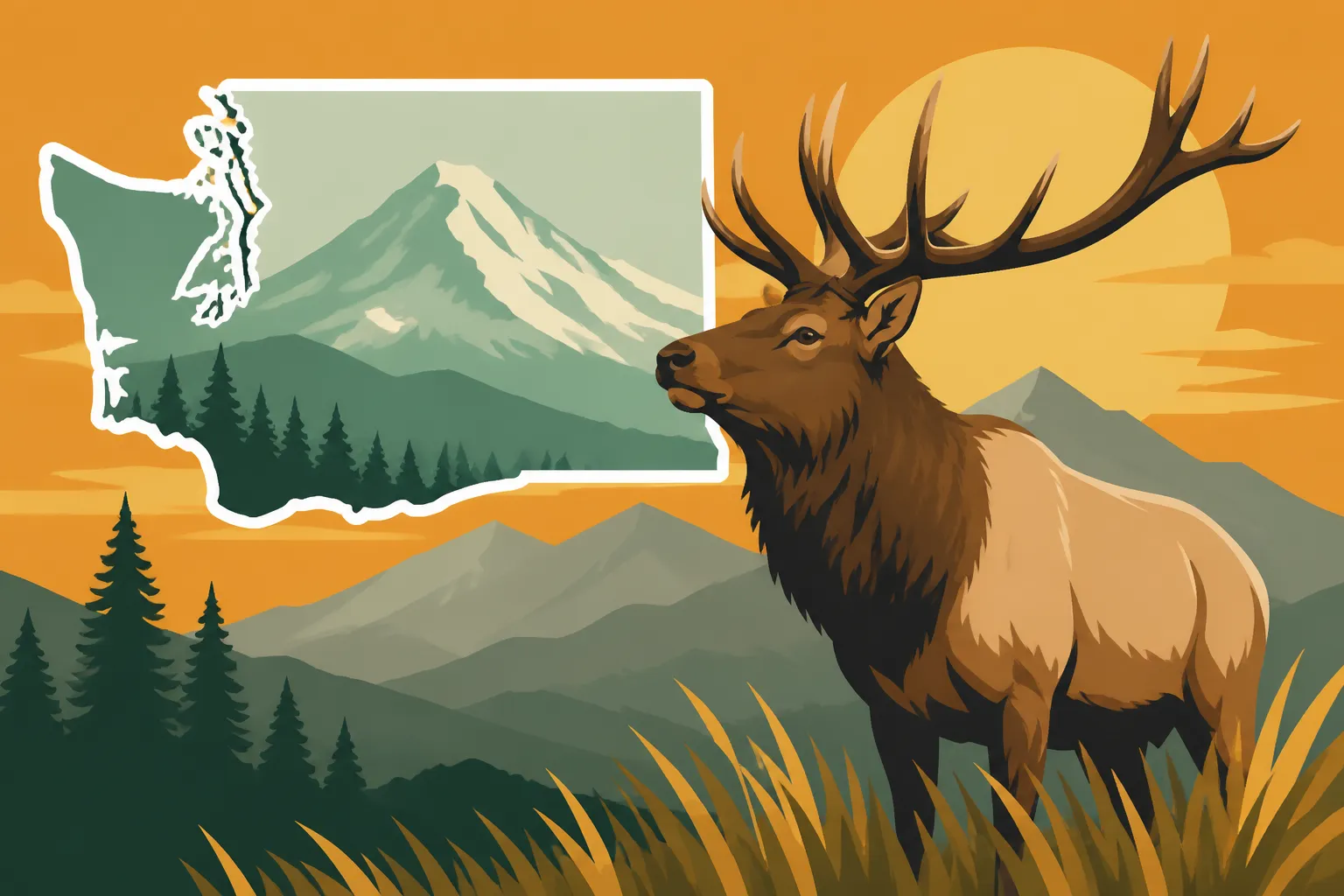
Rocky Mountain elk, or Cervus canadensis nelsoni, thrive in the drier, more open landscapes of Eastern Washington, which typically feature ponderosa pine forests, sagebrush flats, and dramatic canyon breaks. Unlike their Roosevelt cousins, who navigate dense, wet rainforests, Rocky Mountain elk are often found in country that demands long-range glassing and strategic spot-and-stalk approaches. Their antlers tend to be more symmetrical and often reach impressive lengths, characterized by long, slender tines, which is a big draw for many hunters. They've adapted to a more arid climate, often traveling greater distances for water and forage, which means understanding their seasonal movements is absolutely paramount to success.
Where They Roam
Eastern Washington is home to several significant Rocky Mountain elk herds, each with its own characteristics and hunting opportunities. From the vast expanses of the Yakima and Colockum units to the rugged, timbered draws of the Blue Mountains, these elk roam a diverse array of habitats. These herds are generally found in the foothills and mountains east of the Cascade crest, extending into the high desert country and agricultural interfaces. The common thread is generally more open terrain compared to the dense west-side forests, requiring different tactics for finding and approaching game. Identifying the core ranges and travel corridors for these herds is often the first step in successful scouting and hunt planning.
Key Eastern Washington Elk Herds
Eastern Washington's elk hunting landscape is shaped by several distinct herds, each presenting its own set of challenges and unique hunting scenarios. Understanding these specific areas is crucial for any hunter hoping to punch a tag.
The Yakima Herd
The Yakima Elk Herd is one of Washington’s most iconic and sought-after herds, drawing hunters from all over the state and beyond. This herd roams a massive area, encompassing diverse habitats from the higher elevations of the Cascade foothills down into the more arid shrub-steppe country near the Yakima River. Hunting here means contending with expansive public land, but also significant private agricultural lands and tribal reservations, which can complicate access. Elk in the Yakima unit are known for their resilience and intelligence, often utilizing steep, broken terrain for cover and escape. Learning how to get into this country, whether through the Green Dot road systems or by foot into wilderness areas, is a critical skill. Success in the Yakima often comes down to intense glassing, patience, and the willingness to cover serious ground. You might find yourself E-Scouting Washington GMUs Before the Draw extensively just to get a lay of the land before you even step foot in it.
The Colockum Herd
Just north of the Yakima unit lies the Colockum Elk Herd, another major player in Washington's Rocky Mountain elk hunting scene. This herd primarily occupies the Colockum Wildlife Area and surrounding national forest and private timber lands between Wenatchee and Ellensburg. The terrain is characterized by a mix of mature timber, brushy draws, and steep, rocky slopes, making it incredibly challenging to navigate. Hunting pressure can be intense, especially during general seasons, pushing elk into thicker cover and more remote areas. The Colockum is known for producing some truly impressive bulls, but they don't come easy. Hunters here need to be prepared for rugged climbs, thick brush, and potentially long shots across canyons. Understanding seasonal shifts between high summer range and lower wintering grounds is crucial for anticipating elk movement.
The Blue Mountains Herd
Venturing to the southeastern corner of the state, you'll find the majestic Blue Mountains Elk Herd. This area offers a dramatically different landscape than the central Washington herds, featuring rolling timbered hills, deep canyons, and vast national forest lands like the Umatilla National Forest. The Blues are particularly renowned for their strong bull-to-cow ratios and the potential for trophy-class animals. However, accessing this country can be difficult, with many areas requiring extensive hiking or even horse packing to reach remote basins. Late-season snow can quickly make roads impassable, adding another layer of challenge. Hunters pursuing elk in the Blues must be proficient in Glassing Eastern Washington Breaks for Mule Deer (a skill that directly translates to elk) and prepared for unpredictable weather, from mild autumn days to sudden heavy snowfalls that can impact elk behavior and access.
Habitat and Terrain Challenges
The diverse landscapes of Eastern Washington present a myriad of challenges that shape how Rocky Mountain elk live and how hunters must adapt their strategies. It’s not just about finding the elk, it’s about understanding where they live and why.
Sagebrush and Ponderosa Pine
The iconic landscape of Eastern Washington often features vast expanses of sagebrush flats interspersed with stands of ponderosa pine. While this might seem open, it’s incredibly deceptive. Elk, especially during the archery and early modern firearm seasons, will use these sparse trees and the undulating terrain of the sagebrush country for cover. A lone ponderosa pine stand on a hillside can hide an entire herd, and the vastness of the sagebrush makes spotting a bedded animal a true test of optics and patience. Hunters need to scan every shadow, every cluster of brush, and every small dip in the landscape. These elk are masters of concealment, disappearing into what appears to be nothing. This terrain often means long approaches on foot, picking your way carefully around obstacles while trying to keep the wind in your favor.
Steep Breaks and Canyon Country
Eastside hunting frequently involves navigating brutal breaks and intricate canyon systems. Imagine looking across a canyon at a bull a mile away; that mile might involve a 1,500-foot descent, a river crossing, and another 1,500-foot ascent through thick, thorny brush and loose rock. This terrain is not for the faint of heart and absolutely demands peak physical conditioning. Elk use these steep, broken areas for security, often bedding on benches that offer commanding views and multiple escape routes. They know these canyons intimately. Hunting these areas requires strategic glassing from high vantage points, meticulously planning your stalk to account for wind shifts, thermal currents, and unavoidable noise. You’ll be grateful for your trekking poles and a pack that can handle a heavy load if you’re successful deep in a canyon.
Agricultural Edges and Private Land
A significant portion of Eastern Washington is privately owned, often consisting of vast agricultural fields, ranches, and private timber holdings. This creates a complex checkerboard of public and private access. Elk, being opportunistic, frequently use these private lands for feeding, especially at night, returning to public land for bedding and security during the day. This can lead to frustrating scenarios where you locate elk just across a fence line on private property that you don’t have access to. Successfully hunting these "transition zones" often requires extensive pre-season scouting to identify historical elk crossing points, understanding which private landowners might grant permission, or researching Washington's private lands access programs. It’s a constant dance between respecting property lines and capitalizing on elk movements. Websites and apps like GoHunt can be invaluable resources for identifying land ownership boundaries and deciphering public access points, helping you navigate this tricky puzzle before you even hit the field.
Seasonal Behavior and Migration Patterns
Understanding the seasonal rhythm of Rocky Mountain elk in Eastern Washington is like having a secret decoder ring for their movements. Their lives are dictated by food, water, and security, and these factors shift dramatically throughout the hunting seasons.
Early Season Movement
As summer melts into the early archery season, Rocky Mountain elk are often found in their summer ranges, which typically means higher elevations in the cooler, timbered country. They're still focused on feeding and building up fat reserves after the breeding season. During this time, they might be somewhat spread out, sometimes in bachelor groups of bulls or larger cow/calf herds. They’re usually less vocal than during the rut, making pinpointing their location a challenge. Water sources are critical during the warmer early season, so focusing scouting efforts around springs, seeps, and reliable creeks can pay dividends. Hunters often find them in areas with good feed, like fresh green-ups after a rain, or near clearcuts that offer new forage. Accessing these higher elevation areas sometimes requires backpacking into remote basins, making Backcountry Camps in Washington Wilderness a common strategy.
Rutting Behavior
Ah, the rut! For many, this is the pinnacle of elk hunting, particularly for those pursuing Rocky Mountain bulls with archery equipment or during the early muzzleloader seasons. Typically occurring from late September into early October, the rut sees bulls become incredibly vocal and aggressive. Bugles echo through the canyons, and herds become more consolidated as herd bulls gather and defend their harems of cows. This is when patience and calling skills become paramount. Bulls can be incredibly responsive to bugles and cow calls, but they can also be notoriously fickle. Reading their mood, understanding when to push and when to back off, and setting up intelligent calling scenarios are crucial. The rut brings bulls out into the open more frequently, especially at dawn and dusk, but also makes them more susceptible to hunting pressure, forcing them to adapt quickly. This is where calls like a sharp "challenge bugle" or a series of soft "cow calls that pull a bull off his herd" can truly make or break your hunt.
Late Season Migration
As autumn progresses into late fall and winter, often coinciding with the modern firearm seasons, snow begins to push Rocky Mountain elk from their high summer and rutting grounds down to lower elevation winter ranges. This can be a blessing and a curse for hunters. On one hand, migration routes can funnel elk, making them more predictable. On the other, these winter ranges are often close to private land or designated closures, requiring careful attention to boundaries. Elk Migration Timing in Washington is heavily influenced by snowfall and forage availability. Mild winters might mean elk stay higher longer, while early, heavy snow can trigger a rapid descent. Hunting late season often means dealing with colder temperatures, snow, and ice, necessitating specialized gear for Layering for Wet Cold Weather to stay warm and dry. Elk in the late season are often in larger herds, making them easier to spot, but also harder to approach without spooking the entire group. Patience, long-range glassing, and careful stalking are the keys to success during these colder months.
Hunting Strategies for Eastside Rocky Mountain Elk
Hunting Rocky Mountain elk in Eastern Washington is a far cry from the dense timber hunts often found on the west side. It demands a distinct set of skills, primarily revolving around patience, keen observation, and strategic movement across open, vast terrain.
The Art of Glassing
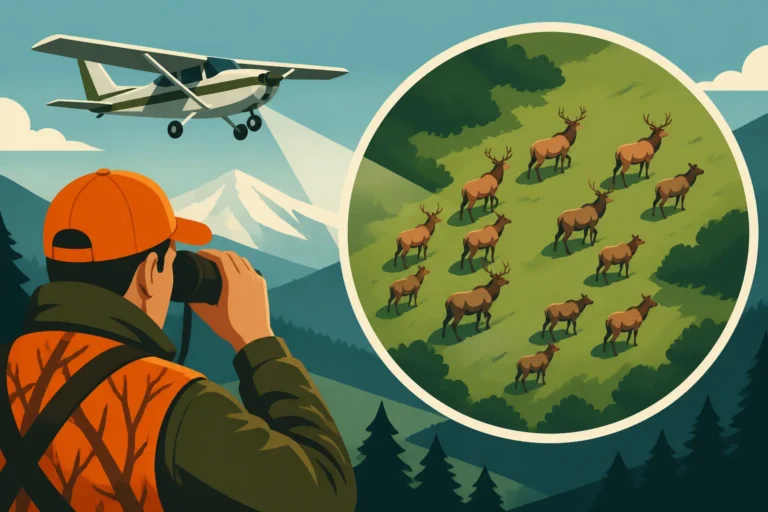
In the expansive country east of the Cascades, your binoculars and spotting scope are arguably your most important tools. Unlike hunting the thick timber, where you might only see an elk a few yards away, here you'll be trying to pick apart entire hillsides, canyon systems, and distant ridges for any sign of movement. This is truly the "art of glassing." It means spending hours behind quality optics, slowly and methodically dissecting every patch of cover, every shadow line, and every rock outcrop. You're not just looking for an entire elk; you're looking for a flick of an ear, a patch of hide, a horizontal line in a vertical world. A good pair of 15x binoculars on a tripod or a high-quality spotting scope is almost mandatory for these open landscapes. Position yourself on high vantage points at first light and last light, when elk are most active, and be prepared to stay there for extended periods. Patience is rewarded – often, what looks like a rock at 9 AM suddenly turns its head at 11 AM.
Spot-and-Stalk Tactics
Once you’ve spotted an elk, the real challenge begins: closing the distance. Eastern Washington's open country makes traditional "still-hunting" incredibly difficult, as you're likely to be seen or smelled long before you get within range. Spot-and-stalk is the name of the game. This involves meticulously planning your approach, considering wind direction, thermals, terrain features that offer cover, and the elk's likely escape routes. You might have to walk miles to get into a good position, often losing sight of the animal for long stretches. It’s a game of chess with a very wary opponent. Using natural contours, drainages, and even large sagebrush bushes for concealment is critical. Moving slowly, deliberately, and always checking the wind are non-negotiable rules. Remember that elk can hear and smell you from incredible distances, especially when the air is still. Sometimes, the best stalk is no stalk at all; if the conditions aren't right, you might need to wait for the elk to move, or circle back another day.
Reading the Landscape
Beyond just spotting elk, true success in Eastern Washington comes from an intimate understanding of the landscape. Elk are creatures of habit, using specific types of terrain for bedding, feeding, watering, and escaping pressure. Look for south-facing slopes in colder weather that get more sun, or north-facing slopes in warmer weather for shade. Identify natural funnels created by ridges or thick timber patches that might concentrate elk movement. Pay attention to water sources—springs, small creeks, and stock tanks—especially in dry years. Learn to differentiate fresh elk sign (tracks, scat, rubs, wallows) from older sign, giving you clues about recent activity. Consider how hunters and other outdoor recreationists might influence elk movements, pushing them into more remote or thicker cover. Understanding these nuances, much like reading the details in a GoHunt overlay map, can unlock patterns that lead you directly to the elk. This deep reading of the land is what separates consistent hunters from those who just stumble upon an animal.
Essential Gear and Preparation
Hunting Rocky Mountain elk in Eastern Washington demands a specific gear list and a serious commitment to physical and mental preparation. This isn't a casual stroll; it's a demanding endeavor that will test your limits.
Optics for Open Country
As mentioned, optics are king here. Forget trying to get by with just a pair of cheap binoculars. For glassing vast Eastern Washington landscapes, you need good quality 10×42 binoculars as your primary handheld, but serious hunters often step up to 15×56 binoculars mounted on a tripod for extended glassing sessions. These higher magnification binos, often from brands like Vortex or Swarovski, allow you to truly pick apart distant hillsides. A spotting scope (20-60x or 25-75x magnification) is also invaluable for confirming an animal's size, checking for legal points, and identifying precise locations before committing to a stalk. Don't forget a rangefinder with angle compensation; you'll be shooting up and down steep terrain, and knowing the true horizontal distance is crucial for accurate shot placement. Having a reliable setup for Choosing Binoculars for Washington Glassing is often the first big gear decision for eastside hunters.
Rifle and Ammo Considerations
Given the often-long distances encountered when hunting Rocky Mountain elk in open country, your rifle setup is critically important. While many cartridges can take an elk, you'll want something capable of delivering sufficient energy and accuracy at extended ranges. Calibers like .300 Win Mag, .300 WSM, 7mm Rem Mag, .30-06, and even the popular 6.5 PRC with heavier bullets are common choices. Bullet construction is paramount; look for controlled expansion bullets designed to retain weight and penetrate deep, even through heavy bone. Practice shooting at various ranges, including uphill and downhill, to build confidence in your setup. A durable, reliable riflescope with clear glass and a good reticle for holding over or dialing for distance is essential. Ensure your rifle is zeroed correctly for the conditions you'll be hunting in, often 200 yards, to minimize guesswork in the field. Having a solid Rifle Setup for Washington Elk and Deer means confidence when that bull finally steps out at 400 yards.
Physical Fitness and Mental Toughness
No amount of expensive gear can compensate for a lack of physical fitness when hunting Eastern Washington elk. The terrain is relentlessly steep, often loose underfoot, and covers vast distances. You'll be climbing thousands of feet in elevation, often with a heavy pack, and then doing it again if you're successful and need to pack out an elk. Incorporate cardio, strength training, and hiking with a weighted pack into your routine months before the season. Mental toughness is equally important. You’ll experience early mornings, late nights, long days of glassing without seeing anything, missed opportunities, and the sheer fatigue of it all. The ability to stay positive, persist through discomfort, and maintain focus when tired is what will carry you through. Remember, elk hunting is a marathon, not a sprint. The rewards of tagging an animal in this challenging country are directly proportional to the effort you put in, both before and during the hunt.
Navigating Regulations and Access
Understanding Washington's hunting regulations and various land access rules is just as crucial as knowing how to hunt elk. Incorrectly navigating these rules can quickly turn a dream hunt into a costly mistake or a frustrating experience.
General Season Versus Special Permits
Washington offers two primary pathways for elk hunting: general season opportunities and special hunt permits. General seasons are typically "over-the-counter" tags, meaning you can purchase them without drawing, though specific GMUs often have antler restrictions (e.g., spike-only, three-point minimum) and weapon restrictions (modern firearm, archery, muzzleloader). These hunts generally have higher hunter densities and can be quite challenging, as elk quickly become pressured.
Special permit hunts, on the other hand, are limited-entry draws that offer access to specific units, earlier/later seasons, or antlerless opportunities. These permits are highly coveted because they often provide access to higher quality animals, less hunter pressure, or unique season dates. The odds of drawing a special permit can be incredibly low, especially for trophy units, but the reward can be immense. Understanding Washington Special Hunt Permits and How to Apply is essential if you're aiming for one of these exclusive hunts. You apply through the Washington Department of Fish and Wildlife (WDFW) system, and while Washington doesn't have preference points, the random draw means every application has a chance.
Public Land Access
Eastern Washington boasts vast tracts of public land, including National Forests, Bureau of Land Management (BLM) lands, and WDFW Wildlife Areas. These lands are generally open to hunting, but access points, road closures, and specific regulations vary widely.
- National Forests (e.g., Okanogan-Wenatchee, Umatilla, Colville): These are often the backbone of elk hunting, offering extensive habitat. Be aware of Motorized Vehicle Use Maps (MVUMs) that designate roads open or closed to vehicles. Many areas operate on a "Green Dot" road system, indicating certain roads are open for vehicle travel while others are gated or closed to protect winter range or maintain wilderness values. A Discover Pass or Northwest Forest Pass may be required for parking at certain trailheads or day-use areas.
- Bureau of Land Management (BLM): BLM lands in Eastern Washington are often found in the more arid, lower elevation country and can offer excellent hunting, particularly during migrations or early season. These areas are typically open, but access can sometimes be checkerboarded with private land, requiring careful navigation.
- WDFW Wildlife Areas: These managed areas are specifically acquired and managed for wildlife. They offer good opportunities but often come with specific rules regarding camping, vehicle use, and entry points. Always check the individual wildlife area rules before you go.
For all public lands, using mapping tools like those from GoHunt or onX Hunt is crucial for identifying land ownership boundaries, roads, and trail systems.
Private Land Considerations
Navigating private land is perhaps one of the trickiest aspects of Eastern Washington hunting. Many prime elk areas are adjacent to or interspersed with private property.
- Permission is Key: Always, always obtain written permission before setting foot on private land. This is not just courteous, it's the law. Trespassing can result in fines, loss of hunting privileges, and gives all hunters a bad name.
- Timber Company Lands: Large timber companies (e.g., Weyerhaeuser, Hancock Forest Management) own extensive acreage in Washington. Some offer access permits for a fee, while others may have "walk-in only" policies behind locked gates. These policies can change year to year, so consistent research is needed. Websites like GoHunt or direct contact with the timber companies can provide current information on permit availability and access rules.
- WDFW Private Lands Access Programs: The WDFW works with private landowners through programs like "Feel Free to Hunt," "Hunt by Reservation," or "Register to Hunt." These programs offer opportunities for public access on private land, sometimes for a specific species or during certain seasons. Checking the WDFW website for maps and program details is essential.
Developing relationships with landowners, even if it's just asking permission for future years, can be a long-term strategy for gaining access. Remember to be respectful, leave no trace, and be a good ambassador for hunters. Knowing the rules for Getting Written Permission on Private Land is not just a suggestion, it's a foundation of ethical hunting.
Rocky Mountain Elk Hunting: A Comparative Overview
To help you visualize the different aspects of hunting Rocky Mountain Elk in Eastern Washington, here’s a quick overview of key considerations:
| Feature | Early Archery Season (Sept) | Modern Firearm General Season (Oct-Nov) | Muzzleloader Special Season (Sept/Oct) |
|---|---|---|---|
| Elk Behavior | Transitioning from summer range, rutting behavior begins mid-late Sept. Bulls vocal. | Post-rut, moving towards winter range. Often in larger herds. Wary. | Rutting behavior, bulls very vocal and responsive. |
| Typical Habitat | Higher elevations, timber, water sources. | Lower elevations, timbered slopes, transition zones, canyon bottoms. | Similar to archery, higher elevations, timbered. |
| Hunting Pressure | Moderate to High (due to rut appeal). | High (most popular season). | Moderate (limited tags, specific equipment). |
| Key Challenges | Locating pre-rut bulls, stalking in open timber, navigating warm weather. | High pressure, wary elk, navigating private land/access issues, weather. | Limited range of weapon, keeping powder dry, weather. |
| Primary Tactics | Calling (bugles, cow calls), spot-and-stalk, early morning/late evening hunting. | Glassing, spot-and-stalk, tracking fresh snow, strategic road hunting. | Calling (bugles, cow calls), spot-and-stalk, patience. |
| Required Fitness | High (steep climbs, long stalks). | High (long hikes, potential snow, packing out). | High (steep climbs, long stalks). |
| Recommended Optics | 10x binos, tripod 15x binos, rangefinder. | 10x binos, tripod 15x binos/spotter, rangefinder. | 10x binos, tripod 15x binos, rangefinder. |
| Weapon Considerations | Compound bow (350+ grain arrow, fixed/mechanical broadhead). | Rifle (.24 cal minimum, good quality bullet for distance). | .45 cal minimum, legal ignition, single projectile. |
| Weather Conditions | Warm days, cool nights, potential for rain. | Cooler temps, rain, snow, freezing. | Similar to archery, but can turn cold quickly. |
This table provides a generalized overview. Each GMU and specific hunting unit will have its own micro-climates and unique challenges, so always do your homework for your chosen area! For specific season dates and rules, refer to the WDFW hunting regulations pamphlet, especially for Washington Elk General Seasons East and West.
The Reward of Eastern Washington Elk Hunting
Finally, let's talk about the reward. Eastern Washington Rocky Mountain elk hunting is not for the faint of heart. It demands significant preparation, physical exertion, and often, a hefty dose of patience and humility. You will likely face long days, challenging terrain, unpredictable weather, and the ever-present possibility of coming home empty-handed. This isn't a factory farm; these are wild animals in wild country, and they are masters of survival.
But that’s precisely what makes it so incredibly rewarding. When you do finally connect with a bull—after countless hours of glassing, meticulously planning a stalk, navigating tough terrain, and overcoming the elements—the feeling is unlike anything else. It's a profound sense of accomplishment, a deep connection to the land, and a testament to your perseverance. The meat you bring home will be hard-earned, fueling your family with lean, organic protein and memories that last a lifetime. Beyond the harvest, it's the beauty of the vast landscapes, the silence of the canyons, the camaraderie with hunting partners, and the personal growth that truly define the experience. Hunting Rocky Mountain elk east of the Cascades is more than just a hunt; it's an adventure that shapes you as a hunter and as a person. It's a journey into some of Washington's most wild and beautiful country, testing your mettle and rewarding you with experiences you'll cherish forever.
Disclaimer
Please be aware that hunting regulations, seasons, and access rules in Washington can change annually. Always consult the most current Washington Department of Fish and Wildlife (WDFW) hunting regulations pamphlet and check for emergency rule changes or closures before heading afield. Information provided here is for general guidance and educational purposes only.