Motorhome Access on Forest Roads
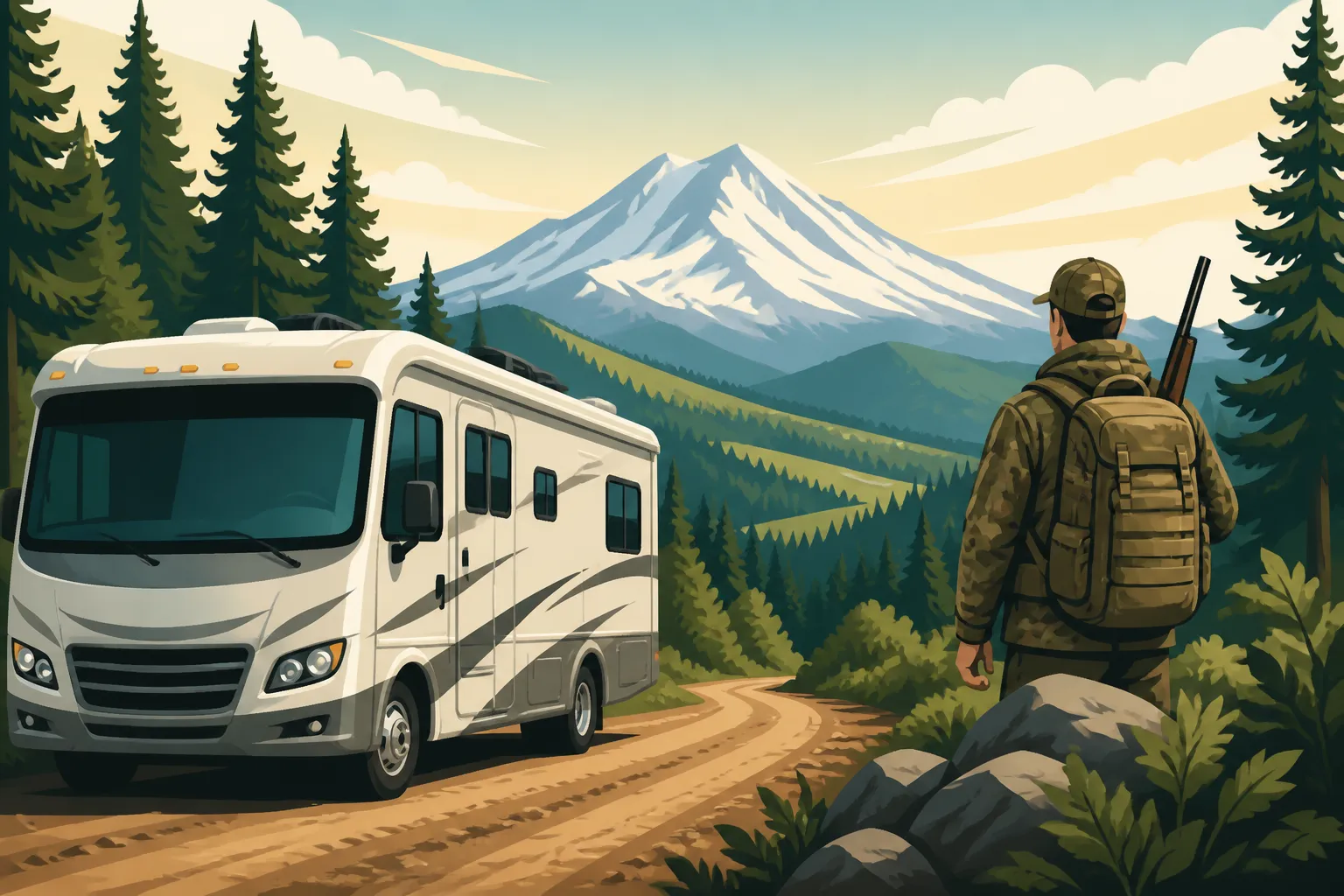
Heading out for a Washington hunting trip in your motorhome sounds like a dream, doesn't it? Picture this: you've got your cozy sleeping quarters, a real kitchen, and all the comforts of home right there at the trailhead. But then reality sets in. You pull up to a forest road, confident your rig can handle it, only to be met with a "No Motorized Vehicles Over X Length" sign, or worse, a gate that wasn't on your map. It’s a frustrating scenario many of us have faced, leaving you scrambling to find an alternative spot as daylight fades. This guide is all about navigating those very real challenges, helping you understand where and how you can actually get your motorhome into Washington’s beautiful, yet often complex, forest road systems for your next hunt.
Understanding Forest Road Designations and Restrictions
Washington's public lands offer incredible hunting opportunities, but they come with a tapestry of road rules that can feel like trying to solve a Rubik's Cube in the dark, especially when you're driving something larger than a pickup truck. It’s not just about if a road is open; it's about how it's open, and to what kind of vehicle.
The Green Dot System and Its Nuances
Ah, the Green Dot system. If you've hunted Eastern Washington, particularly in areas managed by the Department of Natural Resources (DNR) or the Okanogan-Wenatchee National Forest, you’ve probably seen those iconic green circles painted on trees or signs. This system was designed to help manage vehicle access, reduce road densities, and create quality hunting experiences by providing walk-in opportunities. Sounds great in theory, right?
For motorhome owners, though, the Green Dot system can be a bit of a tightrope walk. While Green Dot roads are generally open to vehicles, many have restrictions that can easily snag a larger rig. You might find width restrictions that make a 25-foot motorhome feel like a semi-truck, or sharp turns that are simply impossible to navigate without dropping a wheel off the edge or scraping the side of your RV. Some Green Dot roads are designated for passenger vehicles only, or have length limits, clearly stating that anything over a certain length (say, 18-20 feet) is prohibited. Imagine driving an hour into a unit, only to find a sign saying your 30-foot motorhome is now illegally parked, or worse, can't make the next corner. It's enough to make you want to pull your hair out. The intent is good – protecting the resource and enhancing hunter experience – but the practical application for a motorhome can be a real headache. Always double-check the specific Green Dot regulations for the unit you're targeting; these details are often buried in small print on WDFW’s online pamphlets or through local ranger district offices. For more on navigating these specific roads, check out Washington Green Dot Road Systems.
Other Road Classifications and Seasonal Closures
Beyond the Green Dot roads, Washington has a whole host of other road classifications, each with its own set of rules and potential pitfalls for motorhome users.
- US Forest Service (USFS) Roads: These are found within our National Forests like the Gifford Pinchot or Colville National Forest. They vary wildly in condition, from well-maintained gravel roads to barely-there two-tracks. Many are suitable for motorhomes, especially the main arteries, but side roads can quickly become impassable due to washouts, overgrown brush, or simply being too narrow or steep for a large vehicle. What looks like a straight shot on a map might be a series of bone-jarring potholes or blind corners.
- Department of Natural Resources (DNR) Roads: DNR lands, often found on the west side of the state, manage timber production, recreation, and conservation. Their roads can be very well-maintained when active logging is taking place, but once a section is clearcut and replanted, the roads often degrade quickly or are decommissioned. Access might require a Washington DNR Recreation Passes, or even a specific permit depending on the area. Motorhome access on these roads can be good initially, but watch for active hauling operations, which take precedence, and for the sudden appearance of gates that limit access after logging is complete.
- Private Timber Company Roads: Companies like Weyerhaeuser or Hancock manage vast tracts of timberland throughout Washington. Many of these lands are open to public recreation, but almost always require a permit, and these permits often come with very specific rules about vehicle types, road use, and camping. Some actively restrict motorhomes to main arterial roads or designated campgrounds. You might pay good money for a permit only to find your dream spot is down a road your motorhome can't touch. Timber Company Permits in Western Washington is a topic that definitely warrants a close look if you plan to hunt these lands.
Then there are the seasonal closures, which are often the biggest wrench in a motorhome hunter's plans.
- Snow Closures: This is a big one, especially in high-elevation areas of the Cascades or Blue Mountains. Many forest roads are simply not plowed and become impassable once the snow flies, typically from late fall through late spring. This impacts late-season deer or elk hunts significantly. Always check local ranger district websites or the WDFW road conditions before you go.
- Fire Danger Closures: In dry years, many forest roads, or even entire units, can be closed due to extreme fire danger. This usually happens in late summer and early fall, right in the heart of archery and early rifle seasons. A motorhome, especially with its propane tanks and generator, can sometimes be viewed as a higher risk, even if it's just a general closure. You don't want to drive all the way out there, only to be turned away at a roadblock. Check Washington Fire Restrictions During Dry Hunting Seasons before loading up.
- Wildlife Winter Range Closures: Many critical wintering areas for deer and elk, particularly in Eastern Washington, have roads that close seasonally to protect these animals from disturbance. These closures are typically from December 1st through April 30th but can vary. If you're planning a late-season hunt, these closures can drastically limit your access. Learn more about these restrictions at Washington Winter Range Closures That End Late Hunts.
It's a lot to keep track of, and sometimes it feels like the rules are designed to keep you guessing. That's why diligent pre-trip planning is non-negotiable.
Navigating Motorhome-Specific Challenges on Forest Roads
Even if a forest road is "open" and doesn't explicitly prohibit motorhomes, that doesn't mean it's an easy drive. Hauling a large, heavy rig off the main highway and onto rough gravel roads presents its own unique set of considerations.
Vehicle Size and Maneuverability Concerns
Let's be real: a 30-foot motorhome is not built for dodging potholes and navigating hairpin turns on a narrow dirt track. The sheer size alone creates challenges.
- Width and Overhang: Forest roads are often just wide enough for two regular vehicles to pass, and sometimes only one. Your motorhome's width, combined with mirrors and any side-mounted gear, can easily lead to scraping trees, brush, or rocks. The long overhangs common on many RVs mean that steep dips or rises can cause the rear bumper or front end to drag, potentially damaging plumbing, tanks, or leveling jacks. A seemingly small dip can turn into a major obstacle.
- Turning Radius: Picture trying to make a tight U-turn on a logging spur that dead-ends. A motorhome's turning radius is significantly larger than a pickup truck or SUV. What a smaller vehicle can do in one swing might require multiple back-and-forths, chewing up the road shoulder, and causing damage to your rig or the environment. Blind corners are especially tricky; you can't see oncoming traffic (or that fallen tree), and your large vehicle takes up more than its fair share of the road.
- Weight and Clearance: The weight of a fully loaded motorhome can be substantial. This impacts braking on steep descents and traction on loose gravel climbs. Low clearance is a major vulnerability. Rocks, stumps, or high centers on poorly maintained roads can quickly become catastrophic, leading to punctures, bent components, or getting high-centered, leaving you stranded miles from cell service. Always err on the side of caution. If you're questioning whether your motorhome can make it, it's usually best to park and scout ahead on foot or with a smaller vehicle. Rifle Setup for Washington Elk and Deer might be what you focus on, but thinking about your vehicle setup is just as critical for a successful trip.
Finding Suitable Campsites and Dispersed Camping Rules
Once you've successfully navigated the roads (hooray!), the next challenge is actually finding a suitable spot to park your mobile home. Dispersed camping, or "boondocking" as some call it, is usually the goal for hunters seeking solitude and quick access to their hunting grounds.
- Space Requirements: A motorhome needs a good-sized, relatively flat area to park. Many of the picturesque, tucked-away campsites that a tent camper or truck camper can access are simply too small or too uneven for an RV. You'll often find yourself sticking to wider pull-offs or established, but primitive, clearings. Look for areas that have obviously been used by larger vehicles before, indicated by compacted gravel or bare spots.
- Distance from Roads and Water: Generally, dispersed camping on National Forest and DNR lands requires you to be a certain distance from designated roads (often 50-100 feet) and water sources (often 200 feet). This can be tough with a motorhome, as suitable spots often mean being right on the edge of a pull-out. Always check the specific land management agency's rules for the area you're in. Also, keep your motorhome clear of any active logging roads or turnarounds; you don't want to wake up to a feller buncher asking you to move. Dispersed Camping in Washington Hunting Season provides more insights into these rules.
- Length of Stay and Leave No Trace: Most dispersed camping limits stays to 14 consecutive days within a 30-day period. This is rarely an issue for hunters, but it’s good to be aware of. More importantly, practice strict Leave No Trace principles. This means packing out everything you pack in, including trash, food scraps, and even grey water. Do not dump your black water tank in the woods. Use existing fire rings if possible, and ensure any fires are completely out before leaving. With a motorhome, you have more capacity to be self-contained, so use it!
Essential Planning and Tool Use for Motorhome Access
Successfully getting your motorhome into Washington's hunting country isn't about luck; it's about meticulous planning and using the right tools. Failing to plan can easily turn a relaxing hunt into a stressful ordeal, or worse, a recovery situation.
Pre-Trip Research: Websites, Maps, and Apps
Before you even think about putting the key in the ignition, you need to arm yourself with information. This is where modern technology really shines, complementing traditional methods.
- WDFW Resources: Start with the Washington Department of Fish and Wildlife (WDFW) website. Their GMU maps often have critical road closure information, and their hunt planners are invaluable. While they don't always specify motorhome-friendly roads, they give you the baseline information about vehicle access in specific units. The game management unit (GMU) pamphlets sometimes mention general restrictions, too.
- Forest Service and DNR Websites: For the most detailed road conditions, go straight to the source. Local US Forest Service Ranger District websites and DNR region websites often have dedicated sections for road closures, current conditions, and even specific vehicle restrictions. These are updated more frequently than broader resources, especially during active logging or fire season. This is also where you'll find information on any permits required for specific areas, like those issued by Weyerhaeuser and Hancock Permits in Washington.
- Mapping Applications: This is where brands like onX Hunt and GoHunt become absolutely indispensable. These apps allow you to download offline maps before you leave cell service, showing land ownership (public vs. private timber), roads, trails, and topographical features.
- onX Hunt is a hunter's best friend. Its desktop and mobile app versions provide layers showing public vs. private land, specific forest service road numbers, and even gate locations. You can zoom in to incredible detail to assess road conditions (look for satellite imagery that shows width, vegetation encroachment, and potential obstacles). I've spent countless hours in front of my computer using onX Hunt to scout potential motorhome access points, identify pull-offs, and trace Finding Old Logging Roads on Satellite that might lead to a sweet spot. Crucially, its ability to download maps means you won't lose navigation when you inevitably lose signal. Downloading Offline Maps for Washington is a feature you simply can't do without.
- GoHunt also offers robust mapping capabilities with similar land ownership and road layers, often providing even more detailed information on hunt units and draw odds, which is incredibly useful for planning your overall hunt strategy. While its primary strength might be for drawing permits and big picture planning, its mapping features can certainly help you visualize access roads and potential camping spots.
When using these apps, pay close attention to the satellite imagery. Look for roads that appear wide and well-maintained. Zoom in to see if there are any obvious signs of recent grading, or conversely, severe washouts or deep ruts. Cross-reference what you see on the map with any official closure information you've gathered. Don't be afraid to E-Scouting Washington GMUs Before the Draw using these tools, even if you’re just looking for a good camping spot.
On-the-Ground Navigation and Contingency Planning
Even with the best pre-trip research, conditions can change. A sudden rainstorm can turn a passable gravel road into a muddy mess, or a new tree might fall across your path. That's why on-the-ground navigation and having a solid backup plan are crucial.
- Reliable GPS (and Physical Maps): Your phone with onX Hunt is an amazing tool, but never rely solely on it. Batteries die, and electronics can fail. Always carry a secondary GPS device or, at the very least, physical maps of the area (USFS maps, Green Trails, or even printouts from your mapping app). Know how to read them! A map and compass are old-school but foolproof.
- Assessing Road Conditions: Drive slowly. I mean, really slowly. Give yourself plenty of time to react to unexpected hazards. If you see signs of fresh mud, deep puddles, or soft shoulders, stop and walk it. Look for solid ground. Pay attention to how the road might change if it starts raining. Is there adequate drainage, or will it become a slick, greasy slide? If you're on a multi-day hunt, consider parking your motorhome at a more accessible, established spot and then using a smaller, more capable vehicle (like a truck or ATV, where allowed) to reach farther into the unit for daily hunting.
- Backup Plan: What if the road you planned to take is closed? What if you can't find a spot big enough for your rig? Have a Plan B, C, and even D. Identify several potential access roads and camping areas before you leave home. This might mean having a list of backup GMUs or even alternative state parks or designated campgrounds that can accommodate motorhomes, even if they're a bit farther from your hunting zone. Having multiple options minimizes frustration when things don't go exactly as planned.
- Basic Self-Recovery Gear: While you won't be winching a motorhome out of a creek, a basic set of recovery tools can save you a lot of grief. This includes a shovel, traction boards (like MaxTrax), a high-lift jack (if your motorhome has suitable lift points), and a strong tow strap. Make sure you know how to use them safely. Having a satellite messenger or two-way radio for communication when out of cell service can be a lifesaver in an emergency; check out Satellite Messengers for Solo Washington Hunts for more on that. The goal isn't to get stuck, but to be prepared if you do.
Navigating Washington's forest roads in a motorhome for hunting is totally doable, but it requires patience, thorough preparation, and a healthy dose of realistic expectations. Don't let the potential challenges deter you; with the right approach, you can combine the comforts of your RV with the thrill of chasing game in some of the most beautiful country around.
| Road Type/Agency | Typical Motorhome Access | Common Restrictions | Planning Resources |
|---|---|---|---|
| US National Forest (USFS) | Main roads often good, side roads vary widely. | Width, length, steepness, seasonal snow/fire closures. | USFS District Websites, onX Hunt, GoHunt. |
| Washington Department of Natural Resources (DNR) | Main hauling roads generally good when active; others degrade. | Gates, permits (Discover Pass/DNR Access Permit), active logging, seasonal closures. | DNR Website, WDFW Hunt Planner, onX Hunt. |
| Green Dot Roads | Generally open to vehicles, but specific limits apply. | Vehicle length, weight, time limits, seasonal wildlife closures. | WDFW GMU Pamphlets, WDFW Road Rules, onX Hunt. |
| Private Timber (e.g., Weyerhaeuser, Hancock) | Varies greatly; often permit-dependent. Main roads only. | Permits required, designated routes, restricted camping, specific vehicle limits. | Company Websites, WDFW Land Access Maps, onX Hunt. |
Disclaimer
This article is for general informational purposes only and does not constitute professional advice. Laws, prices and regulations vary by location and change over time. Consult a qualified professional for guidance on your specific situation.