Trespass Law on Posted Washington Land
One of the most nerve-wracking things for any hunter in Washington is the fear of accidentally stepping onto private land without permission. With the patchwork of public and private property boundaries, especially in timber country or near agricultural fields, it’s easy to get turned around or misread a map. This guide is here to walk you through Washington's trespass laws, particularly regarding posted land, and equip you with the knowledge and tools to confidently navigate the landscape without running afoul of the law or landowners.
Understanding Washington's Trespass Laws for Hunters
Let's be real, no one wants to be "that guy" who ends up in a sticky situation with a landowner. Understanding Washington's trespass laws isn't just about avoiding trouble; it's about respecting private property rights, maintaining a positive image for hunters, and ensuring you can enjoy your time afield without unnecessary stress. It's not always black and white, especially when a property line might be marked by a subtle change in vegetation or an old, faded sign.
The core of Washington's trespass law is pretty straightforward: you cannot enter or remain on land that is clearly private and where you do not have permission. For hunters, this is amplified because carrying a weapon and potentially pursuing game makes any trespass situation much more serious. Whether it's a vast ranch in Eastern Washington or a small timber parcel in the western part of the state, private land is private land.
What "Posted" Really Means in Washington
The term "posted" often conjures images of bright yellow signs every fifty feet, but in Washington, the legal definition can be a bit more nuanced. While explicit "No Hunting" or "Private Property" signs are the most obvious indicators, they aren't the only ones. A landowner can also "post" their land through other means, and it's our responsibility as hunters to recognize these.
Firstly, traditional signs are certainly effective. These signs must be placed in reasonably conspicuous places, such as along boundaries, at normal points of entry, and around areas where unauthorized entry is likely. They don't have to be on every single tree, but they need to be clear enough that a reasonable person would know they are entering private property. Secondly, there's the "purple paint law." While not as widely used as signs, some landowners mark their property boundaries with purple paint on trees or posts. This purple paint serves the same legal purpose as "No Trespassing" signs and means you do not have permission to enter. Finally, even without signs or purple paint, land can be considered "posted" if it is fenced or enclosed in such a manner as to clearly indicate private ownership, or if the property owner has directly communicated to you that entry is forbidden. This communication could be verbal or written.
Think about a real-life scenario: you're still-hunting for blacktails in what you thought was public timber, and you come across a series of old growth trees marked with faded purple bands. Your heart sinks. Even if there are no explicit "No Hunting" signs, those purple bands are legally binding. In this situation, the best course of action is to immediately turn around and exit the property the way you came, carefully confirming your position on your mapping app. It's always better to be overly cautious than to risk a citation.
Consequences of Trespassing While Hunting
Let's not sugarcoat it: trespassing, especially while armed and hunting, can lead to some significant headaches and penalties in Washington. It's not just a slap on the wrist; it can impact your ability to hunt in the future and carry legal ramifications far beyond a simple fine.
Trespass can range from simple civil trespass (where a landowner might sue you for damages) to criminal trespass, which can involve fines, jail time, and the loss of your hunting privileges. If you are found to have committed criminal trespass while hunting, the penalties can be severe. This might include substantial fines, confiscation of your hunting equipment (your rifle, bow, or even your vehicle), and the forfeiture of any game harvested. Perhaps most painful for a dedicated hunter is the potential suspension or revocation of your hunting license and privileges for a period of time, sometimes even for life depending on the severity and frequency of the offense. In Washington, offenses that involve taking game illegally or without permission often carry additional penalties related to poaching, further escalating the consequences.
Imagine a scenario where you've successfully shot an elk, and it crosses a fence line onto private land that you know is posted. You follow it, hoping to recover your animal, and are then confronted by the landowner. Even with the best intentions of recovering wounded game, knowingly entering posted private land without permission is a serious offense. The consequences could include losing your harvested elk, significant fines, and potentially facing charges that jeopardize your hunting future. It's a tough situation, but understanding the law before it happens can help you make better decisions in the moment.
Proactive Steps to Avoid Trespassing on Your Hunt
The best defense against trespassing is a good offense in the form of preparation. The vast majority of hunters want to do the right thing and respect property boundaries. With modern tools and a little pre-hunt homework, you can drastically reduce your chances of inadvertently trespassing, making your hunt much more enjoyable and stress-free. It's about combining digital savvy with old-school field craft.
Navigating the diverse landscapes of Washington, from the dense timber of the Olympic Peninsula to the open plains of Eastern Washington, means encountering a mix of public and private ownership. Being proactive is key to staying legal and ethical. This means not just relying on a general idea of where public land lies, but actively using resources to pinpoint property lines down to the foot.
Mapping Tools and Pre-Season Scouting
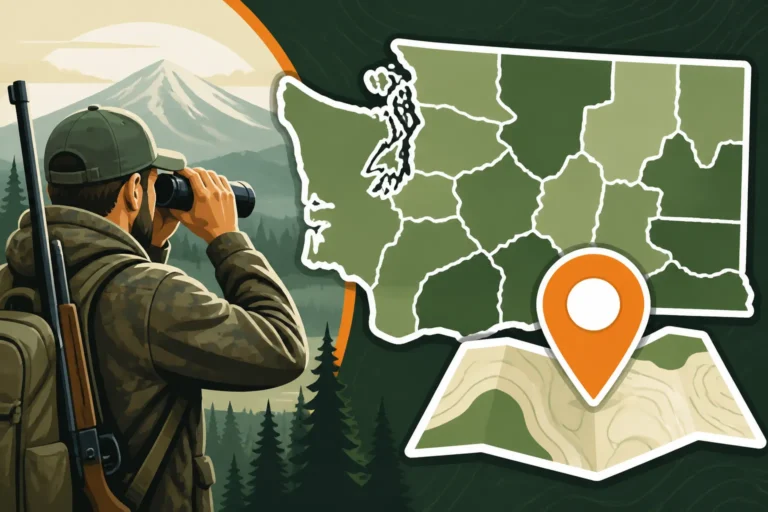
Gone are the days when a paper map and a compass were your only guides. While those are still valuable skills, modern technology has revolutionized how we understand and navigate property boundaries. Digital mapping apps are an absolute game-changer for avoiding trespass. Brands like onX Hunt and GoHunt have developed incredible platforms that overlay land ownership boundaries directly onto satellite imagery and topographical maps.
These apps allow you to see, in real-time, whether you are on public land (like National Forest, DNR, or BLM) or private property. You can identify specific parcels, see who owns them (though direct contact info isn't always available), and plot your route to skirt private holdings. Before you even set foot in the woods, you can use these tools to E-Scouting Washington GMUs Before the Draw, identifying potential access points, pinpointing likely game habitat, and most importantly, marking out those crucial public-private boundary lines. I often spend hours before the season, pouring over satellite images, looking for old logging roads or clearcuts that might be near a public-private interface. Finding Old Logging Roads on Satellite is a huge part of this. Using these maps, you can even Marking Access Gates Before the Season to know exactly where you can legally enter.
Consider this: you've identified a promising ridge for mule deer based on your e-scouting. With your mapping app, you can see that the top of the ridge is public land, but the adjacent valley floor is a mosaic of private agricultural fields. You can then plan your approach to stay high on the ridge, avoiding the private property altogether, or at least knowing exactly where that property line falls. Downloading offline maps for your hunting area is also critical, as cell service is often non-existent in remote Washington hunting units. Downloading Offline Maps for Washington can literally save your hunt, or at least keep you out of trouble.
Verifying Boundaries in the Field
While mapping apps are incredibly powerful tools, they are not infallible. GPS signals can occasionally drift, batteries can die, and dense canopy can sometimes reduce accuracy. That's why verifying boundaries in the field, using your physical surroundings, is a critical step.
Your mapping app should be your primary guide, constantly referencing your position as you move. However, also train your eyes to look for physical markers. Fences, especially those that look well-maintained, are often a strong indicator of a property line. Changes in land management—like a sudden transition from old-growth forest to a clearcut, or from national forest timber to a young private tree farm—can also signal a boundary. Look for survey markers, blazes on trees, or even the subtle changes in vegetation that often occur where ownership changes. And, of course, always be on the lookout for those "No Trespassing" signs or purple paint.
Imagine you're hunting a unit where your GPS shows a property line running through a creek bottom. As you approach the creek, you notice a well-maintained barbed-wire fence running along its bank, with "Private Property" signs posted every hundred yards. Even if your GPS shows you just on the public side, the physical evidence is undeniable. In such a case, trust the physical markers and your common sense. If there's any doubt, err on the side of caution and back off. It's better to miss a potential opportunity than to risk a trespassing charge. Constantly comparing your digital map with what you see on the ground is key to confidently hunting Finding Property Lines on Washington Public Land.
Navigating Access and Permission
Sometimes, the best hunting opportunities might be on private land, or perhaps the only way to access a remote public parcel is by crossing private property. In these situations, simply avoiding private land isn't an option. Instead, you need to understand how to legally obtain permission and utilize Washington's various access programs. Building good relationships with landowners is crucial for the future of hunting.
This isn't just about knocking on a door; it's about being prepared, respectful, and understanding the different avenues available. Washington has put some great programs in place to facilitate public access to private lands, and knowing how to leverage them can open up entirely new hunting grounds.
Seeking Written Permission for Private Land
The gold standard for hunting on private land is always to obtain written permission from the landowner. While verbal permission might seem sufficient, a written document protects both you and the landowner. It eliminates misunderstandings about where you can hunt, what species you're pursuing, and for how long.
A good written permission slip should include the landowner's name and contact information, your name and contact information, the specific dates you are allowed to hunt, the exact parcel of land you can access (e.g., a legal description or map), and the species you are permitted to hunt. It's also wise to include any specific rules the landowner might have, such as where to park, gates to close, or areas off-limits. Washington even has programs like Washington Private Lands Access Programs that encourage landowners to allow access, sometimes with pre-made forms available through WDFW. You can learn more about Getting Written Permission on Private Land and what to include.
When approaching a landowner, always be respectful, well-groomed, and offer to share some of your game if you're successful. Start by asking for permission to scout first, rather than immediately asking to hunt. This shows your commitment and gives them a chance to get to know you. If you get permission, thank them profusely and follow every rule they set, no matter how minor. This builds trust and opens doors for future opportunities.
Utilizing Public-Private Access Programs
Beyond direct landowner contact, Washington offers several programs designed to connect hunters with private land that has been opened for public access. These programs are a fantastic resource and can provide opportunities that might otherwise be unavailable. Familiarizing yourself with them can significantly expand your hunting options.
The Washington Department of Fish and Wildlife (WDFW) manages several such programs:
- Feel Free to Hunt: These are generally private lands where the landowner has agreed to allow public hunting without requiring individual contact. You often just need to show up and follow the specific rules posted for that property. Think of them as open gates for walk-in access. Feel Free to Hunt Properties Explained details how these work.
- Register to Hunt: For these properties, you'll need to register online through WDFW to get a permission slip. This allows WDFW and the landowner to manage hunter numbers and ensure a quality experience. You'll typically get specific instructions for access. Register to Hunt Properties Explained provides more info.
- Hunt by Reservation: These are often for specific, limited access hunts, requiring hunters to book a slot online for a particular date or time. They're great for controlling pressure and can offer unique opportunities. Hunt by Reservation Sign-Ups is where you'd typically find these.
Here's a quick comparison of these access types:
| Program Type | Access Method | Hunter Responsibility | Key Benefit |
|---|---|---|---|
| Feel Free to Hunt | Walk-in public access (no individual permission needed) | Follow all posted WDFW and property rules, respect land | Easy access to enrolled private lands with minimal effort |
| Register to Hunt | Register online for specific properties | Obtain a permission slip, adhere to property rules, check for closures | Managed access, often reduces hunter density, specific instructions |
| Hunt by Reservation | Book specific hunt times/dates | Strict adherence to reservation terms, property rules, check-in/out | Controlled access for specific species/dates, often higher quality hunts |
| Written Permission | Direct contact with landowner | Obtain signed permission, follow landowner's terms, build trust | Personalized access, flexibility, potential for long-term access |
Always check the WDFW website for the most current list of these properties and their specific rules. They can change annually, so what was open last year might be closed this year, and vice versa.
What to Do If You Suspect or Accidentally Trespass
Even with the best intentions and meticulous planning, situations can arise where you find yourself questioning your location or, worse, realize you've inadvertently crossed a line. How you handle these moments can make all the difference, potentially mitigating legal issues and preserving your reputation as an ethical hunter.
Panic is your enemy here. Staying calm, thinking clearly, and acting decisively in a respectful manner are paramount. The goal is to correct the situation as quickly and professionally as possible.
If You Realize You've Trespassed
Let's face it, it happens. You're following a faint game trail, engrossed in the hunt, and suddenly you spot an old "No Trespassing" sign partially hidden by brush, or your GPS chirps, alerting you that you've just stepped onto private land. Your immediate actions are critical.
First and foremost, unload your weapon. Make it obvious that you are no longer hunting. Next, immediately and calmly exit the property the same way you came in. Do not try to cut across the property or find a "shortcut" off. The goal is to minimize your presence and impact. If you encounter a landowner or manager, remain calm, polite, and apologetic. Explain that you believe you may have inadvertently trespassed and are immediately leaving. Avoid arguing or becoming defensive. An honest mistake, quickly rectified and genuinely apologized for, is far less likely to result in severe penalties than confrontation or defiance.
A particularly challenging scenario involves a wounded animal. Say you've shot a deer, and it runs onto posted private land. The instinct to recover your game is incredibly strong, but you still cannot legally enter that private property without permission. In this situation, the ethical thing to do is to attempt to contact the landowner immediately for permission to track and recover your animal. If you cannot reach them, or they deny permission, you must contact WDFW enforcement for guidance. They may be able to contact the landowner on your behalf or advise on legal recovery options. Never proceed without proper authorization, even for a wounded animal; doing so can turn a tragic loss into a criminal offense.
Reporting Suspicious Activity or Illegal Trespass
On the flip side, you might encounter situations where you witness others violating trespass laws or engaging in illegal hunting activities. As ethical hunters, we have a responsibility to report such actions. Poaching and illegal trespass undermine conservation efforts, harm landowner relations, and tarnish the image of all legal hunters.
If you observe someone trespassing on private land (especially if they are hunting without permission) or engaging in what appears to be poaching activity, do not confront them directly. This can escalate the situation and put you in danger. Instead, gather as much information as possible from a safe distance:
- Location: Specific road names, landmarks, GPS coordinates.
- Time: When did you observe the activity?
- Description of individuals: Number of people, clothing, physical characteristics.
- Vehicle details: Make, model, color, license plate number.
- Activity: What exactly were they doing? Hunting, shooting, driving off-road?
- Game: If an animal was involved, what species and how many?
Once you have this information, contact the WDFW Enforcement office. They have dedicated hotlines and online reporting tools for wildlife violations. You can find out more about Reporting Poaching in Washington through WDFW resources. Providing detailed, accurate information significantly increases the chances of a successful investigation and helps ensure that those who disregard the law are held accountable. Your vigilance helps protect Washington's wildlife and hunting access for everyone.
Disclaimer
This article is for general informational purposes only and does not constitute professional advice. Laws, prices and regulations vary by location and change over time. Consult a qualified professional for guidance on your specific situation.