Why Some Washington Areas Ban Rifles
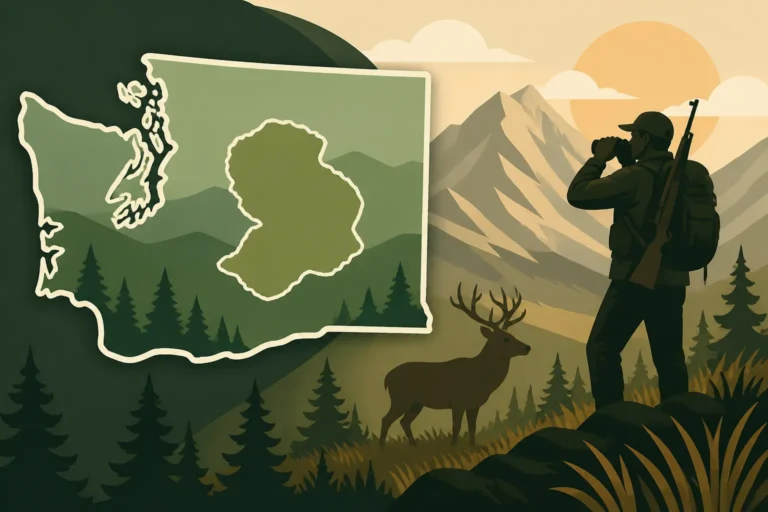
It can be incredibly frustrating to pore over maps, spend countless hours e-scouting a promising Game Management Unit (GMU), only to discover that the area you’ve meticulously planned to hunt prohibits the use of rifles. This isn't just a minor inconvenience; it fundamentally changes your entire approach and can even render your usual gear useless. This guide is designed to demystify these specific regulations, helping you understand why certain Washington areas ban rifles, how to identify these zones, and most importantly, how to adapt your hunting strategy to remain legal, safe, and effective in the field.
The Core Reasons Behind Washington's Rifle Bans
Washington is a state with incredibly diverse landscapes, from dense coastal rainforests and rugged mountain ranges to sprawling agricultural lands and rapidly growing suburban interfaces. This variety, while offering incredible hunting opportunities, also creates complex challenges for wildlife managers and local authorities. Restricting rifle use in certain areas isn't arbitrary; it's a calculated decision rooted in a few key concerns, primarily public safety, wildlife management, and sometimes, historical precedence or local pressures.
Public Safety in Developed and Densely Populated Areas
One of the most significant drivers for rifle restriction areas is public safety, particularly in GMUs that border or encompass suburban, exurban, or agricultural communities. A rifle bullet, especially from high-powered cartridges commonly used for big game, can travel incredibly far and maintain lethal energy for distances measured in miles, not just yards. In areas where homes, farms, roads, and recreational trails are present, the risk of an errant bullet striking an unintended target or person becomes unacceptably high. Imagine the anxiety for landowners hearing rifle shots near their homes, or the danger to hikers enjoying a public trail that runs through a popular hunting spot. These restrictions aim to mitigate that risk, creating a safer environment for both hunters and non-hunters alike. It's about minimizing the potential for tragic accidents and maintaining social license for hunting in these more populated parts of the state.
Wildlife Management and Ethical Hunting Practices
Beyond public safety, some rifle restrictions are tied into specific wildlife management goals or are designed to promote particular hunting ethics. In certain sensitive areas, limiting weapon choice can influence harvest rates, especially on species like blacktail deer that inhabit dense cover close to human habitation. By mandating shotguns or muzzleloaders, which generally have a more limited effective range than modern rifles, managers can encourage closer engagements and potentially reduce the risk of wounded animals that are difficult to recover in challenging terrain. It forces hunters to become more skilled at stalking and tracking, ensuring a cleaner kill within the weapon's effective range. You might also see these restrictions in place to manage pressure on specific game populations or to ensure a more "primitive" hunting experience in certain designated zones. Understanding these nuances helps us appreciate the broader conservation goals at play.
Historical Context and Local Ordinances
Finally, some rifle prohibitions have historical roots or stem from local ordinances that have been in place for decades, predating modern wildlife management techniques. In some parts of Western Washington, particularly, the tradition of hunting with shotguns for deer has a long history, influenced by the dense brush and limited visibility. Over time, these local preferences or agreements with landowners and communities solidify into formal regulations. Additionally, county or municipal governments sometimes implement their own firearm discharge ordinances that can supersede or complement state hunting regulations in specific zones, further complicating the patchwork of rules. It’s not always about the latest scientific study; sometimes, it’s about maintaining long-standing community harmony and respecting local traditions. You'll often find these long-established rules in areas that have seen gradual population growth over many years.
How to Identify Rifle Restriction Areas
Knowing why these restrictions exist is only half the battle; the crucial next step is knowing where they apply. Misinterpreting a map or overlooking a small detail in the regulations can quickly turn a planned hunt into a legal predicament. Luckily, Washington provides several resources to help hunters navigate these complex boundaries, though it requires diligent research on your part.
Decoding the WDFW Regulations and Maps
The Washington Department of Fish and Wildlife (WDFW) hunting pamphlets and online regulations are your primary source of truth. Each year, the "Big Game Hunting Seasons and Regulations" pamphlet details specific GMU rules, including any weapon restrictions. These are often listed under the individual GMU descriptions or in a dedicated section on "Firearm Restriction Areas" or "Shotgun-Only Areas." It's not enough to just skim these; you need to read them carefully, paying close attention to the exact boundary descriptions. Sometimes, a restriction might only apply to a specific portion of a GMU, or it might be active only during certain seasons. Look for keywords like "firearm restricted," "shotgun or muzzleloader only," or specific caliber limitations. Often, these areas are depicted on the GMU maps provided by WDFW, but those can sometimes be high-level, requiring further investigation. This is where cross-referencing becomes vital. You might find detailed descriptions under Washington Game Management Units Explained.
Utilizing Digital Mapping Tools
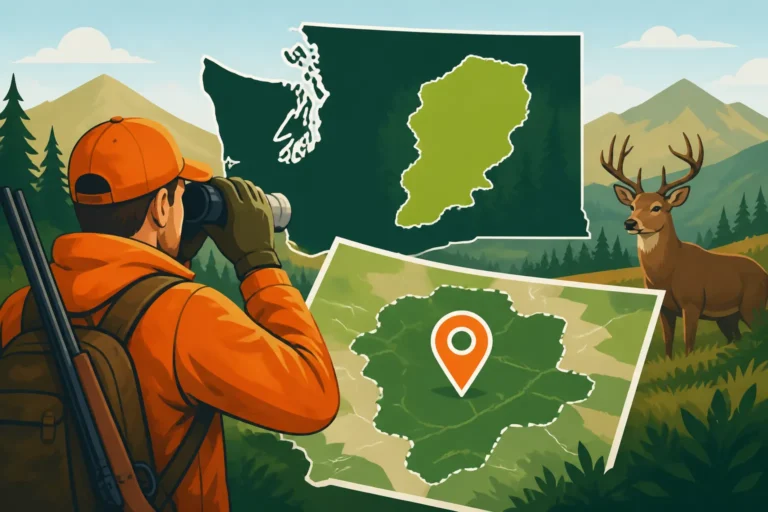
In today's age, digital mapping applications are indispensable for hunters, and they are especially critical for identifying rifle restriction zones. Platforms like onX Hunt and GoHunt are powerful tools that allow you to layer public land ownership, private parcels, and, crucially, specific hunting regulations directly onto your map. You can often toggle on layers that highlight firearm restriction areas, showing precise boundaries right down to the property line or road. I can't stress enough how much this technology has simplified pre-season scouting. Before heading out, I always make sure to download offline maps for my target GMU on my phone, including all relevant regulation layers. This way, even if I lose cell service deep in the woods, I have a clear, real-time understanding of where I am relative to any restrictions. It truly takes the guesswork out of navigating ambiguous paper map boundaries. When you're out there, knowing exactly where Washington's Three-Point Rule and What Counts applies or where you need to switch weapon types can be the difference between a successful hunt and a hefty fine. For a deeper dive, check out Downloading Offline Maps for Washington.
Ground Truthing and Local Signage
While digital maps are fantastic, nothing beats ground truthing your scouting efforts and paying attention to local signage. When you're actually in the field, keep an eye out for physical signs posted by WDFW, the Forest Service, DNR, or local municipalities. These signs might indicate "No Hunting with Rifles Beyond This Point," "Shotgun Only Area," or simply "Safety Zone." Roads, power lines, fences, and prominent terrain features are often used as boundaries for these restricted areas. If you're hunting near a town, school, or residential area, assume there might be restrictions in place even if you haven't seen specific signs on your map. Talking to local landowners, game wardens, or even other hunters can also provide invaluable on-the-ground intelligence. Sometimes, small local nuances aren't perfectly captured in a digital layer, and a quick chat with someone who knows the area like the back of their hand can save you a lot of trouble. This meticulous approach is key to understanding Finding Property Lines on Washington Public Land and respecting all boundaries.
| Restriction Type | Common Areas Affected | Typical Weapon Allowed | Primary Rationale |
|---|---|---|---|
| Firearm Restriction | Near towns, suburbs, high recreation areas, private lands | Shotgun, Muzzleloader, Archery | Public safety, noise reduction, reduced range |
| Archery-Only | Designated GMUs, urban deer hunts, specific wildlife areas | Archery only | Maximize close encounters, specific management |
| Muzzleloader-Only | Special seasons, certain GMUs | Muzzleloader only | Promote traditional hunting, extend seasons |
| Shotgun-Only | Dense timber, mixed-use areas, agricultural fringes | Shotgun (slugs), Archery | Limited range, public safety in brushy areas |
Adapting Your Hunting Strategy to Rifle-Restricted Zones
Discovering your chosen hunting area bans rifles doesn't mean your hunt is over. It just means you need to adjust your approach and potentially your equipment. Many hunters embrace these challenges, finding new satisfaction in the skills required for success in these areas. It often boils down to a more intimate understanding of game behavior and more precise hunting techniques.
Embracing Shotguns and Muzzleloaders
For many rifle-restricted areas, shotguns (loaded with slugs, not birdshot) and muzzleloaders become the go-to firearms. Modern slug guns, especially those with rifled barrels and saboted slugs, are incredibly accurate out to 150-200 yards, which is far more effective than the old smoothbore setups. However, this is still a significant reduction in effective range compared to most hunting rifles. Muzzleloaders, especially those allowed during general firearm seasons (check your specific GMU rules carefully, as some muzzleloader seasons have separate, stricter equipment rules), offer similar range capabilities. This shift in weapon choice immediately dictates a change in strategy. You can't rely on long-range glassing and shooting across a canyon. Instead, you'll need to focus on still-hunting, tracking, and setting up ambushes in tighter cover. You'll need to be proficient with your chosen alternative, understanding its limitations and practicing within its effective range. Remember, Muzzleloader Loading and Ignition in Rain requires special attention to keep your powder dry.
Archery as a Primary Weapon
If you're already an archer, these rifle-restricted zones can feel like a natural fit. Archery is often permitted where firearms are not, offering a quiet, low-impact way to hunt in close proximity to developed areas. Even if you're primarily a rifle hunter, considering picking up a bow opens up a world of opportunities in these otherwise restricted zones. The skills developed for archery—extreme patience, silent movement, meticulous wind awareness, and precise shot placement at close range—are highly transferable and will make you a better hunter overall. Archery Elk Hunting in Washington's September Season often involves navigating dense cover and making quiet approaches, skills directly applicable here. Bowhunting demands a commitment to getting incredibly close to your quarry, often within 20-40 yards. This means hours spent practicing your draw, shot, and judging distance without a rangefinder if a quick opportunity presents itself.
Tactics for Close-Quarters Hunting
Regardless of whether you choose a shotgun, muzzleloader, or bow, hunting in rifle-restricted areas almost always means engaging in close-quarters tactics. This involves becoming intimately familiar with the terrain, understanding game trails, bedding areas, and feeding patterns within a much smaller, more confined space. Still-hunting through dense timber, slowly and deliberately, pausing to observe and listen, becomes paramount. Focusing on pinch points, saddles, and small clearings where game might funnel through can be incredibly effective. Reading sign—tracks, scat, rubs, and beds—becomes even more critical as you're likely to be hunting pockets of game rather than vast expanses. You might also consider using calls, like subtle cow calls for elk, to draw animals closer in thick cover where visibility is limited. It's a more challenging, often more rewarding, style of hunting that emphasizes woodsmanship over long-range marksmanship. This style is especially useful when Still-Hunting Blacktails in Wet Washington Brush.
Planning Your Hunt in Restricted GMUs
Hunting in a rifle-restricted GMU requires more than just swapping out your rifle for a shotgun. It demands a more thorough pre-season planning process, careful gear considerations, and a commitment to staying updated on regulations. This proactive approach will maximize your chances of success and ensure a safe, legal hunting experience.
Pre-Season Scouting and Research
Your pre-season homework starts long before you ever set foot in the woods. Begin by identifying potential GMUs and then immediately check their specific weapon restrictions in the WDFW regulations. Once you've confirmed an area allows your chosen alternative weapon, dive deep into maps. Use tools like onX Hunt to study topo lines, identify potential funnels, escape routes, and bedding cover. Look for features that might concentrate game, like small pockets of old growth, water sources, or transitional zones between different types of vegetation. Pay close attention to public land boundaries versus private property, especially since many rifle restriction areas are near private parcels. E-Scouting Washington GMUs Before the Draw is a critical step, allowing you to narrow down options from your living room. Consider visiting the area beforehand, if possible, to walk potential game trails, verify access points, and get a feel for the terrain and cover density. This "boots on the ground" verification helps confirm your map-based assumptions and reveals nuances that only on-site observation can provide.
Gear Considerations for Alternative Weapons
Switching from a rifle to a shotgun, muzzleloader, or bow means a change in your gear setup. For shotguns, ensure you have a modern slug gun, preferably with a rifled barrel, and practice extensively with the specific brand and type of slug you intend to hunt with. Not all slugs perform the same in every shotgun. For muzzleloaders, practice loading and firing in various weather conditions, paying special attention to keeping your powder and primer dry in Washington's often damp environment. Carry all necessary cleaning supplies, loading accessories, and a reliable ignition system. If you're going the archery route, confirm your bow is tuned, your broadheads are razor-sharp, and you've practiced extensively at realistic hunting distances, especially from various positions you might encounter in the field. Also, ensure your broadheads meet Washington's Seven-Eighths Inch Broadhead Rule. Regardless of the weapon, invest in good quality optics like binoculars and a rangefinder that is effective in various light conditions and terrain, as you’ll be relying on them for precise distance judgment. A comfortable, quiet pack for stalking, and dependable rain gear are always wise investments in Washington. For more specifics on what's allowed, refer to Washington's Legal Equipment Rules by Weapon.
Staying Informed About Rule Changes
Washington's hunting regulations, like those of many states, can change from year to year, and sometimes even mid-season due to emergency closures or new management strategies. It is absolutely your responsibility as a hunter to stay informed. Always consult the most current WDFW regulations pamphlet for the year you are hunting. Don't rely on old pamphlets or hearsay. Check the WDFW website for any emergency rule changes before you head out, especially if there have been significant wildfires, disease outbreaks (like elk hoof disease), or unusually harsh weather conditions. Subscribing to WDFW's email updates or following their social media channels can also provide timely notifications. Organizations like GoHunt also provide excellent resources and forums where hunters often share updates and discuss regulations. By staying vigilant and informed, you can avoid costly mistakes and ensure your hunting efforts are always within the bounds of the law, contributing to a positive image for all Washington hunters. For official releases, check the Washington Big Game Pamphlet Release.
Disclaimer
This article is for general informational purposes only and does not constitute professional advice. Laws, prices and regulations vary by location and change over time. Consult a qualified professional for guidance on your specific situation.