Washington Cougar Season and Harvest Guidelines
Trying to navigate Washington's cougar hunting seasons and understand the ever-changing harvest guidelines can feel like you're trying to track a ghost through a blizzard – confusing, frustrating, and easy to get turned around. The rules aren't always straightforward, and missing a critical detail can turn a hopeful hunt into a costly mistake. This guide is here to untangle the complexities, walking you through everything you need to know about Washington's cougar season, the strict harvest guidelines, and how to stay on the right side of the law while pursuing these incredible predators.
Understanding Washington's Cougar Hunting Framework
Hunting cougars in Washington is a unique challenge, not just because of the animal's elusive nature, but also due to the very specific regulatory framework in place. Unlike some other big game species, cougars operate under a system designed to manage localized populations and prevent overharvest, which means hunters need to be exceptionally dialed into the current rules. It’s not a simple case of "season open, go hunt." You're dealing with a dynamic system that demands constant vigilance.
The General Season and Key Dates
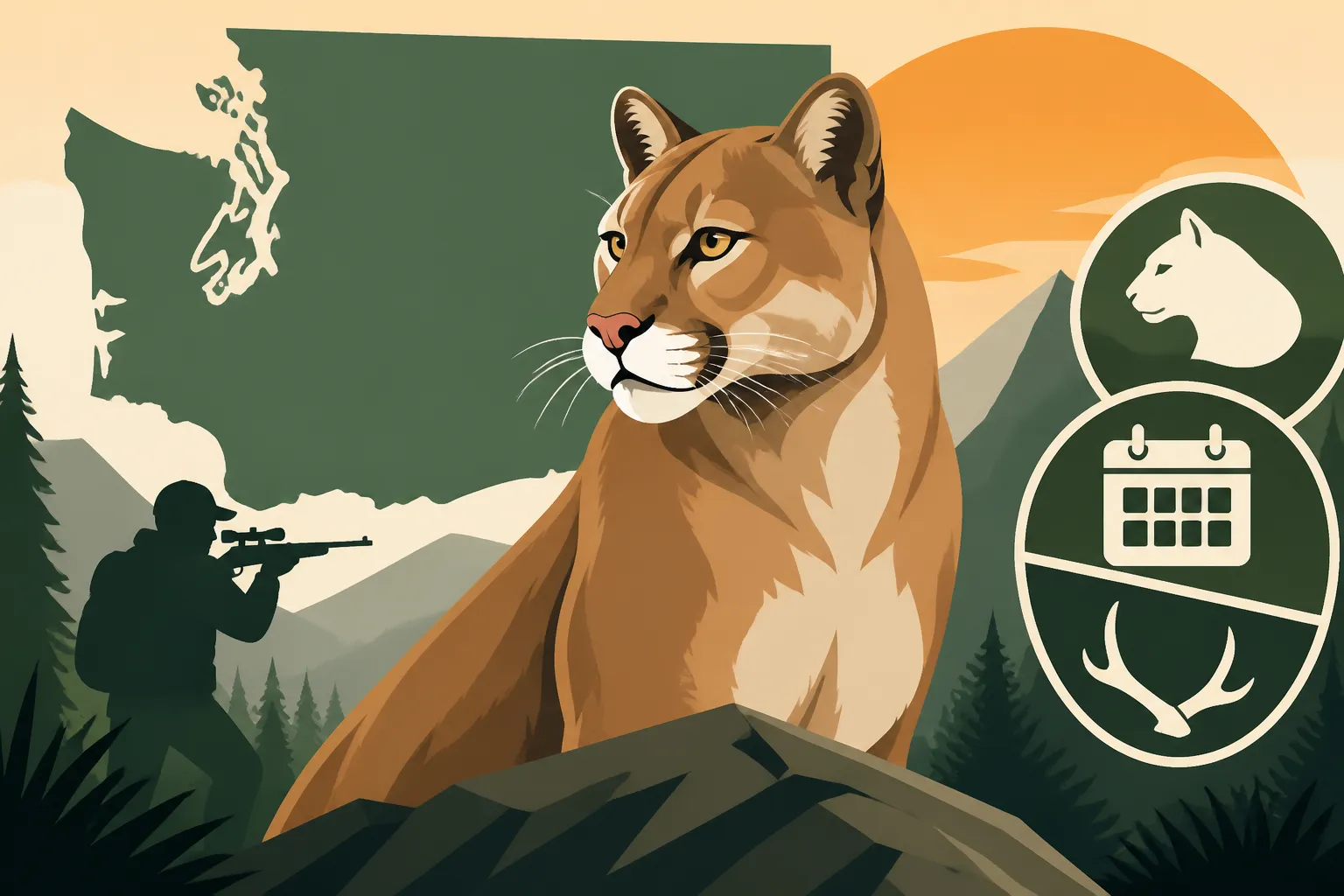
The general cougar hunting season in Washington typically kicks off in early September and runs through mid-March the following year. However, this isn't a blanket statement for the entire state. Washington is carved into various Game Management Units (GMUs), and while many share similar season dates, it's crucial to understand that regional harvest guidelines can and do lead to early closures. You might be planning a hunt for early February, only to find that the specific GMU you’re targeting closed in December because its quota was met. This unpredictability is a major source of frustration for many hunters. Always, and I mean always, check the current WDFW big game pamphlet and the WDFW website for the exact dates for your chosen GMU. You can also utilize tools like GoHunt to help cross-reference this information, but direct WDFW sources are your ultimate authority. The season is generally designed to give hunters ample opportunity throughout the fall and winter, but those harvest guidelines can cut things short at any moment.
Weapon Restrictions and Legal Methods
When it comes to pursuing cougars in Washington, you have several weapon choices, provided you adhere to the specific regulations for each. Generally, you can use modern firearms, archery equipment, or muzzleloaders during the general season. For modern firearms, the regulations allow for centerfire rifles of .22 caliber and larger, which is a key distinction from deer and elk where the minimum is .24 caliber. This means many popular varmint cartridges can be used for cougars, which can be an advantage for hunters already set up for smaller predators. However, ensure your chosen cartridge and bullet are suitable for effectively and ethically taking a cougar. For archery, broadheads must be at least 7/8 inch wide, and both fixed and mechanical broadheads are permitted, so long as they meet the sharpness and width requirements. Muzzleloader hunters must use a minimum .45 caliber projectile. What you cannot use are rimfire firearms, shotguns with buckshot or birdshot, or any methods considered unsporting or illegal, such as baiting or the use of hounds, which we'll delve into shortly. Knowing your weapon's specific legal parameters is as important as knowing how to shoot it. If you're looking for more detailed information on specific gear, articles like Washington's Legal Equipment Rules by Weapon can provide a deeper dive into the technical requirements.
The Hunter Education Requirement
Before you can even think about heading into the field for cougar season, you absolutely must fulfill Washington's hunter education requirement. This isn't just a suggestion; it's a mandatory step for most hunters. If you were born after January 1, 1972, you're required to complete a state-approved hunter education course and possess a valid hunter education card to purchase a hunting license in Washington. There are a few exceptions, such as deferred hunter education for first-time hunters under supervision, or those who can prove prior hunting experience in other states, but for the vast majority, the course is non-negotiable. The goal of hunter education isn't just to teach you gun safety; it also instills ethical hunting practices, wildlife identification, conservation principles, and the importance of understanding and following regulations. It's a foundational element for responsible hunting, ensuring that every hunter entering the woods understands their role in wildlife management and public safety. You can find comprehensive details about this process in guides like Washington Hunter Education and Licensing.
Navigating Harvest Guidelines and Quotas
Hunting cougars in Washington is governed by a strict system of harvest guidelines, not hard quotas in the traditional sense, but guidelines that trigger immediate closures. This makes cougar hunting particularly unique and requires hunters to be constantly informed, almost in real-time. It’s not like deer season where you know the exact end date; with cougars, that end date can move up unexpectedly, leaving many hunters frustrated if they aren't checking frequently.
Regional Harvest Guidelines Explained
Washington operates its cougar management on a system of regional harvest guidelines. These aren't arbitrary numbers; they are carefully determined by the Washington Department of Fish and Wildlife (WDFW) based on population estimates, research, and conservation goals for different areas of the state. These guidelines are set for various Game Management Units (GMUs) or larger hunting districts, and once the reported harvest within a specific area reaches that pre-determined number, that area closes immediately to cougar hunting, regardless of the published general season end date. This means that a GMU that was open yesterday might be closed today, making timely communication and checking official sources absolutely critical. The intent is to maintain healthy cougar populations while also addressing potential conflicts with livestock or other wildlife. Understanding that these guidelines are a cap for the entire season, not just a suggestion, is the first step to a successful and legal hunt. For hunters considering their unit choices, resources like Washington Game Management Units Explained can help in understanding these boundaries.
The Real-Time Closure System
Because of these dynamic harvest guidelines, Washington utilizes a real-time closure system for cougar season. This is perhaps the most critical piece of information for any cougar hunter. When a GMU's guideline is met, WDFW will issue an emergency rule change, and the season for that specific area will close immediately. Hunters are responsible for knowing when these closures occur. The primary way WDFW communicates these closures is through their official website, often on a dedicated cougar harvest updates page, and sometimes through a hotline number. Many hunters will check these resources daily, especially as the season progresses and harvest numbers climb. Imagine planning a trip to a specific GMU, driving for hours, only to find out it closed yesterday. It's a common, heartbreaking scenario. This is where tools that aggregate WDFW data can be helpful, but nothing replaces checking the official WDFW website or calling their dedicated line right before you head out and even while you’re in the field if you have service. Staying informed is entirely on you.
Reporting Your Cougar Harvest
Reporting your cougar harvest is not just a formality; it's a legal requirement and a cornerstone of Washington's cougar management strategy. Every hunter who successfully harvests a cougar must report it to WDFW within 48 hours of the kill. This reporting is how the department tracks harvest numbers against the regional guidelines and determines when to issue closures. Failing to report your cougar can result in fines and penalties, but more importantly, it undermines the very system designed to manage cougar populations sustainably. The reporting process usually involves contacting WDFW directly via phone or online, providing details about the kill, such as the date, time, location (GMU), and sex of the animal. Additionally, you are typically required to present the skull and hide (with proof of sex naturally attached) to WDFW for inspection within five days of the kill. This inspection allows biologists to collect crucial data, such as age, sex, and other biological information, which helps refine population models and future harvest guidelines. Remember, the quick turnover for reporting is what makes the real-time closure system work, so every hunter plays a vital role. For a broader understanding of reporting, check out Washington Harvest Reporting Requirements.
Here's a quick reference table for reporting and general season overview, but always confirm with current WDFW regulations:
| Aspect | Detail |
|---|---|
| General Season Dates | Typically Sept 1 – March 15 (next year). Subject to early closure by GMU/District based on harvest guidelines. |
| Harvest Guideline | One cougar per license year. Specific regional guidelines (numbers) are set per GMU/Hunting District. |
| Closure Notification | WDFW website (emergency rule updates), WDFW Cougar Hotlines (check current pamphlet for number). |
| Harvest Reporting | Mandatory within 48 hours of kill. |
| Physical Inspection | Mandatory within 5 days of kill (skull & hide with proof of sex naturally attached) at a WDFW office or designated check station. Call ahead to schedule. |
| Legal Weapons | Centerfire rifle (.22 cal minimum), Archery (7/8" broadhead), Muzzleloader (.45 cal minimum). No baiting, no hounds. |
| Required License/Tag | Valid Washington hunting license + Cougar Transport Tag. |
| Hunter Education | Required for most hunters born after Jan 1, 1972. |
Specific Rules and Considerations for Cougar Hunters
Hunting cougars in Washington isn't just about seasons and tags; it's deeply ingrained with specific ethical and legal considerations that set it apart from other big game pursuits. These rules are in place not just for the animal's welfare but also to maintain public trust and ensure a fair chase. Ignoring these nuances can lead to serious consequences, both legally and ethically.
The Ban on Hounds and Baiting
Perhaps the most significant and widely discussed rule in Washington cougar hunting is the statewide ban on the use of dogs (hounds) and bait. This prohibition came into effect with Initiative 655, passed by voters in 1996. For many traditional cougar hunters, this was a monumental shift, essentially reshaping the entire approach to hunting these animals. The rationale behind the ban was largely driven by animal welfare concerns and the perception of fair chase. What it means for you, the hunter, is that your pursuit must be conducted solely through spot-and-stalk methods, still-hunting, or calling. You cannot lure a cougar to a specific location with food or scent, nor can you use trained dogs to track and tree or bay a cougar. This makes cougar hunting in Washington an incredibly challenging endeavor, testing a hunter's woodsmanship, tracking skills, and patience like few other hunts can. If you want to dive deeper into the history and implications of this, you might find What I-655 Banned for Cougar Hunters to be a helpful read.
Ethical Hunting Practices and Fair Chase
Beyond the legal definitions, ethical hunting practices and the principle of fair chase are paramount when pursuing cougars. Because cougars are incredibly intelligent and elusive, their pursuit without the aid of hounds or bait demands a high level of skill and respect for the animal. Fair chase means giving the animal a reasonable chance to escape. This includes, but isn't limited to, avoiding shooting animals on private property where they might be habituated, refraining from shooting into dense cover where recovery is unlikely, and ensuring you have a clear, ethical shot opportunity. It also extends to your actions after the shot – making every effort to track and recover a wounded animal, even if it means long hours and difficult conditions. The goal isn't just to kill, but to do so cleanly, efficiently, and respectfully. As a hunter, you are an ambassador for the sport, and upholding these ethical standards is crucial for the future of hunting.
Protecting Sows with Kits
Another vital ethical and legal consideration in Washington cougar hunting is the protection of sows with dependent kits. It is illegal to harvest a cougar that is obviously a female with kittens or to harvest a kitten that is obviously dependent on a sow. While cougars are largely solitary, a sow will raise her kits for an extended period, teaching them vital survival skills. Removing the mother jeopardizes the survival of her offspring. Identifying whether a cougar is a sow and if she has dependent young can be incredibly difficult in the field, especially given their stealthy nature and the challenging terrain. It requires careful observation and a conservative approach. If you have any doubt about the presence of kits or the sex of the animal you're pursuing, it's always best to err on the side of caution and pass on the shot. This practice reinforces responsible wildlife management and ensures the continuity of cougar populations within the state.
Licensing and Permits for Washington Cougar Hunting
Just like with any big game animal in Washington, you can't simply head out into the woods with a rifle and hope to stumble upon a cougar. There's a specific set of licenses and tags you need to acquire, each with its own cost and implications. Understanding these requirements beforehand will save you a headache and potential legal trouble down the line.
Obtaining Your Washington Hunting License
The first and most fundamental step to hunting cougars (or any big game, for that matter) in Washington is to obtain a valid hunting license. This license is your general permit to hunt in the state for the current license year. For most residents, this will involve purchasing a "Big Game Hunting License" or a "Combination License" which often includes deer, elk, bear, and cougar privileges. Non-residents will typically need a "Nonresident Big Game Combo" or similar package. You can purchase these licenses online through the WDFW WILD system, at authorized license dealers throughout the state, or by visiting a WDFW regional office. Keep in mind that license fees can change, so always check the most current WDFW fee schedule. Your hunting license validates your ability to purchase specific tags, but it does not automatically allow you to hunt a cougar without the additional cougar tag. For a detailed breakdown of all the costs and options, the article Washington Big Game Licence and Tag Costs is an excellent resource.
Cougar Tag Requirements and Costs
Once you have your basic hunting license, the next crucial step is to purchase a Washington Cougar Transport Tag. This is the specific tag that authorizes you to harvest one cougar per license year. The cougar tag is usually an add-on to your general big game license, and its cost is separate from the base license fee. For many resident hunters, especially those purchasing a combo package, the cougar tag might be automatically included, but always double-check your purchase to ensure you have all necessary endorsements. Non-residents will also need to ensure they have the appropriate cougar tag as part of their package. When you successfully harvest a cougar, this tag must be immediately validated and attached to the animal as per WDFW regulations, typically by signing, dating, and punching out the month and day of the kill. This acts as proof of your legal harvest and allows for the legal transport of the animal. Without this specific tag, any cougar harvested is considered illegally taken. Understanding these specifics is key to a smooth and legal hunt. For more specific details, consider reading Washington Cougar Tag Rules.
Non-Resident Considerations
For those coming from out of state, hunting cougars in Washington presents a few additional considerations, primarily regarding costs and sometimes, specific regulations. While non-residents are welcome to hunt cougars in Washington, the cost of licenses and tags is significantly higher than for residents. A non-resident Big Game Combo license, which typically includes cougar, can be a substantial investment. It’s important to budget accordingly and ensure you fully understand what your non-resident package covers. Additionally, while the general cougar hunting rules regarding seasons, harvest guidelines, and weapon restrictions apply equally to residents and non-residents, some nuances, particularly around special permits or specific draw opportunities (though less common for general cougar), might favor residents. It's always a good idea for non-residents to thoroughly review the current WDFW pamphlet, paying close attention to any sections that specifically address non-resident hunter regulations. Planning ahead, including understanding travel requirements and logistics for game retrieval, is even more critical for those traveling a distance to hunt these elusive cats.
Preparation and Tactics for Washington Cougars
Hunting cougars without the aid of hounds or bait is arguably one of the most challenging big game pursuits in Washington. It requires a significant investment in time, keen observation skills, and a deep understanding of cougar behavior. Success often hinges on meticulous preparation long before the season even opens.
Scouting for Cougar Sign
Finding a cougar in the vast wilderness of Washington is like finding a needle in a haystack if you don't know what to look for. That's why scouting for cougar sign is absolutely paramount. Cougars are territorial and leave distinct clues of their presence. Look for tracks, which are typically large, round, and lack claw marks unless the animal was climbing or running hard. Scat, often segmented and containing hair or bone fragments, is another key indicator. Scratches on trees, known as "scrape trees" or "marking posts," where cougars sharpen claws or leave scent, are also vital clues. These are often found along game trails, ridgelines, or near kill sites. You'll want to focus your scouting efforts on areas with high concentrations of their primary prey, which in Washington often means deer and elk. Think about creek bottoms, dense timber adjacent to clearcuts, and areas with good vantage points for glassing. Pay particular attention to fresh snow, as it makes tracking and identifying fresh sign much easier. Understanding Reading Cougar Sign in the Snow can dramatically increase your chances of finding areas of recent activity. Many successful cougar hunters spend countless hours simply looking for these subtle but undeniable hints.
Calling Strategies Without Hounds
Since the use of hounds is prohibited, calling becomes one of the most effective tactics for bringing a cougar within range. Cougars are apex predators and opportunists, responding primarily to distress calls from their prey. Fawn distress calls, rabbit distress calls, and even elk calf distress sounds can be incredibly effective. The key is patience and realistic volume. Cougars have exceptional hearing, so calling too loudly can sometimes spook them, especially if they are close. Often, short, intermittent calling sequences followed by long periods of silence (10-15 minutes or more) work best. You want to sound like an easy meal struggling in the brush. When calling, choose setups that offer good visibility in multiple directions and allow for a quick shot. Positioning yourself with your back against thick cover, where a cougar won't be able to easily circle downwind of you undetected, is crucial. Remember, a cougar can cover ground incredibly fast and quietly, often approaching from unexpected directions. Be prepared for a close-range encounter at any moment. For a deeper dive, consider resources like Calling Cougars Without Dogs in Washington.
Post-Harvest Requirements and Meat Care
Successfully harvesting a cougar is only part of the process; proper post-harvest care and adherence to regulations are just as critical. Immediately after the kill, you must validate your cougar tag and attach it to the animal. Then, you'll need to field dress the animal to begin the cooling process. Cougars are relatively lean animals, but proper meat care is still important, especially if you plan on salvaging the meat. Washington regulations allow for the salvage of cougar meat, but as with all wild game, it must be handled properly to ensure its quality and safety. Many hunters choose to skin the animal and quarter it to cool rapidly, especially if hunting in warmer early-season conditions. Once quartered, use good quality game bags to protect the meat from dirt and insects. Remember, the skull and hide (with proof of sex naturally attached) must be presented to WDFW for inspection within five days of the kill. This means you need to protect these parts of the animal as well. If you're backpacking deep into the wilderness, consider how you'll manage to transport the hide and skull without damaging them. For more on meat care, Cougar Meat Salvage in Washington can provide useful insights.
Disclaimer
Please be aware that hunting regulations, season dates, and harvest guidelines in Washington are subject to change. While this guide provides comprehensive information, it is your responsibility to consult the most current Washington Department of Fish and Wildlife (WDFW) hunting regulations pamphlet and check for emergency rule changes before heading into the field. This content is for informational purposes only and does not constitute legal advice.