Washington Elk Herds and Where They Live
If you've ever dreamed of chasing a Washington elk, you know the dream usually comes with a healthy dose of confusion. Our state is incredibly diverse, from the dense rainforests of the Olympic Peninsula to the sagebrush steppes of the Columbia Basin, and so are our elk herds. Pinpointing where these magnificent animals live, understanding their habits, and navigating the nuances of different subspecies can feel like an overwhelming puzzle, but this comprehensive guide is here to unravel those mysteries, helping you understand where Washington's elk live and what makes each herd unique.
Understanding Washington's Diverse Elk Landscape
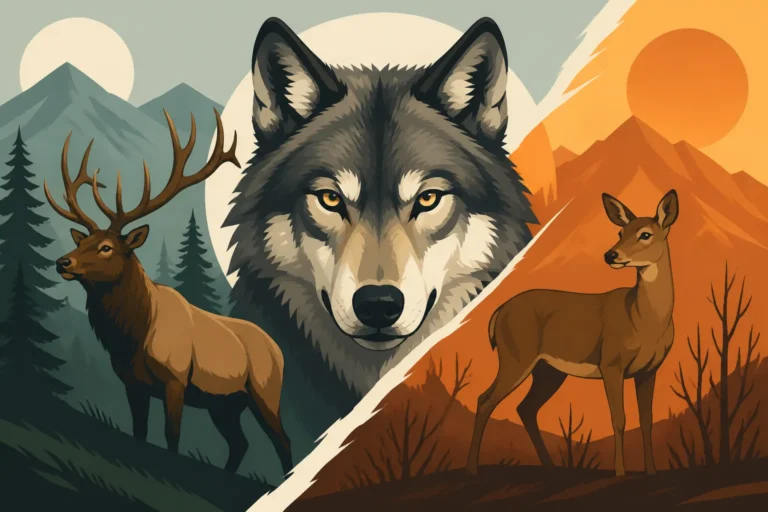
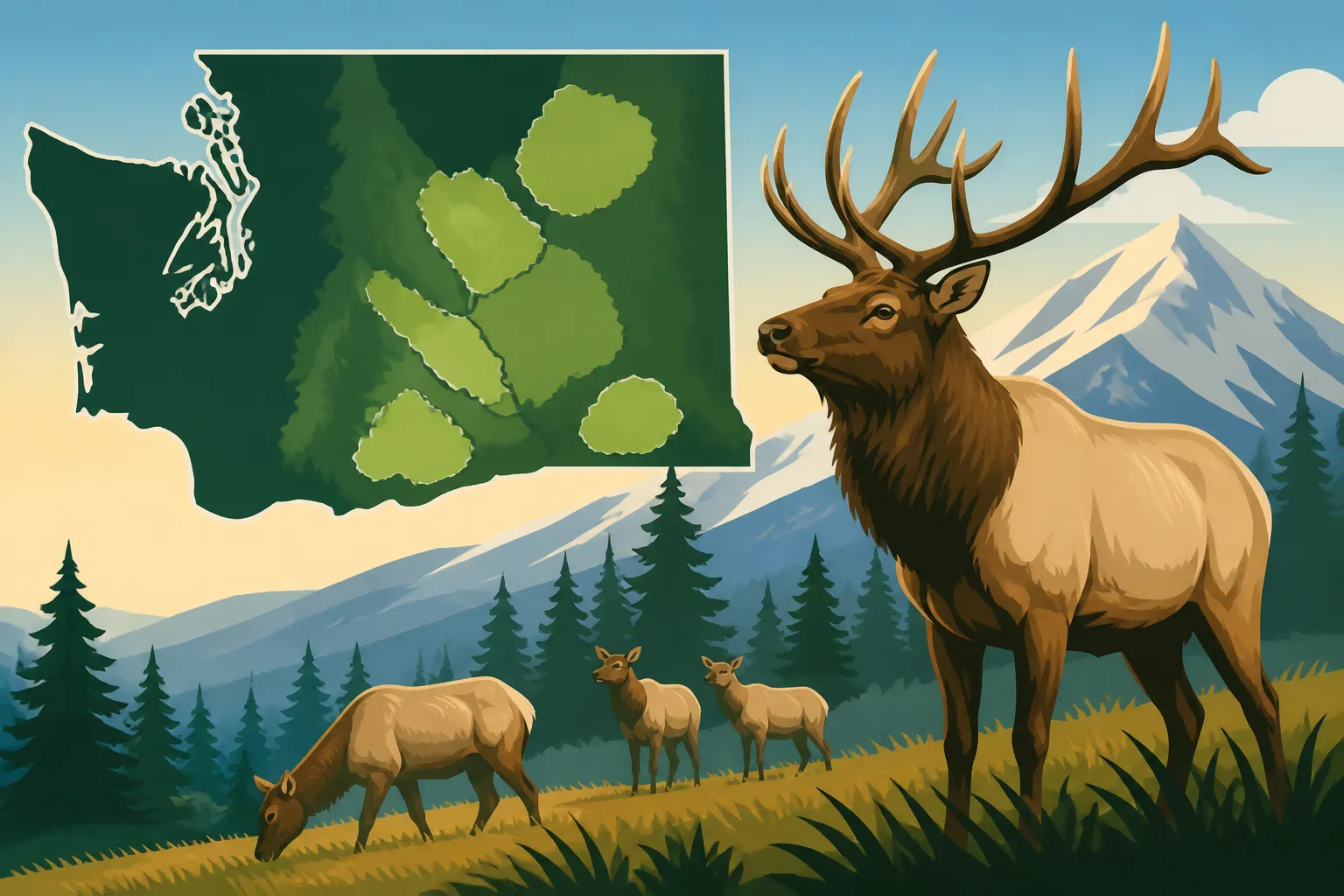
Washington state offers a truly unique backdrop for elk hunting, primarily because it's home to two distinct subspecies of elk: the majestic Roosevelt elk on the western side of the Cascade Mountains and the hardy Rocky Mountain elk to the east. This geographical division isn't just a line on a map; it represents a fundamental difference in habitat, behavior, and even the challenges hunters face when pursuing them. Getting a handle on this basic split is the first step in unlocking Washington's elk hunting potential.
The Cascade Crest Divide
The towering Cascade Mountain range acts as a natural, formidable barrier, effectively separating Washington into two distinct ecological zones, each favoring a different type of elk. On the west, you have a temperate rainforest environment, characterized by dense timber, heavy rainfall, and thick undergrowth like salal and devil's club. This is the domain of the Roosevelt elk. To the east, the landscape dramatically transforms into high desert, expansive ponderosa pine forests, and vast sagebrush flats, a stark contrast that perfectly suits the Rocky Mountain elk. This division isn't arbitrary; it reflects millennia of adaptation, where each subspecies has evolved to thrive in its specific environment. Understanding this fundamental divide is crucial because it directly influences everything from population dynamics to effective hunting strategies.
Habitat Differences: Wet Forests Versus Dry Sagebrush
The contrast between these two environments couldn't be more profound, and it profoundly shapes the lives of the elk that call them home. Western Washington is synonymous with big trees and wet weather, and the Roosevelt elk are masters of navigating this dense, often steep, terrain. They thrive in the cover provided by old-growth and second-growth timber, frequently feeding in clearcuts and along forest edges before retreating into the dark timber for security. Here, you'll encounter a constant battle with moisture, requiring different gear and hunting tactics.
In Eastern Washington, the story is entirely different. The Rocky Mountain elk are accustomed to wide-open spaces, significant elevation changes, and much drier conditions. They might spend their days in the timbered slopes of the Colockum or Blue Mountains, but they're just as likely to be found grazing in vast agricultural fields, or bedding down in the broken coulees and canyon country of the Columbia Basin. Hunters here rely heavily on optics to pick apart distant hillsides and understand the thermals that carry their scent. These habitat variations mean that a successful approach for a Roosevelt often needs to be completely rethought when pursuing a Rocky Mountain elk, making versatility a key trait for any Washington elk hunter.
The Mighty Roosevelt Elk Herds of Western Washington
When you talk about elk on the "wet side" of Washington, you're talking about Roosevelt elk. These impressive animals are often larger-bodied than their Rocky Mountain cousins, though their antlers tend to be more compact, focusing on mass rather than spread. Hunting Roosevelt elk is an exercise in patience, stealth, and grit, often involving navigating incredibly dense cover and enduring persistent rain. Several distinct herds roam Western Washington, each with its own characteristics and challenges.
Willapa Hills Herd
Nestled in the southwestern corner of Washington, the Willapa Hills region is classic Roosevelt elk country. Characterized by a mix of private timberlands, state-managed forests, and sprawling private holdings, this area supports a robust elk population. The terrain is a labyrinth of steep, timbered ridges, deep drainages, and countless clearcuts in various stages of regrowth. Access can be a real challenge here, with many prime areas owned by private timber companies like Weyerhaeuser or Hancock, often requiring permits or careful navigation of their public access policies.
Hunters often spend their time still-hunting through thick reprod or glassing recent clearcuts at first and last light, hoping to catch elk feeding. The constant rain and thick vegetation make for challenging blood-trailing and requires meticulous attention to gear, like ensuring you have proper rain gear for Westside hunting. The Willapa Hills are known for producing solid bulls, but you’ll often have to work hard for them, pushing through some truly nasty brush. Understanding access is paramount in this region, as gates and private land boundaries can change rapidly.
Olympic Peninsula Herds
The Olympic Peninsula is synonymous with the grandeur of Roosevelt elk. These herds roam some of the wildest and most pristine landscapes in Washington, from the temperate rainforests of Olympic National Park (where hunting is prohibited) to the surrounding Olympic National Forest and state lands. The sheer scale and ruggedness of this country are breathtaking, but also incredibly demanding for hunters. This is truly the realm of the backcountry hunter, willing to put in miles and vertical gain.
The elk here are masters of their environment, disappearing into the dense timber or slipping through the almost impenetrable salal and vine maple thickets. Hunting pressure is significant in accessible areas, pushing elk into remote valleys and high-elevation basins. Hunters pursuing these giants often focus on remote drainages, old logging roads that are now overgrown, and the transition zones between mature timber and younger clearcuts. Success here often hinges on your ability to physically penetrate deep into their domain and your knowledge of Roosevelt bulls and why they bugle less than their eastern counterparts.
Cowlitz and Toutle River Herds
The Cowlitz and Toutle River drainages, particularly in the shadow of Mount St. Helens, are home to significant Roosevelt elk populations that have faced unique challenges and opportunities. Following the catastrophic eruption of Mount St. Helens in 1980, the landscape was dramatically altered, creating a mosaic of blast zones, regenerating forests, and new habitat types. These herds have shown remarkable resilience, adapting to the changing environment.
Access to these areas is a blend of public and private timberlands, much like the Willapa Hills. However, the geology and regrowth patterns from the eruption add another layer of complexity. Hunters might find themselves navigating areas of downed timber, new meadows, and steep, unstable terrain. These herds offer excellent opportunities for general season hunters, but success often comes down to scouting and understanding how elk utilize the evolving habitat. The sheer size of some of the mature Roosevelt bulls coming out of these areas can be truly impressive, making them a sought-after quarry. The region is a testament to nature's ability to recover and adapt, providing a unique hunting experience unlike anywhere else in the state.
Rocky Mountain Elk Herds East of the Cascades
Crossing over the Cascade Crest, the landscape opens up, and so does the hunting experience. Eastern Washington is the domain of the Rocky Mountain elk, known for their impressive antler growth and adaptability to diverse, often arid, conditions. These herds often inhabit larger territories and can be found in a variety of habitats, from dense conifer forests to open sagebrush and agricultural lands.
Yakima Herd
The Yakima Elk Herd is arguably one of Washington's most iconic and well-managed herds. Spanning vast tracts of public land, including the Colockum Wildlife Area, Wenas Wildlife Area, and extensive national forest lands, this herd is a prime example of successful wildlife management in action. The terrain is characterized by rolling hills, deep canyons, scattered timber, and expansive sagebrush flats. Elk here are migratory, moving between high-elevation summer ranges and lower-elevation wintering grounds as the snow dictates.
Hunting the Yakima Unit requires a keen eye and often long-range shooting skills. Glassing breaks at first light and covering significant ground are common tactics. The herd is managed for quality, with numerous special permits available through the draw, offering hunters a chance at truly mature bulls. Understanding the herd's migration patterns and winter range closures that end late hunts is critical for success, as elk will often move out of hunting areas once deep snow arrives. Tools like those found on GoHunt can be invaluable for analyzing draw odds and unit characteristics to help plan for a hunt in this popular region.
Colockum Herd
Just north of the Yakima, the Colockum Elk Herd shares many similarities in habitat and behavior. This herd utilizes the rugged, broken country of the Colockum Wildlife Area and surrounding private and state lands. It's a challenging landscape of steep, timbered slopes, open grassy hillsides, and deep, brushy draws. Like the Yakima herd, these elk are largely migratory, following the snow line up and down the mountains.
The Colockum is known for producing strong bulls and offers a mix of general season and special permit opportunities. Access can be a patchwork of public roads and private land, so careful e-scouting a Washington GMU from home is essential before heading out. Hunters here often employ a mix of glassing open hillsides and still-hunting timbered pockets. During the rut, the calls of the bulls can echo across the canyons, creating an exhilarating hunting experience, though knowing when bulls stop answering in late archery can be key to adapting your strategy.
Blue Mountains Herd
Located in the southeastern corner of the state, the Blue Mountains Elk Herd (often called the "Blues" by local hunters) is a distinct and highly sought-after population. These elk inhabit the rugged, heavily timbered slopes and deep canyons of the Umatilla National Forest, Asotin Creek Wildlife Area, and surrounding private lands. The habitat is characterized by dense stands of Ponderosa pine, Douglas fir, and grand fir, interspersed with open meadows and steep, brushy draws.
The Blues are renowned for producing some of Washington's largest Rocky Mountain elk, making tags here highly coveted. Special permits are the primary way to hunt the best units, and drawing one is a significant achievement. Hunting in the Blues typically involves strenuous hiking, navigating steep terrain, and often dealing with unpredictable weather, including early snow. Hunters here need to be proficient in reading coulees for sign, understanding the challenges of tracking a buck after a fresh snow (which applies similarly to elk), and capable of glassing sage and wheat edges for Washington mule deer, as elk will often utilize similar feeding areas. This is big, wild country that rewards perseverance and preparation.
Mount St. Helens Herd: A Unique Rocky Mountain Presence
While most of Western Washington is Roosevelt elk territory, the Mount St. Helens herd is a unique exception. Genetically, these elk are Rocky Mountain elk, descendants of transplants from Eastern Washington and other states, introduced after the 1980 eruption decimated the native Roosevelt population. This herd has flourished in the post-eruption landscape, which initially presented an abundance of new forage.
The Mount St. Helens blast zone offers a truly unique hunting experience. The terrain is a mix of rapidly regenerating clearcuts, standing snags, deep ash deposits, and dense brush. Elk here are often found feeding on the lush new growth in the blast zone itself or retreating to the thicker timbered edges for cover. Access can be tricky, with portions managed by the Mount St. Helens National Volcanic Monument (no hunting) and other sections by the Gifford Pinchot National Forest and private timber companies. This herd provides a fascinating case study in elk adaptation and offers an exciting challenge for hunters willing to explore this distinctive landscape.
Key Factors Influencing Washington's Elk Herds
Washington's elk herds are constantly influenced by a complex web of environmental factors, human activities, and natural processes. Understanding these dynamics is crucial for both hunters and conservationists, as they directly impact elk populations, distribution, and the overall health of the ecosystem.
Habitat Quality and Human Encroachment
The availability and quality of suitable habitat are paramount for elk survival and population growth. Elk require a mosaic of cover for security and bedding, forage for food, and water sources. In Western Washington, urban sprawl and agricultural conversion continue to fragment elk habitat, pushing animals into smaller, more isolated areas. Timber harvest practices, while creating new forage in clearcuts, can also reduce critical old-growth cover and disturb traditional movement corridors if not managed carefully.
In Eastern Washington, similar pressures exist, with development expanding into traditional wintering grounds and agricultural practices sometimes leading to conflicts between elk and landowners. Maintaining and enhancing habitat connectivity, protecting critical winter ranges, and managing timber and agricultural landscapes in a way that benefits wildlife are ongoing challenges. This means hunters need to be aware of areas experiencing habitat loss and adapt their strategies accordingly, perhaps focusing on areas like public land scouting in Washington before opening day to find undisturbed pockets.
Elk Hoof Disease and Its Impact
One of the most pressing challenges facing Washington's elk herds, particularly the Roosevelt elk on the west side, is Elk Hoof Disease. This debilitating illness causes severe lesions and deformities on an elk's hooves, leading to lameness, difficulty feeding, and increased vulnerability to predators and harsh weather. The disease is widespread in many Western Washington herds, and its long-term impacts on population health and hunter success are a major concern for the Washington Department of Fish and Wildlife (WDFW).
WDFW is actively researching the disease, its causes, and potential management strategies. While the exact transmission mechanism and full scope of its impact are still being understood, it's clear that it adds significant stress to affected herds. As a hunter, it's important to be aware of the symptoms of Elk Hoof Disease, such as limping or abnormal hoof growth, and to report sightings of severely affected animals to WDFW to aid in their research. This disease highlights the delicate balance of wildlife health and the complex challenges facing modern conservation.
Predator Influence: Wolves, Cougars, Bears
Washington's elk share their landscapes with a variety of predators, each playing a role in population dynamics. Cougars are ubiquitous across the state, preying on elk calves and, occasionally, adult elk. Black bears are opportunistic predators, often taking calves during the spring fawning season. However, the reintroduction and natural expansion of wolf packs in Eastern Washington have added a new, significant dynamic to elk management.
Wolf packs can exert considerable predation pressure on elk herds, particularly calves and weaker adults. While wolves are a natural part of the ecosystem, their presence adds another layer of complexity to elk management, especially in areas where elk populations are already struggling due to habitat loss or disease. WDFW continually monitors wolf populations and their impact on game species, trying to find a balance that supports both predator and prey. Understanding this dynamic is part of being an informed hunter, recognizing that a healthy ecosystem requires robust populations across the food chain.
Winter Conditions and Calf Survival
The severity of winter weather plays a monumental role in the survival rates of elk, particularly calves and older animals. Harsh winters with deep, persistent snow and prolonged cold can limit access to forage, leading to malnutrition and increased mortality. Calves born the previous spring are especially vulnerable, as they are still developing their strength and fat reserves.
Conversely, mild winters can lead to higher calf survival rates and overall herd growth. These fluctuations mean that elk populations can vary from year to year, even within the same GMU. WDFW's management decisions often take into account recent winter severity when setting permit numbers and season structures. Hunters need to be prepared for late-season hunting in Washington snow, which can mean challenging travel and difficult conditions, but also opportunities to find elk concentrated on accessible winter ranges before Washington winter range closures that end late hunts begin.
Hunting Strategies by Elk Herd Type and Location
Successfully hunting elk in Washington is less about a single "trick" and more about adapting your approach to the specific subspecies, terrain, and conditions you're facing. What works wonders in the dense timber of Western Washington might be completely ineffective in the open expanses of the east side.
Western Washington Timber and Rain Strategies
Hunting Roosevelt elk on the west side of the Cascades is a truly immersive experience, often defined by the relentless pursuit through thick, wet timber. The dense vegetation and frequent rain make long-range glassing largely ineffective, shifting the focus to close-quarters encounters. Hunters often employ still-hunting tactics, moving slowly and deliberately through the forest, pausing frequently to listen and scan for the slightest movement or sound. You might be still-hunting blacktails in wet Washington brush, but the principles for elk are much the same – move slow, be quiet, and rely on your senses.
Calling can be very effective, especially during the archery season. Bugling and cow calling in Washington's archery elk season is a prime tactic, but you need to be prepared to get close. Because visibility is often limited to mere yards, calling setups need to be carefully considered, often involving two-man calling setups on elk where one caller draws the bull in while the shooter positions themselves for a close shot. Persistence and waterproof gear are your best friends here, as you'll spend hours slogging through wet brush and steep terrain. Patience is paramount, as a Roosevelt bull can appear silently out of the mist in an instant.
Eastern Washington Open Country and Breaks Approaches
Eastern Washington elk hunting offers a stark contrast, demanding a different set of skills. While there's plenty of timber, especially in the Blues and parts of the Okanogan, many areas are characterized by open hillsides, deep coulees, and vast agricultural lands. Here, optics are king. Hunters spend countless hours glassing eastern Washington breaks for mule deer, and the same principle applies to elk. High-quality binoculars, often 10×42 versus 15×56 for Washington open country, and a good spotting scope on a tripod are essential tools for picking apart distant hillsides.
Once elk are located, a spot-and-stalk approach is common. This involves careful planning to use terrain features to approach undetected, navigating the swirling winds and understanding the thermals that can carry your scent for miles. The distances can be significant, so physical fitness and an accurate rifle capable of longer shots are often beneficial. During the rut, bugling can be incredibly effective, but often from a distance to locate bulls before initiating a stalk. Tracking bucks in fresh Eastern Washington snow can also provide valuable insights into elk movement patterns and feeding habits, as both species often utilize similar terrain features.
Conservation Efforts and Future of Washington Elk Hunting
Washington's elk herds are a precious resource, and their continued health and abundance depend on ongoing conservation efforts and responsible management. The Washington Department of Fish and Wildlife (WDFW) plays a central role in these efforts, working to balance the needs of elk with the interests of hunters, landowners, and other stakeholders.
WDFW Management Goals and Research
WDFW employs a scientific approach to managing Washington's elk herds. This involves regular aerial surveys and herd estimates to track population numbers, sex ratios, and calf recruitment rates for all of Washington's ten major elk herds. They also conduct extensive research into elk behavior, habitat use, disease prevalence (like Elk Hoof Disease), and the impacts of predation. Based on this data, WDFW sets hunting seasons, allocates permits for general season versus special permit hunts, and implements habitat improvement projects.
A key goal is to maintain healthy, viable elk populations across their range, while also addressing issues such as agricultural damage caused by elk and ensuring sustainable harvest levels. This is a dynamic process, with management plans continually evolving to respond to changing environmental conditions and new scientific findings. Hunters can contribute to these efforts by providing accurate harvest reports after their hunt, which provides crucial data for WDFW's assessments.
Hunter's Role in Elk Conservation
Hunters are, without a doubt, among the most dedicated conservationists. Through the purchase of hunting licenses and tags, hunters provide significant funding for WDFW's wildlife management programs, habitat acquisition, and research efforts. Beyond financial contributions, ethical hunting practices are fundamental to conservation. This includes adhering to all regulations, ensuring ethical shot placement on a quartering elk, and diligent blood trailing in salal and devil's club to recover every animal.
Hunters also act as eyes and ears on the ground, reporting unusual wildlife sightings, suspected poaching, or instances of disease. Engaging in public processes, such as commenting on proposed hunting rules or attending WDFW meetings, also gives hunters a voice in shaping the future of elk management. By being responsible stewards of the land and its wildlife, hunters ensure that future generations will have the opportunity to experience the thrill of pursuing a Washington elk.
Resources for Locating and Understanding Elk Herds
Navigating the complexities of Washington's elk hunting opportunities can be a challenge, but there are numerous resources available to help you plan your hunt, understand herd dynamics, and locate potential hunting areas. Utilizing these tools effectively can significantly increase your chances of success.
WDFW Pamphlets and Online Tools
The Washington Department of Fish and Wildlife (WDFW) is your primary and most authoritative source of information for elk hunting in the state. Each year, they release the Big Game Hunting Seasons and Regulations pamphlet, which is an absolute must-read. This pamphlet details all general seasons, special permit hunts, GMU boundaries, and specific rules for Washington's weapon choice rule for deer and elk. Beyond the annual pamphlet, the WDFW website offers a wealth of information, including detailed descriptions of Washington's ten major elk herds, herd population numbers, and historical harvest data.
Their online hunt planner map layers for Washington are invaluable, allowing you to visualize GMU boundaries, public and private land ownership, road closures (like Washington Green Dot road systems), and other critical information. It's essential to check the WDFW website frequently, as emergency season closures or rule changes can occur, especially during fire season or in response to wildlife disease outbreaks. Becoming familiar with these resources is the foundational step for any serious Washington elk hunter.
Mapping Applications and E-Scouting
In the digital age, mapping applications have revolutionized how hunters scout and plan their trips. Tools like onX Hunt, BaseMap, or even Google Earth, combined with WDFW's data, allow for extensive e-scouting Washington GMUs before the draw, all from the comfort of your home. These apps provide detailed topographic maps, satellite imagery, public and private land boundaries, and often a wealth of other useful layers.
You can identify potential bedding areas, feeding grounds, water sources that hold deer in dry country (and often elk), and escape routes. Marking access gates before the season, identifying walk-in only gates on industrial timber, and understanding potential travel corridors can give you a significant advantage. When used effectively, these tools help hunters to develop a robust hunting plan, maximizing their time in the field and increasing their efficiency. For example, GoHunt offers detailed draw odds and unit breakdowns that complement these mapping applications, providing a holistic view for hunt planning.
Table: Roosevelt vs. Rocky Mountain Elk in Washington
To help clarify the distinctions between Washington's two elk subspecies, here's a quick comparison:
| Feature | Roosevelt Elk | Rocky Mountain Elk |
|---|---|---|
| Primary Range | Western Washington (West of Cascades) | Eastern Washington (East of Cascades) |
| Habitat | Dense temperate rainforest, wet timber, clearcuts | Open sagebrush, ponderosa forests, canyons, agriculture |
| Body Size | Often larger-bodied, heavier | Generally leaner, sometimes taller |
| Antler Style | Shorter, thicker, more compact; focus on mass | Longer, wider spread, often more points; focus on tine length |
| Vocalization | Less frequent, lower-pitched bugles | More vocal, higher-pitched, common bugling during rut |
| Typical Challenge | Thick cover, heavy rain, close-quarters encounters | Long-range spotting, open country stalking, thermals |
| Key Herds | Willapa Hills, Olympic, Cowlitz, Mount St. Helens | Yakima, Colockum, Blue Mountains, Selkirk |
Disclaimer
Please note that hunting regulations, seasons, and access rules in Washington State can change frequently. Always consult the most current Washington Department of Fish and Wildlife (WDFW) regulations pamphlet and website before planning any hunting trip. This guide is for informational purposes only and does not supersede official WDFW regulations.