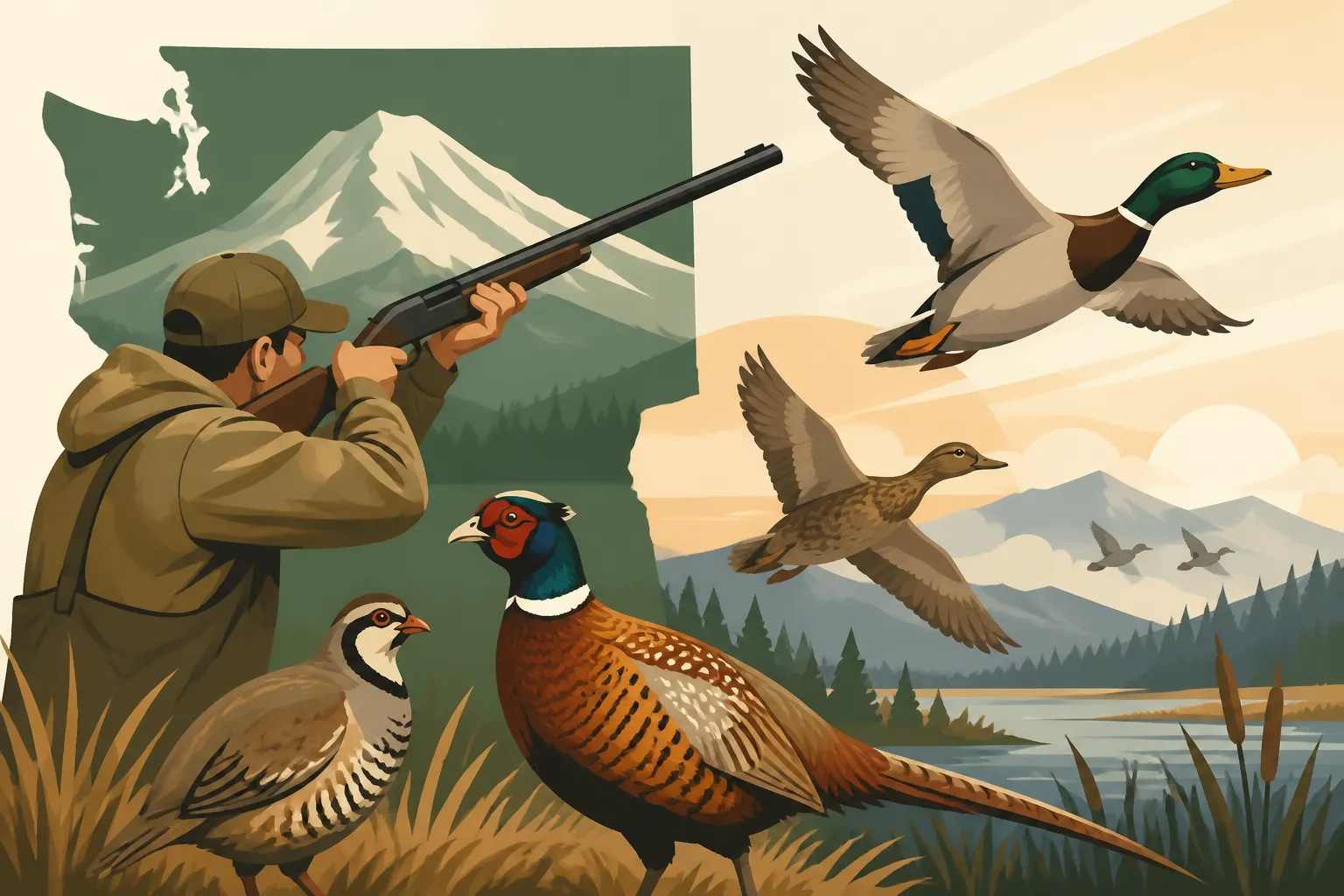
Washington Upland Birds and Waterfowl
There’s nothing quite like the crisp autumn air or the bitter bite of a winter morning that calls to a hunter in Washington. While many of us live and breathe big game, the opportunities for upland birds and waterfowl in our state are absolutely incredible, offering a different kind of challenge and reward. If you've ever felt overwhelmed by the sheer variety of birds or unsure where to even begin with seasons, regulations, or effective strategies, you're not alone. This comprehensive guide is here to unravel the complexities, introduce you to the diverse species, and equip you with the knowledge to pursue Washington's feathery game across its varied landscapes.
Understanding Washington's Upland Bird Landscape
Washington is a state of incredible ecological diversity, and that variety extends directly to its upland bird populations. From the dense, wet forests of the west to the arid sagebrush and canyon lands of the east, different species thrive in different niches. Many hunters, especially those new to bird hunting, often feel like they need a separate degree just to understand where to find what. The truth is, it just takes some focused research and an understanding of key habitats.
Identifying Key Upland Bird Habitats
The very first step to successful upland bird hunting in Washington is knowing where to look. It's not like deer or elk where a good trail camera setup might reveal their presence; for birds, understanding habitat is paramount. Western Washington, with its mixed conifer and deciduous forests, clear-cuts, and river bottoms, is prime territory for grouse. Think about areas with a good mix of mature timber for roosting and younger brushy areas for feeding and escape cover. The soil here is often damp, leading to lush undergrowth.
Move east of the Cascades, and the landscape completely transforms. Here, you'll find expansive sagebrush flats, steep, rocky coulees, wheat fields, and riparian zones along rivers and creeks. This is the domain of species like chukar, Hungarian partridge, and various quail. You might spend days hiking through rough terrain, only to find birds concentrated in a small, specific patch of cover near a water source, validating the saying that "birds are where you find them." Resources like the GoHunt platform can be incredibly helpful for e-scouting these diverse habitats, offering detailed topo maps and public land layers that highlight potential birdy areas before you ever step foot in the field.
General Season Timing and Overlap with Big Game
One of the fantastic aspects of upland bird hunting in Washington is how often it overlaps with or picks up right after big game seasons. Many hunters transition directly from chasing deer or elk to pursuing birds, making the most of their hunting license and the fall weather. Generally, most upland bird seasons kick off in September or October and run through December or January. This means you can often combine a morning grouse hunt with an afternoon of elk scouting, or vice-versa.
However, each species has its own specific season dates and regulations that can vary by GMU, so it's absolutely crucial to consult the current WDFW hunting pamphlet. For example, while grouse might be open early, pheasant release sites might have later, specific dates. The ability to chase both big game and small game during the same general timeframe really maximizes your time afield, though it does mean being prepared with appropriate gear for both. If you’re interested in extending your season beyond big game, consider exploring options like Upland Bird Hunting After Deer Season to keep your boots on the ground.
Chasing Washington's Diverse Quail Species
When you mention quail hunting, many people picture the iconic California quail, with their distinctive topknot and propensity for running. But Washington is also home to the more elusive Mountain quail, adding a different flavor to the pursuit. Quail hunting can be a fast-paced, dog-driven affair or a challenging test of your foot power and stealth.
Hunting California Quail in Valley and Brush Country
California quail, often affectionately called "valley quail," are probably the most recognized quail species in Washington. You'll find them predominantly in eastern Washington, but they also exist in pockets west of the Cascades in areas with suitable habitat. They thrive in agricultural areas, river bottoms, and brushy draws – places where they have easy access to water, dense cover for escape, and open areas for feeding. Hunting these birds is a blast, often involving coveys that explode into flight when disturbed.
The frustration often comes from their tendency to run rather than fly, especially if they're pressured. You might hear their distinctive "chi-ca-go" call, follow it for a quarter-mile, and then suddenly they flush far out of range. The key is to work slowly, often with a good pointing dog, through thickets of blackberry, hawthorn, or riparian brush. Focusing your efforts on areas where there's a good mix of dense cover and open feeding grounds, especially near water sources like creeks or irrigation ditches, will greatly increase your success. Understanding California Quail Range in Washington can help you pinpoint the best areas to focus your efforts.
Pursuing Elusive Mountain Quail
Mountain quail are a different beast entirely. Larger and much shyer than their California cousins, they prefer the higher elevations and denser, often steeper, timbered country. Finding them can be a real challenge, and many hunters go their entire lives without bagging one. They tend to hold tight, often flushing vertically like a grouse, making for a challenging shot. You're less likely to find them in large coveys like California quail; instead, they often hold in small family groups or singles.
Hunting mountain quail requires patience, strong legs, and a willingness to explore rugged terrain. Focus on brushy slopes, timbered ridges, and areas with good huckleberry or elderberry patches, particularly at mid-elevations. A quiet approach is crucial, as they can be incredibly wary. While a dog can certainly help, expect to cover a lot more ground than you would for valley quail. The reward of bagging a mountain quail, with its beautiful plumage, is a testament to the effort you put in.
The Thrill of Grouse Hunting in Washington's Forests
Grouse hunting in Washington is a beloved tradition, particularly for those who enjoy hunting without the need for extensive gear or long-range shots. Washington is home to three main species: Ruffed Grouse, Blue (Dusky/Sooty) Grouse, and the less common Spruce Grouse. Each offers a unique experience, from explosive flushes in thick timber to strategic stalking in higher elevations.
Ruffed Grouse: The King of the Forest Floor
The Ruffed grouse is arguably the most popular upland bird in Western Washington, though they are also found in suitable habitats east of the Cascades. These birds thrive in mixed deciduous and conifer forests, particularly in areas with dense undergrowth, clear-cuts regenerating with alders and willows, and along riparian corridors. Their explosive flush, often accompanied by a heart-stopping drumming sound, is what makes them so exciting to hunt. You'll be walking quietly through thick cover, and suddenly, a bird erupts from underfoot, usually offering only a fleeting shot opportunity through a screen of branches.
Success with Ruffed grouse often comes down to covering ground slowly and methodically, paying attention to areas where food sources (berries, buds, catkins) and cover overlap. Dogs can be invaluable, helping to pinpoint birds before they flush wildly. Many hunters enjoy combining Ruffed grouse hunting with Still-Hunting Blacktails in Wet Washington Brush or scouting for elk, as the habitats often overlap. The challenge isn't just finding them, but getting a clear shot in their dense environment. Expect a lot of missed shots and even more "shoulda-been" moments, but that's part of the fun.
Blue Grouse: High Country Challenges
Blue grouse, which include both Dusky and Sooty grouse depending on your location (Dusky generally east, Sooty west), are typically found at higher elevations, often in more open timber or on brushy slopes within coniferous forests. Hunting them usually means putting in some vertical miles. Early in the season, they might be found higher up, feeding on huckleberries and other mountain fruits. As the season progresses and snow begins to fall, they often descend to feed on conifer needles.
The hunt for blue grouse is often more akin to big game hunting than other bird pursuits. You'll be covering steep terrain, often glassing open patches or the edges of timber for these larger, darker birds. Unlike the explosive flush of a ruffed grouse, blue grouse sometimes hold tight, almost to the point of being docile, allowing for a more deliberate shot. However, they can also flush powerfully downhill, disappearing quickly. A good pair of Boots for Steep Eastside Country is absolutely essential, as you’ll be doing a lot of climbing. Look for them along old logging roads, mountain trails, and the edges of meadows in conifer stands.
Spruce Grouse: The Rare Find
Spruce grouse are perhaps the most unique and least common of Washington's grouse species. They inhabit dense conifer forests, particularly those dominated by spruce and fir, primarily in northern Washington. They are known for being incredibly tame, sometimes called "fool hens," often allowing a very close approach before flushing. This makes them less of a sporting challenge for some, but their rarity and specific habitat make finding one a special experience.
Due to their specialized habitat and relatively limited distribution, hunting spruce grouse is often an opportunistic event rather than a targeted hunt. If you're backpacking or Backcountry Camps in Washington Wilderness in deep, mature conifer forests, keep an eye out. They feed almost exclusively on conifer needles, especially spruce, so look for them in areas where these trees are abundant. While they might not provide the adrenaline rush of a ruffed grouse, encountering a spruce grouse is a cool reminder of Washington's diverse ecosystems.
Battling the Chukar in Washington's Rugged Canyons
If there's one upland bird in Washington that can truly humble a hunter, it's the chukar. These exotic-looking partridges are masters of their rugged, arid canyon domain in eastern Washington, and pursuing them is an extreme fitness challenge disguised as a hunt. They are notorious for their loud "chuk-ar, chuk-ar" call and their ability to run uphill at breakneck speeds.
Finding Chukar in Eastern Washington's Arid Breaks
Chukar are synonymous with the steep, rocky, sagebrush-covered coulees and basalt breaks of eastern Washington, particularly areas along the Snake and Columbia Rivers. They thrive in incredibly dry, desolate terrain that most other game birds wouldn't touch. The key to finding them often lies in locating water sources – seeps, springs, or small streams – in these otherwise parched environments. These birds need water daily, especially in warmer early seasons, so any green-up or damp spot in a drainage is a magnet.
It's common to hear their calls echoing across a canyon, only to spend hours trying to get to their location. They will often run uphill, giving them a massive advantage, and then flush downhill at incredible speeds, quickly disappearing around a bend. GoHunt's detailed maps can be invaluable here, helping you identify promising drainages and potential water sources in otherwise featureless country. The sheer physicality of Chukar Country Fitness and Footwear cannot be overstated; this is a hunt where your legs will burn, and your lungs will ache.
Strategies for the Canyon Kings
Hunting chukar is less about stealth and more about relentless pursuit and strategic positioning. Many hunters work in pairs or small groups, with one person pushing the birds from below while another tries to get above them, hoping to cut them off or force a flush within range. A good bird dog with tough pads and an even tougher will is almost a prerequisite, as they can track and hold these running birds.
You'll need to learn to read the terrain and anticipate where they're going to go. If they flush downhill, try to position yourself for a shot before they gain too much speed. If they run uphill, be prepared for a grueling chase. The best strategy is often to work a drainage system from bottom to top, or contour along a slope, always mindful of escape routes. Don't be surprised if you hike for miles and only get a handful of shot opportunities. But when you connect on a chukar, especially after a tough climb, it's an incredibly satisfying feeling. Chukar Numbers After a Wet Spring can influence how many birds you find, as moisture is crucial for chick survival.
Washington's Vibrant Turkey Hunting Opportunities
While Washington might not be the first state that comes to mind for turkey hunting, it offers fantastic opportunities, particularly for Merriam's and Rio Grande subspecies. The experience of calling in a gobbler is uniquely thrilling and addictive, drawing hunters back year after year.
Spring Gobblers and Fall Opportunities
Turkey hunting in Washington has two primary seasons: a spring gobbler season and a fall either-sex season. The spring season, typically running from mid-April through May, is all about chasing vocal, displaying toms. This is when the woods come alive with gobbling, and the challenge lies in using various calls – yelps, clucks, purrs – to lure a lovesick gobbler into shotgun or bow range. Success often depends on scouting roosting areas, understanding turkey behavior, and mastering your calling sequences.
The fall season, often in September or October, provides a different challenge. Turkeys are usually in larger flocks, and the focus shifts from breeding behavior to feeding and flock dynamics. Hunters might still call, but "flock busting" – scattering a flock and then calling the birds back together – is a popular and effective tactic. Fall tags are often for "any turkey," allowing for hens or young birds, which can be a great way to fill the freezer. For detailed dates and specific GMU information, checking the official Washington Turkey Seasons and Tags is a must.
Calling and Decoying Strategies
Effective calling is the cornerstone of successful turkey hunting. For spring gobblers, you'll need to mimic hen vocalizations to pique a tom's interest. A variety of calls, including slate calls, box calls, and diaphragm calls, are used. Learning to produce realistic yelps, clucks, and purrs takes practice, and understanding when to be aggressive and when to be subtle is key. Decoys can also be highly effective, drawing a gobbler into range and providing a focal point, diverting attention from the hunter.
In the fall, calling strategies might involve lost hen or kee-kee runs to gather scattered birds. Turkeys are incredibly keen-sighted, so camouflage and remaining motionless are paramount. Setting up with your back against a wide tree to break up your silhouette, and ensuring a clear shooting lane, are fundamental. Whether you're chasing a Merriam's in the ponderosa pines of northeast Washington or a Rio Grande in the river bottoms, the chess match with a wild turkey is an experience you won't soon forget. Washington's turkey population has been growing, offering more chances for hunters to succeed, partly due to efforts like those that support Washington Turkey Population Growth.
Navigating Washington's Waterfowl World
Washington is a fantastic state for waterfowl hunters, sitting right on the Pacific Flyway. From dabbling ducks in flooded fields to diving ducks on large lakes and majestic geese in estuaries, the opportunities are abundant. It's a world where weather, tides, and scouting play crucial roles in success.
Identifying Key Waterfowl Species
Washington's waterways host an incredible array of ducks and geese. For ducks, the most commonly hunted species include Mallards, often found in agricultural fields and smaller ponds; American Wigeon, known for their whistling calls; Northern Pintails, with their elegant long necks; and various species of Teal (Green-winged, Blue-winged, Cinnamon) that dart across the sky with incredible speed. In larger bodies of water, you'll find diving ducks like Scaup, Goldeneye, Bufflehead, and Canvasbacks.
Geese are also a major draw, with resident and migratory Canada geese being widespread. The famous Snow Geese in the Skagit Valley provide a spectacular and challenging hunt in specific coastal areas, while Cackling Geese (often mistaken for small Canadas) are also prevalent. Additionally, some hunters pursue Brant along the coast during special seasons, and Sandhill Cranes in designated areas under very limited permits. Understanding the flight patterns and feeding habits of each species is vital. You can find up-to-date information on Washington Duck and Goose Numbers through WDFW reports and various conservation organizations.
Prime Waterfowl Hunting Locations
Waterfowl hunting in Washington is highly dependent on location and habitat. Western Washington, particularly the Skagit, Stillaguamish, and Chehalis River valleys, offers excellent opportunities in flooded agricultural fields, tidelands, and coastal estuaries. These areas serve as crucial wintering grounds and migratory stops. Private land access can be tough, but numerous WDFW Wildlife Areas like Skagit Wildlife Area provide public hunting opportunities.
East of the Cascades, the Columbia Basin, with its extensive irrigation systems, large lakes (like Moses Lake, Banks Lake), and the Columbia River itself, is a hotspot. Public access can be found on parts of the Columbia National Wildlife Refuge, McNary National Wildlife Refuge, and many WDFW lands. Knowing specific flight corridors and local feeding areas, often identified through careful scouting or through detailed mapping resources like those offered by GoHunt, is key to being in the right place at the right time. The weather, especially cold fronts and strong winds, can dramatically influence bird movement.
Decoying and Calling for Washington Ducks and Geese
Waterfowl hunting is often a social pursuit, enjoyed with friends, a good retriever, and a strategic spread of decoys. It's an art form that combines camouflage, calling prowess, and an understanding of bird behavior.
Setting Up Effective Decoy Spreads
Decoy spreads are fundamental to most waterfowl hunting. The goal is to create a realistic-looking landing zone that entices ducks or geese to commit to your spread. For ducks, a typical spread might include several dozen mallard decoys, often mixed with pintails or wigeon, arranged in a "J" or "U" shape with a landing hole in front of your blind. Adding motion decoys, like spinning-wing or jerk-string decoys, can significantly increase visibility and realism, especially on calm days.
Goose spreads are often much larger, sometimes numbering in the hundreds, and often include full-body decoys in feeding positions. The key is to mimic natural feeding and resting patterns you've observed during scouting. Layout blinds in open fields allow hunters to conceal themselves effectively amidst the spread. For both ducks and geese, paying attention to wind direction is critical, as birds almost always land into the wind. Your decoys and blind placement need to account for this.
Mastering Waterfowl Calling Techniques
Calling is another art that takes practice and experience. For ducks, mastering the basic mallard quack, greeting call, and feeding chuckle will cover most situations. Wigeon whistles are also very effective when those birds are in the area. The key is to sound natural and not overcall; sometimes less is more. For geese, short "cluck-cluck-cluck" calls, honks, and murmurs of feeding birds are essential. Learning to differentiate between Canada geese, Cackling geese, and even Snow geese calls will help you tailor your calling.
One common frustration for new callers is sounding too robotic or artificial. Listening to real bird sounds and practicing cadence and tone is crucial. Don't be afraid to experiment with different calls and volumes depending on the birds' reactions and the weather conditions. Electronic calls are legal for waterfowl in Washington, which can be an effective tool, especially for drawing in distant birds or creating a realistic feeding chatter. However, be sure to understand Electronic Calls and What Washington Allows for specific regulations. The combination of a well-placed decoy spread and realistic calling can turn a slow morning into an unforgettable hunt.
Essential Gear and Strategies for Washington Bird Hunters
Successful bird hunting in Washington requires more than just a shotgun and shells; it demands specific gear and adaptable strategies to contend with the state's diverse conditions and challenging terrain. From staying dry on the wet westside to covering miles in the arid east, having the right setup is key.
Shotgun and Ammunition Choices
For most upland birds and waterfowl, a 12-gauge shotgun is the workhorse, offering a versatile platform for various loads. A 20-gauge is also an excellent choice, particularly for lighter recoil and for new or younger hunters. Semi-automatic shotguns or pump-actions are popular due to their capacity and reliability. Choke choices will vary: improved cylinder or modified for close-flushing grouse or decoying ducks, and full or extra-full for longer shots on pheasants or high-flying geese.
Ammunition choice is critical. For upland birds like grouse, quail, and chukar, typically #6 or #7.5 lead shot is sufficient. However, for all waterfowl hunting in Washington, non-toxic shot (steel, bismuth, tungsten alloy) is legally required. Steel shot in #2 or #3 is common for ducks, while larger steel BB or BBB is often preferred for geese. Bismuth and tungsten alternatives offer denser patterns and more knockdown power, but at a higher cost. Always check regulations for specific shot size restrictions for certain species or areas.
Weather-Appropriate Clothing and Footwear
Washington weather can be notoriously fickle, so layering and waterproof gear are non-negotiable. For western Washington, where rain is a constant companion, a high-quality Rain Gear for Westside Hunting setup is essential to stay dry and comfortable. Look for quiet fabrics that won't spook birds. Base layers, a mid-layer for warmth, and an outer shell that can shed water are fundamental. For eastern Washington, while it can also rain, the focus often shifts to warmth in cold, windy conditions and breathability for strenuous climbs.
Footwear is equally critical. For the wet, muddy, and often steep terrain of the westside, waterproof boots with good traction are paramount. Muck boots or high-quality leather boots treated with waterproofing are common. In the eastern breaks, sturdy hiking boots designed for rocky, abrasive terrain are a must, providing ankle support and durable soles for climbing and descending. Remember, Chukar Country Fitness and Footwear demands the best you can get. Consider Layering for Wet Cold Weather to adapt to changing temperatures throughout the day.
Navigational Tools and Safety Preparedness
Even on a "simple" bird hunt, getting lost or encountering an emergency is a real possibility. Always carry reliable navigational tools. A GPS unit or a smartphone app like onX or GoHunt (with downloaded offline maps) is invaluable for tracking your position, marking bird flushes, and navigating property boundaries. A compass and paper map serve as a critical backup.
Beyond navigation, a basic first-aid kit, enough water (especially in arid eastern Washington), and extra layers are essential. If hunting solo or in remote areas, a satellite messenger or two-way radio (ensure you know Two-Way Radio Use While Hunting) can be a lifesaver for communication in areas without cell service. Let someone know your hunt plan and expected return time. Washington's diverse terrain and weather mean that being prepared for anything is not just good practice, it's essential for a safe and enjoyable hunt.
Washington Upland Bird and Waterfowl Species Summary
To help you get a clearer picture of the diverse opportunities, here's a quick summary table of Washington's primary upland bird and waterfowl species. Remember, specific seasons and bag limits vary annually and by GMU, so always consult the latest WDFW regulations pamphlet before heading afield.
| Species | Primary Habitat (General) | Season Start (General) | Hunting Method (Common) | Shot Size (Lead Upland / Non-Toxic Waterfowl) | Notes |
|---|---|---|---|---|---|
| Upland Birds | |||||
| Ruffed Grouse | Mixed forests, brushy clear-cuts, riparian zones (West) | Sept | Flush, dog work, still-hunting | #6, #7.5 | Explosive flushes, often in thick cover |
| Blue (Dusky/Sooty) Grouse | Higher elevation conifer forests, brushy slopes (East/West) | Sept | Stalking, glassing, dog work | #6, #7.5 | Often hold tight, can be docile, steep terrain |
| Spruce Grouse | Dense conifer forests (North) | Sept | Opportunistic (very tame) | #6, #7.5 | Rare, highly localized |
| California Quail | Agricultural fields, brushy draws, river bottoms (East/West) | Oct | Dog work, pushing brush, running birds | #7.5 | Run more than fly, covey birds |
| Mountain Quail | High elevation brushy slopes, timbered ridges (East/West) | Oct | Slow stalk, dog work (hard to find) | #7.5 | Elusive, larger, solitary or small groups |
| Chukar | Arid, rocky coulees, sagebrush breaks (East) | Oct | Extreme hiking, pushing birds, dog work | #6 | Incredibly challenging, physically demanding |
| Hungarian Partridge | Agricultural edges, sagebrush flats (East) | Oct | Dog work, walking field edges | #6, #7.5 | Fast flyers, covey birds, often with chukar |
| Pheasant | Agricultural fields, WDFW release sites (East) | Oct/Nov | Dog work, push lines, field edges | #5, #6 | Stocked birds common, some wild populations |
| Turkey (Merriam's/Rio Grande) | Ponderosa pine, mixed forests, river bottoms (East) | Spring (gobbler), Fall (any) | Calling, decoying, stalking | #4, #5 (lead) | Exciting calling, highly visible |
| Waterfowl | |||||
| Ducks (Mallard, Wigeon, Pintail, Teal, Divers) | Ponds, rivers, lakes, flooded fields, estuaries (East/West) | Oct | Decoying, calling, jump shooting | Steel #2, #3, #4, BB | Wide variety of species, often migratory |
| Geese (Canada, Cackling, Snow, Brant) | Fields, large lakes, estuaries, coastal flats (East/West) | Oct | Decoying (large spreads), calling | Steel BB, BBB, T | Varying sizes, from small Cacklers to large Canadas |
Disclaimer
The information provided in this guide is for general informational purposes only and is not intended as a substitute for official regulations. Hunting regulations, seasons, and bag limits are subject to change by the Washington Department of Fish and Wildlife (WDFW). Always consult the current WDFW hunting pamphlets, emergency rules, and any specific permit requirements before planning and engaging in any hunting activities. It is the hunter's responsibility to know and follow all applicable laws and regulations.