Winston Unit Access Roads
For anyone who’s ever stared at a satellite map of the Winston Unit, trying to make sense of the spaghetti noodles of roads—some open, some gated, some just overgrown trails—you know the frustration. It feels like you need a secret decoder ring just to figure out how to get your boots on the ground, let alone your vehicle near where the elk might be. This guide is here to untangle that knot, offering a clear path to understanding and accessing the challenging, yet incredibly rewarding, Winston Unit.
The Lay of the Land: Understanding the Winston Unit
The Winston Unit, nestled in the Gifford Pinchot National Forest, is a prime example of Western Washington's rugged hunting country. It's renowned for its Roosevelt elk, but getting to them often means navigating a complex tapestry of public and private lands, each with its own set of rules and access challenges. It’s not a place you just drive into on a whim.
Geographic Overview and Game Species
The Winston Unit generally encompasses terrain south of the Cowlitz River, west of the Cascade crest, and north of the Lewis River. We're talking about steep, heavily timbered hillsides, dense reprod, clearcuts in various stages of regrowth, and deep creek drainages. Elevations can vary dramatically, from valley floors to high ridges, meaning you’ll experience everything from muddy, low-elevation brush to rocky, higher-country timber. It's classic Roosevelt elk habitat – dense, wet, and often unforgiving. Beyond the impressive Roosevelt elk, you'll find Columbian blacktail deer in the mix, though they tend to be overshadowed by the elk reputation. Bears are also present, especially in areas with huckleberry patches in late summer and early fall.
Understanding the topography is crucial for hunters. Those steep hillsides might look daunting, but they often funnel animals into predictable travel corridors or provide hidden bedding areas. The dense timber offers fantastic cover for elk, making them incredibly challenging to spot without thorough scouting and a willingness to get deep into the brush. Early season, you might find elk higher up, but as pressure mounts and the weather shifts, they often drop into those thick, impenetrable drainages. If you're looking for where Washington's great elk herds live, the Winston is definitely one of them. You can learn more about Washington Elk Herds and Where They Live to get a broader perspective.
Land Ownership Puzzle
One of the biggest hurdles in the Winston Unit is the patchwork quilt of land ownership. You've got large swaths of federal land managed by the U.S. Forest Service (specifically, the Gifford Pinchot National Forest), parcels managed by the Washington Department of Natural Resources (DNR), and extensive holdings by private timber companies. This creates a confusing situation where a road might be public for a stretch, then cross onto private timber, then back onto public land. Each of these land types can have different rules regarding vehicle access, permits, and even foot travel.
Navigating this mix requires diligence. You can't just assume a road is open because it appears on an older map or looks like a well-used track. Private timber companies, in particular, are very active in the Winston area, and their land use policies can change frequently, often involving gates, permits, or complete closures. DNR lands often have different rules than Forest Service lands, and while generally accessible for hunting, specific areas might have seasonal restrictions or require a Discover Pass for parking. This complex ownership structure is why tools like onX Hunt are practically indispensable for hunting the Winston, as they clearly delineate property boundaries and often indicate road status.
Deciphering Winston's Road Systems
Access roads in the Winston Unit are not uniform; they vary wildly in condition, accessibility, and the rules governing their use. Understanding these distinctions is paramount to a successful hunt, saving you from frustrating dead ends and potential trespassing violations.
The Green Dot System
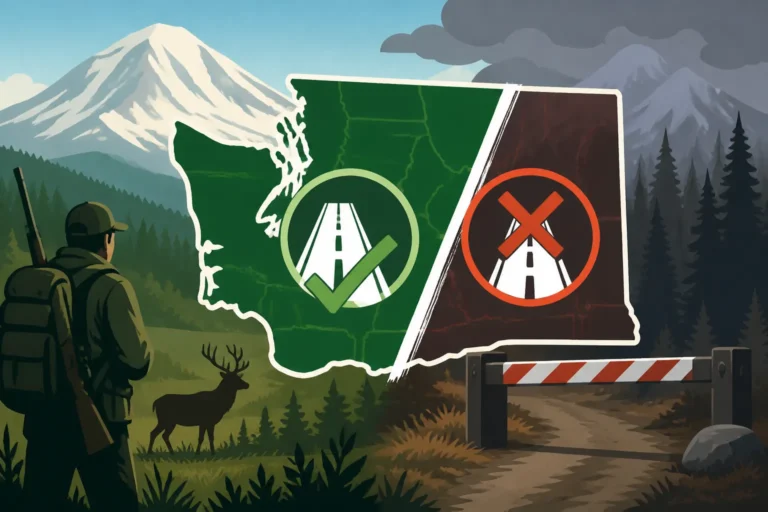
The Green Dot road system is a WDFW and Forest Service cooperative effort designed to manage vehicle access in many of Washington's hunting units, including portions of the Winston. Essentially, roads marked with a "Green Dot" on WDFW maps (and often physically marked with green paint or signs) are generally open to vehicle traffic during hunting season, up to a certain point. Beyond that point, the road is usually gated or bermed, designating it as a "walk-in" area only. The intent is to provide some access while also creating secure habitat for wildlife away from constant vehicle disturbance.
However, it's not always as simple as seeing a green dot. Some Green Dot roads might only be open seasonally, or they might terminate at a private timber boundary that has its own gate. Moreover, the Green Dot system sometimes refers to entire road systems where only certain roads are actually open to vehicles, while others are foot access only. Always cross-reference your WDFW GMU map with current Green Dot information, often found in the hunting regulations pamphlet or on the WDFW website. Knowing Washington Green Dot Road Systems in detail is absolutely critical here. Be prepared for washouts and rough conditions, as these roads aren't always maintained to a high standard, especially deeper in the unit.
Private Timber Company Access
This is often the most variable and challenging aspect of accessing the Winston Unit. Large private timber companies, like Weyerhaeuser or Hancock Forest Management, own significant acreage within and adjacent to the unit. Their primary business is timber production, and access for recreation, including hunting, is often managed to align with their operational needs and to generate revenue. This means that many roads on private timber lands are gated, and access requires purchasing a permit. These permits can be for a specific area, for a specific season, or for a specific number of days.
The rules for these permits can change annually, and some companies even use a lottery system for certain areas. Some gates might open for "walk-in only" access, meaning you can park outside the gate and hike in, but vehicles are prohibited. It’s a constantly evolving situation, and you must check the specific timber company's website well in advance of the season to understand their current access policies and permit requirements. Failure to do so can result in fines, vehicle impoundment, or simply a ruined hunt when you arrive to find your planned access point gated and locked. Detailed information on Private Timber Access Permits in Washington can save you a lot of headaches.
WDFW Lands and Other Public Access
While the Winston Unit is primarily defined by the Gifford Pinchot National Forest and private timber, there might be smaller parcels of WDFW-managed lands or other public access points. WDFW Wildlife Areas, for instance, are managed for wildlife habitat and public recreation, often including hunting. These usually have specific rules regarding vehicle access, parking, and weapon restrictions. Always check the current WDFW regulations for any specific unit or wildlife area you plan to hunt.
Beyond these, some older logging roads or utility easements might offer public access, even if they aren't explicitly part of the Green Dot system or major timber company holdings. These are often discovered through extensive e-scouting and on-the-ground reconnaissance. They can be rough, require high-clearance vehicles, or involve significant hiking, but they can sometimes lead to less-pressured areas. Understanding Washington Wildlife Area Rules is important if you plan on using any such properties for access or hunting.
Strategies for Successful Access in the Winston
Given the complexities, simply showing up to the Winston Unit without a plan is a recipe for frustration. Successful access hinges on preparation, utilizing modern tools, and being willing to adapt.
E-Scouting Your Route
Before you ever put boots on the ground, or even gas in your truck, you need to dedicate serious time to e-scouting. This involves using online mapping tools, like onX Hunt, to meticulously plan your approach. Start by clearly identifying the GMU boundaries of the Winston Unit. Then, layer in land ownership maps to differentiate between Forest Service, DNR, and private timberlands. Look for roads, both open and gated, and identify potential parking areas.
Pay close attention to topography. Look for drainages, ridgelines, and saddles that might serve as natural travel corridors for elk. Mark potential bedding areas (dense timber, north-facing slopes) and feeding areas (clearings, recent burns). The beauty of tools like onX Hunt is that you can download these maps for offline use, ensuring you have access even when you're deep in the timber and out of cell service. GoHunt also offers robust mapping solutions that can be incredibly helpful for this level of detail. By spending hours e-scouting, you can eliminate many dead-end roads and focus your physical scouting efforts on the most promising access points. This step is a cornerstone of E-Scouting a Washington GMU From Home.
Securing Necessary Permits
If your e-scouting reveals that your desired hunting area relies on access through private timberlands, you absolutely must secure the necessary permits. Do not delay. Private timber companies often have specific windows for permit sales, and popular areas can sell out quickly. Visit the websites of major landowners like Weyerhaeuser or Hancock Forest Management (if they operate in your specific area of the Winston Unit) and research their current permit offerings.
These permits are not just a formality; they are a legal requirement. Driving or walking onto private timberland without a valid permit is trespassing and can lead to serious consequences. Make sure you understand the terms of the permit – does it allow vehicle access? For what dates? What specific areas are covered? Keep a copy of your permit with you at all times while hunting.
Foot Power and Walk-In Opportunities
Despite the allure of driving as close as possible, the reality of hunting the Winston Unit, especially for elk, often involves significant foot travel. Many of the most productive areas are miles behind locked gates or beyond the reach of vehicle access on Green Dot roads. Embrace this fact, and view these walk-in opportunities as a chance to get away from the crowds and into undisturbed habitat.
This means you need to be physically prepared to carry a heavy pack, ascend steep grades, and potentially pack out an elk quarter over challenging terrain. It also means investing in quality footwear, a capable pack, and the right gear for extended backcountry travel. Many hunters find that the best elk sign is often found a mile or two beyond the last accessible road, in areas rarely disturbed by vehicles. For some prime walk-in locations, understanding Walk-In Only Gates on Industrial Timber can provide a strategic advantage. This commitment to foot travel is often the key to success in pressured units like the Winston.
Navigating Road Closures and Regulations
Access isn't static in the Winston Unit. Roads can open, close, or be restricted based on environmental factors, timber operations, or wildlife management decisions. Staying informed is crucial to avoid unpleasant surprises and ensure you're hunting legally and ethically.
Seasonal and Winter Range Closures
One of the most common reasons for road closures in the Winston Unit, especially later in the season, is the protection of wintering wildlife. As snow levels drop and temperatures fall, elk and deer migrate to lower elevations to find food and shelter. Many roads are closed to vehicles to prevent disturbance to these animals during a critical time of year. These closures are typically well-marked and widely publicized by WDFW and the Forest Service.
Respecting these closures is not just a legal obligation; it's an ethical one. Disturbing wintering animals can lead to unnecessary stress, impacting their survival rates. Always check the specific GMU regulations for the Winston Unit regarding seasonal closures, paying particular attention to dates when roads become walk-in only or are entirely closed. Ignorance of these rules is not an excuse. You can often find maps or lists of specific roads impacted by Washington Winter Range Closures through WDFW resources.
Staying Informed on Current Conditions
The official WDFW hunting regulations pamphlet is your first and most important resource for understanding broad rules and general season dates. However, for specific road statuses and immediate closures, you'll need to dig a little deeper. The WDFW website usually has an "Alerts" section, and GMU-specific information that can highlight recent changes. The Gifford Pinchot National Forest website is also an invaluable resource, often providing real-time updates on road conditions, closures due to fire, weather events, or timber operations.
Don't underestimate the power of local knowledge. Visit sporting goods stores in nearby towns like Randle or Morton, where staff often have up-to-date information. Online hunting forums specific to Washington can also be a good place to glean intelligence from other hunters who have been in the unit recently. Cross-referencing multiple sources ensures you have the most accurate picture before heading out. Keep an eye out for the Washington Big Game Pamphlet Release each year, as this contains critical updates.
Respecting Boundaries and Rules
Ultimately, successful and ethical hunting in the Winston Unit comes down to respecting boundaries and adhering to all rules and regulations. This means double-checking land ownership with your onX Hunt app or other maps, understanding the nuances of Green Dot roads, and always having the correct permits for private timberlands. Trespassing, whether accidental or intentional, not only carries legal penalties but also damages the reputation of hunters and can lead to further access restrictions for everyone.
Always park responsibly, ensuring you don't block gates or impede traffic. Pack out everything you pack in, and then some. Leave gates as you find them – if it was closed, close it behind you. These common-sense courtesies go a long way in maintaining good relationships with landowners and fellow recreationists, helping to preserve hunting access for future generations.
| Land Type | Typical Access Rules in Winston Unit | Common Requirements/Considerations | Best Tools for Identification |
|---|---|---|---|
| U.S. Forest Service | Generally open via designated roads (often Green Dot), some gates. | Discover Pass sometimes needed for parking. Respect Green Dot rules. | WDFW GMU maps, Forest Service maps, onX Hunt, GoHunt |
| Washington DNR | Similar to Forest Service, varying road conditions. | Discover Pass often required for vehicle access/parking. | WDFW GMU maps, DNR website maps, onX Hunt, GoHunt |
| Private Timber | Often gated and requires permits; some walk-in only areas. | Purchase permits well in advance. Check company websites frequently. | Private timber company websites, onX Hunt (for property lines) |
| Green Dot Roads | Open to vehicles up to a certain point, then walk-in only. | Check current WDFW regulations for specific road numbers and dates. | WDFW GMU maps, Green Dot system maps, onX Hunt |
| Closed Roads | No vehicle access; often walk-in only, sometimes fully restricted. | Heed all signs and gates. Verify reasons for closure (winter range, operations). | WDFW, Forest Service, timber company websites, onX Hunt, GoHunt |
Disclaimer
This article is for general informational purposes only and does not constitute professional advice. Laws, prices and regulations vary by location and change over time. Consult a qualified professional for guidance on your specific situation.