Ryderwood Unit Elk Hunting
Hunting elk in Washington's Ryderwood Unit can feel like trying to solve a complex puzzle, with a frustrating mix of private timberlands, a few scattered public parcels, and elk that know every inch of the country. Many hunters come to this area, drawn by the reputation of its robust Roosevelt elk, only to get tangled up in access issues or baffled by the animals' evasive tactics. This guide is here to untangle that complexity, offering a realistic look at how to navigate the Ryderwood Unit and increase your chances of finding success on these challenging Westside elk.
Understanding the Ryderwood Unit Landscape and Elk Behavior
The Ryderwood Unit, nestled in Southwest Washington, is a classic example of what you'll encounter when hunting the Westside: dense timber, steep hillsides, and a patchwork of land ownership that can make your head spin. It’s not a vast, open national forest where you can simply wander for miles. Instead, it's a dynamic landscape where understanding the lay of the land and how elk use it is absolutely critical.
Navigating the Mix of Private Timber and Public Parcels
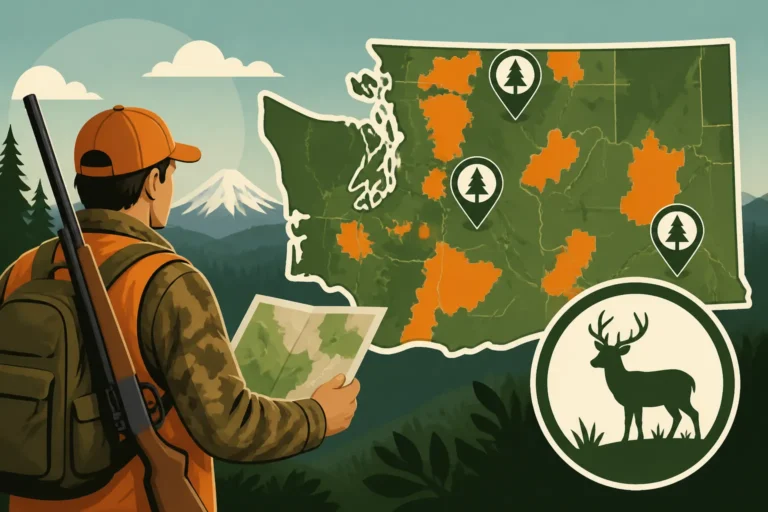
Let's be honest, one of the biggest headaches when hunting anywhere on Washington's Westside, and especially in areas like Ryderwood, is the land ownership. You'll find yourself constantly checking maps, because what looks like prime elk habitat one minute can instantly become private, restricted timberland the next. The Ryderwood Unit is dominated by vast tracts of industrial timber company land, like those managed by Weyerhaeuser or Hancock Forest Management. These companies own huge swaths of what often looks like public hunting ground.
This checkerboard pattern means that relying solely on general public land maps isn't enough. You might see a small block of Washington State Department of Natural Resources (DNR) land or a sliver of state forest, but it’s often surrounded by private holdings. Elk don't care about property lines; they move freely between these areas, often seeking refuge on the private lands that might have restricted access or require permits. This means that to effectively hunt the Ryderwood Unit, you absolutely need to know exactly where you are standing, where the boundaries lie, and what the access rules are for each piece of ground. It's a logistical challenge that many hunters find incredibly frustrating, especially when a bull is bugling just on the other side of a locked gate or a "no trespassing" sign.
Elk Movement and Seasonal Patterns in the Ryderwood Area
Roosevelt elk in the Ryderwood Unit are incredibly adaptable animals, and their movements are heavily influenced by the landscape, food availability, and hunting pressure. You'll find them using everything from the dark, old-growth timber stands (where they feel secure and unseen) to the dense, young regeneration (or "reprod") on clearcuts, which offers both food and cover. Creek bottoms and steep drainages often act as natural travel corridors, allowing them to move quietly through the unit.
Early in the archery season, when things are still relatively warm, elk might be found higher on the slopes, feeding in secluded clearcuts or around the edges of mature timber. As hunting pressure mounts, especially when the modern firearm seasons open, these elk become incredibly wary. They'll often move into the thickest, nastiest cover they can find, sometimes bedding down deep inside dense timber blocks or seeking the sanctuary of private lands where human disturbance is minimal. Understanding these seasonal shifts and how specific pieces of ground offer different resources (food, water, security) is key to predicting where they might be. It’s also important to remember that Roosevelt Elk of Western Washington generally have a different disposition than their Rocky Mountain cousins; they often prefer to sneak away quietly rather than crossing open country, which makes hunting them in dense timber particularly challenging.
Essential Access Strategies for Ryderwood Elk Hunting
Access is arguably the biggest hurdle to hunting successfully in the Ryderwood Unit. Without a solid plan for getting onto the land, and knowing what you're stepping on, you're essentially just wandering around hoping for luck. This requires a proactive approach, leveraging modern tools and understanding the nuanced rules of private timber access.
The Critical Role of Mapping Tools and Scouting
Gone are the days when a simple paper map and compass were sufficient for hunting areas like Ryderwood. While those are still valuable skills, the complex land ownership patterns here make digital mapping tools absolutely indispensable. I can't stress this enough: investing in a good mapping app, like onX Hunt, is probably the most crucial piece of "gear" you can have for the Ryderwood Unit. These apps provide detailed land ownership overlays, showing you exactly what is public and what is private, often down to the individual parcel.
Before you even set foot in the woods, spend hours E-scouting from home. Use satellite imagery to identify potential access roads, gates, clearcuts, and areas of dense timber that might hold elk. Mark key features, potential parking spots, and any "no trespassing" signs or private property lines you can see. E-Scouting Washington GMUs Before the Draw isn't just for drawing a tag; it's vital for planning your actual hunt, especially in areas with tricky access like Ryderwood. This pre-season reconnaissance can save you countless hours of driving around aimlessly, or worse, inadvertently trespassing. Make sure to download offline maps, as cell service can be spotty or non-existent in many parts of the unit.
Beyond digital maps, physical scouting is still incredibly important. Take a weekend trip or two before the season opens to drive the main roads, look for sign, and verify what you saw on your map. Gates that were open last year might be locked this year, or new clearcuts might have opened up fresh access or excellent new feeding areas.
Permitted Access and Walk-In Opportunities
Because so much of the Ryderwood Unit is controlled by private timber companies, gaining access often requires a permit. Companies like Weyerhaeuser and Hancock Forest Management often offer various recreation permits, sometimes on a lottery system, sometimes available for purchase. These permits grant you legal access to their lands for hunting, often through locked gates that keep out the general public. It's absolutely crucial to visit the specific timber company's website well in advance of the season to understand their permit requirements, application periods, and any associated costs. Ignoring this step is a surefire way to be left out in the cold, quite literally, as you stare at a "no trespassing" sign on prime elk ground.
Even if you can't secure a permit for motorized access, many of these timber company lands, as well as state-managed lands, offer Walk-In Only Gates on Industrial Timber. This means you can park outside a gate and access the property on foot. While this often means a longer hike, it's also a fantastic way to get away from the road hunters and find elk that haven't been pressured as heavily. These areas, particularly those requiring significant hiking, can be golden tickets to less disturbed animals. Always make sure you understand the rules for these walk-in areas, as they can change. Additionally, keep an eye out for Washington DNR Land Open to Hunting which, while sometimes fragmented, provides reliable public access without the need for private permits. These public parcels are often overlooked by hunters focused on timber company access, presenting another opportunity for diligent hunters. If you're looking for more general information on how this process works, understanding Hunting Behind Timber Company Gates is a great starting point.
Tactical Approaches for Ryderwood Elk
Hunting Roosevelt elk in the Ryderwood Unit means adapting your tactics to the dense, unforgiving terrain of Western Washington. It’s not about long-range shooting across vast plains; it’s about patience, stealth, and intimate knowledge of the elk’s preferred habitat.
Hunting Clearcuts and Regeneration for Roosevelt Elk
Clearcuts and areas of young regeneration (often called "reprod" by locals) are absolute magnets for elk in the Ryderwood Unit. These areas, especially those 3-10 years old, offer abundant forage like salal, huckleberry, and new growth. Elk will move into these areas to feed, particularly in the mornings and evenings, before retreating to thicker cover to bed during the day. However, navigating these areas can be brutal: the reprod is often shoulder-high or taller, incredibly dense, and crisscrossed with blowdowns and hidden stumps.
When hunting clearcuts, it's often more effective to hunt the edges. Find a vantage point where you can Reading Clearcuts and Reprod for Blacktail Bucks (a strategy equally effective for elk) to spot movement, but be prepared to still-hunt slowly and quietly through the reprod itself. Use the wind to your advantage, always trying to keep it in your face as you move. Elk have incredible noses, and a single whiff of human scent will send them packing. Focus on moving from cover to cover, pausing frequently to glass, listen, and scan for any flick of an ear or patch of brown hide. Don't be afraid to sit and wait in a strategic spot, especially if you know elk are using a particular clearcut. Patience is a virtue here, as elk often move slowly and deliberately in these dense environments.
Still-Hunting Timber and Creek Bottoms
While clearcuts offer food, the mature timber and creek bottoms provide security and travel routes. Many hunters avoid the dark timber, assuming it's too thick to effectively hunt. This is precisely why it can be so productive! Elk often retreat deep into these areas to escape pressure. Still-hunting in dark timber requires an entirely different approach: you need to move incredibly slowly, often taking only a few steps every minute. The goal is to stalk through the woods without making a sound, mimicking the movement of other animals. Think about Still-Hunting Blacktails in Wet Washington Brush; the principles are very similar for elk in this dense environment.
Listen for the sounds of elk: a branch snapping, a faint rustle of leaves, the quiet chewing of an animal. Use your eyes to pick apart the shadows, looking for horizontal lines that don't belong in a vertical forest, or the tell-tale gleam of an antler. Creek bottoms, especially those with good cover, act as highways for elk moving between feeding and bedding areas. These drainages can be noisy to navigate, but they also offer natural concealment. Move along the banks, constantly scanning ahead and to the sides. If you cut fresh tracks in a creek bottom, slow down even further; you might be very close to a bedded animal. The rain and wet conditions common in Western Washington can actually be an ally here, as damp ground and wet leaves can muffle your footsteps, allowing for quieter movement.
Gear and Preparation for Ryderwood Success
Hunting the Ryderwood Unit isn't just about finding elk; it's about enduring the conditions that Washington's Westside throws at you. Proper gear isn't a luxury; it's a necessity for safety, comfort, and ultimately, success.
Footwear, Rain Gear, and Layering for the Westside
If there's one thing you can count on when hunting the Ryderwood Unit, it's moisture. Whether it's pouring rain, a persistent drizzle, or just the constant dampness from dew-soaked vegetation, you will get wet if you're not prepared. Your footwear is paramount. Forget flimsy hiking shoes; you need serious, waterproof boots with excellent ankle support and aggressive traction. The terrain is often steep, slick with mud, and riddled with hidden obstacles. Look for boots that are specifically designed for wet conditions and aggressive off-trail use. They might feel heavy, but a twisted ankle or soaked feet can end your hunt instantly.
Equally important is your rain gear. This isn't the time for a cheap poncho. You need a durable, waterproof, and breathable rain jacket and pants that can stand up to heavy brush and repeated downpours. Look for quiet fabrics, as noisy rain gear will give away your position faster than anything else. Underneath your rain gear, a smart layering system is essential. Start with a moisture-wicking base layer (merino wool or synthetics are excellent choices), add an insulating mid-layer for warmth, and then your waterproof outer shell. This system allows you to adapt to changing temperatures and activity levels, preventing you from getting chilled when you stop moving or overheating when you're busting brush. Proper Layering for Wet Cold Weather is the difference between a miserable hunt and an enjoyable one.
Essential Tools for Navigation and Meat Care
Beyond your weapon and basic hunting clothing, a few key tools will make your Ryderwood hunt much more efficient and safe. As mentioned, a reliable GPS device or a smartphone app like onX Hunt with downloaded offline maps is non-negotiable. Don't rely solely on cell service, as it's unreliable in much of this country. A power bank to keep your phone charged is also a smart addition.
When it comes to meat care, especially for elk, you need to be prepared. A sharp, reliable knife (or two, or a replaceable blade system) is critical for field dressing and quartering your animal. Good quality game bags are also a must. In the often mild early-season temperatures of Western Washington, getting meat cooled down quickly is paramount to preserving its quality. Even if it's not "warm" by desert standards, the persistent dampness can accelerate spoilage if not managed properly. Familiarize yourself with techniques like Field Dressing in Warm Early-Season Weather and have a plan for how you'll get your animal out and cooled as quickly as possible.
Finally, don't underestimate the power of a good headlamp, and always carry spare batteries. Packing an elk out of dense, dark timber, especially after dark, is a serious undertaking. You'll need reliable light to navigate the terrain and ensure you're following your tracks out safely.
Ryderwood Unit Access Options: At a Glance
| Access Type | Pros | Cons | Key Considerations |
|---|---|---|---|
| Private Timber Permit | Access to restricted lands, less pressure | Requires application/purchase, limited availability, specific rules | Check Weyerhaeuser, Hancock websites for current programs |
| Public DNR Lands | Free access, no special permits required | Often smaller parcels, can be higher pressure near roads | Use mapping apps to identify and verify boundaries |
| Walk-In Only Areas | Escapes road hunters, often good elk sanctuary | Longer hikes, requires physical fitness, potential for steep terrain | Look for gates on timber/DNR land, verify rules |
| Private Land (Permission) | Exclusive access, low pressure, direct communication | Hard to obtain, requires good networking and landowner relationships | Always get written permission before hunting |
This article is for general informational purposes only and does not constitute professional advice. Laws, prices and regulations vary by location and change over time. Consult a qualified professional for guidance on your specific situation.