Asking Permission Before Washington’s Opener
The crunch of autumn leaves underfoot, the crisp scent of damp earth, and the faint, hopeful sound of a distant bugle – these are the hallmarks of hunting season in Washington. But before you even think about setting foot in the woods, especially as opening day approaches, many hunters face a massive hurdle: where exactly can you go, and how do you get there legally? With public lands sometimes feeling more crowded than a rush-hour freeway, getting access to private property can unlock incredible opportunities. This guide is all about navigating the sometimes intimidating process of asking for permission to hunt on private land before Washington's opener, and doing it in a way that builds bridges, not burns them.
Understanding Washington's Private Land Landscape
Washington state offers a diverse landscape, from the dense, managed timberlands of the west side to the sprawling farms and ranches of the east. Each type of private land comes with its own unique considerations when it comes to seeking permission, and understanding these distinctions is your first step toward success.
The Importance of Respecting Boundaries
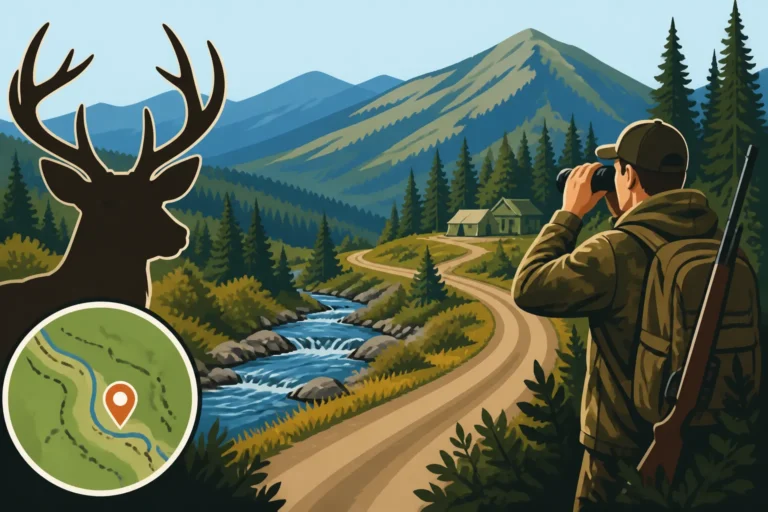
Before you even think about knocking on a door or making a call, you absolutely must know where property lines are. Nothing sours a potential permission request faster than accidentally trespassing, or even appearing like you might. Washington's landscape can be a patchwork quilt of public and private parcels, especially in areas with historic logging or homesteading. It's not always obvious where one ends and another begins.
Imagine scouting a promising ridge only to realize later, through your mapping app, that the prime bedding area actually sits on private ground. This isn't just a hypothetical; it's a common scenario that frustrates many hunters. Utilizing detailed mapping tools, like the ones offered by onX Hunt, can be an absolute game-changer here. They allow you to see property ownership lines, parcel numbers, and even landowner contact information in some cases. This foundational knowledge is crucial not just for legal access, but for showing a landowner that you've done your homework and respect their property. Knowing exactly where you want to hunt on their land demonstrates a level of professionalism that often makes a positive first impression. For more on navigating these complex areas, check out Finding Property Lines on Washington Public Land.
Different Types of Private Land
Not all private land is created equal, and your approach will vary depending on who owns it.
Small Private Parcels: Farms, Ranches, and Woodlots
These are often family-owned properties – maybe a small cattle ranch, an apple orchard, or a few hundred acres of timber that backs up to public land. This is where the direct, in-person approach shines. Landowners here are often more accessible and might be willing to grant permission to individuals they trust. They might be looking for help with nuisance animals, or simply prefer to know who is on their property. Building a personal relationship is key here. These smaller parcels can often be overlooked, but they can hold incredible game, especially if they offer food or sanctuary close to pressured public ground.
Large Industrial Timberlands
Companies like Weyerhaeuser and Hancock own vast tracts of forestland across Washington. Historically, some of these lands were open to public access, but that's largely changed. Many now operate on a fee-based permit system. This means instead of asking individual landowners, you're dealing with a corporate entity. Their rules are often rigid, and permits can be expensive and competitive to acquire. You'll need to research their specific access programs well in advance, as application periods and permit availability often precede hunting seasons by many months. While it might not be the personal handshake deal, these permits can open up immense areas of prime habitat. To learn more about this, look into Timber Company Permits in Western Washington, Weyerhaeuser Permit Draw Timing in Washington, and Hancock Permit Availability in Washington. Some timber companies also have specific walk-in only gates you should be aware of; see Walk-In Only Gates on Industrial Timber.
Washington's Private Lands Access Programs
The Washington Department of Fish and Wildlife (WDFW) has done a great job of working with private landowners to create various access programs designed to provide hunters with opportunities while also respecting property rights. These programs fall into categories like "Feel Free to Hunt," "Register to Hunt," and "Hunt by Written Permission."
- Feel Free to Hunt Properties: These are lands where landowners have opened their property to public hunting with minimal restrictions, often marked with specific WDFW signs. While you don't need to ask for individual permission, you still need to follow all posted rules and regulations. It’s a fantastic resource, but it requires careful research to find these parcels. You can find more details in Feel Free to Hunt Properties Explained.
- Register to Hunt and Hunt by Written Permission: These programs require a bit more effort. "Register to Hunt" often involves signing up online or at a kiosk, while "Hunt by Written Permission" requires you to directly contact the landowner (whose contact info is usually provided by WDFW) and obtain a signed permission slip. This is still asking for permission, but with the backing and guidance of WDFW. This is a great starting point for those new to seeking private land access. For the specifics on how to get started, review Getting Written Permission on Private Land.
Understanding these categories helps you tailor your approach, whether you're looking up corporate permit deadlines or preparing to have a face-to-face conversation with a farmer.
Preparing for Your Permission Request
You wouldn't show up for an elk hunt without scouting, checking your gear, and sighting in your rifle, right? The same level of preparation applies to asking for private land hunting permission. A little homework goes a long way in making a positive impression and increasing your chances of success.
Researching the Land and Landowner
This step is critical. Before you even think about approaching someone, learn as much as you can.
First, identify the property and its owner. This is where tools like onX Hunt are incredibly valuable. You can zoom in, see parcel boundaries, and often get landowner names and mailing addresses. If that information isn't available through your app, county assessor's office websites are public resources where you can search by parcel number or address to find owner details. Knowing who you're talking to and having their name correct immediately shows respect and preparedness.
Next, discreetly scout the outside of the property. Can you see game trails, rubs, or bedding areas from public roads or adjacent public land? What kind of habitat is present? Does it look like a well-maintained property or more overgrown? This reconnaissance helps you understand the potential hunting value and gives you specific details to discuss with the landowner. For example, if you see deer consistently crossing a certain field edge into thick timber, you can mention that observation to the landowner, showing you’ve done your homework. Using a resource like GoHunt can also give you broader insights into game populations and unit potential, helping you identify promising areas to even consider for private land access.
It’s also wise to understand the general hunting sentiment in the area. Are there "No Hunting" signs everywhere? Is it a high-pressure area? While you might not know the specific landowner's stance, a general sense of the local hunting culture can inform your approach.
Timing is Everything
This is arguably one of the most important aspects. Never, ever wait until opening day to ask for permission. Seriously, just don't do it. Landowners are often busy with their own preparations, harvests, or simply don't appreciate last-minute requests.
The best time to ask is weeks, or even months, before the season opens. This shows foresight and respect for their time. Consider approaching them in the late spring or early summer, well before the fall rush. They're likely less stressed and might be more open to a conversation. If you’re targeting a specific early season, like archery elk, get your feelers out in June or July. For deer, think about late summer. Even better, consider asking during the off-season. Offering to help with chores like mending fences or clearing brush can be a fantastic way to build rapport and demonstrate your commitment long before hunting season is even a thought for most.
What to Bring
Your appearance and what you bring can speak volumes before you say a single word.
- Neat Appearance: Dress respectfully. You don't need to wear a suit, but clean, casual clothes are appropriate. Avoid showing up in muddy hunting clothes or camo, as it can sometimes be perceived as presumptuous.
- A Map: Bring a printed map of their property (from onX Hunt or a county website) where you can clearly mark where you'd like to hunt and any access points. This visual aid makes your request clear and concise.
- Written Permission Form: Have a pre-filled Getting Written Permission Before Opening Day form ready, with all your information. This shows you're serious and organized, and streamlines the process for them if they agree. The WDFW website often provides templates for these forms.
- Your Hunting License/ID: Be ready to show your valid Washington hunting license and a driver's license. This proves you are a legal, licensed hunter.
- Clean Vehicle: Drive a clean vehicle. It may seem minor, but it reflects on your overall respect for property.
Making the Ask: Your Approach Matters
This is the moment of truth. How you present yourself and your request can be the deciding factor between a handshake and a closed door. Remember, you're asking for a privilege, not asserting a right.
The Initial Contact
If possible, make initial contact in person. A face-to-face conversation allows for genuine interaction and helps build trust. If they're not home, leave a polite note with your name, phone number, and a brief explanation of why you stopped by, asking for a convenient time to call or return. Never just wander onto their property without permission.
When you do meet them, be polite, friendly, and respectful. Introduce yourself clearly. "Hello, Mr./Ms. [Landowner's Last Name], my name is [Your Name]. I hope I'm not bothering you, but I was wondering if I could speak with you for a few minutes about hunting." A simple, direct, and courteous introduction sets a positive tone.
What to Say (and What Not To)
Once you have their attention, be clear and concise about your purpose.
What to Say:
- Introduce yourself and state your purpose upfront. "I'm a local hunter, and I've noticed you have some fantastic-looking habitat on your property here. I'm wondering if you ever allow respectful hunters to access your land for [specific species, e.g., deer/elk] during [specific season, e.g., archery season]."
- Emphasize your respect for their property. "I'm always extremely careful about gates, fences, and not leaving any trash behind. I understand this is your private property, and I would treat it as if it were my own."
- Highlight safety. "Safety is my number one priority. I always know my target and what's beyond it, and I'd be happy to discuss my plans with you."
- Offer benefits. "I'd be happy to keep an eye out for any suspicious activity or even help you with [a small chore, like picking up fallen branches] while I'm out there." Many landowners deal with trespassers or poaching; a responsible hunter can be an extra set of eyes. Offer to let them know if you see Reporting Poaching in Washington.
- Be specific about what you want to hunt. "I'm primarily interested in bowhunting for blacktail deer, and I'd only be out during daylight hours on weekdays." Avoid vague requests like "Can I just hunt anything out here?"
- Ask about their concerns. "Do you have any areas you'd prefer I avoid, or any specific concerns about hunting on your land?" This shows you value their input.
What Not to Say:
- Don't assume permission. Never say, "I'm planning on hunting your back forty…"
- Don't demand or act entitled. "I hunt public land nearby, and your property is blocking my access."
- Don't lie or exaggerate. Be honest about your experience and intentions.
- Don't badmouth other hunters. Focus on your own responsible behavior.
- Don't show up with a loaded firearm or bow. Keep your hunting gear out of sight.
Show them the map you prepared, pointing out the areas you're interested in and your proposed access points. Discuss any existing structures, livestock, or sensitive areas they might have.
| Characteristic | Good Permission Request | Bad Permission Request |
|---|---|---|
| Timing | Weeks/months before season, respectful of landowner's schedule | Day before or on opening day, rushed, last-minute |
| Appearance | Clean, presentable, respectful attire | Dishevelled, muddy hunting clothes |
| Approach | Polite, humble, clear, asking for specific access | Demanding, entitled, vague, assuming access |
| Preparation | Knows property boundaries (e.g., via onX Hunt), has permission form ready, understands local rules | Unprepared, no knowledge of property, no form, ignorant of rules |
| Offer | Offers to help, watch property, close gates, respect rules | Only focuses on personal gain (getting to hunt) |
| Response to No | Graciously accepts, thanks for time, leaves options open | Argues, complains, acts offended |
| Follow-Up | Thanks after hunt, provides updates, offers appreciation | Disappears, leaves trash, doesn't communicate |
Handling Rejection Gracefully
Sometimes, despite your best efforts, the answer will be no. And that's okay. A "no" isn't a personal rejection; it might be because they've had bad experiences in the past, already have hunters, or simply don't feel comfortable with it.
If you're denied, graciously accept it. Say, "I completely understand, thank you so much for your time and for even considering it. I appreciate your honesty." Leave the door open by saying something like, "If anything changes in the future, please don't hesitate to reach out." Leave your contact information anyway, just in case. Maintaining a positive attitude, even in rejection, leaves a far better impression than becoming argumentative or sullen. You never know when circumstances might change, and a good impression might lead to a "yes" down the road.
Building Long-Term Relationships
Getting permission once is great, but cultivating a long-term relationship with a landowner is the ultimate goal. This secures future opportunities and makes you a valued partner, not just a seasonal visitor.
Following Through on Your Promises
This is non-negotiable. If you said you'd close all gates, close them. If you said you'd stay out of a particular field, stay out. If you promised to report any issues or Checking Washington Road Closures Before You Go if you notice damage, then do it. Your word is your bond.
- Respect all boundaries and rules. Stay only in the areas you were granted access to.
- Leave no trace. Pack out all your trash, spent casings, and anything else you brought in. Leave the property cleaner than you found it.
- Communicate. If your plans change, or if you encounter something unexpected (like a broken fence or a downed tree), inform the landowner. Transparency builds trust.
- Drive slowly and carefully on their property and access roads.
Breaking a promise, even a small one, can quickly revoke your permission and ruin opportunities for other respectful hunters in the future.
Showing Appreciation
A little gratitude goes a long way. After your hunt, whether successful or not, always follow up with a thank you.
- A simple thank-you note or phone call is a must.
- Consider a small gift. This doesn't need to be extravagant. A gift card to a local hardware store or restaurant, a batch of homemade cookies, or a share of any game meat you harvested (if they're amenable) can be deeply appreciated. Present it as a token of thanks, not a payment.
- Provide an update. Let them know how your hunt went. "We didn't get an elk, but we saw some great deer sign near the north pasture, and everything looked good on your property." This communication shows you respected their land and keeps them in the loop.
Beyond the Hunt
True relationships go beyond just hunting season. If appropriate and offered, consider helping with chores outside of hunting. Maybe they need help stacking firewood, mending a fence, or moving cattle. Being a good neighbor and a trustworthy individual can cement your relationship for years to come. Becoming a known, reliable presence means they'll think of you first when they consider granting hunting access, giving you an edge over countless other hunters vying for limited private land opportunities in Washington.
Remember, every "yes" you receive is a privilege earned through respect, preparation, and consistent good conduct. Treat it as such, and you'll open up a world of new hunting possibilities.
Disclaimer
This article is for general informational purposes only and does not constitute professional advice. Laws, prices and regulations vary by location and change over time. Consult a qualified professional for guidance on your specific situation.