Powder, Bullets and Sabots
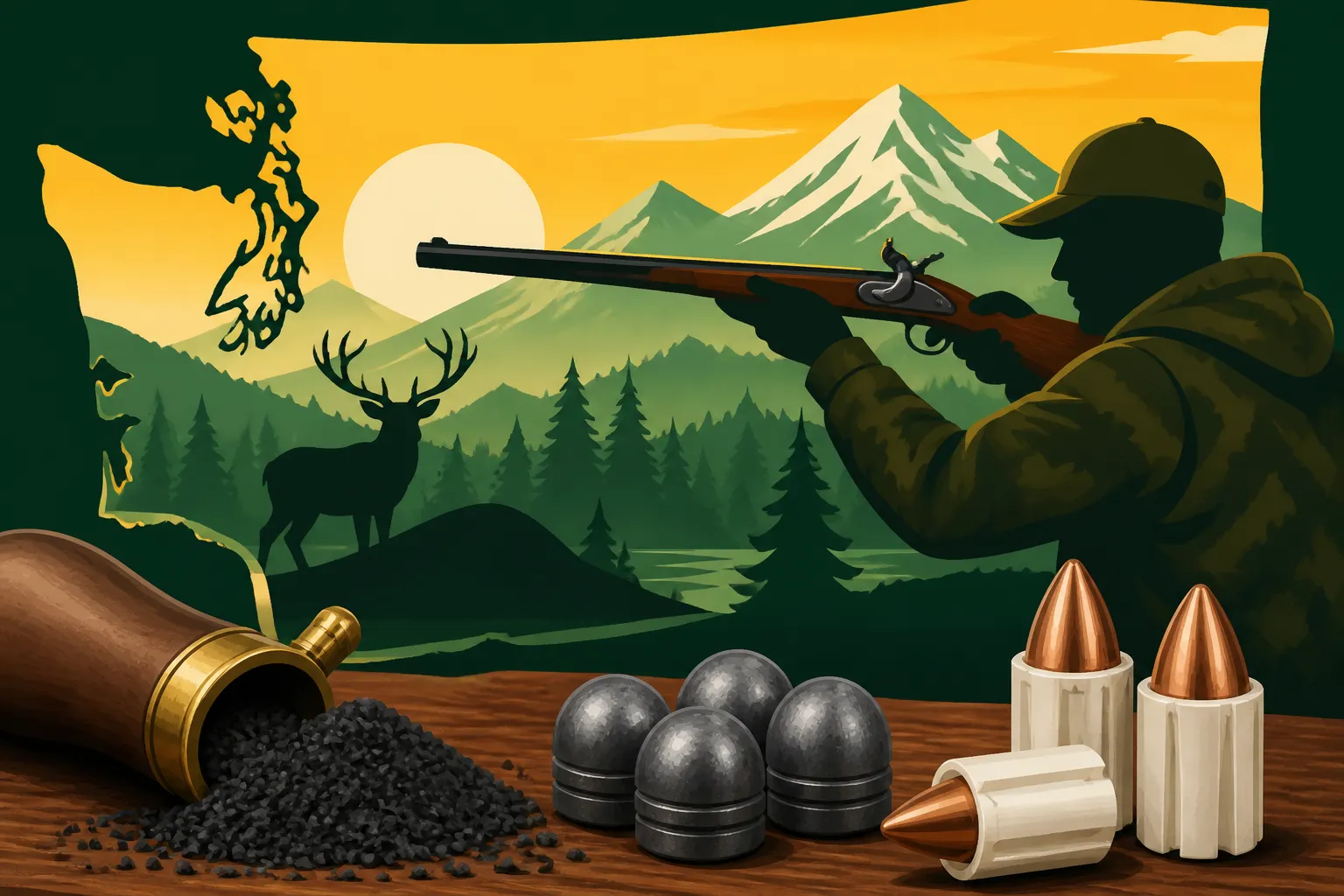
Stepping into the world of muzzleloader hunting in Washington can feel a bit like cracking open a dusty old book written in a forgotten language. You've got your rifle, but then you're faced with a dizzying array of choices: what kind of powder do I need? Are those little plastic sabots really legal, and which bullet do I pair with them? This guide is here to untangle the confusion, helping you understand the crucial role powder, bullets, and sabots play in muzzleloader accuracy and performance, so you can head into the Washington woods with confidence.
Understanding Muzzleloader Powders in Washington
Choosing the right powder for your muzzleloader is arguably one of the most critical decisions you'll make, impacting everything from accuracy to cleaning. It’s not just about filling the barrel; it’s about understanding how these propellants react, especially in Washington’s notoriously damp conditions on the west side or the freezing dry cold of the east. Each type has its own personality, and getting to know them will save you a lot of frustration and probably a few misfires in the field.
Traditional Black Powder
Ah, the classic. When most people picture a muzzleloader, they often envision the billowing white smoke and hearty boom of true black powder. It's an experience, no doubt, and it's what started it all. This stuff is made from potassium nitrate, charcoal, and sulfur, a formula that hasn't changed much in centuries.
Real black powder, like brands such as Goex or Swiss, ignites very easily, which is a huge plus, especially when you're fumbling with cold fingers or battling a persistent drizzle. It produces a dense cloud of white smoke and a distinctive smell that's part of the historical charm. However, it also creates a lot of very corrosive fouling. This means you absolutely cannot put off cleaning your rifle after a day at the range or, more importantly, after a shot in the field. If you let that fouling sit for even a few hours, you'll start seeing rust pitting in your barrel, and that's a heartbreaking way to ruin a good firearm. Many hunters love the authenticity of black powder, and it performs consistently even in cold weather, but its corrosive nature and the need for frequent cleaning are definitely things to consider.
Black Powder Substitutes: Pyrodex and Triple Seven
For years, hunters have sought the performance of black powder without the rigorous cleaning regimen. That's where substitutes like Pyrodex and Triple Seven come into play. These are chemically formulated to burn similarly to black powder, producing high velocities and comparable accuracy, but with less corrosive residue.
Pyrodex, available in granules or pellets, was one of the first widely adopted substitutes. It ignites a bit differently than true black powder, often requiring a hotter primer for reliable ignition. It still produces a fair amount of smoke and fouling, but it's generally less corrosive than real black powder. You still need to clean your rifle diligently, but you might have a little more grace period. Triple Seven, on the other hand, is a more modern substitute that often boasts higher velocities and even less fouling than Pyrodex. It's a popular choice for hunters who want power and decent cleanliness. Both Pyrodex and Triple Seven are hydroscopic, meaning they readily absorb moisture from the air. This is a critical consideration for Washington hunters. If you're on the wet side of the Cascades, a damp day can quickly degrade your powder charge if it's not sealed well, potentially leading to a misfire or a squib load. Proper storage in waterproof containers and capping your muzzle in the rain are non-negotiable when using these powders.
Modern Propellants: Blackhorn 209
Then we have the new kid on the block, relatively speaking: Blackhorn 209. This is a completely different beast, a true smokeless powder developed specifically for muzzleloaders, but it has to be loaded by volume like black powder. The biggest draw? It's non-corrosive and produces minimal fouling, which means you don't have to break out the cleaning rod every five minutes. You can often shoot a dozen or more shots without cleaning and still maintain decent accuracy, which is a game-changer for extended range sessions or multiple days in the field.
Blackhorn 209 requires a hot 209 primer for consistent ignition, and it's much less sensitive to humidity than other black powder substitutes. This makes it a fantastic option for hunting in diverse Washington weather, from the bone-chilling damp of the Olympics to the dry, cold winds of Eastern Washington's breaks. However, it does require a specific cleaning solvent (petroleum-based) rather than the water-based solvents used for black powder or its substitutes. It also tends to be more expensive. For hunters looking for maximum convenience, consistent performance, and extended shooting without immediate cleaning, Blackhorn 209 is a top contender, but make sure your muzzleloader is rated for it and you understand the specific cleaning protocols. It's worth checking out resources like GoHunt, which often have forums or articles where hunters discuss their experiences with different powders in various conditions.
Here's a quick comparison of popular powder types:
| Powder Type | Ignition Sensitivity | Fouling Level | Corrosiveness | Humidity Sensitivity | Cleaning Solvent | Pros | Cons |
|---|---|---|---|---|---|---|---|
| Traditional Black Powder | Very High | High | Very High | Moderate | Water-based | Reliable ignition, consistent in cold weather | Very corrosive, heavy smoke, lots of cleaning |
| Pyrodex (Pellets/Granules) | Moderate | Moderate | Low | High | Water-based | Less corrosive than true black, good power | Still fouls, can absorb moisture, hotter primer often needed |
| Triple Seven (Pellets/Granules) | Moderate | Low | Very Low | High | Water-based | Higher velocity, cleaner than Pyrodex | Can absorb moisture, hotter primer often needed |
| Blackhorn 209 | Low (needs hot primer) | Very Low | None | Very Low | Petroleum-based | Extremely clean, non-corrosive, consistent | More expensive, requires specific cleaning, needs hot 209 primer |
Choosing the Right Projectile: Sabots Versus Conical Bullets
Once you've settled on a powder, the next big decision is what you're actually going to launch down the barrel. Muzzleloader projectiles come in two main categories: sabot-encased bullets and traditional conical bullets. Each has its own benefits and drawbacks, and what works best for your rifle and your hunting style in Washington might be different from what your buddy is using.
Sabot-Encased Projectiles
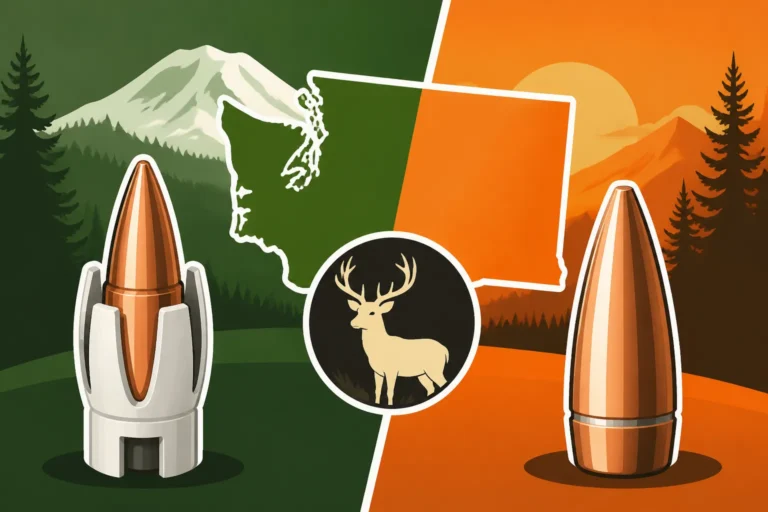
Sabots are those little plastic sleeves that hold a smaller-diameter bullet, typically a .40, .45, or .44 caliber pistol bullet, inside a larger muzzleloader bore, usually .50 caliber. The plastic sabot engages the rifling, imparting spin to the bullet, and then falls away shortly after leaving the barrel. This ingenious design allows you to shoot much more aerodynamic and ballistically efficient bullets than you could otherwise in a muzzleloader.
The primary advantage of sabot-encased bullets is accuracy. Because the bullet itself doesn't directly contact the rifling, it can be made to much tighter tolerances, leading to incredibly consistent groups at the range. They also often allow for higher velocities and flatter trajectories, which can be a real benefit if you're hunting in the more open country of Eastern Washington where shots might stretch out a bit further. Popular choices include Barnes Expander MZ, Hornady SST, and various types of lead core or bonded bullets. However, sabots can sometimes be finicky to load, especially if your barrel is slightly fouled, and the plastic can sometimes melt or strip if your powder charge is too hot, leading to poor accuracy. They're also often more expensive than traditional conicals. When considering sabots, think about the game you're after; a robust sabot bullet will perform excellently on Washington Elk Herds and Where They Live or Columbian Blacktail Deer in Western Washington.
Traditional Conical Bullets
Traditional conical bullets, on the other hand, are solid lead or copper projectiles that match the full bore diameter of your muzzleloader (e.g., a .50 caliber conical for a .50 caliber rifle). These are often heavier than sabot bullets and rely on their full-bore diameter to engage the rifling and stabilize.
Many hunters prefer conical bullets for their simplicity and devastating terminal performance. Because they are typically heavier and larger in diameter, they transfer a tremendous amount of energy to the animal, often creating larger wound channels, which can be a huge advantage for blood trailing in Washington's thick brush. They are also generally easier to load, as there's no plastic sabot to deal with, and they can be a great choice if you're using a historically accurate rifle or hunting in areas where sabots might be restricted (though Washington typically allows sabots during general muzzleloader seasons). Brands like PowerBelt, Hornady Great Plains, or various pure lead conicals are common. The trade-off is often accuracy at longer ranges and a more rainbow-like trajectory compared to sabots. However, for ethical shots within 100-150 yards, especially in dense timber where shots are usually closer anyway, a well-placed conical bullet is incredibly effective. Washington's .45 Caliber Muzzleloader Minimum rule means most conical users will be running .50 caliber or larger, ensuring plenty of punch.
Matching Powder, Bullet, and Primer for Optimal Performance
Finding the perfect combination of powder, bullet, and primer for your muzzleloader isn't a "one size fits all" endeavor; it's a journey of discovery that almost always involves a trip to the range. Think of it like cooking a gourmet meal – each ingredient needs to work in harmony to achieve the best flavor. For a muzzleloader, that "flavor" is accuracy and consistent performance in the field.
The Role of the Primer in Ignition
The primer is the spark plug of your muzzleloader. It provides the initial ignition to get your powder burning, and selecting the right one is more critical than many new muzzleloader hunters realize. For modern inline muzzleloaders, the 209 shotgun primer is the standard. However, not all 209 primers are created equal. Some, often referred to as "magnum" or "hot" primers, produce a more powerful flash and can be essential for reliable ignition, especially with harder-to-ignite powders like Blackhorn 209 or in very cold, damp conditions.
If you're experiencing hangfires (a slight delay between the hammer strike and the shot) or misfires, a switch to a hotter primer might be the solution. Conversely, some powders and bullets might perform best with a standard primer, as an overly hot primer could blow apart a sabot prematurely or cause inconsistent ignition with very sensitive powders. It's often recommended to stick with the same brand and type of primer once you find a combination that works, as even subtle differences can affect group sizes.
Finding Your Rifle's Sweet Spot
Every muzzleloader barrel is a law unto itself. What shoots fantastic groups in one rifle might spray bullets all over the target in another, even if they're the exact same make and model. This is where experimentation comes into play. Start with the powder manufacturer's recommended loads for your bullet type. For instance, if you're using a .50 caliber sabot with a 250-grain bullet, the powder manufacturer (Pyrodex, Triple Seven, Blackhorn 209, etc.) will usually provide a starting charge range, often expressed in volume measurements (e.g., 90-120 grains by volume).
Begin at the lower end of the recommended charge and slowly work your way up in small increments (e.g., 5-grain steps). Shoot groups at 50 or 100 yards, letting your barrel cool between shots, and carefully record your results. You're looking for the tightest group. It's a tedious process, but it's the only way to truly unlock your rifle's potential. Some rifles prefer a lighter charge with a heavy bullet, while others might group better with a heavier charge and a lighter bullet. Factors like barrel twist rate, bore condition, and even the weather on the day of shooting can influence these results. Don't be afraid to try different bullet brands or weights within the sabot category, or various conical designs, until you find what your specific rifle "likes" best. Many experienced hunters find themselves spending hours at the range before Sighting In Before the Opener to truly dial in their preferred load.
Consistency is Key
Once you find that magical combination of powder, bullet, and primer that consistently groups well, stick with it. Consistency in loading is paramount for muzzleloader accuracy. Use a consistent ramming pressure when seating your bullet. Ensure your powder charges are measured accurately, whether you're using a volumetric measure or pre-weighed charges (though volume is more common for muzzleloader powders). Any variation in these steps can lead to flyers and frustration.
It's also important to consider how your chosen load performs in various conditions you might encounter in Washington. A load that groups perfectly on a sunny summer day might perform differently on a cold, damp November morning. If you plan to hunt in the rain, practice loading and shooting with wet hands and cold fingers. This kind of realistic practice will build confidence and ensure your setup performs when it truly matters. Muzzleloader Loading and Ignition in Rain highlights just how important it is to test your equipment in conditions that mimic your actual hunt.
Muzzleloader Accuracy and Ballistics Considerations
When you're out in the field, whether chasing a Roosevelt elk in the thick timber or a mule deer across the rolling hills of eastern Washington, understanding your muzzleloader's accuracy and ballistic performance is non-negotiable for ethical hunting. It's not just about hitting the target; it's about knowing where that bullet will hit and whether it retains enough energy to be effective at various ranges.
Effective Range and Trajectory
Muzzleloaders, by their nature, generally have a more limited effective range compared to modern centerfire rifles. While some highly tuned modern inlines with saboted bullets can be effective out to 200 yards or even a bit further for experienced shooters, most muzzleloader hunters in Washington wisely limit their shots to within 100-150 yards. The trajectory of most muzzleloader projectiles is significantly more curved than a high-velocity rifle bullet. What might be a relatively flat trajectory out to 100 yards can drop dramatically between 100 and 150 yards.
This means knowing your bullet drop at different distances is absolutely critical. After you've found your accurate load, spend time on the range shooting at 50, 75, 100, 125, and 150 yards. Create a range card that shows your holdover or hold-under for each distance. A good rangefinder is an indispensable tool for muzzleloader hunting, allowing you to quickly and accurately determine the distance to your target, eliminating guesswork. When chasing Rocky Mountain Elk East of the Washington Cascades, where longer shots can present themselves, precise range estimation combined with a thorough understanding of your bullet's trajectory is essential.
Energy Retention and Bullet Performance
Beyond accuracy, you need to consider whether your projectile retains enough energy to humanely dispatch the animal at your chosen range. A bullet might hit the target, but if it doesn't expand or penetrate adequately, it's not an ethical shot. Heavier bullets, especially those with good construction designed for large game, tend to retain energy better at longer distances.
For elk, you want a bullet that will penetrate deeply and reliably expand to create a sufficient wound channel. Many hunters prefer bonded bullets or those specifically designed for muzzleloaders, such as some of the heavier sabot options or robust conicals. For deer, the requirements are slightly less stringent, but good bullet construction is still paramount. The energy figures might look impressive at the muzzle, but it's the energy at impact that truly matters. This is where researching specific bullet designs and their real-world performance on game comes into play. Websites like GoHunt often feature discussions and reviews from hunters about what projectiles work best for different species and distances, which can be invaluable when making your choice.
Wind Drift and Environmental Factors
While muzzleloader bullets are typically slower than rifle bullets, they are still affected by external factors, most notably wind. A stiff crosswind can push a slower, heavier muzzleloader projectile off course more dramatically than a faster, lighter rifle bullet. This is another reason why limiting your shot distance is a smart move for muzzleloader hunters. Practice shooting in varying wind conditions at the range to get a feel for how much your particular load drifts.
Environmental factors like temperature and humidity can also subtly affect muzzleloader performance. Extreme cold can sometimes reduce powder efficiency, while high humidity can affect open powder charges or even compromise primers if not properly sealed. While modern powders like Blackhorn 209 are less susceptible, it's still good practice to be mindful of the conditions and to have confidence that your gear will perform when you need it most. Ensuring your rifle is clean and properly maintained, especially after a day hunting in Washington's varied weather, is also key to consistent accuracy. Cleaning a Muzzleloader in Camp can prevent many accuracy issues down the line.
Muzzleloader Maintenance and Safety with Components
Muzzleloaders demand a higher level of care and attention than most modern firearms, especially when it comes to cleaning and component storage. Neglect in these areas can quickly lead to degraded accuracy, corrosion, and potentially dangerous situations.
Cleaning After Every Use (or Shot!)
This cannot be stressed enough: clean your muzzleloader immediately after use. For traditional black powder and most substitutes like Pyrodex and Triple Seven, the fouling they leave behind is incredibly corrosive. We're talking about rust appearing within hours if left uncleaned. A quick field cleaning with a patch and solvent is a good first step, but a thorough cleaning at home is essential. This means breaking down the rifle (if it's an inline), cleaning the barrel with appropriate water-based solvents (for black powder/substitutes), and ensuring all powder residue is removed from the breech plug and firing pin channel.
For Blackhorn 209, while it's non-corrosive, it still leaves a residue. This residue is different and requires petroleum-based solvents for effective cleaning. Using a water-based solvent on Blackhorn 209 fouling will just create a sticky mess. Always make sure you're using the correct solvent for your powder. A dirty breech plug, in particular, can lead to poor ignition and accuracy, so ensure that little component is sparkling clean. Proper cleaning also means lubricating your rifle afterward to prevent rust, especially in Washington's often-damp environment.
Safe Storage of Powders and Primers
Storing your muzzleloader components properly isn't just about maintaining their effectiveness; it's a critical safety issue. Black powder and its substitutes are flammable and should be stored in a cool, dry place away from any ignition sources. Ideally, they should be kept in their original containers, which are designed to be static-resistant. Never store large quantities of powder near living spaces.
Primers, too, are sensitive to impact and heat. They should be stored in their original packaging in a cool, dry, dark place. Never store loose primers, as they can accidentally detonate if jostled. Keeping powders and primers separate from each other, and away from other flammable materials, is a fundamental safety practice. When heading into the field, carry only the amount of powder and primers you anticipate needing, and keep them protected from moisture and impact. A small, waterproof container for your pre-measured powder charges and a separate, secure case for your primers are highly recommended.
Handling Malfunctions and Misfires
Misfires and hangfires can happen with muzzleloaders, and knowing how to safely address them is crucial. If your muzzleloader clicks but doesn't fire, keep it pointed in a safe direction. Wait for at least 30 to 60 seconds before attempting any action, as it could be a hangfire (a delayed ignition). Never immediately open the breech or look down the barrel.
After waiting, if it still hasn't fired, you can carefully remove the breech plug to see if the primer fired or if the powder is wet. If the primer is spent but the powder didn't ignite, you might have wet powder or a blocked flash channel in the breech plug. If the primer didn't fire, it could be a faulty primer or an issue with your firing pin. In most cases, the safest bet is to discharge the loaded round into a safe backstop at the range or, if in the field, into the ground away from anything sensitive. If you're using a modern inline that allows for easy breech plug removal, you can often knock the bullet out from the breech end after removing the powder, but always consult your rifle's manual. Safety should always be your top priority.
Washington-Specific Muzzleloader Regulations and Best Practices
Hunting in Washington means playing by the rules, and muzzleloader hunting has its own specific set of regulations that are important to understand. These rules dictate everything from the minimum caliber to the type of ignition and optics you can use, directly influencing your choices of powder, bullets, and sabots.
Washington's Muzzleloader Equipment Rules
The Washington Department of Fish and Wildlife (WDFW) has clear rules regarding what constitutes a legal muzzleloader for big game. Generally, you're looking at a minimum caliber of .45 for deer and elk. This means your bullets and sabots must be designed for at least a .45 caliber bore, with most hunters opting for .50 caliber for added punch, especially for elk. Washington's .45 Caliber Muzzleloader Minimum is a key regulation to keep in mind when purchasing your setup.
Beyond caliber, WDFW regulations specify that muzzleloaders must be loaded from the muzzle. They can only be charged with black powder or a black powder substitute. This directly impacts your powder choice, meaning no modern smokeless powders (except for those specifically designed and regulated for muzzleloaders, like Blackhorn 209 which is loaded by volume). Only a single projectile (bullet or sabot-encased bullet) can be loaded at a time. The rules also govern optics, typically restricting hunters during general muzzleloader seasons to open sights or scopes with no more than 1x magnification (meaning non-magnifying). This impacts how far you can confidently shoot, further emphasizing the need for dialed-in loads at ethical ranges. It's crucial to check the current WDFW regulations pamphlet for any updates or specific rules for the GMU or special permit hunt you're participating in.
Understanding Season Differences
Washington offers several different seasons for muzzleloader hunting, and the regulations can sometimes vary slightly between general seasons and special permit hunts. General muzzleloader seasons often have the most restrictive equipment rules (e.g., the 1x scope limit). However, if you draw a special permit for a "modern firearm" hunt, but choose to use your muzzleloader, you might be allowed to use more advanced optics or other equipment typically associated with modern firearms. This flexibility means your choice of powder, bullet, and sabot could be different depending on the specific tag you hold.
Always consult the WDFW hunting pamphlet for the exact regulations pertaining to your specific tag and GMU. For example, some units might have different antler point restrictions or season dates. A hunter looking to explore new units or understand the specifics of various seasons might use a tool like GoHunt to cross-reference GMU information with weapon season rules, ensuring their muzzleloader setup is always legal and appropriate for the hunt type. This research can save a lot of headaches and potential citations in the field.
Ethical Shot Placement and Practice
Regardless of your powder, bullet, or sabot choice, ethical shot placement is paramount. A muzzleloader, even with the most powerful load, is only as effective as the hunter wielding it. This means consistent practice at the range, not just shooting from a bench, but also practicing from field positions like kneeling, sitting, or offhand. Many Washington hunting scenarios, particularly in steep, uneven terrain or thick cover, will not present perfect bench-rest opportunities.
Practice at varied distances, familiarizing yourself with your bullet's trajectory. If you're hunting elk in a unit like the Colockum or Yakima, where shots can be long and steep, you need to know exactly how your chosen load performs under those conditions. The goal is to be so familiar with your rifle and load that you can consistently place your shot in the vital zone of the animal at any ethical range. This includes understanding Shot Placement on a Quartering Elk or a broadside deer. There’s no substitute for range time to build this confidence, and it’s a vital part of responsible muzzleloader hunting in Washington.
Disclaimer
This article is for general informational purposes only and does not constitute professional advice. Laws, prices and regulations vary by location and change over time. Consult a qualified professional for guidance on your specific situation.