Zeroing at 100 or 200 Yards
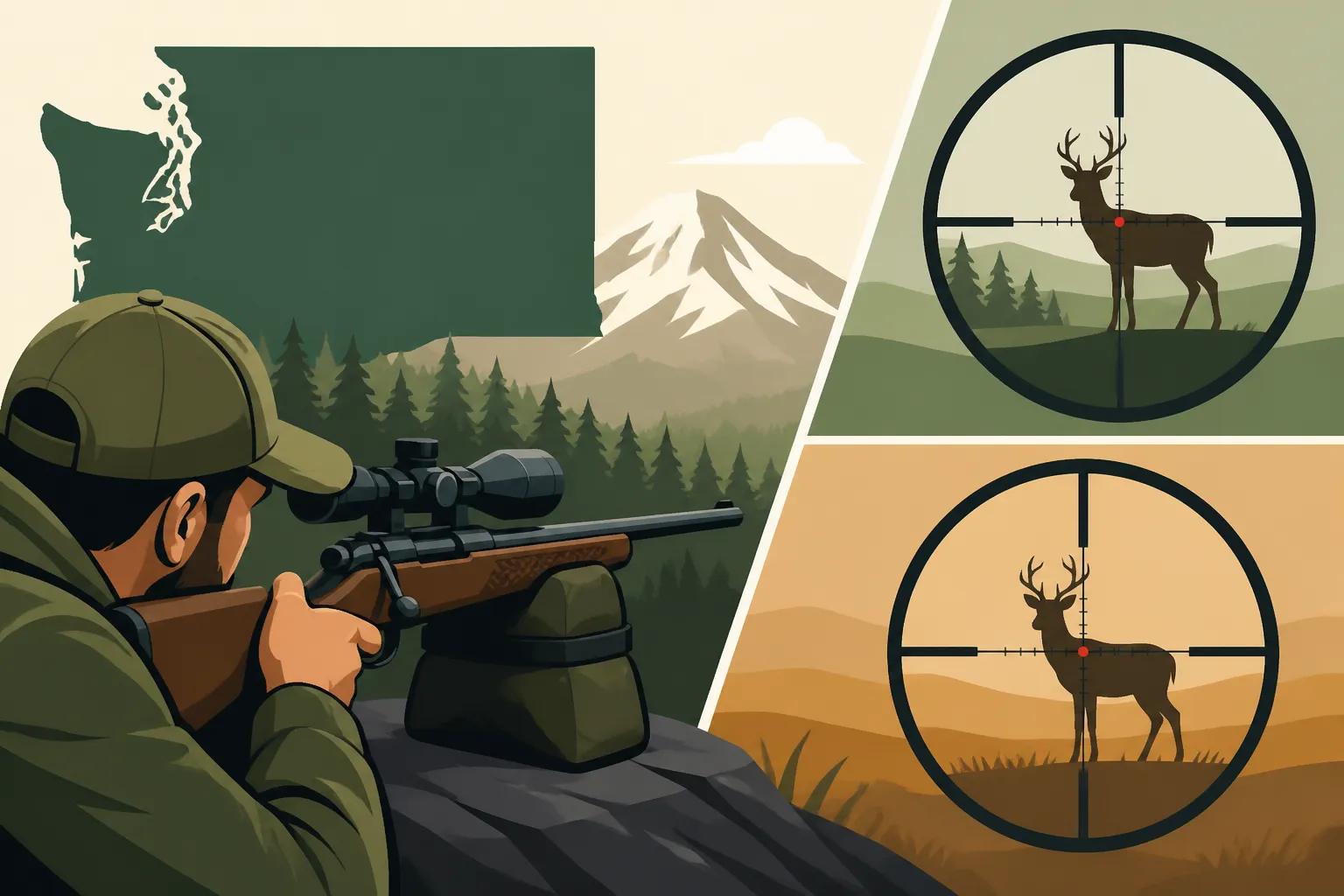
One of the most common dilemmas Washington hunters face when preparing for the season is deciding where to zero their rifle. Should it be a crisp 100-yard zero, giving you confidence in the timber, or stretching it out to 200 yards to take advantage of flatter trajectories across those vast eastern Washington plains? This decision isn't just about punching paper at the range; it impacts your confidence in the field and your ethical shot placement when that moment of truth arrives. This guide will walk you through the nuances of each approach, helping you decide what's best for your hunting style and the diverse terrain Washington offers.
The Age-Old Debate: 100 Yards Versus 200 Yards
It’s a conversation as old as hunting itself, particularly in a state like Washington with its incredibly varied landscapes. Head west of the Cascades, and you’re likely diving into dense forests, thick brush, and steep, broken terrain. East of the Cascades, the world opens up into vast sagebrush flats, rolling wheat fields, and rocky breaks. Your zeroing strategy absolutely needs to reflect where you plan to spend most of your season. There's no single "right" answer, only the right answer for you and your hunt.
Why 100 Yards Appeals to Many Washington Hunters
For many hunters, especially those who spend their time chasing blacktails in the western Washington timber or Roosevelt elk in the thick coastal rainforests, a 100-yard zero just makes sense. The reality of hunting in these areas is that shots are often close, fast, and fleeting. You might get a glimpse of a deer slipping through the salal at 50 yards, or a bull elk crashing through dark timber at 75 yards. In these scenarios, a 100-yard zero means you're practically point-and-shoot out to that distance, with minimal bullet drop or rise to consider.
Think about it: when you're still-hunting through a dense clearcut, Still-Hunting Pace in Wet Brush, the chances of a 300-yard shot are slim to none. You're trying to sneak within bow range, even if you’re carrying a rifle. A 100-yard zero provides maximum certainty for those quick, close-range opportunities. You aim dead on, squeeze the trigger, and trust that your bullet will impact right where you want it. There's less mental calculation, less worry about holdover or hold-under, which can be critical when adrenaline is surging and light is fading. It simplifies the shooting process under pressure, and for many, that peace of mind is invaluable.
The Case for a 200-Yard Zero in Washington
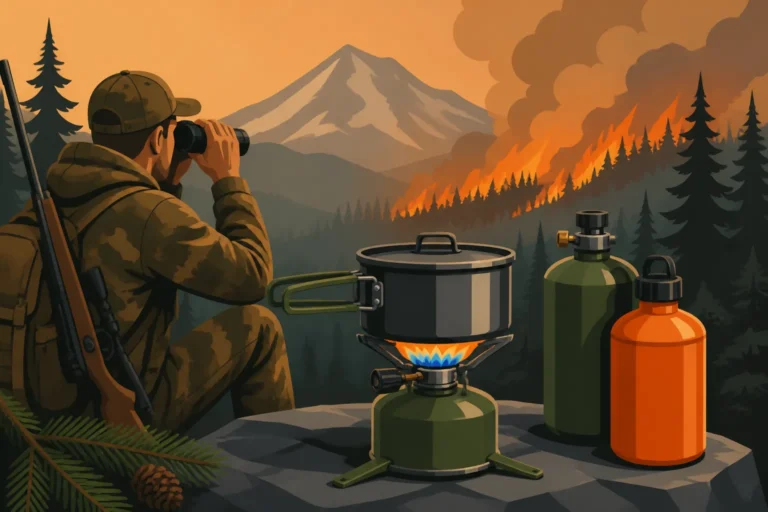
Now, let's pivot to eastern Washington. Imagine you're glassing a massive sagebrush flat for mule deer in the Okanogan, or watching a herd of Rocky Mountain elk moving across a canyon in the Blue Mountains. Glassing Eastern Washington Breaks for Mule Deer In these wide-open spaces, a 100-yard shot can feel like a rare gift. More often, you're looking at distances from 150 to 300 yards, sometimes even further. This is where the 200-yard zero truly shines.
With a 200-yard zero, your bullet will typically rise a few inches above your point of aim at 100 yards, be dead on at 200, and then start its descent. This effectively creates a "point-blank" range that extends much further than a 100-yard zero. For many common hunting calibers, you can often aim dead center on a deer or elk out to 250 or even 300 yards without significant holdover. This "maximum point-blank range" approach simplifies longer shots, allowing you to focus on windage and a steady rest rather than complex ballistic calculations in the moment. It gives you a much wider window of error for those mid-range shots that are so common in open country. It's about being prepared for the most likely shot you'll encounter, and for many Eastside hunters, that's definitely not a 50-yard poke.
Understanding Ballistics and Trajectory for Washington Game
Choosing a zero isn't just a preference; it's a decision rooted in the physics of how a bullet travels. Understanding ballistics isn't about becoming a rocket scientist, but knowing the basics will empower you to make informed choices and build confidence in your setup. Every rifle, caliber, and bullet combination behaves differently, and what works for a Rifle Setup for Washington Elk and Deer might be different for a long-range varmint rig.
How Caliber and Bullet Affect Your Zero
The type of rifle, caliber, and bullet you choose plays a massive role in how flat your bullet flies and, consequently, what zero makes the most sense. A fast-flying magnum, like a .300 Win Mag, will typically have a flatter trajectory than a slower, heavier bullet from a .30-06, especially past 200 yards. Similarly, a high Ballistic Coefficient (BC) bullet designed for long-range precision will maintain its velocity and resist wind drift better than a standard cup-and-core bullet.
Consider hunting both deer and elk in Washington. While a .270 might be perfectly adequate for Columbian Blacktail Deer in Western Washington, you might want a heavier, more robust bullet construction for Bullet Weight and Construction for Elk when chasing Rocky Mountain bulls. This choice of bullet changes your trajectory and your point of impact, so it's crucial that you practice with the exact load you intend to hunt with. Different bullet weights and designs, even within the same caliber, will often print at different points on the target, requiring you to re-zero. Don't show up to hunting camp with a different box of ammo than what you zeroed with – that's a recipe for heartbreak.
Compensating for Drop: Holdovers and Turrets
Once you've decided on your zero, understanding how your bullet drops beyond that distance is paramount. This is where holdovers and turret adjustments come into play.
-
Holdovers: This involves using your reticle to aim slightly high at longer distances. Most modern hunting scopes have some form of ballistic reticle (BDC, duplex with subtensions, Christmas tree reticles) that provide aiming points for various distances. The key here is knowing what those points correspond to for your specific rifle and load. You need to shoot at 300, 400, and even 500 yards to truly understand where your bullet is going. It's not enough to trust the dots on the reticle or a chart; actual field practice is non-negotiable.
-
Turret Adjustments: For precision at longer ranges, especially past 300 yards, many hunters opt to "dial" their scope turrets. This involves calculating the exact bullet drop for a given distance and adjusting the elevation turret on your scope to compensate. This method offers extreme precision but requires a precise rangefinder, accurate ballistic data for your load, and a clear understanding of how to operate your scope's turrets under pressure. Tools like custom ballistic turrets or online calculators can assist, but again, nothing replaces practice. Platforms like GoHunt, for instance, can sometimes offer tools or insights into terrain that might influence typical shot distances, helping you visualize potential scenarios where dialing might be necessary.
| Zero Distance | 100-Yard Drop | 200-Yard Drop | 300-Yard Drop | 400-Yard Drop | 500-Yard Drop |
|---|---|---|---|---|---|
| 100 Yards | 0" | -3" | -10" | -22" | -40" |
| 200 Yards | +1.5" | 0" | -7" | -18" | -35" |
| 300 Yards | +3" | +2" | 0" | -12" | -28" |
Hypothetical values for a common .30-caliber hunting rifle with a 180-grain bullet, 2800 fps muzzle velocity, with scope mounted 1.5 inches above bore. Always verify with your actual setup.
Practical Considerations for Zeroing Your Rifle
Getting a precise zero isn't just about setting your scope; it involves a whole host of practical considerations that can make or break your accuracy in the field. From the actual terrain you hunt to your personal shooting abilities, every factor contributes to the ideal zero.
Your Primary Hunting Terrain and Expected Shots
This is arguably the most crucial factor. Are you primarily hunting the dense rainforests of the Olympic Peninsula for Olympic Unit Roosevelt Elk? Or are you planning to pursue Mule Deer of Eastern Washington in the vast, open spaces of the Columbia Basin? Your answer should heavily influence your zero.
For thick cover, a 100-yard zero is often more forgiving for close, quick shots. You're less likely to have a 300-yard lane of sight, and the ability to aim dead-on at a deer that might pop out at 40 yards is a huge advantage. In contrast, for open country, a 200-yard zero gives you that extended point-blank range, minimizing the need for holdover on shots out to 250 or even 300 yards. If you primarily hunt one type of terrain, tailor your zero to that. If you hunt both, you'll need to decide which scenario is more likely or consider which type of shot you are more confident in adjusting for. Washington Elk Herds and Where They Live highlights the diverse environments these animals inhabit, underlining the importance of this consideration.
Matching Your Zero to Your Confidence and Practice
Honestly, this is where many hunters go wrong. They pick a 200-yard zero because their buddy does, or because they read it’s "better" for big game, but they rarely practice beyond 100 yards. A zero is only as good as your familiarity with it. If you zero at 200 yards but only ever shoot at 100, you’ll be aiming a couple of inches low at 100 yards without even realizing it. That slight difference can mean the difference between a clean kill and a wounded animal, or a clean miss.
Be realistic about your practice regimen. How often do you get to the range? Do you shoot from field positions, not just off a bench? Can you consistently hit a 6-inch target (the approximate vital zone of a deer) at 200 or 300 yards under varying conditions? If the answer is no, stick with a 100-yard zero and build your skills and confidence before stretching it out. It’s far more ethical and responsible to limit your shot distance to what you know you can achieve accurately. Practicing Offhand and Kneeling Shots is crucial for building real-world hunting accuracy, regardless of your zero.
Tools and Techniques for a Precise Zero
Getting a truly precise zero involves more than just firing a few rounds.
- A Solid Rest: Whether you use a sturdy bench rest, sandbags, or a bipod, stability is key. Any wobble introduced during the zeroing process will translate directly into inaccuracy.
- Good Ammunition: Use high-quality, consistent hunting ammunition. Budget plinking rounds are fine for practice, but for zeroing, use the exact brand and bullet weight you'll be taking into the field.
- Optimal Conditions: Try to zero on a calm day with minimal wind. While hunting often happens in less-than-ideal conditions, eliminating variables during the initial zeroing helps establish a true baseline.
- Group Shooting: Don't just fire one shot and adjust. Shoot groups of three (or five, if you have the ammo and patience). The center of your group is your true point of impact.
- Target Selection: Use targets with a clear aiming point that allows for precise adjustment. Many prefer targets with small, distinct squares or circles.
- Confirmation at Distance: After establishing your primary zero (100 or 200 yards), always confirm your point of impact at other relevant distances. If you zero at 100, shoot at 200 and 300 to see where your bullet truly impacts. If you zero at 200, shoot at 100 and 300. This builds confidence and helps you understand your holdover points.
- Field Check: Once your rifle is zeroed, take it out to a realistic hunting scenario if possible. Hike around, set up quickly, and see if your Checking Zero After a Rough Pack-In has shifted. Even minor bumps can affect accuracy.
Making the Call: Which Zero is Right for Your Hunt?
Ultimately, the decision comes down to a personal assessment of your hunting style, the terrain, the species you're pursuing, and your comfort level with ballistic compensation. There's no one-size-fits-all answer, but we can break it down further to help you choose wisely.
Westside Timber vs. Eastside Open Country
Let's simplify. If your hunting plans almost exclusively involve the thick, wet timber of western Washington, a 100-yard zero is often the most practical choice. Shots are likely to be up close and personal. You want minimal guesswork. The maximum effective range in such dense cover might only be 150 yards anyway, making a 200-yard zero offer little additional benefit for trajectory and potentially confusing close shots. Using a scouting tool like GoHunt can help you analyze the typical shot opportunities in specific GMUs. If the topo maps and satellite imagery show tight canyons and heavy timber, a shorter zero makes sense.
Conversely, if you're venturing into eastern Washington for Mule Deer of Eastern Washington or chasing elk across the wide-open plains and coulees, a 200-yard zero will likely serve you better. The ability to aim dead-on for a wider range of distances, typically out to 250-300 yards, is a significant advantage where longer shots are common. You'll still need to learn your holdovers beyond that, but it gives you a much larger margin for error on those mid-range opportunities. For these hunts, understanding the topography through E-scouting tools E-Scouting Washington GMUs Before the Draw can reveal the likely shot distances, further guiding your zero choice.
Personalizing Your Zero for Deer or Elk
While there are general guidelines, the specific animal you're hunting also factors in. A deer's vital zone is smaller than an elk's. For example, a mule deer buck might present a 6-8 inch vital zone, whereas a mature bull elk offers a vital zone closer to 12-14 inches. This difference can affect how forgiving your zero is.
If you're hunting only deer, and particularly smaller blacktails, a precise 100-yard zero ensures your bullet is almost always within a couple of inches of your aiming point within typical timber ranges. For elk, with their larger vital zone, a 200-yard zero often provides enough leniency that you can still hold dead-on at 100 or 250 yards and remain well within the vitals. Shot Placement on a Quartering Elk is always critical, but a flatter trajectory can simplify the equation on longer shots. Consider the type of shot opportunities you'll have for your target species and pick a zero that maximizes your ethical range and confidence. Remember Washington's Minimum Rifle Caliber Rule is a baseline, but shot placement is everything.
In the end, your zero is a deeply personal decision, influenced by your chosen gear, the terrain, your prey, and most importantly, your own skill and practice. Be honest with yourself about your abilities and practice diligently with your chosen zero. Confidence born from preparation is the greatest advantage you can have in the field.
Disclaimer
This article is for general informational purposes only and does not constitute professional advice. Laws, prices and regulations vary by location and change over time. Consult a qualified professional for guidance on your specific situation.