Still-Hunting Pace in Wet Brush
The feeling is all too familiar for anyone who's chased game in Washington's notoriously damp timber and thick undergrowth: you're trying to move silently, testing every step, only to inevitably snap a branch or slosh through a puddle, instantly shattering the quiet and sending every deer or elk within earshot bounding away. It's frustrating, disheartening, and makes you wonder if still-hunting in wet brush is even possible. This guide is here to tell you it absolutely is, and we'll break down the deliberate, almost agonizingly slow pace you need to adopt to become a ghost in the Washington woods.
The Unique Challenges of Washington's Wet Brush
Still-hunting is tough in any environment, but Washington's wet, dense brush presents a specific set of hurdles that can make even the most seasoned hunter feel like an amateur. It's not just about what you can see or hear; it's about the very physics of sound and scent in a saturated landscape.
Noise Amplification in Saturated Foliage
Think about it: dry leaves crackle. Wet leaves squish and slap. A dry twig might snap with a sharp crack, but a waterlogged branch can break with a dull, thudding thwack that carries surprisingly far in the damp air. Western Washington is carpeted with vegetation like salal, huckleberry, and sword ferns, all of which hold moisture like a sponge. Every step you take, every brush against your clothing, every misplaced hand on a branch can create noise. The ground itself can be a symphony of sloshing mud, squelching moss, and hidden puddles beneath layers of decaying organic matter. Even your rain gear, while essential for staying dry, can produce a surprisingly loud swish with every movement if you're not careful. This amplified noise means that any casual movement is often far louder than you perceive it to be, giving game plenty of warning.
Limited Visibility and Scent Dispersal
Beyond the noise, the sheer density of our brush creates significant visibility challenges. It’s a constant battle of trying to peer through a wall of green, where a deer might be standing twenty yards away, completely obscured by a few well-placed fir boughs or a thicket of alder. This lack of clear sightlines demands an even slower pace, forcing you to utilize every tiny opening, every shift in elevation, to scan thoroughly before moving. Furthermore, while rain can wash away some human scent, the high humidity often associated with wet brush can actually cause scent to hang in the air for longer, or to drift in unpredictable ways with subtle thermals, making scent control an ongoing concern. You might think the rain covers your scent, but a sudden downdraft or a pocket of still air can carry your tell-tale odor right to a bedded animal.
The Mental Game of Patience
Let's be honest, the biggest challenge often isn't the terrain itself, but the mental fortitude required to embrace the glacial pace still-hunting demands in wet conditions. Our instincts tell us to keep moving, to cover ground, especially when it's cold and damp. The temptation to pick up the pace, to just "get through" a particularly nasty section of brush, is immense. However, succumbing to this urge is almost always a recipe for failure. The frustration of moving so slowly that it feels unproductive can be overwhelming. You might question if you're even going to see anything, or if you're wasting valuable hunting time. But it's precisely in these moments of self-doubt that you must recommit to the slow game. It's about accepting that covering fifty yards in an hour can be more effective than covering a mile if those fifty yards are done with extreme stealth and awareness.
Mastering the Art of Glacial Movement
When still-hunting in wet brush, your movement isn't just slow; it's an intentional, deliberate dance with the environment. Every single action, from how you lift your foot to how you shift your gaze, is calculated to minimize disturbance and maximize your chances of spotting game before it spots you.
The "Stop, Look, Listen" Philosophy and Smell!
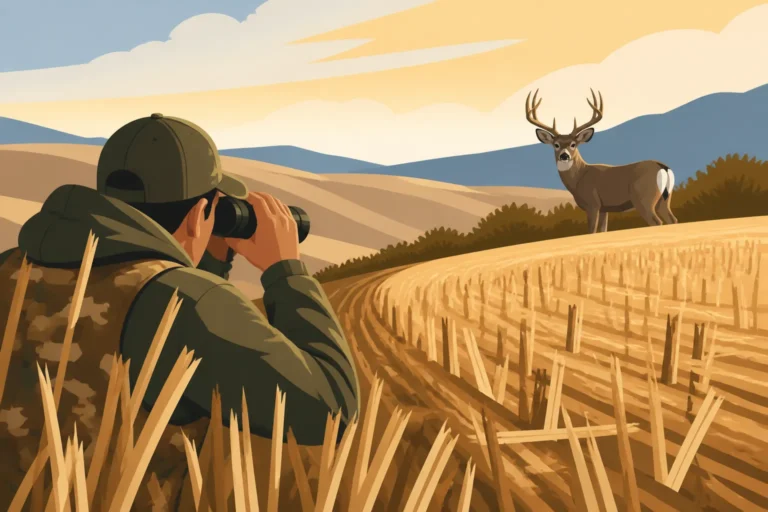
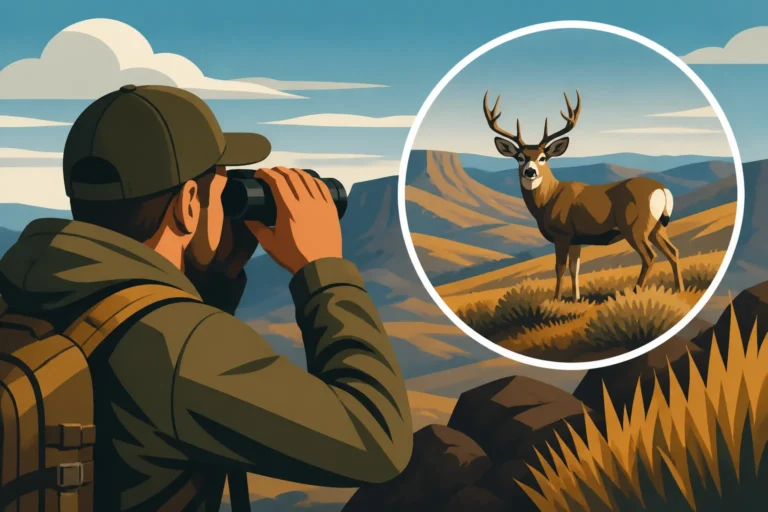
This isn't just a catchy phrase; it's the core methodology for still-hunting in dense, wet cover. But we need to expand on it. It's not just look, it's scan—methodically and slowly, segment by segment, looking for horizontal lines in a vertical world, a flicker of an ear, an unnatural shadow. Use your binoculars to pick apart every suspicious patch of cover, not just quick glances. Listen means pausing long enough to let your ears adjust to the ambient sounds of the forest, then actively trying to isolate any anomalous rustles, footfalls, or snaps that don't belong. This often means stopping for several minutes, allowing the sounds of your own movement to dissipate. And don't forget smell. Especially with elk, that musky, damp animal odor can carry on the air, indicating their presence even before you see or hear them. Incorporating all four senses turns each stop into a comprehensive intelligence-gathering operation.
Micro-Movements: Heel-to-Toe and Weight Transfer
The actual physical act of moving in wet brush needs to be broken down into almost microscopic steps. Forget a normal stride. Instead, it's about a controlled heel-to-toe placement. Lift your front foot just enough to clear any obstacles, then gently place your heel down. Before you commit your full weight, test the ground with your heel. Is it solid? Will it crunch? Will it squish? Only when you're sure it's quiet do you slowly roll your weight forward onto the ball of your foot.
This slow transfer of weight is critical. It allows you to retract your foot silently if the initial placement proves noisy. Your movements should be continuous, flowing, and free of sudden jerks. Think of it like a slow-motion tai chi sequence. Your head should move independently, scanning, while your body prepares its next quiet step. It’s also crucial to lift your feet, rather than shuffling or dragging them through the brush, which creates endless noise. This refined movement is key to truly becoming quiet, even in places like the thick reprod where blacktails love to hide. For more insights on how to get truly close, check out our guide on "How Close You Get in Coastal Reprod".
Silence is Your Stride: Choosing Each Step Deliberately
In Washington's wet environment, the ground itself offers both traps and opportunities for silence. You need to consciously choose where to step. Seek out solid ground, mossy patches, or the firm base of large trees. Avoid piles of dry branches, crunchy dead leaves (even if wet, they can still make noise), and areas of visibly squishy mud. Sometimes, taking a slightly longer route around a noisy patch is far better than plowing directly through it. You're effectively building your own silent path as you go. This also extends to your upper body. Instead of crashing through branches, gently push them aside with your hand or forearm. Hold them until the person behind you (if hunting with a partner) can also pass, then slowly release them to avoid a snap-back. This level of intentionality is paramount, and it’s something you can practice even in your backyard.
Reading the Brush and Terrain for Advantage
Still-hunting isn't just about moving slowly; it's about moving smartly. The Washington landscape, even in its densest, wettest forms, offers clues and advantages if you know how to read them. Leveraging these features can put you in a prime position to spot game.
Utilizing Natural Cover and Contours
The natural lay of the land, especially in Western Washington, provides ample opportunities for concealment. Use the undulating terrain to your advantage. Walk on the low side of ridges or benches to keep your silhouette below the skyline. Utilize large downed logs, thickets of salal, or clusters of young fir trees as visual screens. When you pause to scan, position yourself behind a tree or a dense clump of brush. This breaks up your outline and makes you less likely to be spotted by watchful eyes. Remember that game animals are masters of using cover, and you should be too. Moving from one piece of cover to the next, like a series of short bounds, can significantly improve your stealth. Tools like GoHunt's mapping system can be invaluable here, allowing you to pre-scout potential cover and movement corridors before you ever step foot in the woods.
Hunting the Wind and Thermals
Even in damp conditions, understanding wind direction and thermals is non-negotiable. Your scent is your biggest giveaway, and while rain can temper it, it doesn't eliminate it. Always try to hunt into the wind or with a crosswind. This means constantly checking the wind, whether with a small puff bottle, a piece of dental floss, or simply feeling it on your face.
In mountainous or hilly terrain, thermals play a crucial role. In the morning, as the air warms, thermals rise, carrying your scent uphill. In the evening, as the air cools, thermals fall, carrying your scent downhill. Adapt your hunting strategy accordingly: in the morning, hunt up towards ridgelines; in the evening, hunt down from them. Even on flat ground in dense timber, subtle air currents can exist. Pay attention to how leaves are moving or how your breath drifts. Integrating this awareness into your still-hunting pace ensures that while you're moving silently, you're also moving intelligently, keeping your scent away from the game.
Focusing on High-Probability Areas
Still-hunting is physically and mentally demanding, so you want to maximize your efforts by focusing on areas where game is most likely to be. In wet brush, this often means focusing on transition zones: the edges of clearcuts, where new growth provides both food and cover; dense reprod stands where animals feel secure; drainages and creek bottoms that offer travel corridors and water; and areas of diverse forage. Blacktail deer, in particular, love these thick, wet environments. Knowing where they prefer to bed and feed will help you direct your efforts. For an in-depth look at where to find these elusive deer, be sure to read our guide on "Reading Clearcuts and Reprod for Blacktail Bucks". Before heading out, I often use GoHunt to study topo maps for subtle elevation changes and dense cover, highlighting potential bedding and feeding areas that would be perfect for a slow still-hunt.
Adapting Your Pace to the Day's Conditions
The "right" still-hunting pace isn't a fixed speed; it's a dynamic calculation based on a multitude of factors, from weather to terrain to your knowledge of the game you're pursuing. Learning to adjust your pace is a critical skill for success in Washington's varied hunting environments.
When to Slow Down to a Crawl
There are times when "slow" isn't slow enough, and you truly need to nearly freeze. This includes periods of heavy rain or even a light drizzle that softens sounds, allowing you to get closer. Hunting "Hunting Blacktails in Fog and Rain" demands an almost painfully slow pace, as visibility is low for both you and the animal, increasing your chances of a close encounter. Approaching a known bedding area, or any area where you've found fresh sign (tracks, scat, rubs, fresh beds), also warrants a snail's pace. If you're picking apart a thick patch of cover you suspect holds game, or if you hear a faint rustle or branch snap ahead, you should slow down to a crawl, taking minutes for a single step, using your binoculars to meticulously scrutinize every detail. This is where patience truly becomes a virtue, and the difference between seeing a deer or elk and bumping it can be a matter of seconds.
When a "Quicker" Pace is Justified
While "quick" is a relative term in still-hunting, there are moments when you can marginally increase your speed. These are typically when you're crossing more open terrain (like a logging road, a sparse clearcut, or a less dense ridge top) where visibility is better and the likelihood of spooking game at close range is lower. However, even in these situations, you should still be moving far slower than a typical walk, constantly scanning and pausing. Another scenario might be when you're actively trying to intercept game moving between feeding and bedding areas, especially if you have a good understanding of their travel patterns. If you're on a hot track, for instance, following a blood trail in thick salal and devil's club, a slightly more aggressive (but still cautious) pace might be necessary to stay on the trail. Our guide on "Blood Trailing in Salal and Devil's Club" emphasizes the balance between speed and precision in such situations. Just be ready to slam on the brakes at any moment.
Gear Considerations for Quiet Movement
Your gear plays an enormous role in your ability to move silently. No matter how slow your pace, noisy gear will betray you. Invest in quality rain gear that is designed to be quiet, even when wet. Many modern fabrics like those from Sitka Gear or Kuiu are specifically engineered for this. Avoid stiff, crinkly plastics. Our article on "Rain Gear for Westside Hunting" offers excellent advice on this.
Similarly, your boots need to be both waterproof and provide excellent traction for the slippery, uneven ground. They should fit snugly to prevent foot noise, but also be comfortable for long periods of slow movement. The type of boots you choose for "Boots for Washington's Eastside Rock and Westside Mud" can directly impact your ability to move quietly and safely. Additionally, ensure all your pack straps are cinched tight to prevent rattling, and any loose items are secured. Even a jangling set of keys or a clanking rangefinder can be enough to give you away. Layering your clothing effectively, as detailed in "Layering for Wet Cold Weather", can also help reduce bulk and rubbing noise. A quiet hunting experience often starts with meticulous gear preparation.
Here's a quick guide to adjusting your still-hunting pace:
| Hunting Pace Type | Typical Distance Covered (per hour) | Optimal Conditions | Game Reaction Expectation | When to Employ |
|---|---|---|---|---|
| Glacial Crawl | 10-20 Yards | Dense cover, heavy fog, rain, known bedding areas. | High chance of seeing game before it sees you, close encounters. | When hunting thick timber for blacktails, or stalking into a known elk bedding area. Any time you know game is very close and you need to pick apart every square foot of cover. Especially useful in extremely wet and dense conditions where sound travels far and visibility is low. |
| Standard Still-Hunt | 20-50 Yards | Moderate cover, light drizzle, general cruising. | Good chance of spotting game, but vigilance required. | When moving through general hunting country with varied cover, not targeting a specific spot but looking for active animals. Good for covering ground slowly while still being stealthy and scanning for opportunities. |
| Cautious "Quick" Pace | 50-100 Yards | Open timber, sparse clearcuts, good visibility. | Higher risk of bumping game, but allows covering more ground. | When transitioning between known game areas, crossing open flats, or following a very fresh, clear track (like a blood trail) where sustained movement is necessary, but always ready to slow instantly. Requires constant scanning and wind checks. |
Remember, still-hunting isn't about how much ground you cover; it's about how thoroughly and quietly you cover the ground you choose. Embrace the slow, the deliberate, and the seemingly unproductive pauses. That's when the magic happens, and you finally become the ghost in the Washington woods you've always aspired to be.
Disclaimer
Hunting carries inherent risks, including but not limited to those associated with firearms, archery equipment, wildlife encounters, and navigating challenging terrain. Always prioritize safety, understand and follow all Washington Department of Fish and Wildlife (WDFW) regulations, and consider taking a certified hunter education course. The information provided in this guide is for educational purposes only and should not replace professional instruction or personal experience in the field.