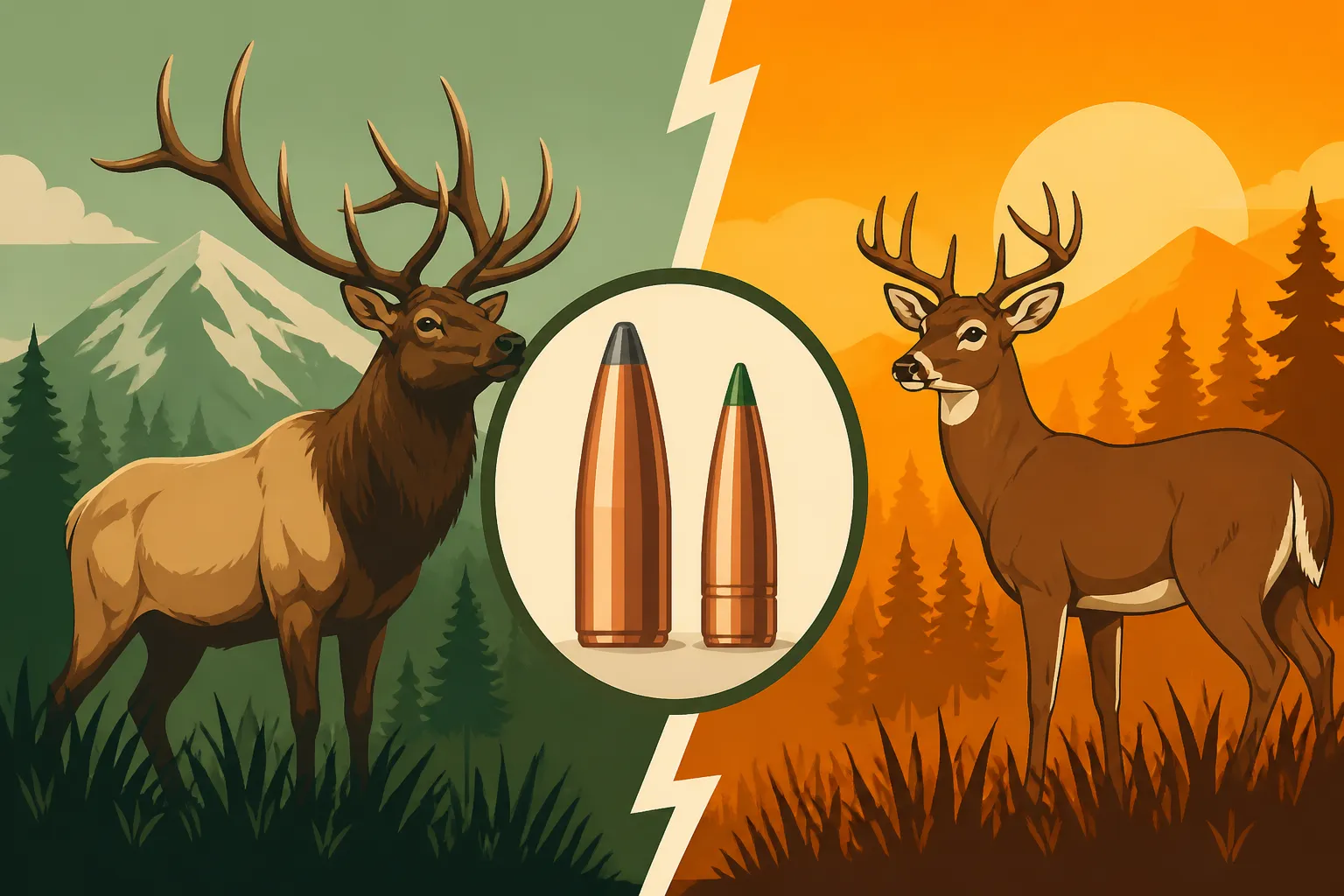
Bullet Weight for Elk Versus Deer
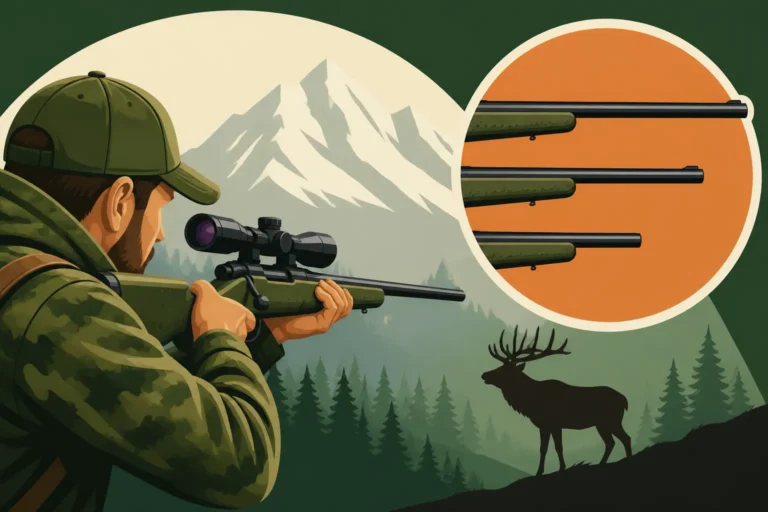
One of the most common head-scratchers for Washington hunters is figuring out if the bullet that's perfect for a big bull elk is overkill for a blacktail deer, or vice versa. It’s a totally valid question, because you want to be ethical and effective on every hunt, and using the wrong bullet can lead to either insufficient penetration or excessive meat damage. This guide will help you navigate the nuances of bullet weight for elk and deer, so you can confidently pick the right ammunition for your next hunt across our diverse Washington landscapes.
Understanding Terminal Ballistics
When we talk about bullet weight, we’re really diving into the realm of terminal ballistics—how a bullet performs when it hits an animal. It’s not just about the number on the box; it’s about what that number means for energy, momentum, and ultimately, a clean kill.
Bullet Construction and Impact
The weight of a bullet is intrinsically linked to its construction and how it's designed to perform. Lighter bullets, especially in smaller calibers, often rely on rapid expansion and hydrostatic shock to put an animal down. They tend to shed energy quickly, which can be great for deer, causing significant internal damage without excessive exit wounds. However, for a larger animal like an elk, this rapid expansion might mean a lack of penetration, failing to reach vital organs through thick hide and bone.
Heavier bullets, on the other hand, are typically designed for deeper penetration. They carry more momentum, allowing them to drive through muscle, ribs, and even shoulder bone to reach the lungs and heart. Often, these heavier bullets are constructed with bonded cores or solid copper designs to maintain their integrity and weight even after striking bone. Understanding this difference is key. A bullet that fragments too quickly on a large elk might just wound the animal, while an overly stout, heavy bullet on a deer might pass through without expanding sufficiently, leaving a less effective wound channel. This balance is crucial for ethical hunting, and it’s why savvy hunters spend time researching and testing different loads. For more on what makes a bullet effective, check out Bullet Construction for Heavy Bone.
Energy and Momentum
Energy and momentum are the dynamic duo of terminal ballistics. Energy (often measured in foot-pounds) is about the bullet's ability to cause damage through shock and expansion, while momentum is about its ability to maintain velocity and penetrate. A lighter, faster bullet might have high initial energy, but it loses that energy quickly upon impact. This is often perfectly sufficient for deer, leading to a quick, humane kill by transferring most of its energy within the animal.
However, elk are a different beast entirely. They have denser bones, thicker hides, and a larger body mass, requiring a bullet that can punch through all that to reach the vitals. This is where momentum becomes paramount. A heavier bullet, even if it's traveling a bit slower, carries more momentum, allowing it to penetrate deeply. You need a bullet that can break through a tough shoulder blade and still have enough steam to churn through lung tissue. Imagine trying to hammer a nail with a lightweight tack hammer versus a heavy framing hammer—the principle is similar. For elk, you need the framing hammer. For deer, a slightly lighter, faster option can often be more than enough, ensuring that all that kinetic energy is deposited where it counts, inside the animal.
Bullet Weight Considerations for Elk Hunting
Hunting elk in Washington, whether it's the coastal Roosevelt or the Rocky Mountain variety east of the Cascades, demands a robust approach to ammunition selection. These animals are large, tough, and can cover ground even with a fatal wound if your bullet doesn't perform.
Roosevelt and Rocky Mountain Elk Differences
While both are formidable, there are subtle differences in their physical makeup that might influence bullet performance. Roosevelt elk, found in the dense, wet forests of Western Washington, tend to be slightly larger and heavier-boned than their Rocky Mountain cousins. Their sheer mass, combined with the often close-range, thick timber shots, means you need maximum penetration. A bullet might encounter heavy muscle and bone almost immediately after impact.
Rocky Mountain elk, ranging across the open sage and timbered breaks of Eastern Washington, can still be massive, but shots might occur at longer distances. While penetration is still key, a bullet that performs well at extended ranges, retaining energy and flying true in varying wind conditions, also becomes important. In both cases, the goal is to drive a bullet through significant tissue and bone to disrupt the central nervous system or quickly incapacitate the circulatory system. This is not the time for fragile, varmint-style bullets. The terrain and typical shot distances can inform your final bullet choice, but the need for deep, reliable penetration remains constant for all Washington elk.
Shot Placement and Penetration
For elk, deep penetration is non-negotiable. Their vitals are encased in a strong rib cage and often protected by heavy shoulder bones. A bullet designed for rapid, shallow expansion might not reach the far lung or the heart, especially on a quartering shot. This is why many experienced elk hunters gravitate towards heavier-for-caliber bullets with robust construction, like bonded core, partitioned, or solid copper designs. These bullets are engineered to hold together, retaining their weight as they travel through the animal, ensuring a deep wound channel that creates maximum tissue damage to vital organs.
Think of it this way: you want a bullet that can smash through the engine block, not just dent the fender. A bullet that blows up on the shoulder blade might leave a surface wound, but a well-constructed, heavier bullet will typically punch through, delivering its devastating energy to the vitals. When hunting a truly big bull, especially a Roosevelt in the dark timber, you want every advantage you can get to anchor that animal quickly and efficiently. Ensuring your bullet can get to where it needs to go is paramount for an ethical kill and minimizing tracking distances in often brutal terrain. Selecting the right cartridge is also a big part of the equation, and you can learn more about specific choices in Cartridges That Suit Washington Roosevelt Elk or Cartridges for Long Eastside Shots in Washington.
Minimum Caliber and Bullet Weight
Washington State has specific rules regarding minimum rifle caliber for big game, which is generally .24 caliber (6mm). While you can hunt elk with a .243 Winchester, most seasoned elk hunters would strongly advise against it due to its limited bullet weight options and lower energy. For elk, a good rule of thumb is to start at cartridges like the .270 Winchester, .308 Winchester, or .30-06 Springfield, and scale up from there to more powerful options like the 7mm Rem Mag, .300 Win Mag, or .338 Win Mag.
Within these calibers, you want to lean towards the heavier end of the spectrum for elk. For a .270, that might mean 150-160 grain bullets. For a .30-06, 180-200 grain. For a .300 Win Mag, 180-210 grain is common. These heavier bullets, coupled with appropriate construction, provide the momentum and sectional density necessary for deep penetration and reliable expansion on a tough animal like an elk. Remember, a bigger animal needs a bigger punch, and it's always better to be slightly over-gunned than under-gunned when pursuing something as magnificent as a Washington elk. It's not just about the rules, but about responsible hunting. For more details on the legal side, see Washington's Minimum Rifle Caliber Rule.
Bullet Weight Considerations for Deer Hunting
Deer hunting in Washington offers a variety of experiences, from the dense timber where blacktails roam to the open sagebrush of Eastern Washington mule deer country, and the whitetails of the Northeast. While smaller than elk, deer still require careful bullet selection for a clean, ethical harvest.
Blacktail, Mule Deer, and Whitetail Differences
Washington's deer species—Columbian blacktails, mule deer, and whitetails—each present slightly different challenges that can influence your bullet choice. Blacktails, common in the thick, often rainy Western Washington forests, are typically smaller than mule deer or whitetails. Shots tend to be up close and personal in dense cover. A bullet that expands quickly but still penetrates adequately through brush and hides without excessive over-penetration is often ideal, ensuring all energy is dumped into the animal.
Mule deer, found across Eastern Washington's more open and rugged terrain, are larger and more robust than blacktails. Shots can often be at longer ranges, requiring a bullet that flies flat and accurately. Whitetails, primarily in Northeastern Washington, are known for their dense bone structure and incredible ability to vanish after a shot. For both mule deer and whitetails, a balance of expansion and penetration is key, but you generally don't need the extreme penetration required for elk. A bullet that quickly transfers its energy to the animal will result in a rapid, humane kill and often shorter tracking jobs. The difference in size and habitat means that while any deer requires respect, you can often opt for bullets that prioritize energy transfer over sheer deep penetration compared to elk.
Maximizing Energy Transfer
For deer, especially blacktails, the emphasis shifts slightly from deep penetration to maximizing energy transfer within the animal. You want a bullet that expands effectively upon impact, creating a wide wound channel and delivering its kinetic energy efficiently to the vital organs. This rapid energy dump helps to quickly incapacitate the deer, minimizing its ability to run and get lost in thick cover.
Lighter-for-caliber bullets, designed for quicker expansion, can be very effective on deer. These might not hold together as well as heavier, bonded bullets, but their rapid energy transfer can be devastating to a deer's vitals. The goal is to ensure the bullet expands enough to create significant hydrostatic shock and tissue damage without simply punching through both sides with minimal disruption. Of course, this needs to be balanced with adequate penetration; you still need to reach the vitals. The sweet spot for deer is a bullet that expands reliably and dumps its energy effectively, leading to a quick, ethical kill without unnecessary tracking. This approach helps conserve meat and ensures a humane outcome, which is always our top priority as hunters. This is also important for understanding your potential Deer Meat Yield From a Blacktail or any other Washington deer.
Common Bullet Weights and Calibers
For deer in Washington, a wide range of popular calibers are highly effective. The .243 Winchester, .25-06 Remington, 6.5 Creedmoor, .270 Winchester, and .30-30 Winchester are all excellent choices. Within these calibers, you typically don't need the absolute heaviest bullet weights.
For example, if you're shooting a .243, a 95-100 grain bullet is often ideal for deer. In a .270, 130-140 grain bullets are classics. For a .308 or .30-06, 150-165 grain bullets are incredibly versatile and effective on deer. These weights typically offer a good balance of accuracy, flat trajectory, and terminal performance for deer-sized game. They are designed to expand reliably within a deer's lighter bone structure and body mass, ensuring that energy is deposited effectively without being overly destructive. Choosing a bullet that is too heavy and robust for deer might result in less expansion and a smaller wound channel, potentially leading to longer tracking jobs. The key is to match the bullet to the animal's size and density, ensuring ethical and efficient harvests.
Finding the Right Balance for Both Species
Many hunters in Washington chase both elk and deer, sometimes even in the same general unit during overlapping seasons. The challenge then becomes: can one rifle and one bullet weight do it all, or do you need to specialize?
The "Do-It-All" Bullet Fallacy
It's tempting to think there's a single bullet that's perfectly suited for every animal, from a small blacktail to a monstrous Roosevelt bull. While some modern bullet designs come impressively close to being "all-arounders," relying solely on one load for such diverse game can be a bit of a fallacy. A bullet optimized for the deep penetration required for elk might pass through a deer without fully expanding, leading to a less effective wound channel and potentially a longer track. Conversely, a bullet that performs perfectly on a deer might lack the integrity and penetration needed to reliably reach the vitals of a large bull elk, especially through heavy bone.
The "do-it-all" bullet often represents a compromise. It might be good enough for both, but rarely truly optimal for either. For hunters who prioritize maximum ethical performance on each species, having different loads—or even different rifles—is often the preferred approach. While it adds a layer of complexity, it ensures that when you pull the trigger, you have the best possible chance for a quick, humane harvest on whatever game you're pursuing. This is where researching your specific unit on platforms like GoHunt can provide crucial insights into the typical shot distances and terrain, helping you decide if a compromise is acceptable or if specialized loads are truly needed.
Caliber and Bullet Weight Selection Strategies
When hunting both deer and elk, you have a few strategic options for your rifle and bullet choices.
Option 1: The Dedicated Approach
If you have the luxury, using separate rifles or at least separate loads for each species is ideal. A .270 Win with 130-grain bullets for deer and a .300 Win Mag with 180-grain bonded bullets for elk gives you optimal performance. This removes any compromise.
Option 2: The Mid-Range Workhorse
Many hunters opt for a versatile cartridge like the .30-06 Springfield or .308 Winchester. These calibers offer a broad range of bullet weights and constructions, allowing you to tailor your load. For example, a .30-06 could be loaded with 150-grain bullets for deer and 180-grain bonded bullets for elk. This requires diligent zeroing and practice with both loads, as points of impact can differ significantly. This is a popular option for hunters seeking a solid Rifle Setup for Washington Elk and Deer.
Option 3: The Heavy-for-Deer Compromise
If you absolutely must choose one load for both, and you prioritize elk, then select an elk-appropriate caliber and bullet weight (e.g., a 7mm Rem Mag with 160-grain bonded bullets). This load will be effective on elk and will certainly dispatch deer, though it might cause more meat damage on deer than an optimized deer load. The key is choosing a bullet designed to hold together and penetrate, ensuring it works on the tougher elk, even if it's "overkill" for a deer. Remember, a bigger hole is still a fatal hole. Using resources like GoHunt can help you analyze the game populations in your chosen GMU to decide if elk or deer are the primary focus.
| Caliber | Recommended Deer Bullet Weight (grains) | Recommended Elk Bullet Weight (grains) | Notes |
|---|---|---|---|
| .243 Winchester | 95-100 | Not Recommended | Great for deer, insufficient for most elk. |
| .270 Winchester | 130-140 | 150-160 | Versatile, but opt for premium 160gr for elk. |
| 7mm-08 Remington | 120-140 | 140-160 | Excellent deer round, heavier premium bullets for elk. |
| .308 Winchester | 150-165 | 165-180 | Highly versatile, 180gr premium for elk. |
| .30-06 Springfield | 150-165 | 180-200 | Classic workhorse, 180gr+ premium for elk. |
| 7mm Rem Magnum | 140-160 | 160-175 | Great for both, 160gr+ bonded for elk. |
| .300 Win Magnum | 165-180 | 180-210 | Powerful, 180gr+ bonded or monolithic for elk. |
| .338 Win Magnum | 200-225 | 200-250 | Heavy hitter, primarily for elk and large bears, effective on deer. |
Testing and Practice
Regardless of your chosen strategy, rigorous testing and practice are paramount. Every rifle is a law unto itself, and different bullet weights and brands will perform differently in your specific firearm. You need to know your rifle's point of impact with your chosen load at various ranges. What shoots perfectly at 100 yards might be several inches off at 200 or 300 yards with a different bullet weight.
Spend time at the range, shooting from field positions, not just off a bench. Practice shooting offhand, from kneeling, and using shooting sticks or a pack—just like you would in the field. This not only builds confidence but also reveals any issues with your ammunition or rifle setup before you're staring down an elk or deer. Never assume a new box of ammunition, even of the same brand and weight, will shoot identically to a previous batch. Confirm your zero every season, and before any major hunt. Your proficiency with your chosen bullet and rifle is just as important as the bullet itself. Don't underestimate the value of consistent practice; remember, Practicing Offhand and Kneeling Shots can make all the difference.
Choosing the right bullet weight for your Washington elk and deer hunts can seem like a daunting task, but it doesn't have to be. By understanding the fundamental differences in game anatomy and terminal ballistics, you can make informed decisions that lead to ethical and successful harvests. Whether you opt for dedicated loads, a versatile middle-ground, or a heavy-for-deer compromise, the most critical factors remain unwavering: a well-placed shot and a deep understanding of your equipment's capabilities. Get out there, test your gear, and hunt confidently. The landscapes of Washington offer incredible opportunities, and being prepared is the best way to honor the game we pursue.
Disclaimer
This article is for general informational purposes only and does not constitute professional advice. Laws, prices and regulations vary by location and change over time. Consult a qualified professional for guidance on your specific situation.