Two-Way Radios and Satellite Messengers
There's a unique kind of dread that settles in when you're deep in Washington's backcountry, perhaps tracking a bull elk through thick timber or navigating a steep clearcut for blacktails, and you realize your cell phone has become an expensive brick. Reliable communication in these vast, often remote hunting grounds isn't just a convenience; it can be a lifesaver, connecting you to your hunting partners or emergency services when every second counts. This guide will walk you through the essential tools—two-way radios and satellite messengers—to ensure you're never truly alone out there.
Why Reliable Communication is Non-Negotiable in Washington's Wilds
Hunting in Washington state, whether you're chasing Roosevelt elk on the wet west side or mule deer in the arid eastern breaks, means venturing into areas where cell service is often nonexistent. The mountains, deep canyons, and dense forests that make for incredible hunting also create massive communication black holes. Relying solely on your smartphone is a gamble, and it's one you simply shouldn't take when your safety, or the safety of your hunting party, is on the line.
The Isolation Factor and Unexpected Situations
Imagine the scenario: you're solo hunting a new unit near the Okanogan, miles from the nearest paved road, and you take a fall, twisting an ankle badly. Or maybe you've punched your tag on a massive bull deep in the Gifford Pinchot, and you need to coordinate with your partners for packing out the meat before nightfall and rising temperatures set in. These aren't just hypothetical situations; they're real challenges Washington hunters face every season. Without a way to communicate, a minor mishap can quickly escalate into a serious emergency, turning a dream hunt into a nightmare. Leaving a Trip Plan at Home is a start, but direct communication is always superior.
Coordinating with Your Hunting Party
Even with a group, getting separated is surprisingly easy in Washington's complex terrain. One minute your buddy is just ahead, the next, a ridge, a drainage, or a dense patch of timber has swallowed them whole. Two-way radios are invaluable for maintaining contact, giving real-time updates on animal movement, coordinating drives, or simply checking in to ensure everyone is safe and knows the plan. They allow for quick adjustments to strategies without having to hike miles to find each other, saving precious daylight and energy.
Understanding Two-Way Radios for Hunting
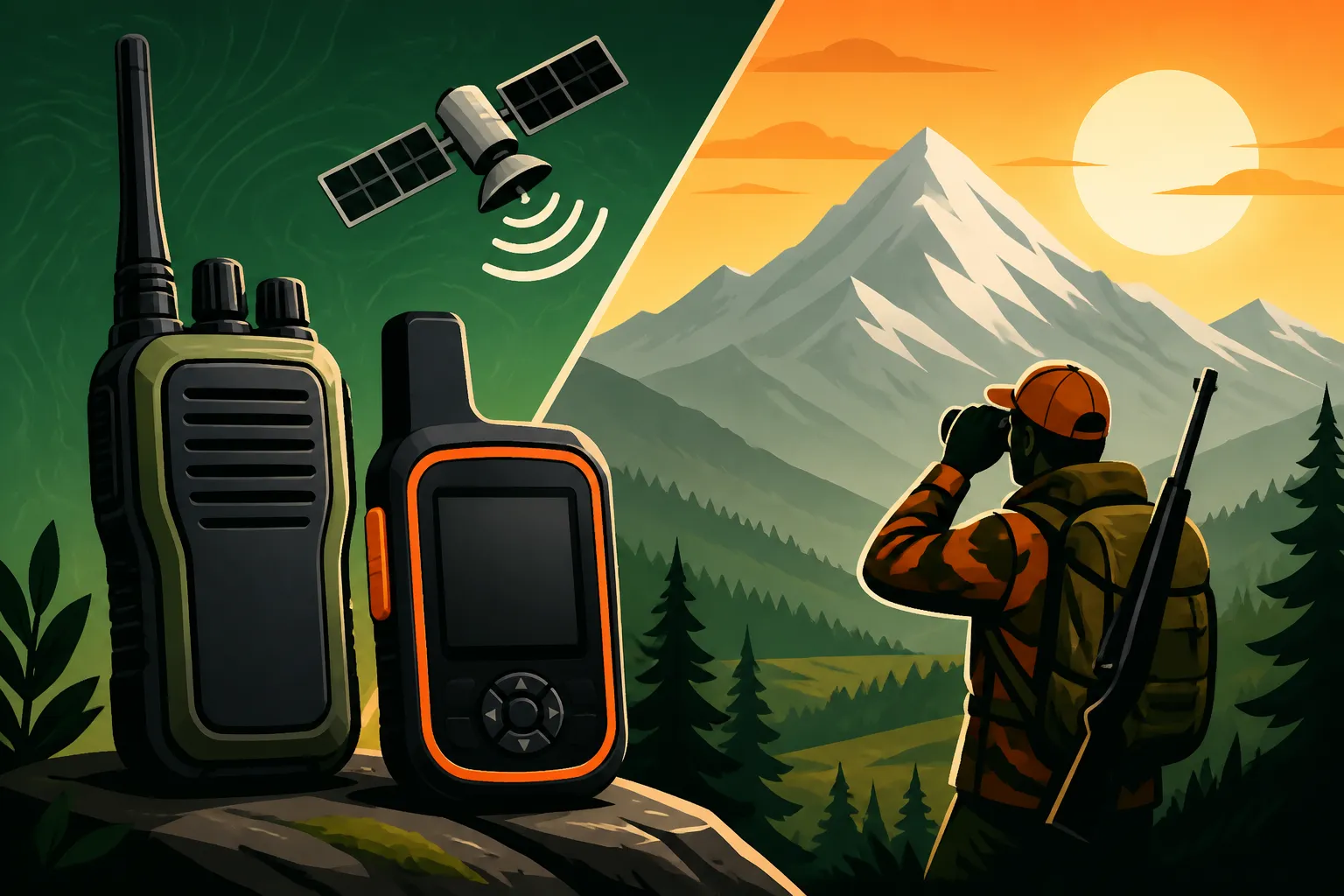
Two-way radios, often called walkie-talkies, are a classic and highly effective tool for short-to-medium range communication in the field. They operate on specific radio frequencies, allowing you to talk directly to other radio users within range. For hunting, they are especially popular for keeping track of partners, coordinating movements, and sharing immediate observations.
Types of Radios and Their Range Limitations
When we talk about two-way radios for hunting, we're generally looking at two main categories: FRS (Family Radio Service) and GMRS (General Mobile Radio Service). FRS radios are lower power, usually require no license for personal use, and are great for short-range communication, typically a mile or two in ideal conditions. GMRS radios offer more power, which translates to longer range—think several miles in good conditions—but they do require a license from the Federal Communications Commission (FCC) in the United States, which is an easy online application process for a multi-year license.
It's crucial to understand that the "up to 30 miles" claims on radio packaging are almost always based on line-of-sight in flat, open terrain—a scenario you rarely encounter while hunting in Washington's mountainous, timbered landscapes. Realistically, in the dense forests of Western Washington or the rugged, broken country of the Eastside, expect a fraction of that advertised range. Obstacles like hills, thick timber, and even dense wet foliage absorb and block radio waves, significantly reducing effective communication distance.
Battery Life and Durability in the Field
A radio is useless if it runs out of juice or breaks when you need it most. Battery life is a huge consideration. Many hunting-specific radios offer rechargeable battery packs, but it's always wise to carry spare AA or AAA batteries, or a power bank specifically for radios, especially on multi-day hunts. Cold weather, which is common during late-season hunts in Washington, can drastically reduce battery performance, so keeping spare batteries warm is a good practice.
Durability is another key factor. Hunting gear takes a beating. Radios need to withstand accidental drops, rain, snow, and general abuse. Look for radios with a rugged housing, and ideally, an IPX-rated waterproof or water-resistant certification. Many of us know the feeling of a sudden downpour in the Cascades; a non-waterproof radio would be toast in minutes. Rain Gear and Layering for Washington Hunts goes hand-in-hand with keeping your electronics dry.
The Power of Satellite Messengers
While two-way radios connect you to your immediate party, satellite messengers connect you to the wider world, even when you're miles beyond the reach of any cell tower or GMRS signal. They utilize global satellite networks, meaning their coverage extends to virtually anywhere on Earth, making them indispensable for true backcountry safety.
Global Coverage and SOS Capabilities
This is where satellite messengers truly shine. Unlike cell phones or two-way radios, which rely on terrestrial infrastructure or line-of-sight, satellite messengers transmit signals directly to orbiting satellites. This means that whether you're hunting high in the Pasayten Wilderness, deep in the Blue Mountains, or along the remote coast, you can almost always send and receive messages.
The most critical feature of any satellite messenger is its SOS button. In a true life-threatening emergency—a severe injury, a lost hunter, or a critical medical situation—pressing this button sends an alert, along with your precise GPS coordinates, to a 24/7 global monitoring center. They then notify local search and rescue teams (like those in Washington) of your emergency, initiating a rescue operation. This capability alone makes a satellite messenger an invaluable piece of gear for anyone venturing into remote areas. It provides a level of peace of mind that no other communication device can. For solo hunters, especially, this is a must-have for Solo Hunting Safety Precautions.
Two-Way Messaging and Tracking Features
Beyond SOS, most satellite messengers offer two-way messaging, allowing you to send custom text messages to designated contacts (friends, family, or your hunting partners back at camp) and receive replies. This is incredibly useful for non-emergency communication: updating loved ones on your progress, letting your spouse know you're safe, or sending a quick message to coordinate a rendezvous point. You can often pre-program messages for quick sending, which is handy when you're fumbling with gloves or in low light.
Many devices also include tracking features. This allows you to automatically send location updates at set intervals, creating a breadcrumb trail of your journey. Friends and family can often view your progress on an online map, which is another excellent safety measure. This feature is also fantastic for reviewing your hunt, seeing your routes, and sharing your adventures with others. Paired with a mapping app like GoHunt's mapping tools on your phone, you can get a comprehensive overview of your route and communicate your exact location to others.
Subscription Costs and Device Options
The global reach of satellite messengers comes with a subscription cost. Unlike two-way radios, which are a one-time purchase (plus any license fees), satellite messengers require an active service plan, much like a cell phone. These plans vary in price depending on the number of messages included, tracking intervals, and the level of emergency services provided. It's a recurring cost, but most users find it a small price to pay for the unparalleled safety and connectivity it offers in the backcountry.
There are several popular brands in the satellite messenger market, each offering a slightly different suite of features, device sizes, and subscription models. Do your research to find one that fits your typical hunt duration, messaging needs, and budget. Some devices are purely messengers, while others integrate navigation features, weather forecasts, and even detailed mapping capabilities.
Here’s a quick comparison of general features between common two-way radios and satellite messengers:
| Feature | Two-Way Radios (FRS/GMRS) | Satellite Messengers (e.g., inReach, Zoleo) |
|---|---|---|
| Communication Range | Short to Medium (1-5 miles typical in terrain) | Global (virtually anywhere on Earth) |
| Primary Use | Group coordination, localized comms | Emergency SOS, remote messaging, tracking |
| Reliance on Towers/Satellites | None (direct radio waves) | Satellite Network (global coverage) |
| Emergency Button (SOS) | No | Yes (direct link to SAR) |
| Two-Way Text Messaging | No (voice only) | Yes |
| Tracking/Location Sharing | Limited to voice relay | Yes (automated breadcrumb trail) |
| Initial Cost | Generally lower | Higher |
| Ongoing Cost | No (GMRS license is a one-time fee) | Yes (monthly/annual subscription) |
| Battery Life | Hours to a few days (depending on use) | Days to weeks (depending on model/settings) |
| Terrain Impact | Highly affected by obstacles | Minimal impact from terrain |
Integrating Communication into Your Hunt Plan
Having the right gear is only half the battle; knowing how to integrate it effectively into your hunting strategy is what truly makes a difference. Communication should be a core part of your pre-hunt planning and daily routine in the field.
Pre-Trip Planning and Gear Checks
Before you even leave your driveway for a hunting trip into the Wenaha-Tucannon Wilderness or the vastness of the Blue Mountains, establish a communication plan. Who has what device? What channels will radios be set to? Who are the emergency contacts for the satellite messenger? Share your trip plan, including expected routes and timelines, with someone reliable back home, and ensure they know which device you'll be carrying.
Always perform a full gear check before heading out. Charge all batteries, check for any necessary updates, and send a test message from your satellite messenger to confirm it's working. If you're using a planning tool like GoHunt's maps, mark out potential rendezvous points or areas where you might get a fleeting cell signal, even if you don't plan to rely on it. This proactive approach ensures your equipment is ready when you need it most.
Establishing Communication Protocols in the Field
Once in the field, establish clear communication protocols with your hunting partners.
- Check-in Times: Agree on specific times to check in via radio, especially if you plan to split up. For example, a quick radio call every hour on the hour, or at specific landmarks.
- Call Signals: Decide on clear, concise call signals. Instead of "Are you there?" try "Status check, over." This reduces confusion and saves battery life.
- Emergency Words: If you have a two-way radio, establish a specific "panic word" or code that immediately signals an emergency. This avoids having to shout out sensitive information that others might overhear.
- Location Updates: Regularly share your location, especially if you're navigating complex terrain. With a satellite messenger, this can be automated; with radios, a quick "I'm at the top of the second clearcut from camp" is vital. Don't forget to pack a First Aid Kit for a Remote Hunt and ensure everyone knows its location.
Choosing the Right Devices for Your Washington Hunt
Deciding between two-way radios and satellite messengers, or often, deciding to carry both, depends heavily on your hunting style, the terrain you'll be in, and your budget. There's no one-size-fits-all answer, but thinking through these factors will help you make an informed choice.
Considering Your Hunting Style and Location
Are you primarily hunting within earshot or line-of-sight of your partners in relatively close quarters, perhaps still-hunting Blacktail Deer Hunting in Western Washington Timber? Then reliable, rugged two-way radios are probably sufficient for coordinating movements and staying in touch. They offer instant, free communication within their range.
However, if you're planning a multi-day backcountry elk hunt deep in a wilderness area, or venturing far afield from camp on a solo mission, a satellite messenger becomes absolutely essential. Its ability to provide global emergency contact and send messages when radios and cell phones fail is unparalleled. For long-distance trips where Packing an Elk Out of Washington's Backcountry might take days, constant contact with the outside world is priceless.
Balancing Cost and Safety Needs
Two-way radios are generally a lower initial investment, with no recurring monthly fees (beyond a potential GMRS license). They're a fantastic tool for group communication on day hunts or within defined areas.
Satellite messengers have a higher upfront cost and require a subscription, but they offer an unmatched layer of safety and peace of mind for truly remote adventures. If your hunting often takes you into areas with zero cell service, consider the subscription a non-negotiable insurance policy for your safety. Many hunters choose to carry both: radios for in-group communication and a satellite messenger for outside-world contact and emergencies. Using your mapping app on your phone, perhaps with a GoHunt subscription, can also help you identify areas with potential signal or good vantage points where you might get better radio range.
Essential Features to Look For
When purchasing either device, keep these features in mind:
- Battery Life: Prioritize devices with long battery life or the option to use standard replaceable batteries.
- Durability and Weatherproofing: Look for rugged, water-resistant or waterproof ratings (IPX) to withstand Washington's unpredictable weather.
- Ease of Use: In a stressful situation, you don't want to be fumbling with complicated menus. Simplicity is key.
- Antenna Design: For radios, a good antenna can make a big difference in range. For satellite messengers, a clear view of the sky is crucial for signal acquisition.
- Power Output (for Radios): Higher wattage generally means better range for GMRS radios.
- Pre-programmed Message Options (for Satellite Messengers): The ability to send quick, custom messages can be a huge time-saver.
Ultimately, the goal is to enhance your safety and effectiveness in the field. Don't underestimate the importance of reliable communication. It's an investment in your well-being and helps ensure you can enjoy your Washington hunting adventures to the fullest. Whether you're coordinating with your crew on Washington Elk Hunting Tactics by Weapon Season or just letting your family know you're okay, these tools are vital.
Disclaimer
This article is for general informational purposes only and does not constitute professional advice. Laws, prices and regulations vary by location and change over time. Consult a qualified professional for guidance on your specific situation.