Barrel Length for Timber Hunting
We've all been there, heading into a patch of prime Washington timber, rifle slung over a shoulder, only to find ourselves snagging on every branch, twig, and vine. Trying to swing a long-barreled rifle through the dense undergrowth, whether it's the notorious salal of the westside or the thick pine regeneration on the east, can be a real headache, sometimes even costing you a shot. This guide is all about helping you understand why barrel length matters so much when hunting in the thick stuff and what practical choices you can make to improve your timber hunting experience.
The Maneuverability Maze: Why Shorter Barrels Shine in Tight Cover
Hunting in Washington often means navigating some seriously dense terrain. Whether you're chasing Roosevelt elk in the Olympic rainforest or still-hunting blacktails in a brushy clearcut, the ability to move freely and quickly get your rifle into position can make all the difference. That's where a shorter barrel truly shows its worth.
Navigating Dense Washington Undergrowth
Imagine you're deep in a western Washington drainage, pushing through a stand of young firs mixed with head-high devil's club and salal. Every step is a deliberate effort, and your vision is limited to mere yards. A long, unwieldy rifle, say with a 24-inch or 26-inch barrel, acts like a magnet for every obstacle. It snags on branches, tangles in vines, and constantly forces you to adjust your grip and presentation. This isn't just annoying; it creates noise, slows you down, and can easily compromise your ability to react if an animal suddenly appears in your shooting lane.
A shorter barrel, perhaps 18 to 20 inches, allows you to keep the rifle closer to your body, reducing its overall footprint. This means less snagging, smoother movement through the thick stuff, and more focus on what's ahead of you, not on battling your firearm. When every inch counts, especially when you're trying to sneak silently through a dense bedding area, that compact feel is invaluable. It’s the difference between gracefully slipping through the cover and fighting your way through it, which is crucial when an animal might be just out of sight.
Quicker Target Acquisition and Follow-Up
In timber hunting, shots are often taken at close range and can be fleeting opportunities. An elk might step out of a thicket for just a second, or a blacktail buck could be ghosting through the reprod. You need to get your rifle up, on target, and acquire your sight picture fast. A longer barrel tends to be "slower" to swing and point, particularly when you're restricted by trees or brush. It has more inertia, making rapid adjustments cumbersome.
With a shorter barrel, the rifle feels more nimble. It comes to the shoulder quicker, points more instinctively, and allows for faster transitions between potential shooting lanes. If that bull suddenly bolts or a deer takes a few quick steps, a shorter rifle makes it significantly easier to track and get a follow-up shot off if needed. Think about that moment when a branch antlered bull busts out of a thick stand of timber 50 yards away. You need to react instantly. A compact rifle helps you do just that, minimizing the time it takes to get that crosshair settled. This enhanced responsiveness can mean the difference between filling your tag and going home empty-handed after a hard hunt.
Comfort and Carrying Through the Day
Anyone who's spent a full day still-hunting in Washington's steep, brushy terrain knows that fatigue is a constant companion. Every ounce feels like a pound by the end of the day, especially when you're covering miles with a pack on your back. A longer barrel often translates to more weight, and that weight is distributed further from your body, making the rifle feel heavier and more unbalanced.
A shorter barrel generally means a lighter rifle overall, and the weight is more centralized. This makes it far more comfortable to carry for extended periods, whether slung across your back, held ready in your hands, or carried at a low ready. When you’re pushing deep into a unit, potentially for a Backcountry Camps in Washington Wilderness style hunt, every bit of comfort helps conserve energy. A well-balanced, compact rifle will feel like an extension of your body, rather than a cumbersome tool you're constantly fighting. This is particularly true when negotiating steep inclines, crossing blowdowns, or climbing over rocky outcrops where every movement requires effort and balance.
The Ballistic Balancing Act: Performance Considerations
When you start talking about shorter barrels, one of the first concerns that comes up is ballistics. Hunters often worry about losing velocity, reducing power, or sacrificing accuracy. While these are valid points to consider, the real-world impact for timber hunting scenarios is often less dramatic than imagined, especially with modern ammunition.
Velocity Loss and Bullet Performance
It's true that a shorter barrel will result in a measurable loss of muzzle velocity. This is simply a matter of physics: less barrel length means less time for the propellant gases to accelerate the bullet. For popular hunting cartridges like the .30-06 Springfield or .308 Winchester, you might see a drop of anywhere from 20 to 50 feet per second per inch of barrel reduction, depending on the cartridge and specific load. So, dropping from a 24-inch barrel to an 18-inch barrel could mean a total velocity loss of 120 to 300 fps.
However, consider the typical shot distances in dense timber, which are often well under 150 yards, and frequently much closer – sometimes 50 yards or even less. At these ranges, even with a moderate velocity reduction, most modern hunting bullets will still expand reliably and retain more than enough energy to ethically take deer or elk. Bullet technology has come a long way, with many projectiles designed to perform well across a wide velocity spectrum. For instance, cartridges popular in Washington like the .308 Winchester or 6.5 Creedmoor perform exceptionally well in 18-20 inch barrels for timber distances. While you might not want to take a 400-yard shot with a short-barreled rifle that's lost significant velocity, those aren't the shots we're typically talking about in dense woods. This is where understanding your Cartridge Choices for Washington Elk becomes vital, as some perform better in shorter barrels than others.
Recoil and Muzzle Blast
Another common concern with shorter barrels is an increase in felt recoil and muzzle blast. With less barrel to dissipate the expanding gases, the pressure at the muzzle is higher, leading to a louder report and a more pronounced flash. Also, because a shorter barrel generally results in a lighter rifle, the physics of recoil mean there's less mass to absorb the rearward force, leading to a sharper kick.
For some, this can be a deterrent, especially if they are sensitive to recoil or plan on doing a lot of shooting at the range. However, there are ways to mitigate these effects. Muzzle brakes, which redirect gases, can significantly reduce felt recoil, though they do increase muzzle blast for anyone standing beside the shooter. Suppressors and Washington Hunting Rules also play a role here. A suppressor not only drastically reduces noise but also tames recoil and eliminates muzzle flash, making the shooting experience much more pleasant and often improving the shooter's ability to spot their own shots. Just remember to factor in the added length and weight of these devices when considering your overall rifle package.
Accuracy Expectations in Timber
Some hunters mistakenly believe that a shorter barrel inherently means less accurate rifle. While there's a theoretical point where an extremely short barrel could impact inherent accuracy due to less consistent barrel harmonics, for the typical hunting barrel lengths we're discussing (18-22 inches), this is rarely a significant factor. A well-made rifle with a quality barrel, regardless of whether it's 18 or 24 inches, is capable of more accuracy than most hunters can achieve in field conditions.
The reality is that mechanical accuracy is far more influenced by the quality of the barrel, the rifle's bedding, the trigger, and the ammunition itself, rather than minor differences in barrel length within this practical range. For the close-to-moderate distances typical of timber hunting, minute-of-angle accuracy is more than sufficient, and most modern hunting rifles can easily achieve this with appropriate ammunition, even with a shorter barrel. Furthermore, in the field, a hunter who can quickly and comfortably get their rifle into a stable shooting position with a short barrel will likely be more accurate than someone struggling with a long, unwieldy rifle, especially when a quick, offhand shot is presented. The human element often has a greater impact on accuracy than an inch or two of barrel.
Practical Barrel Length Choices for Washington Hunters
Deciding on the "best" barrel length is a personal journey, influenced by your specific hunting style, the terrain you frequent, and your comfort level. However, we can look at some common configurations and how they typically perform in Washington's diverse hunting landscapes. When doing your research, tools like GoHunt can provide valuable insights into gear choices and terrain features that might influence your decision, helping you find units where a compact rifle is a clear advantage.
Common Barrel Lengths and Their Applications
Let's break down some common barrel lengths and their general suitability for timber hunting:
| Barrel Length | Typical Use Case | Pros for Timber Hunting | Cons for Timber Hunting |
|---|---|---|---|
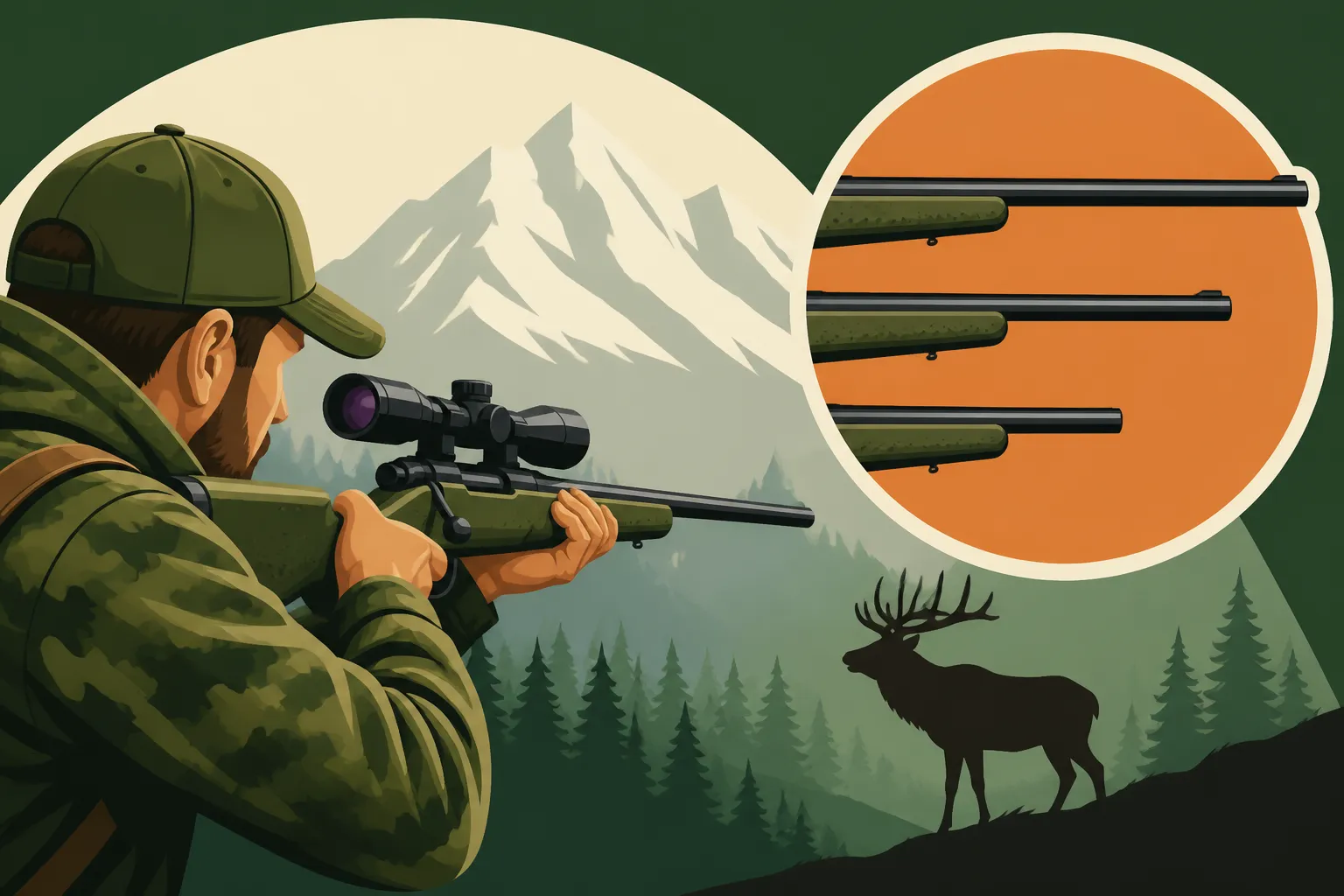
| 16-18 inches | Compact Rifles, Brush Guns | Maximum maneuverability, lightest, very fast handling. | Most velocity loss, highest muzzle blast, snappier recoil. |
| 19-20 inches | Standard Short Barrels | Excellent balance of maneuverability and ballistics, still very handy. | Some velocity loss, increased muzzle blast/recoil compared to longer. |
| 21-22 inches | Versatile All-Rounders | Good ballistic performance, decent maneuverability, less aggressive recoil. | Can still snag a bit in very thick stuff, slightly slower handling than shorter. |
| 23-24 inches | Standard Hunting Rifles | Optimal velocity for most cartridges, less muzzle blast/recoil. | More cumbersome in thick cover, slower to swing, heavier. |
For most dedicated timber hunters in Washington, a barrel in the 18- to 20-inch range strikes an excellent balance. It offers a significant improvement in handling without a drastic reduction in practical ballistic performance for typical timber shots. If you prioritize minimal overall length and weight above all else, an 18-inch barrel is fantastic. If you want a bit more velocity or find recoil a concern, stepping up to 20-22 inches might be a better fit. Remember, you can always research what other successful hunters are using in specific Washington Game Management Units Explained on forums or through resources like GoHunt.
Integrating Suppressors and Muzzle Brakes
The conversation around barrel length changes quite a bit when you introduce accessories like suppressors and muzzle brakes. These devices add several inches to the overall length of your rifle. A suppressor, for example, can add 6-9 inches. If you start with a 24-inch barrel, you're suddenly looking at a rifle that's over 30 inches long before you even add a stock, making it incredibly unwieldy in dense timber.
This is where a shorter base barrel really shines. If you plan to use a suppressor, pairing it with an 18-inch or 20-inch barrel creates a much more manageable overall package. An 18-inch barrel with a 6-inch suppressor still comes in at a total barrel length of 24 inches, which is much more comfortable than a 24-inch barrel plus a suppressor. The same principle applies, though to a lesser extent, with muzzle brakes. By choosing a shorter barrel, you get the benefits of recoil reduction and noise mitigation without turning your handy timber rifle into a cumbersome pole vault. Just ensure you're familiar with Washington's Legal Equipment Rules by Weapon regarding these devices.
Rifle Balance and Personal Preference
Ultimately, the ideal barrel length often comes down to personal preference and how the rifle feels in your hands. A rifle's balance point, the way it shoulders, and how naturally it points are subjective but incredibly important factors. A rifle might have the "perfect" barrel length on paper, but if it feels awkward or uncomfortable to you, it won't be your best performer in the field.
When choosing a rifle, try to handle different barrel lengths. Shoulder them, swing them as if you were tracking an animal, and see how they feel. Pay attention to the balance – does it feel too muzzle-heavy, or does it feel well-distributed? This is particularly important for tasks like Rifle Setup for Washington Elk and Deer or practicing for Shot Placement on a Quartering Elk. What works for a hunter covering vast open country in eastern Washington might not be suitable for someone still-hunting the dark timber of the westside. Don't be afraid to go against the grain if a shorter barrel feels right for you and your hunting style. Hunting is personal, and your gear should reflect that.
Maintaining Your Timber Rifle in Challenging Conditions
Washington's hunting conditions can be tough on gear. From persistent rain and fog in the west to dust and freezing temperatures in the east, your rifle needs to be maintained to perform reliably. A shorter barrel doesn't change the fundamental needs of rifle care, but it does highlight the importance of readiness.
Keeping it Clean and Dry
Hunting in the Pacific Northwest, especially in the thick timber, almost guarantees your rifle will get wet, muddy, or both. Whether it's the constant drizzle of the Cascades or brushing against dew-soaked vegetation, moisture is a constant threat. While a shorter barrel won't make your rifle waterproof, it can be slightly easier to keep dry due to its more compact nature, especially if you're using a quality rifle cover or carrying it inside your pack for short stretches.
After every hunt, or even during a multi-day trip, it's crucial to thoroughly wipe down your rifle. Pay special attention to the bore, action, and any metal surfaces. Moisture can quickly lead to rust, especially if you're out in the field for several days without proper drying time. A light coat of rust-preventative oil is your best friend. For those deep dives into timber, consider investing in a good quality gun sock or a waterproof case for transport to and from the field. This diligent care will ensure your rifle is ready for the next adventure, no matter how wet or muddy your last outing was.
Protecting Optics and Sights
Your rifle's optics are its eyes, and in timber, they can take a beating. Low-hanging branches, thick brush, and even accidental bumps against rocks can scratch lenses or throw off your zero. While a shorter barrel doesn't directly protect your scope, the increased maneuverability of a compact rifle means you're less likely to snag it on obstacles, reducing the chances of impact.
Always use lens caps or covers to protect your scope's objective and ocular lenses when not actively shooting. A good quality Riflescope Magnification for Timber doesn't come cheap, and protecting it is paramount. Check your scope rings and mounting screws periodically to ensure they haven't loosened from the vibrations of carrying or shooting. A quick check before you head out each day can prevent a missed shot due to a bumped zero. Many timber hunters also prefer lower-magnification scopes with robust, simple reticles for faster target acquisition in close quarters, as extreme magnification isn't often needed when you're deep in the woods.
The Overall Package: Beyond Just Barrel Length
While barrel length is a key consideration for timber hunting, it's important to remember it's just one piece of a larger puzzle. A truly effective timber rifle is a combination of several features that work together to enhance your success and comfort in challenging conditions.
Rifle Weight and Balance
A lighter rifle, regardless of barrel length, is always easier to carry and maneuver. Paired with a shorter barrel, a lightweight action and stock can create an incredibly nimble package. When you're blood trailing an animal through Blood Trailing in Salal and Devil's Club or climbing steep grades, every ounce you can shed makes a difference. Seek out rifles that use synthetic stocks, lightweight alloys, or fluted barrels to reduce overall weight.
However, balance is just as important as overall weight. A rifle that is too light in the barrel can feel "whippy" and harder to hold steady for precise shots, especially if you're shooting offhand. A slight forward weight bias can actually help stabilize the rifle. It's about finding that sweet spot where the rifle feels robust enough to handle the rigors of the field, yet light and balanced enough to carry comfortably and swing quickly.
Caliber and Ammunition Choice
The effectiveness of your rifle isn't just about its physical dimensions; it's also about the power it delivers downrange. As mentioned earlier, while short barrels reduce velocity, modern ammunition can largely compensate for this. For timber hunting in Washington, especially for elk, choosing an appropriate caliber with robust bullets is crucial. Your Washington's Minimum Rifle Caliber Rule dictates you must use at least a .24 caliber.
Calibers like the .308 Winchester, 6.5 Creedmoor, 7mm-08 Remington, or even a .30-06 Springfield (which performs well even with a few inches trimmed off its barrel) are excellent choices. Pair these with tough, controlled-expansion bullets designed for larger game and you'll have more than enough punch for timber encounters. Prioritize bullets that are known for reliable expansion at moderate velocities and good weight retention, as they will perform best when impacting heavy bone or muscle at closer ranges.
Ergonomics and Fit
Finally, don't overlook the importance of how the rifle fits you. The length of pull, the grip angle, and the comb height all influence how comfortably and quickly you can shoulder the rifle and acquire a sight picture. A rifle that fits you well will feel like an extension of your body, allowing for more intuitive handling and faster target acquisition. This is critical in the quick-reaction scenarios often found in timber hunting.
Consider adjustable stocks or having a gunsmith customize the length of pull if needed. Wearing your typical hunting layers, like those for Layering for Wet Cold Weather, can also impact fit, so try to simulate real-world conditions when assessing a rifle. Ultimately, a rifle that feels good and handles naturally in your hands, combined with a sensible barrel length for timber, will be your most effective tool for success in Washington's challenging hunting environments.
Disclaimer
This article is for general informational purposes only and does not constitute professional advice. Laws, prices and regulations vary by location and change over time. Consult a qualified professional for guidance on your specific situation.