Cartridges for Long Eastside Shots in Washington
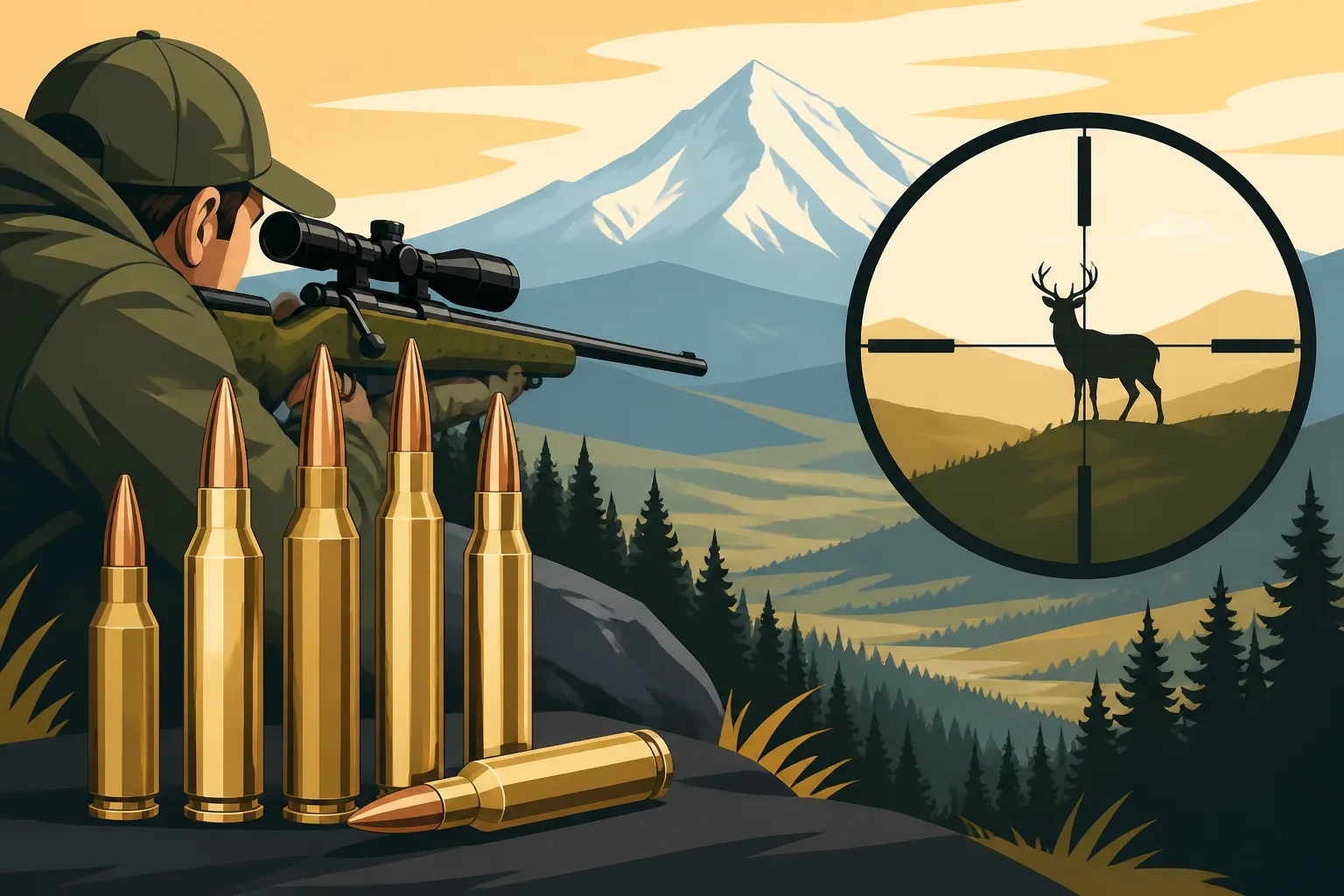
Anyone who has spent time hunting Eastern Washington knows the feeling: vast, open country stretches out before you, often with little cover. You're glassing hard, searching the sagebrush flats, the wheat fields, or the distant timbered coulees, and finally, there he is – that big mule deer buck or a herd of elk – but they're way out there. We're talking 300, 400, sometimes even 500 yards or more. The frustration of being caught unprepared for that kind of shot, or worse, taking a shot you're not truly equipped for, is a common and disheartening experience. This guide is all about equipping you with the knowledge to choose the right cartridges for those demanding, long-range opportunities, ensuring you're ready when that moment of truth arrives on the Eastside.
The Reality of Long Shots in Eastern Washington's Backcountry
Hunting east of the Cascades isn't like still-hunting blacktails in the dense, wet timber of Western Washington. It’s a completely different game, demanding a different approach to your cartridge choice and overall rifle system. The landscape itself dictates many of the challenges you'll face, and ignoring these realities can lead to missed opportunities or, more importantly, unethical shots.
Vast Landscapes and Game Behavior
Eastern Washington is characterized by wide-open spaces. Think the scablands of the Columbia Basin, the rolling hills of the Palouse, or the steep, broken canyons of the Blue Mountains. When you're Glassing Eastern Washington Breaks for Mule Deer, you're often looking across enormous distances, picking apart brush, rock, and sparse timber. This means deer and elk have a much larger escape buffer, and they aren't shy about using it. A wary mule deer buck in open country isn't likely to let you close the gap to a hundred yards. You'll often find them feeding on Finding Mule Deer in Wheat Stubble Edges at significant distances, making a carefully planned long shot a necessity rather than a luxury. This expansive environment naturally pushes shot distances out, making your cartridge's ballistic performance critical.
You might spend hours on a ridge, meticulously picking apart a hillside with your 10×42 Versus 15×56 for Washington Open Country binoculars. When that bull or buck finally appears from deep cover, it’s often in a position where you simply cannot get closer without blowing the opportunity. The terrain might be too steep, too open, or too noisy. Being able to confidently and ethically make a shot at 350-450 yards can be the difference between tagging out and going home empty-handed. It's not about stretching your limits; it's about being proficient within the realistic demands of the environment.
Wind, Distance, and Elevation Challenges
Long-range shooting isn't just about bullet drop; it's about understanding and accounting for environmental factors that have a magnified effect over distance. Wind, for instance, is a constant companion in many parts of Eastern Washington. A seemingly gentle breeze at 100 yards can push a bullet several feet off target at 400 yards. Doping the wind accurately is an art form in itself, but starting with a cartridge that inherently resists wind drift gives you a significant advantage. This requires a deeper dive into ballistic coefficients, which we'll get to shortly.
Furthermore, hunting in areas like the Okanogan or the Blue Mountains means you're almost guaranteed to be shooting uphill or downhill, sometimes at steep angles. Gravity affects bullets differently on these angles, and without proper compensation, your shot can be high or low. Rangefinders for Steep Washington Terrain are invaluable tools for providing angle-compensated distances, but your cartridge's predictable trajectory is still paramount. The combination of wind, distance, and varying elevation demands a cartridge that delivers consistent, predictable performance far beyond what a typical timber rifle might offer.
What Makes a Cartridge "Long-Range Capable"?
When we talk about cartridges for long Eastside shots, we're not just looking for something that "shoots far." We're looking for a specific set of characteristics that allow a bullet to maintain accuracy, energy, and resist external forces over extended distances. It's a delicate balance of physics and practical application in the field.
Ballistic Coefficient and Sectional Density
These are the unsung heroes of long-range performance. Ballistic Coefficient (BC) is essentially a measure of how aerodynamically efficient a bullet is. A higher BC means the bullet cuts through the air more efficiently, retaining velocity and resisting wind drift better than a lower BC bullet. Imagine throwing a football versus a ping-pong ball; the football (higher BC) maintains its path much better. For those long, windy shots across a canyon, a high BC bullet from a cartridge like a 6.5 PRC or a .300 PRC can make a significant difference in point of impact.
Sectional Density (SD) relates to how well a bullet penetrates. It's calculated by comparing the bullet's weight to its diameter. A long, heavy-for-caliber bullet will have a high SD, meaning it penetrates deeper once it hits the target. For taking down a robust Mule Deer of Eastern Washington or an elk at extended ranges, you need a bullet that not only gets there but also retains enough energy and has sufficient SD to reliably reach the vitals and create an effective wound channel. You can often find detailed ballistic data, including BC and SD for various factory loads, by doing some research on platforms like GoHunt, which helps you plan your hunt with precision.
Muzzle Velocity and Energy
While high BC and SD are critical, a bullet still needs to get out of the barrel quickly. Muzzle Velocity is the speed at which the bullet leaves your rifle. Higher muzzle velocity generally translates to a flatter trajectory over shorter to moderate distances, making range estimation errors less forgiving. However, velocity alone isn't everything. A very fast, light bullet with a poor BC will shed velocity rapidly and be highly susceptible to wind. The goal is to find a cartridge that offers a good blend of high muzzle velocity and a high BC, ensuring that the bullet retains speed downrange.
Energy is directly related to velocity and bullet weight, and it's what ensures an ethical kill. At 400 yards, a bullet will have significantly less kinetic energy than it did at the muzzle. For larger game like elk, you want to ensure your chosen cartridge delivers sufficient energy to reliably drop the animal. This is why many hunters gravitate towards magnum cartridges for long-range elk hunting, as they tend to carry more energy further downrange. It's a calculation of whether the bullet will perform its job effectively when it reaches its target, not just if it can reach it.
Recoil Management
Let's be real: a cartridge is only as good as your ability to shoot it accurately. If a cartridge has so much recoil that you flinch, anticipate the shot, or simply can't stay on target, all the ballistic advantages in the world mean nothing. Many magnum cartridges, while excellent ballistically, come with significant recoil. A .300 Win Mag can deliver a stout punch, and if you're not accustomed to it, your accuracy will suffer. This is especially true when you're Practicing Offhand and Kneeling Shots or need to quickly get back on target for a follow-up.
Modern cartridges like the 6.5 Creedmoor or 6.5 PRC offer a fantastic balance of manageable recoil with excellent long-range ballistics, making them easier to shoot accurately for many hunters. Even some of the traditional magnums can be made more comfortable with good recoil pads, muzzle brakes, or heavier rifles. The key is finding a cartridge you can comfortably shoot hundreds of rounds through during practice sessions, so you can perform confidently when it matters most. Never underestimate the psychological and physical impact of recoil on your shooting performance.
Top Cartridge Contenders for Eastern Washington
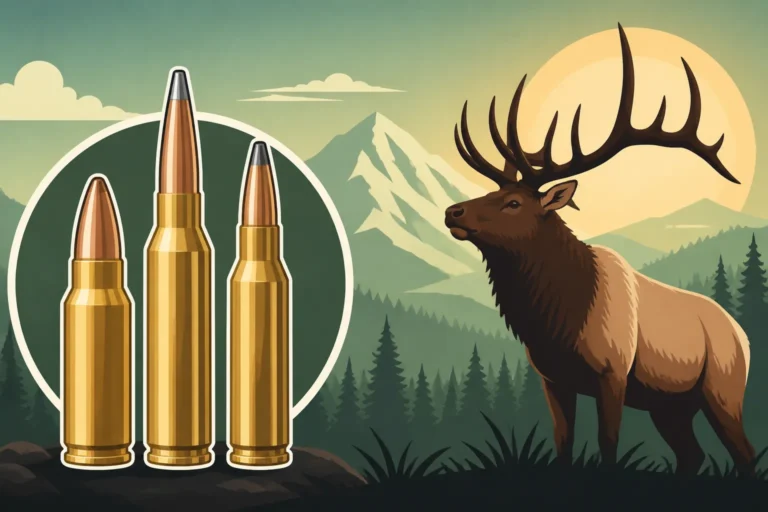
When we combine the demands of Eastern Washington with the characteristics of a long-range capable cartridge, a few specific calibers rise to the top. These aren't the only options, but they represent some of the most popular and effective choices available to hunters today.
Common and Reliable Choices
These cartridges have been proving their worth for decades and continue to be excellent choices for Eastern Washington's open country. They offer a good balance of power, range, and widely available ammunition.
-
7mm Remington Magnum: The 7mm Rem Mag is a true classic. It launches sleek, high-BC 7mm bullets at impressive velocities, offering a flat trajectory and excellent energy retention. It's a fantastic choice for both mule deer and elk, providing enough punch for the latter while being accurate enough for the former. Many hunters find its recoil manageable, especially in a rifle with a decent weight. It's widely available, and you'll find a huge array of factory ammunition and reloading components for it. This cartridge has a long history of success on large western game, making it a reliable choice for those facing Hunting Washington's Three-Point Minimum Units at distance.
-
.300 Winchester Magnum: For many, the .300 Win Mag is the quintessential Western hunting cartridge, and for good reason. It pushes heavy .30 caliber bullets at high velocities, delivering massive energy on target. It excels in wind and retains energy well, making it a superb choice for elk at extended ranges. Its primary drawback is its often-stout recoil, which can be a factor for some shooters. However, with proper technique and rifle setup, it's an incredibly effective cartridge. If you're serious about elk hunting in the expansive terrain of the Colockum or Blue Mountains, this one is hard to beat for raw power and reach. Just make sure your Rifle Setup for Washington Elk and Deer can handle the recoil comfortably for you.
Modern Long-Range Powerhouses
In recent years, several newer cartridges have emerged, specifically designed with long-range accuracy and efficiency in mind. They often achieve excellent ballistics with less recoil than their traditional magnum counterparts.
-
6.5 Creedmoor: While initially gaining popularity in the competition shooting world, the 6.5 Creedmoor has quickly become a favorite among hunters. It's not a magnum, but it launches high-BC 6.5mm bullets at moderate velocities, resulting in surprisingly flat trajectories and excellent wind resistance for its class. Its major advantage is incredibly low recoil, making it exceptionally easy to shoot accurately. For mule deer and smaller elk (like spikes or cows) at ranges out to 400-500 yards, it's highly effective with good bullet choice. While some argue it's "too small" for elk, with premium, heavy-for-caliber bullets and precise shot placement, it certainly gets the job done. It's also an absolute joy to shoot during practice sessions.
-
6.5 PRC (Precision Rifle Cartridge): Think of the 6.5 PRC as the 6.5 Creedmoor's bigger, faster brother. It takes the inherently accurate 6.5mm bullet and pushes it to magnum velocities, without the punishing recoil of a .300 Win Mag. This cartridge offers outstanding long-range performance, a flatter trajectory than the Creedmoor, and excellent energy retention. It's arguably one of the best all-around choices for mule deer and elk in Eastern Washington, especially if you're looking for magnum-level performance with reduced recoil. It’s becoming increasingly popular for good reason, combining high BC bullets with enough speed to handle demanding shots.
-
300 PRC (Precision Rifle Cartridge): If you want .30 caliber magnum performance engineered specifically for modern, high-BC bullets, the .300 PRC is your answer. It's designed around long, heavy bullets, maximizing their ballistic potential. It offers superior long-range performance to the .300 Win Mag in terms of ballistic efficiency and often delivers slightly higher velocities with those heavy projectiles. This is a serious long-range elk cartridge, designed for maximum effectiveness at extended distances. The recoil will be significant, similar to or slightly more than a .300 Win Mag, but its ballistic advantages are undeniable for the dedicated long-range hunter. When researching what loads are best for Bullet Weight and Construction for Elk at extended ranges, looking into the .300 PRC factory options can provide some solid data points.
Here's a quick comparison of some of these contenders:
| Cartridge | Bullet Diameter | Typical Muzzle Velocity (with ~180gr .308, 143gr 6.5, 175gr 7mm) | Recoil Perception (Relative) | Ideal Use Case in Eastern WA |
|---|---|---|---|---|
| 6.5 Creedmoor | 6.5mm (.264") | 2700-2800 fps | Low | Mule deer, smaller elk (to ~450 yds), excellent practice round |
| 6.5 PRC | 6.5mm (.264") | 2950-3050 fps | Moderate-Low | All-around mule deer/elk (to ~600 yds), balanced performance |
| 7mm Rem Mag | 7mm (.284") | 2900-3000 fps | Moderate | Mule deer/elk (to ~600 yds), time-tested |
| .300 Win Mag | .308" | 2950-3100 fps | High | Elk (to ~600+ yds), powerful and popular |
| .300 PRC | .308" | 3000-3150 fps | High | Dedicated long-range elk (to ~700+ yds), modern design |
Note: Muzzle velocities are approximate and depend heavily on barrel length, specific load, and bullet weight. Recoil perception is subjective.
Beyond the Cartridge: The Importance of Rifle and Shooter
Choosing the right cartridge is a crucial first step, but it's only one part of the long-range hunting equation. The finest ballistic marvel means nothing without a complete, capable system and a skilled shooter behind it. You can pick the best rifle for Eastern Washington, but if you don't know its capabilities, you're still at a disadvantage.
The Entire Rifle System Matters
Your cartridge might be outstanding, but it's only as good as the rifle firing it and the optics on top. For long-range shots, you need a rifle that is inherently accurate. This often means a quality barrel, a consistent trigger, and a stable stock. A precision bolt-action rifle, well-tuned and sighted in, is typically preferred. The importance of a high-quality scope cannot be overstated. You'll need clear glass, reliable tracking turrets for dialing in elevation (or a reticle you know intimately for holdover), and potentially some form of windage adjustment. Features like parallax adjustment and good low-light performance are also critical when hunting in diverse Washington conditions. Understanding how to use your Riflescope Magnification for Timber and open country equally well is key.
Consider also the weight of your rifle. A lighter rifle is easier to pack through the steep hills and broken ground, but a heavier rifle often soaks up recoil better and is more stable for making those precise shots. It’s a trade-off that each hunter must consider based on their hunting style and physical capability. Don't forget a stable shooting platform, whether it's a bipod, tripod, or shooting sticks; trying to make a 400-yard shot freehand is a recipe for disappointment. Many hunters use their Tripods and Binocular Adapters for glassing, then quickly transition to using the tripod as a shooting rest.
Practice, Practice, Practice
This is where the rubber meets the road. No cartridge, no matter how amazing, can compensate for a lack of practice. You need to know your rifle and cartridge combination intimately. This means regular trips to the range, shooting from various field positions, and stretching your effective range. Don't just shoot at 100 yards; push it out to 200, 300, 400, and even 500 yards. This is where you learn your bullet's drop, how it reacts to wind, and what your personal ethical range is.
Understanding external ballistics programs, or even just a simple drop chart, is vital. You can use tools on GoHunt to plot bullet trajectories for specific loads and atmospheric conditions. Practice dialing your turrets or using your reticle's holdovers. Practice in different weather conditions if possible, and definitely practice with the ammunition you intend to hunt with. Remember, Sighting In Before the Opener is a minimum requirement, not the extent of your practice. Confidence comes from competence, and competence only comes from dedicated time behind the trigger.
Ethical Hunting
Ultimately, choosing the right cartridge for long Eastside shots comes down to ethics. Just because a cartridge can shoot 600 yards doesn't mean you should. Your personal ethical range is the maximum distance at which you can consistently place a shot into a vital zone, regardless of what your rifle or cartridge is theoretically capable of. This range will fluctuate based on wind, target size, your shooting position, and even your mental state.
A clean, humane kill is always the goal. If you have any doubt about making an ethical shot, don't take it. Pass on the shot and live to hunt another day. Even with the best cartridges and a finely tuned rifle, shot placement is paramount. Knowing your limits, and respecting the animal, is the mark of a true sportsman.
Disclaimer
This article is for general informational purposes only and does not constitute professional advice. Laws, prices and regulations vary by location and change over time. Consult a qualified professional for guidance on your specific situation.