Replaceable Blade Knives for Field Work
There's nothing quite like the immense satisfaction of a successful hunt in Washington's diverse landscapes, from the dense timber of the Olympic Peninsula to the sagebrush flats of the Columbia Basin. But let's be honest, that hard-earned success often brings with it the less glamorous, yet critically important, task of field dressing. Many of us have been there, hunched over a magnificent animal, struggling with a dull blade, trying to make precise cuts while our hands are cold, wet, and maybe a little shaky. This guide is all about tackling that particular frustration head-on, exploring how replaceable blade knives can be a total game-changer for Washington hunters looking for efficiency and reliability when it matters most.
The Struggle with Traditional Knives in the Field
For generations, a sturdy fixed-blade knife has been the cornerstone of a hunter's gear kit, and for good reason. They're robust, reliable, and with proper care, can last a lifetime. However, the demands of field dressing, especially larger animals like Washington elk or tough mule deer, can quickly push even the best traditional knife past its prime sharpness, leaving you in a less-than-ideal situation.
The Frustration of Sharpening in the Field
Imagine this scenario: you've just dropped a beautiful Blacktail buck deep in some western Washington clearcut. It's getting dark, the rain is starting to fall, and you're miles from the truck. You start the field dressing process, and after just a few minutes, you realize your once-razor-sharp blade is now struggling to make clean cuts through hide and muscle. You dig out your small sharpening stone, but your hands are already cold and clammy, making it difficult to maintain a consistent angle. The process is slow, frustrating, and honestly, a little dangerous when you're rushing and working with a less-than-perfect edge.
This isn't just an inconvenience; it can add significant time and effort to an already demanding job. Every minute spent wrestling with a dull blade is a minute longer you're exposed to the elements, or a minute less light you have to work with. Plus, achieving a truly hair-popping edge in adverse conditions with a small field sharpener is a skill that takes practice, and it's not always something you want to be learning or perfecting when you have a big animal on the ground. The thought of getting that meat cooled quickly becomes a race against time and your increasingly dull edge.
Contamination Concerns with Traditional Knives
Beyond the sheer frustration, a dull knife can also increase the risk of meat contamination. When a blade isn't sharp enough to slice cleanly, it tears and pulls tissue, which can introduce bacteria from the hide or gut contents into the meat more easily. This is particularly crucial when you're Field Dressing in Warm Early-Season Weather in parts of Washington where temperatures might not drop as quickly as you'd like. The goal is always clean cuts, minimizing contact with anything that could compromise the quality of your hard-won protein.
Furthermore, a dull knife requires more force to cut, increasing the likelihood of slipping and accidentally puncturing organs, or worse, cutting yourself. In the backcountry, far from immediate medical help, a deep knife cut is a serious emergency you absolutely want to avoid. The focus should be on efficient, safe, and hygienic work, and a traditional knife that's lost its edge can make all three of those goals much harder to achieve, especially when you're working against the clock.
The Advantage of Replaceable Blade Systems
This is where replaceable blade knives have truly stepped in as a modern marvel for hunters. They've revolutionized the way many of us approach field dressing, offering a level of consistent sharpness and convenience that traditional knives often can't match in the field.
How They Work and Why They're Different
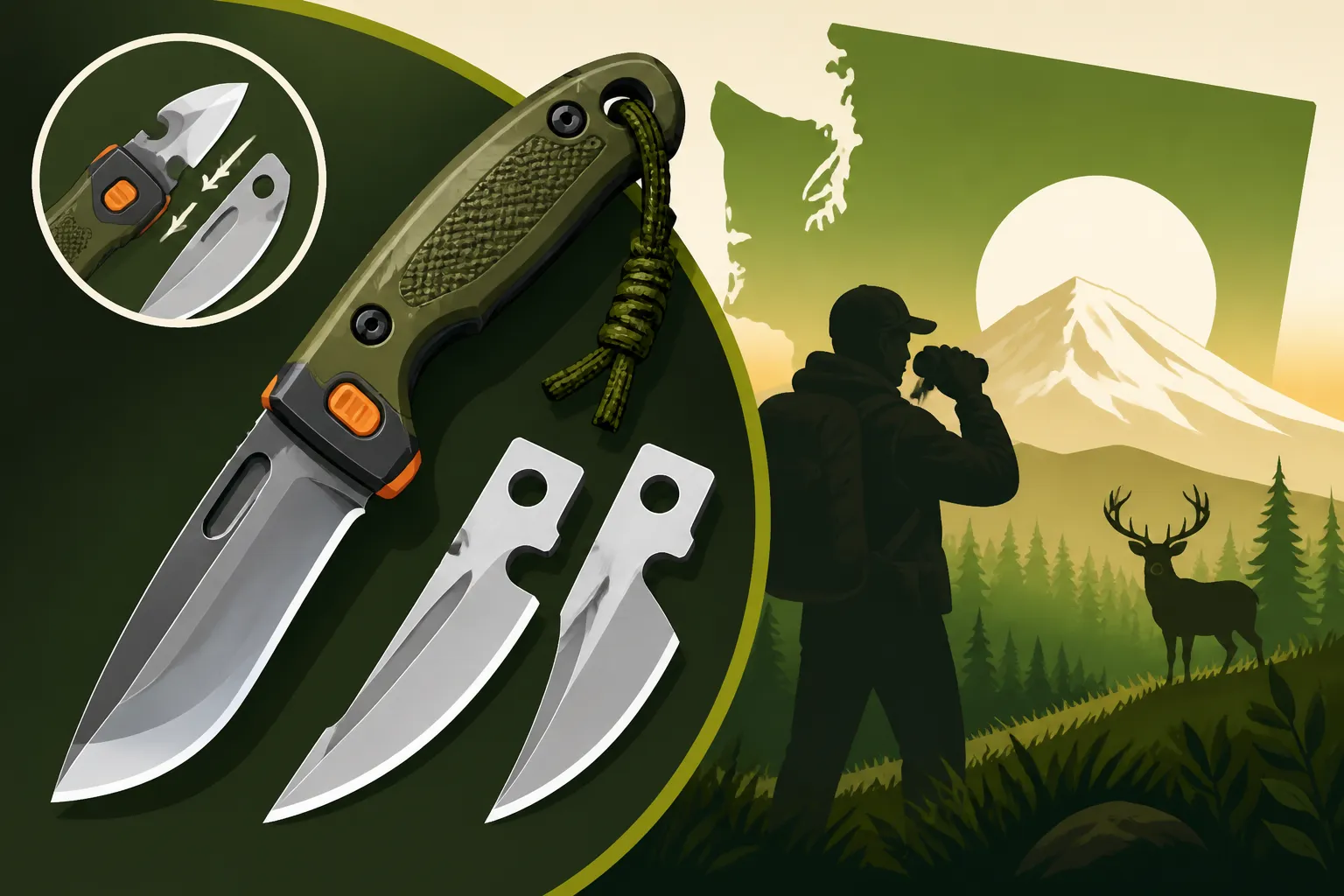
The concept is beautifully simple: instead of sharpening a single blade, you carry multiple, incredibly sharp, disposable blades that can be swapped out in seconds. Most systems feature a robust handle with a mechanism (often a button, lever, or simple push-and-pull system) to securely hold and release the razor-sharp blades. When a blade dulls, you pop it out, discard it safely, and snap in a fresh one. It's like having a brand-new, factory-sharp knife every time you need it.
The primary benefit here is instantaneous sharpness. There’s no fiddling with stones, no guessing angles, no wasted time. Think about being halfway through Quartering and Packing an Elk Solo in a rugged unit like the Colockum or Blue Mountains; the hide is thick, the bone joints tough, and you need precision. With a replaceable blade system, you simply swap blades and continue working with surgical precision. This dramatically speeds up the process, reduces effort, and allows for cleaner, more precise cuts, which in turn helps ensure the quality of your meat. It’s a huge advantage, particularly when you’re working in low light, cold conditions, or under pressure to get the animal processed and cooled.
Common Types and Blade Materials
While the basic premise is the same, there's a good variety in the types of replaceable blade knives and the materials used for their blades. Most replaceable blades are made from surgical-grade stainless steel. This material is incredibly sharp right out of the package but also very thin and brittle compared to a traditional knife blade. They are designed for precision cutting through hide, muscle, and connective tissue, but not for prying, chopping, or heavy bone work.
You'll find several common blade styles:
- Standard Drop Point: This is perhaps the most versatile, suitable for general field dressing, skinning, and caping. It mirrors the utility of a classic hunting knife blade.
- Gut Hook: Some systems offer a dedicated gut hook blade, which can be invaluable for opening the hide cleanly without puncturing the abdominal cavity, especially on larger game.
- Serrated Blades: Less common for the main field dressing, but sometimes available for specific tasks where a sawing action might be beneficial.
- Caping Blades: Smaller, finer blades designed for intricate work around the face and ears when you're preparing a trophy.
The handles themselves come in various materials, from lightweight polymers to more robust aluminum or G-10 composites. The key is finding a handle that feels secure and comfortable in your hand, even when wet or gloved, a crucial consideration for Archery Practice for Wet Coastal Conditions which sometimes transitions to similarly damp field dressing scenarios.
Practical Considerations for Washington Hunters
While replaceable blade knives offer undeniable advantages, there are some practical considerations, especially when hunting in Washington's diverse and often challenging environments. Understanding these nuances will help you make the most of your chosen system.
Durability and Safety in Washington's Tough Terrain
The razor-sharp, thin blades of these knives are phenomenal for cutting, but they are not designed for brute force. Trying to pry open a rib cage or quarter an animal by forcing the blade through bone will almost certainly result in a snapped blade. Washington hunters often face rugged conditions, whether it's navigating blowdown after a windstorm in the Gifford Pinchot or dealing with frozen ground in the late season. It's essential to understand the limitations of these blades and use them appropriately. Many experienced hunters will still carry a small, sturdy fixed-blade knife for heavier tasks like splitting the sternum or if they need a blade for emergency prying.
Safety during blade replacement is paramount. Cold, numb fingers or slippery conditions can make handling tiny, razor-sharp blades hazardous. Always follow the manufacturer's instructions for changing blades, and consider practicing at home in a calm environment before attempting it in the field. Proper disposal of used blades is also critical; they remain extremely sharp even after use. A small, sturdy plastic container or a dedicated blade disposal case should be part of your kit to safely secure spent blades until you can properly dispose of them back home. Resources like GoHunt can provide forums and articles where hunters share tips and tricks for safe handling and disposal specific to various hunting scenarios.
Legality and Ethics of Use
In Washington, the use of replaceable blade knives for hunting is generally legal, falling under the broad category of a "knife" for field dressing. However, it's always wise to stay informed about hunting regulations, as rules can change. You can usually find the most up-to-date information in the annual Washington Big Game Hunting Seasons and Regulations pamphlet, which is readily available online through WDFW or at license vendors.
Ethically, the conversation often revolves around responsible use and minimizing waste. While the blades are disposable, proper handling and disposal ensures they don't become litter in our precious wilderness areas. Leaving spent blades in the field is not only irresponsible but also potentially dangerous for wildlife and other outdoor enthusiasts. Always pack out everything you pack in, and that includes used blades. Hunters are stewards of the land, and upholding ethical practices, from shot placement to field dressing, reflects positively on our community.
Complementary Tools and Best Practices
While a replaceable blade knife is fantastic, it's usually part of a larger field dressing toolkit. Here’s what often goes hand-in-hand with it for Washington hunting:
- A Small Fixed Blade or Saw: For heavier tasks like bone-in quartering, splitting the sternum, or cutting through tough joints where you might risk snapping a thin replaceable blade. A lightweight game saw can make short work of a pelvis or sternum.
- Game Bags: Essential for protecting your meat from dirt, flies, and debris, especially in areas like The Yakima Elk Herd where it can be dry and dusty. Game Bag Fabric and Fly Protection is a key consideration.
- Gloves: Latex or nitrile gloves are invaluable for hygiene, keeping your hands clean and reducing the risk of contamination. Plus, they add a layer of warmth and grip in cold, wet conditions.
- Headlamp: Absolutely critical for those inevitable tasks that extend into low light or darkness. A good headlamp frees up both hands. You might even find user reviews and recommendations for reliable headlamps for various Washington conditions on platforms like GoHunt.
- Wipes or Paper Towels: For cleaning hands and blades between tasks, helping maintain a sterile environment.
Using these tools in conjunction with your replaceable blade knife ensures you're prepared for any field dressing challenge Washington throws your way.
Choosing the Right Replaceable Blade System
With several reputable brands offering replaceable blade knives, selecting the right one can feel a bit overwhelming. The key is to consider what features matter most for your specific hunting style and the conditions you typically encounter in Washington.
Handle Design and Grip
This is arguably one of the most critical aspects. A knife, no matter how sharp, is only as good as its handle. In Washington, you'll often be working with wet hands, or wearing gloves, sometimes both. A handle that provides a secure, non-slip grip is paramount for safety and efficiency. Look for handles with:
- Aggressive Texturing: Raised patterns or rubberized inserts drastically improve grip, especially when wet or bloody.
- Ergonomic Shape: A handle that fits comfortably in your hand, reducing fatigue during prolonged work. Some hunters prefer finger grooves, while others like a more neutral, barrel-shaped handle.
- Material: Polymer handles are often lighter and less cold to the touch than aluminum in freezing conditions, but aluminum can offer greater rigidity. Consider the trade-offs based on your priorities.
Imagine trying to skin a Roosevelt elk on a steep, rainy slope in the Olympic National Forest – a poor grip could lead to dangerous slips. Test different handles if possible, even if it's just by holding them with your hunting gloves on.
Blade Replacement Mechanism
The ease and safety of changing blades in the field directly impact the efficiency of these knives. You want a mechanism that is:
- Intuitive and Quick: You shouldn't have to fumble for minutes trying to swap a blade. A simple button press or a quick lever action is ideal.
- Secure: Once the blade is locked in, it needs to stay locked. There should be no wobble or play.
- Safe: The mechanism should minimize direct contact with the sharp edge during removal and insertion. Some designs allow you to use another blade or a tool to push the old blade out, further enhancing safety.
Some systems require a separate tool for blade changes, while others are tool-less. For most Washington backcountry hunts, a tool-less design is more convenient, as it means one less item to lose or fumble with.
Cost-Benefit Analysis
The initial cost of a replaceable blade knife system can vary, but generally, they are comparable to mid-range traditional fixed-blade knives. Where the cost discussion really comes in is with the ongoing expense of replacement blades. A pack of blades might seem inexpensive, but if you're processing multiple animals or find yourself going through several blades on a single large animal, those costs can add up.
However, consider the benefits:
- Time Saved: No more time spent sharpening in the field means more time dedicated to processing your animal efficiently and getting that meat cooled.
- Increased Safety: Consistent sharpness reduces the risk of slips and cuts.
- Improved Meat Quality: Cleaner cuts mean less tissue damage and potentially less contamination risk.
- Reduced Frustration: There's immense value in a smooth, effortless field dressing experience, especially after a challenging hunt.
When you weigh these advantages against the cost of blades, many hunters find the investment more than pays for itself. The value of a hassle-free, safe, and efficient field dressing process is often priceless, especially when you're working far from home or trying to beat encroaching darkness.
Best Practices and Maintenance for Field Utility
Even with the convenience of replaceable blades, a little forethought and proper care will ensure your system performs flawlessly when you need it most. This isn't just about the knife itself, but how you integrate it into your overall hunting strategy for Washington's varied conditions.
Preparing for Your Hunt
Before you even step foot into a Washington GMU, make sure your replaceable blade knife is ready. This means checking the handle for any loose parts, ensuring the blade mechanism operates smoothly, and most importantly, having an ample supply of fresh blades. I always recommend carrying more blades than you think you'll need. For a deer, two or three might suffice, but for an elk, especially a bull in a remote area requiring the Gutless Method on an Elk, you might easily go through five or more. Pack them in a durable, waterproof container to protect them from moisture and accidental damage.
Consider where you'll carry your knife and spare blades. A dedicated sheath that keeps the knife secure yet easily accessible is crucial. For the spare blades, a small, hard-sided case that fits in a pack pocket is ideal. Think about the conditions you're heading into. If you're Hunting Blacktails in Fog and Rain on the coast, waterproofing your entire kit, including your knife supplies, becomes even more critical.
Field Use and Blade Changes
When you're actually using the knife in the field, remember its purpose: precise cutting. Avoid tasks that could damage the thin blades. If you hit bone or a tough joint, swap to a more robust fixed blade or a game saw. When changing blades, always take a moment to compose yourself, even if you're rushed. Find a stable surface, or at least brace yourself, to minimize fumbling. Many hunters carry a small piece of cloth or a wipe to clean the handle before changing blades, ensuring a better grip and reducing mess.
Always be mindful of where the old blade goes. As mentioned, a dedicated, hard-sided disposal container is vital. This prevents sharp blades from accidentally piercing your pack, injuring you, or worse, becoming hazardous litter on public land. Pack it out, every single time. It's a small detail, but one that speaks volumes about responsible hunting.
Cleaning and Storage
After the hunt, give your replaceable blade knife a thorough cleaning. While the blades are disposable, the handle and mechanism are not. Wash the handle with soap and water, ensuring all blood, grime, and debris are removed, especially from the blade release mechanism. A small brush can help dislodge stubborn bits. Dry it completely to prevent corrosion on any metal parts. Store your knife and fresh blades in a dry place, ready for your next adventure. Taking these simple steps ensures the longevity of your handle and the reliable performance of the blade exchange system.
| Blade Type | Best For | Pros | Cons |
|---|---|---|---|
| Standard Drop Point | General field dressing, skinning, caping | Versatile, familiar shape | Can dull quickly on large animals |
| Gut Hook | Opening abdominal cavity cleanly | Prevents puncturing intestines | Specific use, less versatile |
| Caping Blade | Intricate cuts for trophy prep | Excellent precision for delicate areas | Very small, fragile, not for heavy use |
| Serrated Blade | Cutting through thick hide, fibrous tissue | Good for sawing action on tough spots | Less precise for clean meat cuts |
This article is for general informational purposes only and does not constitute professional advice. Laws, prices and regulations vary by location and change over time. Consult a qualified professional for guidance on your specific situation.