Layering Systems for Wet Cold
We’ve all been there: a promising Washington hunt day starts with a crisp, clear dawn, only to quickly devolve into a miserable downpour or a biting, bone-chilling wind by midday. You’re either sweating profusely from the uphill climb, or shivering uncontrollably on a long glassing sit, and suddenly your focus isn't on the elk, but on your discomfort. The truth is, Washington’s weather is notoriously fickle, capable of throwing everything from drizzle to driving rain, and from mild temperatures to freezing sleet, often within a single hunting trip. This guide is all about equipping you with the knowledge to build a layering system that actively works with Washington’s wild weather, not against it, ensuring you stay comfortable, dry, and focused on the hunt.
The Core Philosophy of Layering for Washington's Weather
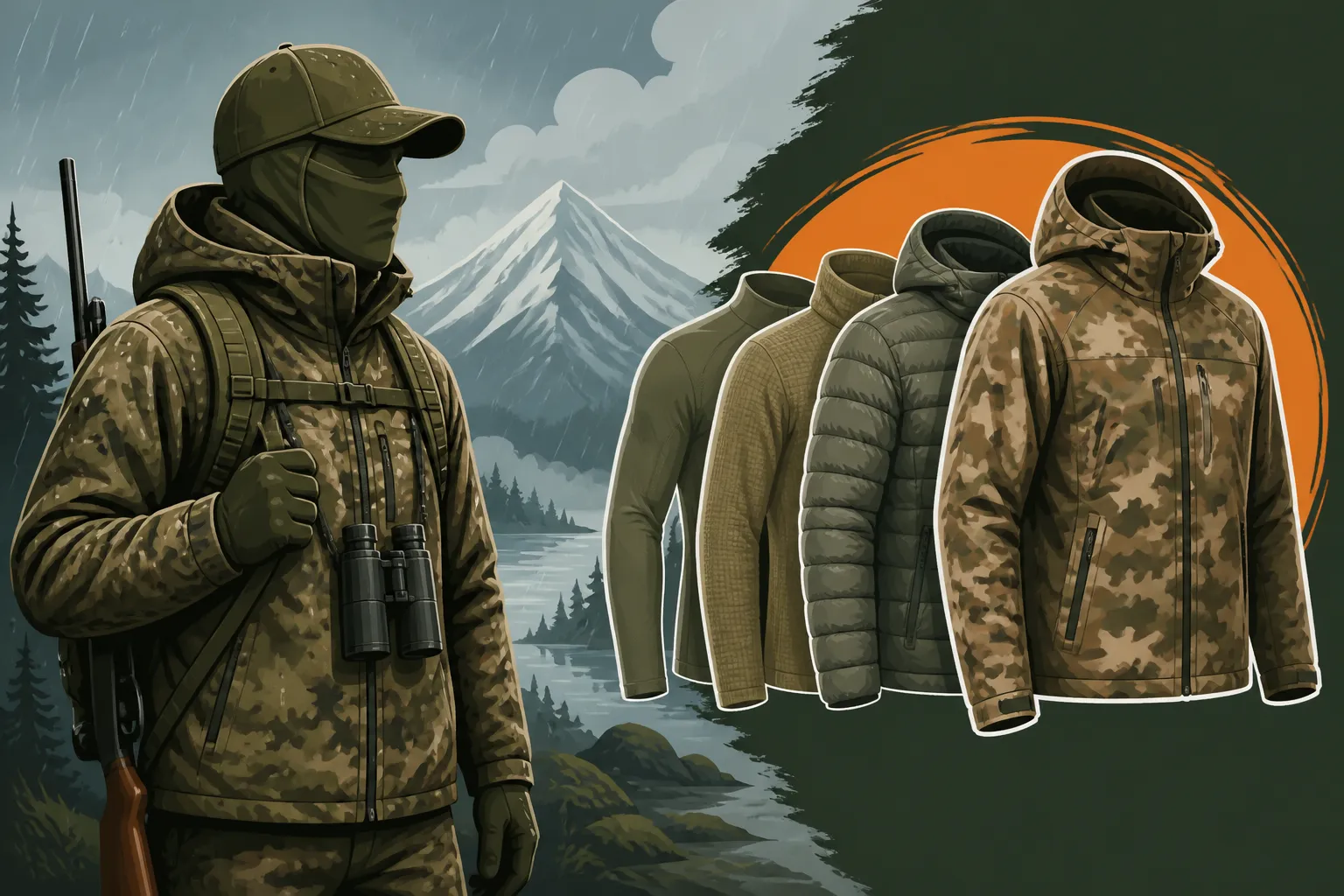
When you're out chasing game in Washington, whether it's Blacktail Deer Hunting in Western Washington Timber or Glassing Eastern Washington Breaks for Mule Deer, your clothing isn't just about looking the part; it's a critical piece of gear that directly impacts your success and safety. The core philosophy of layering here isn't simply about piling on clothes, but strategically combining different garments, each with a specific job, to manage your body temperature and moisture effectively. Think of it as an adaptable armor against the elements.
The "Peel and Add" Principle
The real magic of a good layering system is its adaptability. You need to be able to "peel" off layers when you're exerting yourself, like busting through thick alders on the west side or climbing a steep coulee in the east, and then "add" layers back on the moment you stop to glass, sit on a stand, or field dress an animal. This constant micro-adjustment is key to preventing two major enemies of hunter comfort: overheating and sweating, which inevitably leads to a chill when you stop, and being underdressed and freezing. It’s a dynamic process that you’ll become intimately familiar with, almost instinctively.
Consider a typical early archery season hunt in the Cascades. You might start hiking in the dark, feeling the morning chill. As you climb, your body generates heat, and that first light reveals the steep incline ahead. This is when you'd likely shed your heavier mid-layer and maybe even your outer shell, perhaps hiking in just a base layer and a light jacket. Then, as you crest a ridge and settle in to do some Bugling and Cow Calling in Washington's Archery Elk Season, that exposed position, coupled with your decreased activity, will demand you quickly put those layers back on to prevent a rapid drop in core temperature. Failing to do so can quickly turn a hopeful morning into a shiver-fest.
Prioritizing Moisture Management Over Sheer Bulk
In Washington, it's not always the raw cold that gets you; it's the wet and cold. A heavy, bulky jacket might seem warm at first glance, but if it soaks up rain like a sponge or traps all your sweat against your skin, it quickly becomes a liability. Therefore, prioritizing moisture management – both from external precipitation and internal perspiration – is paramount. Your layers need to be able to wick sweat away from your skin, allow it to evaporate, and then repel external moisture.
This means consciously choosing materials that perform well when wet, or that shed water efficiently. Cotton, for instance, is the ultimate enemy in Washington's hunting woods; once wet, it loses all its insulating properties and takes forever to dry, pulling heat directly from your body. On the flip side, merino wool, synthetic fleeces, and waterproof/breathable outer shells are your best friends. They are designed to manage moisture, helping you stay warm even if you get a little damp, and dry out much faster if you get completely soaked. It’s a shift in mindset from "how thick is this?" to "how well does this manage water?"
Understanding Each Layer's Role in a Washington System
Think of your layering system as a team, with each member having a specialized role. When all layers work together, they create a highly efficient system for regulating your body temperature, whether you're breaking trail through heavy snow in the Wenaha-Tucannon Wilderness in Washington or patiently waiting for a Blacktail Rut Timing in Western Washington buck to appear. Neglect one layer, and the whole system can fall apart.
The Base Layer: Your Second Skin Against Moisture
The base layer is the foundation of your entire system, and arguably the most crucial for comfort and performance in Washington's damp climate. Its primary job is to wick moisture (sweat) away from your skin, keeping you dry. A dry base layer means your body doesn't have to expend extra energy trying to warm up the moisture trapped against your skin, which is a common cause of hypothermia in wet, cold conditions. It's truly your "second skin."
For Washington, I almost exclusively recommend merino wool or high-quality synthetic blends. Merino wool is a superstar because it wicks incredibly well, insulates even when damp, and has natural anti-microbial properties that keep it from smelling like a locker room after a few days in the backcountry. Synthetics are also great, often drying even faster than merino, and are typically more durable against abrasion. Avoid cotton at all costs, especially for your base layer; it absorbs moisture and stays wet, chilling you to the bone the moment you stop moving. I've seen too many hunters suffer needlessly because they wore a cotton t-shirt under their expensive jacket.
The Mid-Layer: Insulation Without Immobility
The mid-layer is your primary insulating layer, designed to trap warm air close to your body. Its job is to provide warmth without being overly bulky or restrictive, allowing for a full range of motion. This is the layer you’ll often add or shed depending on your activity level and the ambient temperature. It's the workhorse that keeps the chill at bay during those long waits.
Common mid-layer materials include fleece (synthetic polyester), down, or synthetic puffy insulation. Fleece is a classic for its breathability and performance in damp conditions; it still insulates reasonably well even if it gets a bit wet. Down is incredibly warm for its weight, but it's crucial to get a water-resistant down or to ensure it's protected by your outer shell, as wet down loses most of its insulating power. Synthetic puffies are an excellent compromise for Washington, offering warmth similar to down but maintaining insulation even when wet, making them incredibly versatile for our unpredictable weather. Carrying a lightweight, packable puffy is almost non-negotiable for most Washington hunts.
The Outer Layer: Your Fortress Against the Elements
The outer layer, or shell, is your first line of defense against external elements – rain, snow, and wind. Its job is to protect all the layers beneath it, keeping them dry and functional, while ideally still allowing internal moisture (sweat vapor) to escape. This is where you don't want to skimp, especially if you plan on hunting the Olympic Peninsula Hunting Access or any other area prone to consistent precipitation.
For Washington, a waterproof/breathable shell is the gold standard. Look for jackets and pants made with technologies like Gore-Tex, Pertex Shield, or similar proprietary membranes. These fabrics are designed with microscopic pores that are too small for liquid water droplets to pass through, but large enough for water vapor (sweat) to escape. This is critical for preventing that clammy feeling that comes from trapped sweat. Pay attention to features like fully taped seams, water-resistant zippers, and adjustable hoods and cuffs, as these all contribute to the overall effectiveness of your "fortress." A quality shell will make or break your comfort on a truly miserable weather day.
Specific Layering Strategies for Different Washington Scenarios
Washington's diverse topography and microclimates mean a one-size-fits-all layering approach simply won't cut it. What works for a blustery November elk hunt in the Blue Mountains might leave you soaked and miserable still-hunting blacktails in a coastal rainforest. Successful hunters are those who adapt their system to the specific demands of their chosen Washington Game Management Units Explained.
Still-Hunting in Wet Western Washington Timber
Still-hunting the dense, wet timber of Western Washington, pursuing Roosevelt Elk of Western Washington or Columbian Blacktail Deer in Western Washington, is a unique challenge. You're moving slowly, deliberately, often in a constant drizzle or through brush that sheds water directly onto you. The key here is breathability combined with excellent waterproof protection. Too much insulation and you'll overheat, too little protection and you'll be soaked.
My go-to for these conditions often starts with a mid-weight merino base layer. This wicks sweat efficiently and keeps you warm even if it gets a bit damp from external moisture. Over that, a light to mid-weight synthetic fleece mid-layer provides just enough insulation to keep the chill off during slow periods, but breathes well enough that you don't build up too much sweat while moving slowly. The crucial piece is your outer shell: it needs to be quiet, durable enough to withstand brush, and genuinely waterproof. Features like pit zips are invaluable for dumping excess heat without removing the shell entirely. Remember, the goal is to be comfortable enough to move silently and be ready for that unexpected close encounter.
Glassing in Cold, Windy Eastern Washington Breaks
Hunting the open, expansive landscapes of Eastern Washington, whether it’s for Mule Deer of Eastern Washington or Rocky Mountain Elk East of the Washington Cascades, often involves long periods of inactivity, glassing from exposed ridges or canyon rims. Here, wind penetration and static insulation are your primary concerns, and the cold can feel far more biting without the protection of dense timber.
For these cold, windy conditions, your base layer should lean towards a mid to heavy-weight merino or synthetic, providing significant warmth right against your skin. Your mid-layer is where you’ll stack on serious insulation. A thicker synthetic puffy jacket is often preferred over fleece due to its superior warmth-to-weight ratio and ability to compress for packing. Down is also excellent if you're confident you can keep it dry. Finally, your outer shell needs to be completely windproof, in addition to being waterproof. Wind will strip away your body heat at an alarming rate, even on a sunny day. Having a dedicated puffy to throw on over your existing mid-layer and under your shell when you stop to glass can make a world of difference. This is a situation where you might even carry an extra puffy just for static warmth.
Managing Sweat and Cold During Heavy Exertion (e.g., Packing an Elk Out)
Nothing tests a layering system quite like the monumental task of Packing an Elk Out of Washington's Backcountry. You're generating an incredible amount of heat, sweating profusely, often in steep, rugged terrain, and then you might stop for a break or at the truck, where that sweat can quickly turn into a debilitating chill. This scenario demands extreme breathability and rapid drying capabilities.
For high-exertion tasks, start with the lightest possible base layer that still provides some insulation. Many hunters opt for a lightweight merino or a performance synthetic designed for active sports. Your mid-layer might be a very thin fleece or even just your base layer and outer shell. The critical part is to have an outer shell that is highly breathable and, again, has good pit zips. As soon as you stop, even for a few minutes, shed your outer shell if it's not raining, and consider immediately changing your base layer if you have a dry spare. This might seem extreme, but a fresh, dry base layer after heavy exertion can prevent a dangerous chill. Alternatively, if you can’t change, immediately throw on your warmest puffy or a dry vest the moment you stop moving. The principle is to get dry and warm before the deep chill sets in. Planning for this type of intense activity with appropriate gear from the start, often with resources from sites like GoHunt, can save you a lot of discomfort and even prevent dangerous situations.
Essential Materials and Features for Washington Hunting Layers
Choosing the right materials and understanding key garment features can truly elevate your layering system from good to great. It's not just about what a fabric is called, but how it performs under specific conditions, and how small design elements contribute to overall effectiveness.
Natural Fibers: Merino Wool's Magic
Merino wool, derived from merino sheep, has become a darling of the outdoor industry for very good reasons, especially in wet and cold environments like Washington. Its fibers are much finer than traditional wool, making it incredibly soft, itch-free, and comfortable directly against the skin. But its real magic lies in its performance characteristics. Merino wool excels at wicking moisture away from your skin, moving it to the outer surface of the fabric where it can evaporate. Crucially, it retains a significant amount of its insulating properties even when it gets damp or wet, unlike cotton.
Furthermore, merino is naturally odor-resistant. This is a huge bonus on multi-day hunts where you don't have the luxury of showering or changing clothes daily. You can wear a merino base layer for days, or even a week, and it won't develop the strong, unpleasant odors that synthetics can after just one day of heavy sweating. This feature alone makes it a top contender for any serious hunter in Washington, whether they are pursuing Archery Elk Hunting in Washington's September Season or a late season deer hunt.
Synthetics: The Workhorses of Wet Weather
While merino wool is fantastic, synthetic fabrics like polyester, nylon, and various blends are the unsung workhorses of a Washington layering system. They shine in their durability, rapid drying times, and often, their affordability. Modern synthetics have come a long way, offering excellent moisture-wicking properties, often surpassing merino in their ability to quickly move and evaporate sweat. They are also generally more robust and resistant to abrasion, making them a good choice for outer mid-layers or components of a shell that will take a beating in the brush.
For mid-layers, synthetic fleeces are highly breathable and provide warmth even when damp. For puffy insulation, synthetic fills like PrimaLoft or Coreloft are designed to mimic down's warmth but maintain their loft and insulation even when saturated with water, making them far more reliable in persistent Washington rain than traditional down unless it's specifically treated. When considering shells, most waterproof/breathable membranes are synthetic, offering critical protection. GoHunt and similar platforms often review specific gear combinations that feature these advanced synthetics, helping hunters make informed choices.
Critical Features Beyond Fabric (Zippers, Hoods, Cuffs)
Beyond the fabric itself, smart design features are essential for a functional layering system. These small details can make a huge difference in your comfort and ability to adapt to changing conditions.
- Zippers: Full-length zippers on base and mid-layers allow for rapid venting of heat during exertion. Pit zips on your outer shell are non-negotiable for dumping heat without removing your rain gear.
- Hoods: A well-designed hood on your mid-layer and especially your outer shell provides critical warmth and protection for your head and neck, which lose a significant amount of heat. Look for hoods that are adjustable, allow for good peripheral vision, and can be worn comfortably over a beanie.
- Cuffs: Adjustable cuffs with Velcro or elastic on mid and outer layers prevent water from running down your arms and trap warmth. Thumb loops on base layers can keep sleeves in place and provide extra warmth for your hands.
- Pockets: Strategically placed pockets, especially on an outer shell, that are accessible even when wearing a pack, are incredibly useful for stashing small essentials like a rangefinder or map.
- Fit: Layers should fit snugly enough to wick effectively but loose enough to allow air circulation and prevent constriction. Your outer shell needs to be large enough to comfortably accommodate all your insulating layers underneath without being baggy.
Here's a quick comparison of common layering materials:
| Material Type | Best Use | Pros | Cons | Performance in Washington's Wet Cold |
|---|---|---|---|---|
| Merino Wool | Base Layer, Light Mid | Excellent wicking, insulates when damp, odor-resistant, soft | Can be expensive, less durable than synthetics, slower drying | Excellent. Top choice for base layers due to damp insulation. |
| Synthetic Fleece | Mid-Layer | Good insulation, breathable, dries relatively fast, affordable | Not windproof, can be bulky, less odor-resistant than merino | Good. Reliable mid-layer; still insulates if damp. |
| Synthetic Puffy | Mid-Layer, Static Warmth | Very warm for weight, insulates when wet, packable | Less breathable than fleece for high exertion, can be noisy | Excellent. Ideal for static warmth, superior to down when wet. |
| Down | Mid-Layer, Static Warmth | Unbeatable warmth-to-weight ratio, highly compressible | Loses insulation when wet, expensive, requires careful drying | Good (with caveats). Best for dry cold; risky if it gets soaked. |
| Waterproof/Breathable Membrane | Outer Layer | Fully waterproof, windproof, allows sweat vapor to escape | Can be expensive, less durable in thick brush, can be loud | Essential. Crucial for staying dry in Washington's unpredictable rain. |
| Cotton | Avoid at all costs | Soft, breathable when dry | Absorbs moisture, loses insulation when wet, dries slowly | Terrible. Will chill you to the bone; dangerous in cold, wet. |
Common Layering Mistakes and How to Avoid Them
Even with the best gear, a poorly executed layering strategy can turn a potentially great hunt into a miserable ordeal. Knowing the common pitfalls is just as important as knowing what to wear. Many of us have learned these lessons the hard way, often during a frosty dawn in the Colville National Forest Hunting in Washington or an unexpected squall on the Olympic Unit Roosevelt Elk country.
Over-Layering and Sweating Out
This is perhaps the most common mistake, especially for new hunters or those accustomed to drier, colder climates. You start cold, so you bundle up, thinking "more layers equals more warmth." But as soon as you start moving, especially on an uphill climb or through dense brush, your body quickly generates heat. If that heat and the accompanying sweat have nowhere to go, they get trapped inside your layers. You become a walking sauna.
The problem with sweating out is that once you stop moving, that trapped moisture rapidly cools, drawing heat directly from your body and making you feel much colder than if you had never sweated in the first place. It's a quick route to hypothermia. The solution? Start cold. Seriously, dress as if it's 10-15 degrees warmer than it actually is, knowing you'll warm up with activity. Pack those extra layers (mid-puffy, heavy shell) in your pack, ready to deploy the moment you stop. Use those zippers and vents on your existing layers to dump heat proactively, before you start sweating heavily. Think of it as managing a mini-furnace inside your clothes.
Neglecting Head, Hands, and Feet
You've got your fancy base layers, your technical mid-layers, and a bombproof outer shell, but you're still freezing. Often, the culprit lies with neglected extremities. Your head, hands, and feet are critical heat-loss zones, and keeping them properly insulated and dry is just as important as your torso. Ever heard the saying, "If your feet are cold, put on a hat"? There's a lot of truth to it!
For your head, a good wool or fleece beanie is essential. In driving rain, a waterproof hat or the hood of your outer shell is crucial. For hands, a system of thin, wicking liner gloves (merino or synthetic) combined with a thicker, insulated, and waterproof outer glove or mitten provides maximum versatility. You can often wear just the liners for dexterity, but have the heavy gloves ready for static periods. For feet, quality merino wool socks are key, paired with waterproof boots that are appropriate for the terrain, whether it's Boots for Washington's Eastside Rock and Westside Mud. Always carry spare socks; there's nothing worse than cold, wet feet. Layering for Wet Cold Weather truly means considering every part of your body.
Underestimating the Power of a Good Outer Shell
Many hunters try to save money on their outer shell, thinking that a cheaper "water-resistant" jacket will suffice, or that they only need truly waterproof gear if it's pouring rain. This is a critical error in Washington. Our "drizzle" can last all day, soaking through less-than-stellar gear and rendering your expensive insulating layers useless. Moreover, even on a clear day, a biting wind can penetrate a non-windproof shell, cutting through your warmth and making you shiver.
A truly waterproof and windproof outer shell isn't just about comfort; it's about safety. It protects your entire system and, by extension, your core body temperature. Invest in a quality shell from a reputable brand that explicitly states it's waterproof and breathable. Look for fully taped seams and durable water repellent (DWR) coatings that cause water to bead up and run off. This investment will pay dividends in every single Washington hunt, whether you're trying to stay dry while Still-Hunting Blacktails in Wet Washington Brush or enduring a frosty wait during Late-Season Hunting in Washington Snow. Don't underestimate it; it's the guardian of your warmth and your gateway to longer, more comfortable, and ultimately more successful hunts.
Disclaimer
This article is for general informational purposes only and does not constitute professional advice. Laws, prices and regulations vary by location and change over time. Consult a qualified professional for guidance on your specific situation.