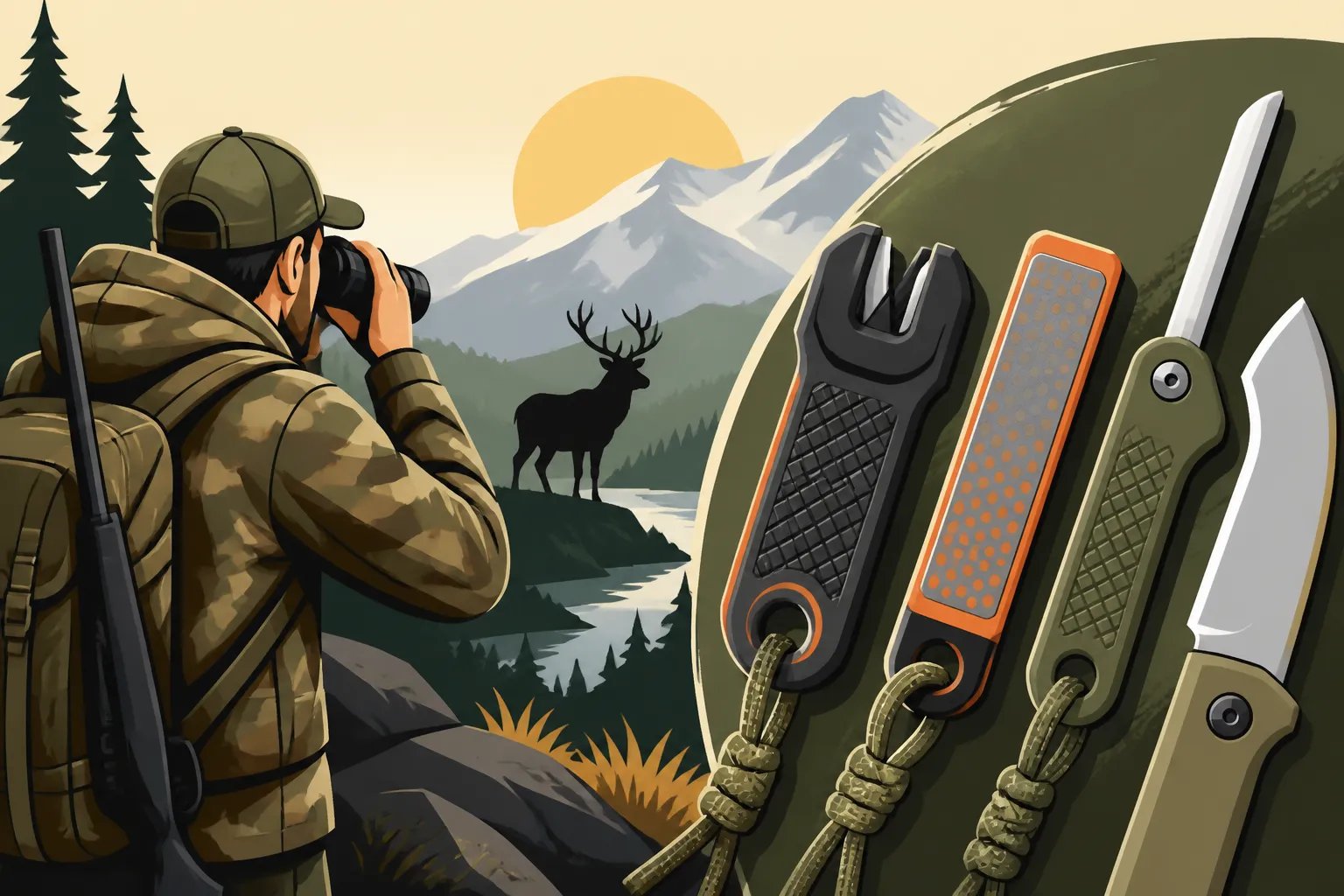
Sharpeners Worth Carrying
There’s nothing quite like the feeling of pulling out your trusty hunting knife in the field, only to find it's duller than a butter knife after a long hike and tough use. This dullness isn't just an annoyance; it's a real safety hazard and can make processing game a frustrating, messy ordeal. This guide is all about helping you understand the different types of sharpeners available and choosing the right one to keep your blades razor-sharp, ensuring clean, efficient work when it matters most on your Washington hunting adventures.
Why a Razor-Sharp Blade is Crucial for Washington Hunting
Let’s be honest, we all spend countless hours and dollars on licenses, tags, optics, and top-tier firearms, but sometimes the humble knife sharpener gets overlooked. Yet, a sharp knife is perhaps one of the most fundamental tools you carry. In the challenging terrain and often wet conditions of Washington, from the dense coastal timber to the rugged eastern breaks, a sharp blade isn't just a nicety; it's a necessity for safety, efficiency, and ethical harvesting.
Safety First: Avoiding Accidents in the Field
A dull knife is a dangerous knife, plain and simple. When a blade isn't cutting cleanly, you're forced to apply more pressure. More pressure means less control, and less control significantly increases the risk of slipping and cutting yourself or a hunting partner. Imagine trying to open up the chest cavity of a big Roosevelt elk in the pouring rain, your hands are cold, perhaps a little numb, and your knife just isn't biting. You push harder, the blade glances off bone, and suddenly you're looking at a nasty cut. This is a common scenario that can be entirely avoided with a properly sharpened blade. Beyond the immediate injury, a deep cut in the backcountry can quickly turn a successful hunt into an emergency, especially when you're miles from the nearest road or cell service.
Efficiency and Speed When Processing Game
When you've finally got that deer or elk on the ground, the clock starts ticking. Whether you're miles into the Pasayten Wilderness Hunting Access or just a short walk from the truck on some Washington DNR Land Open to Hunting, getting the animal field-dressed and cooled quickly is paramount, especially during warmer early-season hunts. A razor-sharp knife glides through hide, muscle, and connective tissue with minimal effort. This makes the entire process faster, cleaner, and less physically demanding. Think about the difference between sawing through thick elk hide with a dull edge versus making one smooth, confident cut. That efficiency means less time spent exposed to the elements, less fatigue, and ultimately, better meat quality because you can cool the carcass faster. When you're attempting The Gutless Method on an Elk, a sharp knife is not just helpful, it's absolutely essential for precise cuts.
Ethical Harvest and Meat Quality
An ethical hunter strives for a quick, clean kill and then honors that animal by processing it respectfully and efficiently. This commitment extends to the field dressing and butchering process. A sharp knife ensures clean cuts, which minimizes contamination and helps preserve the quality of the meat. Ragged cuts from a dull blade can tear tissue, making clean separation harder and increasing the likelihood of hair or other debris getting onto the meat. When you're aiming for Getting a Carcass Cooled Fast, every moment counts, and a knife that performs flawlessly helps achieve this. Furthermore, precise cuts prevent unnecessary waste, ensuring you bring home as much high-quality game meat as possible.
Different Types of Sharpeners for Your Needs
Just like there are different knives for different tasks, there are various sharpeners designed for specific situations. Understanding their strengths and weaknesses will help you choose the best tool for keeping your hunting blades in prime condition, whether you’re in your garage or deep in the Washington backcountry.
Field Sharpeners: Compact and Convenient
These are the sharpeners you tuck into your pack or pocket, designed for quick touch-ups when you're miles from civilization. They prioritize portability and ease of use over achieving a perfect, mirror-polish edge.
Ceramic Rods and V-Sharpeners
Ceramic rods, often found in a pocket-sized format or as part of a multi-tool, are excellent for maintaining an edge or putting a quick, working edge back on a slightly dull blade. They come in various grits, with fine ceramics being popular for field touch-ups. They remove very little steel, making them ideal for frequent use. V-sharpeners, which often feature crossed ceramic or carbide rods set at a fixed angle, are incredibly simple to use—just pull the blade through a few times. They’re nearly foolproof and can quickly restore a serviceable edge, though they might remove more material than a freehand rod. Many hunters swear by them for their simplicity, especially when hands are cold or dexterity is limited. These are fantastic for a mid-day touch-up on your deer knife after field dressing a blacktail in Western Washington Timber Country Access.
Diamond Sharpeners: Durable and Fast
Diamond sharpeners are a hunter’s best friend, especially for harder steels or significantly dull blades. They come in various forms: small folding paddles, fixed rods, or credit-card-sized plates. Diamonds are harder than any knife steel, meaning they cut quickly and effectively, even on modern super steels that can be frustrating to sharpen with traditional stones. They excel at restoring a badly dulled or nicked edge. The downside is that they can be aggressive, and it's easy to remove too much material if you're not careful. For a serious edge restoration on a heavy-duty elk knife, a diamond sharpener is often the fastest route to a working edge. You can find these in various grits, from coarse for repair to extra-fine for a polished finish.
Camp and Home Sharpeners: Precision and Control
These sharpeners are larger, often requiring a stable surface, and are designed for putting a refined, lasting edge on your blades before or after a hunt. They offer greater control and allow for more comprehensive sharpening.
Sharpening Stones: The Traditional Choice
Sharpening stones, also known as whetstones, are the classic choice for a reason. They offer incredible control and can produce an exceptionally keen edge. They come in natural and synthetic varieties, with different grit levels (coarse, medium, fine, super fine). Using a stone requires practice to maintain a consistent angle, which is key to a truly sharp edge. Many hunters start with a medium grit to establish the edge, then move to a fine grit to refine it. Stones often require water or oil as a lubricant, which helps float away swarf (metal particles) and prevents the stone from clogging. While less portable, a good set of stones at home is invaluable for preparing your knife for Rifle Setup for Washington Elk and Deer or getting it ready for processing your game at home.
Guided Sharpening Systems: Consistency and Ease
For those who struggle with maintaining a consistent angle on a traditional stone, guided sharpening systems are a game-changer. Brands like Wicked Edge, KME, and Lansky offer systems that hold the blade or the sharpening stone at a precise, repeatable angle. This takes the guesswork out of sharpening and allows even beginners to achieve professional-level sharpness. These systems typically come with a range of abrasive options, from coarse diamond plates to fine ceramic stones, letting you progress through the grits to get a truly refined edge. While they are an investment and not something you'd carry into the backcountry, a guided system ensures your knives are always razor-sharp before you even leave for your hunt. This attention to detail can make all the difference when you're Field Dressing in Warm Early-Season Weather and need every cut to be precise.
Strops: The Finishing Touch
A strop, often a piece of leather or synthetic material glued to a rigid backing, is used with an abrasive compound (like honing paste) to remove the microscopic burr that forms during sharpening. This burr is essentially a tiny, fragile curl of metal at the very edge of the blade. A strop polishes the edge, removes this burr, and makes the blade incredibly sharp. While not a sharpener in the traditional sense, a strop is essential for achieving a truly hair-popping edge. Many experienced hunters use a small, portable strop in the field for a quick final polish after using a ceramic rod, making their blade even sharper for critical tasks like caping.
Choosing the Right Sharpener for Your Washington Hunt
Selecting the best sharpener isn’t a one-size-fits-all decision. It depends heavily on the type of hunting you do, how long you’ll be in the field, and the specific conditions you'll face in Washington. Understanding these factors will help you make an informed choice that keeps your blades performing optimally.
Considering Your Hunting Style and Trip Length
Are you a day hunter who only ventures a few miles from the truck into Hunting Behind Timber Company Gates, or do you pack deep into the Wenaha-Tucannon Wilderness in Washington for a week-long hunt? Your trip duration and remoteness heavily influence your sharpener choice.
For day hunts or shorter trips where you're not venturing too far, a simple, compact field sharpener like a small ceramic rod or a folding diamond sharpener is usually sufficient. These are light, easy to use, and perfect for quick touch-ups before or after processing a single animal. You might even just rely on a good factory edge and plan to re-sharpen at home.
However, for multi-day backcountry hunts, especially if you anticipate having to process multiple animals (like if you're helping a buddy with their tag), you'll want something more robust. A more versatile field sharpener, perhaps one with multiple grits or a small guided system like a Lansky Puck, could be beneficial. If you are doing an extensive Backcountry Camps in Washington Wilderness hunt, having a reliable way to restore an edge is critical. GoHunt is an excellent resource for planning these longer, more remote trips, helping you visualize the terrain and anticipate the challenges, including the need for dependable gear that performs.
Weight, Durability, and Weather Resistance
Every ounce counts when you're packing into the backcountry. A heavy, bulky sharpening system might be fantastic at home, but it's not practical for your pack. Look for lightweight, compact options for field use. Durability is also key. Your sharpener will get tossed around in a pack, exposed to rain, mud, and grit. It needs to be tough enough to withstand the rigors of a Washington hunting season.
Weather resistance is particularly important in Washington, where wet conditions are common, especially on the west side. Sharpening stones that rely on water can be tricky to use cleanly in a downpour. Diamond sharpeners, being impervious to water, are often a better choice for all-weather performance. If you're Hunting Blacktails in Fog and Rain, you'll appreciate a sharpener that doesn't become a muddy mess. Ceramic rods also perform well in wet conditions. Think about how easy it is to grip and manipulate the sharpener with cold, wet hands or while wearing gloves.
Type of Game and Knife Steel
The kind of game you pursue and the steel your knife is made from also play a role. Processing a large bull elk requires significantly more cutting power and edge retention than field dressing a small blacktail deer. If you're hunting Roosevelt Elk of Western Washington, your knife will see heavy use. Harder, premium knife steels hold an edge longer but are often more challenging to resharpen in the field. This is where diamond sharpeners really shine, as they can cut through these tough steels efficiently. Softer steels might dull faster but are generally easier to bring back to a working edge with a fine ceramic or traditional stone.
Consider also whether you'll be doing any boning work. While many hunters use the Bone-Out Versus Bone-In Packing method to lighten their load, if you're taking bone-in quarters, your blade will encounter bone more often, which can dull an edge quickly. For this, a durable, fast-cutting sharpener is preferred.
Here's a quick comparison of popular sharpener types:
| Sharpener Type | Pros | Cons | Best Use Case |
|---|---|---|---|
| Folding Diamond Sharpener | Compact, lightweight, durable, cuts fast, works on hard steels, good in wet | Can be aggressive, easy to remove too much material | Field touch-ups, restoring badly dulled blades in any weather |
| Ceramic Rod/V-Sharpener | Very compact, easy to use, gentle on edge, good in wet | Slower for significant dullness, doesn't fix major nicks | Quick field touch-ups, maintaining an already sharp edge |
| Sharpening Stone (Bench) | Excellent precision, produces very keen edges | Requires skill/practice, often needs water/oil, not portable | Home use, pre-hunt sharpening, complete edge restoration |
| Guided Sharpening System | Consistent angles, easy for beginners, professional results | Expensive, bulky, not portable, setup time | Home use, precision sharpening, achieving maximum sharpness |
| Leather Strop | Removes burr, polishes edge, achieves razor sharpness | Not a sharpener (finishing step), requires compound | Final edge refinement, maintaining extreme sharpness between full sharpening |
Field Sharpening Techniques and Tips
Having the right sharpener is only half the battle; knowing how to use it effectively in the field is just as important. In the dynamic environment of a Washington hunt, quick and competent sharpening can save the day.
Mastering the Angle: The Key to a Sharp Edge
The single most critical factor in successful sharpening is maintaining a consistent angle between the blade and the sharpening surface. Most hunting knives have an edge angle between 20 to 25 degrees per side. A smaller angle (e.g., 15 degrees) makes for a very sharp but less durable edge, while a larger angle (e.g., 30 degrees) creates a more durable but less sharp edge. For general hunting tasks, a 20-22 degree angle is often a good balance.
When using a field sharpener like a ceramic rod or a diamond plate, try to visualize this angle. Practice at home on a non-critical knife. Some sharpeners, like V-sharpeners, have fixed angles, which makes them foolproof. With freehand sharpeners, imagine holding a matchbook under the spine of your blade if you're aiming for a roughly 20-degree angle. The goal is to feel the burr develop uniformly along the edge. Once you can feel a burr (a tiny curl of metal) on one side of the blade, flip it over and work the other side until the burr is gone or has moved to the opposite side. Then, use lighter pressure to refine the edge. This technique is key whether you're using a fancy guided system or a simple pocket stone.
Quick Touch-Ups Versus Major Edge Repair
In the field, most of your sharpening will be quick touch-ups. This means a few passes on a fine ceramic or diamond stone to bring the edge back to life after field dressing a deer or skinning a bear. The goal isn't to create a brand-new edge but to refresh the existing one. For this, light pressure and consistent angle are paramount. You're simply realigning the very tip of the edge.
If your blade has a significant roll, chip, or is extremely dull, it requires more intensive work. This might involve starting with a coarser grit to reprofile the edge, then moving to finer grits. While possible in the field with a multi-grit diamond sharpener, it's often more time-consuming and can be frustrating if you're cold, tired, or in a hurry. Ideally, major edge repairs should be done at home before your hunt. It’s always best to start your hunt with a perfectly sharpened knife.
Keeping Your Sharpeners Clean and Maintained
Just like your knives, your sharpeners need a little TLC. Sharpening stones and diamond plates can accumulate metal particles and oils, which reduce their effectiveness.
Cleaning Your Sharpeners
Ceramic rods can often be cleaned with warm water and dish soap, sometimes with a gentle scrub brush, to remove embedded metal. Diamond sharpeners are also easily cleaned with soap and water. For traditional sharpening stones, especially those used with oil, dedicated stone cleaning solutions or even kerosene can be used. It's important to keep them clean so their abrasive surface remains exposed and effective. A clogged stone won't cut efficiently.
Protecting Your Sharpeners
Most field sharpeners come with a protective sheath or case. Use it! This prevents the sharpener from getting damaged or damaging other items in your pack. It also keeps dirt and debris off the sharpening surface. For bench stones at home, store them in a dry place to prevent mildew or rust. Proper care ensures your sharpeners last for many seasons, ready to keep your essential Knives and Sharpeners for Field Work in top condition. With careful planning, perhaps even using a mapping tool like GoHunt to scout out potential water sources, you can ensure you have what you need to keep all your gear in prime working order.
Disclaimer
This article is for general informational purposes only and does not constitute professional advice. Laws, prices and regulations vary by location and change over time. Consult a qualified professional for guidance on your specific situation.