Rifle Setup for Washington Elk and Deer
Choosing and setting up the right rifle for Washington's incredibly diverse hunting landscape can feel like trying to hit a moving target – literally. From the dense, moss-laden rainforests of the Olympic Peninsula to the wide-open, sage-dotted plains of Eastern Washington, the demands on your firearm and optics can change drastically. This comprehensive guide is here to untangle the complexities, helping you configure a rifle setup that’s perfectly suited for chasing both elk and deer across our beautiful state.
Understanding Washington's Diverse Hunting Terrain and Game
Washington isn't just one type of hunting ground; it's a tapestry of varied ecosystems, each presenting unique challenges and opportunities. What works wonderfully for a spike camp hunt in the high Cascades might be utterly impractical for a rainy day in the timber company lands out west. Understanding these differences is the first step in setting up your rifle for success.
Western Washington: Dense Timber and Close Shots
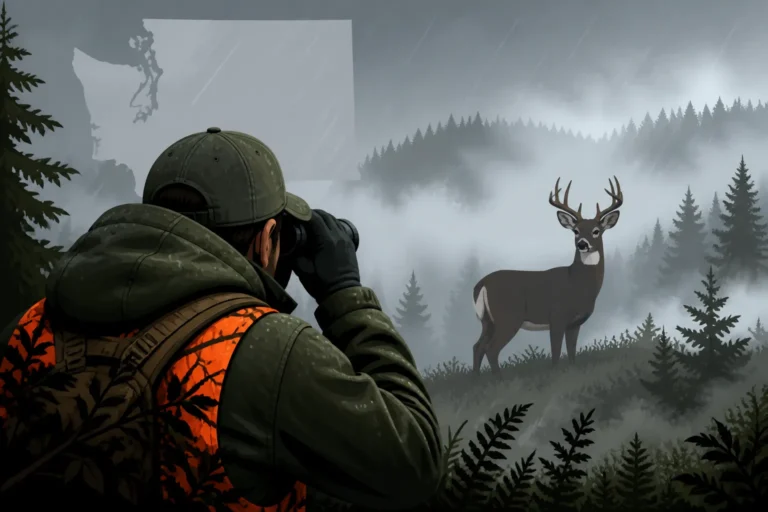
If you've spent any time chasing elk or blacktail deer west of the Cascade crest, you know exactly what I'm talking about. This is a world of towering old-growth, dense clearcuts choked with reprod, and thick, relentless underbrush like salal and devil's club. Visibility is often measured in yards, not hundreds of yards. The light is perpetually dim, filtered by a dense canopy and often obscured by rain or fog.
In this environment, shots are typically fast, close, and often on moving animals. You're usually busting through brush, listening for the snap of a twig, or trying to thread a bullet through a small window in the timber. A rifle that's quick to shoulder, with a relatively short barrel, can be a huge advantage when you're navigating tangled terrain. Optics with a wide field of view and lower magnification are king here, allowing you to acquire targets rapidly without getting lost in the zoom. You also need gear that can withstand constant moisture and impact from bumps and scrapes. The Roosevelt elk and Columbian blacktail deer that call this region home are tough, and a well-placed shot with adequate knockdown power is paramount, even at short range.
Eastern Washington: Open Country and Longer Shots
Shift your focus to Eastern Washington, and you step into a completely different world. Here, the landscape often stretches out before you, offering vast views of sagebrush flats, rolling wheat fields, steep coulees, and timbered draws. Mule deer often inhabit these open, broken lands, as do the robust Rocky Mountain elk herds in areas like the Blue Mountains and the Colockum.
This is where your ability to glass effectively and make longer, more precise shots comes into play. You might spot a trophy mule deer buck bedded a thousand yards away, or a herd of elk feeding on a distant slope. Your rifle setup needs to reflect this. Accuracy at extended ranges is crucial, meaning a stable platform, a scope with higher magnification capabilities, and a bullet that performs well over distance are all top priorities. The wind can be a significant factor, too, demanding a caliber and bullet combination that resists drift. While Washington still offers plenty of close-quarters hunting opportunities in its eastern timber, the potential for long-range engagements is always present, making a different rifle configuration ideal.
The Whitetail Exception: Northeast Washington
Northeast Washington, particularly the counties bordering Idaho and Canada, offers a distinct hunting experience for white-tailed deer. While whitetails can be found in various habitats, they thrive in the mixed timber, agricultural fields, and river bottoms of this region. Hunting them often involves a blend of the close-quarters challenges of Western Washington and the more open-country considerations of the East.
You might be still-hunting dense timber edges one moment, and then setting up over a food plot or field edge for a longer shot the next. This calls for a versatile rifle setup. A scope with a good variable magnification range – perhaps 3-9x or 2-10x – can bridge this gap effectively. While whitetails aren't as large or as robust as elk, they are resilient, and a flat-shooting, accurate deer cartridge is highly recommended. Understanding the specific terrain and habits of the whitetail deer in your chosen GMU is key to fine-tuning your setup.
Washington's Legal Rifle Requirements for Big Game
Before you even start dreaming about calibers and optics, you absolutely need to know the rules. The Washington Department of Fish and Wildlife (WDFW) sets clear guidelines for what constitutes legal equipment for big game hunting. Ignoring these can land you in serious trouble, so it’s essential to be compliant. You can always refer to the official WDFW hunting regulations pamphlet or website for the most current information on Washington's Legal Equipment Rules by Weapon.
Minimum Caliber and Projectile Weight
For taking big game like elk, deer, bear, and cougar with a rifle in Washington, there’s a minimum caliber requirement. Your rifle must be a centerfire firearm, meaning it uses cartridges with a primer in the center of the casing, not on the rim. The bullet must be at least .24 caliber (6mm). This effectively rules out smaller varmint cartridges like the popular .223 Remington for big game, except for cougar hunting, which has a specific exemption allowing .22 centerfire cartridges.
The rationale behind this rule is simple: ethical hunting. A bullet needs sufficient energy and mass to penetrate vital organs and ensure a quick, humane kill. Smaller calibers often lack the kinetic energy and bullet construction necessary for consistent penetration on larger animals like elk, or even a robust mule deer buck. While there isn't a specific projectile weight minimum listed, it's generally understood that heavier bullets within a given caliber tend to perform better on large game. For instance, while a .243 Winchester meets the .24 caliber minimum, most seasoned elk hunters would opt for something significantly more powerful, especially if targeting a large bull.
Suppressors and Magazine Capacity
Washington State generally allows the use of sound suppressors (also known as silencers) for hunting. However, you must comply with all federal and state laws regarding their ownership and use. This typically involves registering the suppressor with the ATF and adhering to any specific WDFW regulations that might be in place. While suppressors are a fantastic tool for reducing noise pollution, protecting your hearing, and potentially improving accuracy by mitigating recoil, always double-check the latest WDFW rules, as regulations can change.
When it comes to magazine capacity, Washington law for big game hunting limits rifles to a maximum of 5 rounds in the magazine, plus one in the chamber, for a total of 6 rounds. This is a common regulation in many states to prevent excessive firing. Most standard hunting rifles come with a 3, 4, or 5-round internal or detachable magazine, which aligns perfectly with this rule. High-capacity magazines, while legal for general ownership, are not permitted for hunting big game. So, make sure your hunting rifle adheres to this limitation before heading into the field.
Choosing the Right Caliber for Washington Elk and Deer
This is where the debate truly heats up around the campfire! Every hunter has their favorite, and there are countless opinions on what constitutes the "best" caliber. However, for Washington elk and deer, we can narrow it down to a few categories based on their performance and versatility across our state's diverse conditions.
Ideal Calibers for Elk: Power and Penetration
Elk are large, tough animals. A mature bull can weigh upwards of 700-900 pounds, and their bone structure is formidable. You need a cartridge that delivers substantial energy and can drive a well-constructed bullet deep into the vitals, even through heavy muscle or bone. For a detailed breakdown, check out our guide on Bullet Weight and Construction for Elk.
Here are some of the tried-and-true calibers favored by Washington elk hunters:
- .30-06 Springfield: The venerable .30-06 remains a top choice. It’s powerful enough for elk, readily available, and can handle a wide range of bullet weights (165-200 grains are common for elk). It offers a good balance of power, trajectory, and manageable recoil, making it a highly versatile option, especially in timber country.
- .300 Winchester Magnum (and similar .30 cal magnums): If you hunt more open country, or just want a bit more punch, the .300 Win Mag is an excellent performer. It provides flatter trajectories and more energy at longer ranges than the .30-06, making it ideal for those cross-canyon shots in Eastern Washington. Recoil is notably heavier, but with practice, it’s manageable. Other popular .30-cal magnums include the .300 WSM and .300 PRC.
- 7mm Remington Magnum: A perennial favorite, the 7mm Rem Mag offers a flatter trajectory than the .30-06 and excellent penetration with heavier bullets (160-175 grains). It's a fantastic all-around elk caliber, especially for those who appreciate less recoil than a .300 magnum but still need long-range capability.
- .338 Winchester Magnum: For those who truly want to anchor an elk with authority, the .338 Win Mag delivers immense energy. It excels at breaking down heavy bone and ensuring deep penetration. While its trajectory isn't as flat as some lighter magnums, its sheer power makes it a popular choice for big bulls, particularly in close-quarters timber where heavy cover might necessitate less-than-perfect shot angles.
Table: Common Elk & Deer Calibers for Washington
| Caliber | Elk Suitability | Deer Suitability | Pros | Cons | Ideal Terrain |
|---|---|---|---|---|---|
| .270 Winchester | Good (w/ heavy bullets) | Excellent | Flat trajectory, mild recoil, accurate | Lacks energy for quartering elk shots | Open plains, mixed timber |
| .308 Winchester | Fair/Good | Excellent | Compact rifles, manageable recoil, good accuracy, common | Marginal for long-range elk, less penetration | Timber, medium range |
| 6.5 Creedmoor | Fair | Excellent | Very accurate, low recoil, good for long-range deer | Lacks energy for elk, especially large bulls | Open plains, long-range deer |
| .30-06 Springfield | Excellent | Excellent | Versatile, powerful, common, good all-rounder | More recoil than deer-specific calibers | All-around |
| 7mm Remington Magnum | Excellent | Very Good | Flat trajectory, good energy, versatile | More recoil, magnum cost, not always necessary for deer | Open plains, varied |
| .300 Winchester Magnum | Excellent | Good | High energy, flat trajectory, long-range power | Heavy recoil, overkill for deer | Open plains, long-range elk |
| .338 Winchester Magnum | Superior | Fair | Max power for elk, bone-breaking | Very heavy recoil, unnecessary for deer | Timber (heavy cover), open plains (big elk) |
Note: "Fair" suitability for elk means it can be used by experienced hunters with premium bullets and excellent shot placement, but generally isn't the first recommendation.
Versatile Calibers for Deer: Accuracy and Manageable Recoil
For deer, especially the smaller blacktails of Western Washington or the average-sized mule deer and whitetails, you don't necessarily need magnum power. Instead, accuracy, a flat trajectory, and manageable recoil that allows for quick follow-up shots are often more important.
- .270 Winchester: The .270 is a classic deer cartridge, known for its flat trajectory and excellent accuracy. It's more than capable of taking down any deer species in Washington, and with good bullet selection (150-grain premium bullets), it can also be a viable elk cartridge for those who shoot it well and understand its limitations. Its recoil is generally mild, making it a joy to shoot.
- .308 Winchester: A highly popular military and hunting cartridge, the .308 offers excellent accuracy in a compact package. It's a fantastic choice for deer at most reasonable hunting ranges and can certainly handle elk with well-placed shots and appropriate bullets. Rifles chambered in .308 often have shorter barrels and are lighter, which is a big plus for navigating dense timber or mountainous terrain. Its recoil is very manageable.
- 6.5 Creedmoor: This relatively newer cartridge has taken the hunting world by storm, and for good reason. The 6.5 Creedmoor is incredibly accurate, boasts a very mild recoil, and performs exceptionally well at longer ranges, making it a superb choice for Eastern Washington mule deer or whitetails. While some hunters use it for elk, it generally requires perfect shot placement and premium bullets due to its lower energy compared to dedicated elk cartridges. It's an excellent choice for a dedicated deer rifle or for newer hunters.
Bullet Selection and Construction
Regardless of your chosen caliber, the bullet you put in it is arguably the most critical component. A poorly constructed bullet, even from a powerful magnum, can fail to penetrate sufficiently or retain its mass, leading to a wounded animal. Conversely, a premium bullet from a slightly smaller caliber can outperform a cheap bullet from a larger one.
For Washington hunting, especially if you're targeting elk or large mule deer, you want a bullet designed for controlled expansion and deep penetration. Examples include bonded bullets (like Federal Fusion, Hornady InterBond, Nosler AccuBond), monolithic bullets (Barnes TSX/TTSX, Hornady GMX, Federal Trophy Copper), or partition-style bullets (Nosler Partition). These bullets are designed to hold together, punch through hide, muscle, and bone, and expand reliably in the vitals, creating a lethal wound channel without fragmenting prematurely.
When you're trying to figure out your next hunting adventure, whether it's for elk or deer, it can be really helpful to use resources like GoHunt to research potential calibers and bullet performance for different species and terrains.
Optics Selection: Scopes for Washington Hunting
Your rifle is only as good as the aiming system on top of it. A quality riflescope tailored to Washington's hunting conditions is paramount. For a deeper dive into choices, you might find our article on Riflescopes for Washington Timber and Open Country particularly useful.
Magnification Ranges for Varied Terrain
The range of magnification you need depends heavily on where you hunt.
- Dense Timber/Close Shots (Western Washington): In thick cover, you'll rarely take a shot over 100-150 yards, and often much closer. A scope with a low minimum magnification (1-3x) and a moderate maximum (8-10x) is ideal. Think 1.5-6×42, 2-7×33, or 3-9×40. The low end allows for quick target acquisition and a wide field of view, crucial for animals moving through brush. The modest upper end is plenty for any shot you're likely to get. Brands like Leupold, Vortex, and Bushnell offer excellent options in this range that are durable and clear.
- Open Country/Longer Shots (Eastern Washington): When you're glassing vast expanses for mule deer or elk, you might be planning for shots from 200 to 500+ yards. Here, a higher maximum magnification is beneficial for precise aiming. Scopes in the 3-12×44, 4-16×44, or even 4.5-14×44/50 range are popular. The higher power helps you pick out specific points on an animal for ethical shot placement at distance. However, avoid going overboard with magnification; an unnecessarily high bottom end (e.g., 6x minimum) can be a hindrance for closer, unexpected encounters.
A good compromise for an all-around Washington hunter is a 3-9×40 or 3.5-10×44. These are versatile enough for most situations, offering a decent field of view at low power and enough magnification for all but the longest shots.
Reticle Choices and Turret Systems
- Reticle Choices:
- Duplex/Simple Crosshairs: For close-to-medium range hunting, especially in timber, a classic duplex reticle is fast and uncluttered. It’s excellent for quick target acquisition.
- BDC (Bullet Drop Compensating) Reticles: These have holdover points for various distances, allowing you to quickly aim higher for longer shots without adjusting turrets. They are excellent for hunting where shots might be fast and range estimation is key, especially for eastern Washington's varied terrain.
- Christmas Tree/MRAD/MOA Reticles: These more complex reticles provide multiple holdover and windage hash marks. They are invaluable for precision long-range shooting where dialing turrets might not be an option, or as a backup to turret dialing. They take more practice to use effectively but offer superior precision.
- Turret Systems:
- Capped Turrets: Most traditional hunting scopes have capped windage and elevation turrets. These are robust, prevent accidental adjustments, and are generally set and forgotten after zeroing. Ideal for close to medium range hunting where you rely on the reticle or know your holdovers.
- Exposed/Target Turrets: Found on many modern long-range scopes, these turrets are designed to be dialed in the field for precise elevation and windage adjustments at various ranges. If you plan on ethical long-range hunting (300+ yards), investing in a scope with reliable, repeatable exposed turrets and learning how to use them is essential. Pair this with a good rangefinder with angle compensation.
Durability, Weatherproofing, and Low-Light Performance
Washington's weather can be brutal. From driving rain and thick fog to dust and snow, your optics need to withstand it all.
- Durability: Choose a scope with a robust, one-piece tube construction, typically aluminum. It needs to be able to take bumps and scrapes without losing its zero or integrity. Brands like Sig Sauer, Maven, and Athlon have gained reputations for durable, high-performing optics at various price points.
- Weatherproofing: Look for scopes that are "fog proof" (purged with inert gas like nitrogen or argon) and "waterproof" (sealed to prevent moisture ingress). This is non-negotiable for hunting in Washington, especially west of the Cascades. Water and fog can instantly render a cheaper, non-sealed scope useless.
- Low-Light Performance: Elk and deer are most active at dawn and dusk. A scope with good low-light performance (achieved through larger objective lenses, high-quality glass, and advanced lens coatings) will give you precious extra minutes of shooting light. While larger objective lenses (e.g., 50mm) gather more light, they also add bulk and require higher scope rings. A balanced approach (e.g., 40-44mm objective) with excellent glass quality often provides the best compromise.
Rifle Accessories and Essential Setup Considerations
A well-chosen rifle and scope are just the foundation. Several accessories and setup steps are crucial for transforming your gear into a cohesive, effective hunting system.
Slings, Bipods, and Shooting Sticks
- Slings: A comfortable, durable sling is non-negotiable for hunting in Washington. You'll be covering miles of challenging terrain, often steeply angled, and a good sling makes carrying your rifle much easier, keeping your hands free for balance. Look for wide, padded slings that distribute weight well and have non-slip backing. Brands like Butler Creek and Kuiu offer excellent options.
- Bipods: For open country hunting where stable prone or seated shots are common, a bipod can be invaluable. Bipods like Harris or Magpul attach to your rifle and provide a solid, repeatable rest, dramatically improving accuracy at longer ranges. Just remember they add weight and can get snagged in thick brush, so they're less ideal for dense timber.
- Shooting Sticks: More versatile than bipods for varied terrain, shooting sticks (monopods, bipods, or tripods) offer a stable shooting platform in standing, kneeling, or sitting positions. They are faster to deploy than a bipod for impromptu shots and can be used in thicker cover where a bipod would be too low. Brands like Primos and Vanguard make great shooting stick options. Some hunters even use their trekking poles as makeshift shooting sticks.
Ammunition Testing and Zeroing
This step is absolutely critical and often overlooked. You can have the most expensive rifle and scope, but if they don't work together with your chosen ammunition, you're just spraying bullets.
- Ammunition Testing: Every rifle has a preferred ammunition. Buy several different brands and bullet weights within your chosen caliber. Go to the range and shoot groups at 100 yards. You'll quickly see which load your rifle "likes" best – producing the tightest groups. Consistency is key, so once you find a load that shoots well, stick with it. GoHunt can be a great place to research which ammunition types are popular and perform well for specific calibers and game animals.
- Zeroing: Once you've chosen your ammunition, you need to properly zero your rifle. For most Washington hunting, a 100-yard zero is a great starting point, giving you predictable holdovers out to 200-300 yards. For more open country or longer shots, a 200-yard zero might be preferred, as it flattens the trajectory out further. Practice at various distances (100, 200, 300+ yards) to understand your bullet's drop and drift. Remember to check your zero before every season and after any significant travel or impact to your rifle. Our guide on Sighting In Before the Opener provides a detailed walkthrough of this essential process.
Cleaning, Maintenance, and Field Care
Washington's climate and terrain can be hard on firearms. Proper care ensures reliability and longevity.
- Regular Cleaning: After every hunt, especially in wet conditions, clean your rifle. Remove moisture, dirt, and fouling from the barrel. Pay attention to the action and trigger group. A clean rifle is a reliable rifle.
- Rust Prevention: Western Washington's humidity and rain are notorious for causing rust. Apply a thin layer of protective oil (like a silicone-impregnated cloth or rust preventative spray) to all metal surfaces after cleaning.
- Field Care: While on the hunt, protect your rifle from moisture and impact. Use a scope cover to keep lenses clear and free of debris. If caught in a downpour, dry your rifle as best you can at the end of the day and give it a thorough cleaning when you get home. A small, portable cleaning kit can be invaluable for mid-hunt maintenance, especially on extended backcountry trips.
Practical Tips for a Successful Washington Rifle Hunt
Beyond the gear, a successful hunt in Washington hinges on preparation, practice, and a deep respect for the animals we pursue.
Physical Conditioning and Marksmanship Practice
Washington's hunting grounds are often physically demanding. Steep inclines, dense brush, and long hikes are the norm.
- Physical Conditioning: Get in shape! Hiking with a weighted pack, especially uphill, will pay dividends. The better your physical condition, the less fatigued you'll be, which directly translates to better marksmanship and safer hunting. You'll be more stable for those critical shots after a long climb and better equipped to pack out an animal.
- Realistic Marksmanship Practice: Don't just shoot from a bench rest. Practice shooting from real-world hunting positions: kneeling, sitting, standing (especially offhand, which is covered in our Practicing Offhand and Kneeling Shots guide), and using natural rests like trees or rocks. Practice shooting quickly and accurately. Simulate hunting scenarios as much as possible, including shooting with your hunting gear on. Knowing your limits and being able to make an ethical shot under pressure is crucial.
Understanding Your Unit and Terrain
Every Game Management Unit (GMU) in Washington has its own character and challenges.
- Scouting: Before you even set foot in the field, use resources like GoHunt maps and aerial imagery, along with WDFW's online tools, to understand the terrain, access points, and potential game habitat. Our article on E-Scouting a Washington GMU From Home offers excellent tips for this. Look for bedding areas, feeding zones, water sources, and travel corridors.
- Local Knowledge: Talk to other hunters, WDFW biologists, and locals. Their insights can be invaluable. Pay attention to past harvest reports for your chosen GMU to understand game densities and success rates.
- Adapt Your Setup: Based on your scouting, make adjustments to your rifle setup. If you find your chosen area is denser than anticipated, maybe opt for a lower magnification setting on your scope. If it's more open, be prepared for longer shots and dial in your rangefinder.
Ethical Shot Placement and Follow-up
The ultimate goal of any hunting setup is to achieve a quick, humane kill.
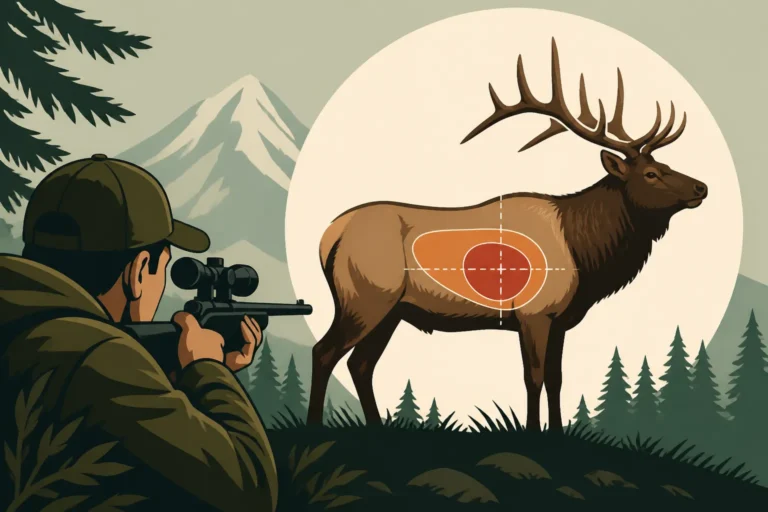
- Know Your Vitals: Understand the anatomy of elk and deer. Aim for the "kill zone" – the heart and lungs – which is typically a broadside or slightly quartering-away shot. Avoid risky shots like the "Texas heart shot" or straight-on frontal shots unless absolutely necessary and you are highly proficient. Our guide on Shot Placement on a Quartering Elk offers valuable advice here.
- Shoot Within Your Limits: Be honest with yourself about your effective shooting range. A missed shot, or worse, a wounded animal, is far more frustrating than passing on a shot that's too far or too risky.
- Always Follow Up: If you take a shot, always assume you hit the animal and begin a diligent search. Even if you don't immediately see the animal drop, give it time and then methodically search the area. Look for blood, hair, bone fragments, and tracks. Tracking an animal, especially in Washington's thick cover, can be incredibly challenging. Our article on Blood Trailing in Salal and Devil's Club provides specific strategies for these tough conditions. Never give up on tracking until you are absolutely certain the animal is not wounded.
Disclaimer
Hunting is an inherently risky activity. The information provided in this guide is for informational purposes only and should not be considered a substitute for professional instruction, adherence to all local, state, and federal hunting regulations, or personal responsibility. Always prioritize safety, ethical hunting practices, and respect for wildlife and the environment.