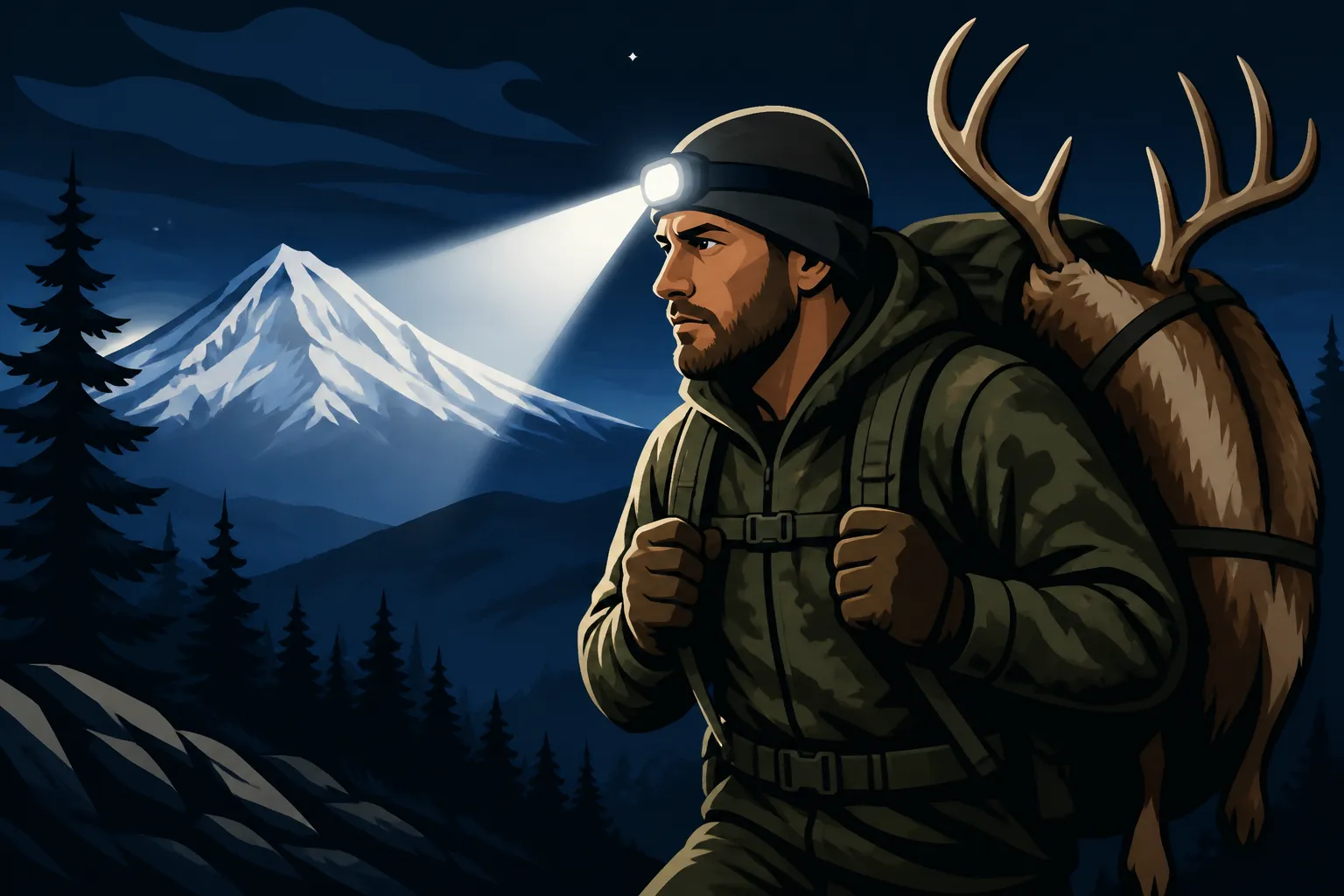
Headlamps for Packing Out at Night
We've all been there: the sun is dipping below the Cascades, casting long shadows across the timber, and you've just put an elk or a big blacktail on the ground. The adrenaline is still pumping, but a cold wave of realization washes over you – you've got a monumental task ahead, and most of it is going to happen in pitch black. Packing out an animal at night in Washington's rugged terrain is a rite of passage for many hunters, but it's also a situation fraught with potential dangers and frustrations. This guide is all about making that challenging experience safer, more efficient, and less miserable by focusing on one often-underestimated piece of gear: your headlamp.
The Undeniable Reality of Packing Out After Dark in Washington
There's a romantic notion of harvesting an animal and packing it out triumphantly in broad daylight, but let's be realistic: that's often not how it plays out in the real world of Washington hunting. The wilderness doesn't care about your schedule, and neither do the animals.
Why Darkness is Almost Inevitable
Think about it. You spend days, maybe weeks, scouting and hunting. You finally get an opportunity, often in the quiet, low-light hours of dawn or dusk when animals are most active. You drop that magnificent bull elk or a heavy-antlered mule deer just as the last rays of sunlight are fading. The subsequent steps – admiring your harvest, field dressing, quartering, and preparing for the haul – take time, often more time than you anticipate, especially if you're practicing The Gutless Method on an Elk for the first time.
Even if you drop an animal in the middle of the day, a long pack out across steep, broken country in the Gifford Pinchot National Forest or the Colville National Forest can easily stretch into the evening. Factor in the shorter daylight hours of late-season hunts in November or December, and darkness becomes less of a possibility and more of a certainty. You're not just dealing with the raw effort of carrying heavy quarters; you're doing it while fighting the clock, knowing that every minute of daylight lost means more time spent navigating unseen obstacles in the dark. It's a humbling experience, often leading to a few choice words muttered under your breath as you stumble over a hidden log.
The Dangers of Inadequate Lighting
Trying to navigate uneven terrain with a weak, flickering, or poorly placed light source isn't just annoying; it's genuinely dangerous. Imagine trying to pick your way through a clearcut choked with blowdown or a dense patch of salal and devil's club on the Olympic Peninsula with just your phone's flashlight. It's a recipe for disaster.
Trips and falls are the most obvious hazards. A twisted ankle or a busted knee when you're miles from the truck, burdened with a heavy pack, can turn a successful hunt into an emergency. Beyond that, insufficient light makes simple tasks incredibly difficult. Trying to Blood Trailing in Thick Understory becomes a nightmare if you can't see the faint signs. Losing the trail, misplacing crucial gear like your knife or a game bag, or even spooking other animals you might encounter in the dark are all very real consequences of not having proper illumination. In Washington's wild places, where cell service is often nonexistent and help is hours away, adequate lighting isn't a luxury; it's a fundamental safety tool. It helps you keep track of your companions, maintain your bearing, and safely make your way back to camp or the trailhead, especially when you're exhausted and your focus is waning.
Essential Features of a Reliable Hunting Headlamp
When you're choosing a headlamp for hunting, especially in Washington's varied and often challenging environments, you need to think beyond just "does it turn on?" There are specific features that can make a world of difference between a smooth, safe pack out and a frustrating, potentially hazardous ordeal.
Lumens and Beam Patterns for Different Tasks
Everyone talks about lumens, and while a higher number generally means brighter light, it's not the only factor. Lumens describe the total amount of visible light from a source, but how that light is distributed is just as important.
You'll encounter two primary beam patterns:
- Spot Beam: This concentrates light into a narrow, focused beam, perfect for long-distance illumination. When you're trying to find the trail 50 yards ahead, glassing a distant hillside to confirm an animal's location, or scanning for reflective markers on your way back to the truck, a strong spot beam is invaluable. It pierces the darkness, giving you a clear path forward.
- Flood Beam: This spreads light widely and evenly, ideal for close-up tasks. Think field dressing your animal, reading a map on your GPS Units Versus Phone Apps, setting up a spike camp, or organizing gear in your pack. A flood beam illuminates your immediate workspace without creating harsh shadows or blinding glare.
The best hunting headlamps offer both, often with adjustable settings that allow you to switch between a tight spot beam and a broad flood beam, or even combine them. This versatility is crucial. You might need a powerful spot beam to navigate a logging road, then switch to a softer flood beam for detailed work quartering your deer. Don't fall into the trap of thinking "more lumens always better" – sometimes, too much light up close can be detrimental, washing out details and causing eye strain. The key is appropriate light for the task at hand.
Battery Life and Power Management
Battery life is paramount, especially on multi-day hunts or when you anticipate a lengthy pack out. There's nothing worse than your light dying miles from civilization.
Headlamps typically use one of two battery types:
- Rechargeable Batteries (e.g., Li-ion): These are convenient, environmentally friendly, and often offer excellent performance. Many modern headlamps feature integrated USB charging, allowing you to top them off with a power bank in the field. The downside is that once they're dead, you're out of luck unless you have a charging source or can swap out the entire battery pack.
- Disposable Batteries (e.g., AA, AAA): These are readily available and easy to swap out in the field. The advantage is that you can carry multiple sets of Spare Batteries Worth Carrying and keep going indefinitely. The drawback is the ongoing cost and environmental impact.
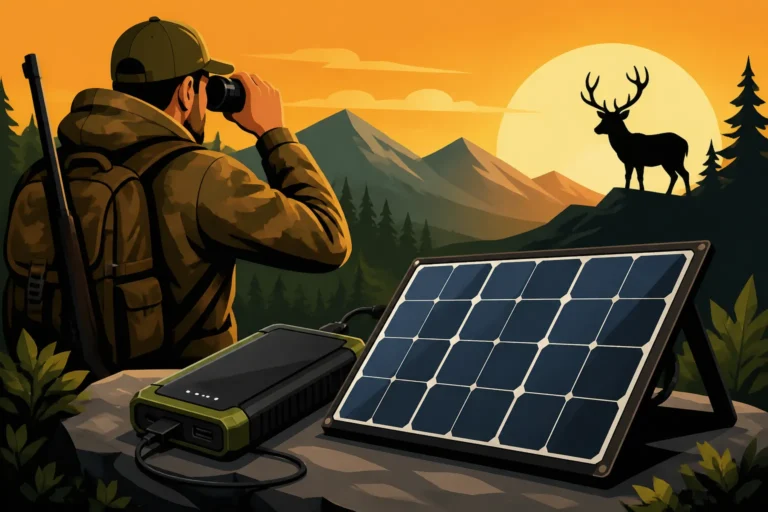
Cold weather is a battery killer. Temperatures regularly drop below freezing during Late-Season Hunting in Washington Snow, and this can drastically reduce the efficiency and lifespan of batteries, especially lithium-ion. Always carry spare batteries, regardless of your headlamp's primary power source, and consider keeping them in an inside pocket close to your body heat to extend their life. A reliable power bank is also a fantastic investment for charging USB-compatible headlamps and phones, especially when you're deep in the backcountry.
Durability, Water Resistance, and Comfort
Washington weather is notoriously fickle. You can start a hunt under blue skies and end it in a torrential downpour or a thick fog. Your gear needs to be able to handle it.
- Water Resistance: Look for an IPX rating. An IPX4 rating means it can withstand splashes from any direction, which is generally sufficient for rain. IPX7 means it can be submerged for a short period. For hunting in Washington's wet environments, especially west of the Cascades, an IPX4 or higher is a non-negotiable minimum. You need Rain Gear for Westside Hunting for yourself, and your electronics need to be just as resilient.
- Impact Resistance: Hunting gear gets bumped, dropped, and scraped. A headlamp needs to withstand the occasional fall onto rocky ground or being knocked against a tree branch. Check for a robust housing and a solid construction that can take a beating.
- Comfort: You'll be wearing this thing for hours, often while carrying a heavy load and sweating. A comfortable strap that doesn't chafe or slip is crucial. Look for adjustable elastic straps, and consider models with an overhead strap for added stability, especially if the headlamp unit itself is a bit heavier due to a larger battery pack. Weight distribution is important; a lighter unit on your forehead is generally more comfortable for extended use.
Practical Headlamp Strategies for a Successful Pack Out
Having the right headlamp is only half the battle. Knowing how to prepare it and use it effectively in the field will elevate your safety and efficiency, making those daunting night-time pack outs manageable.
Pre-Hunt Checks and Preparation
The time to check your headlamp isn't when you're standing over a downed animal in fading light. It's before you even leave the truck, preferably before the season starts.
- Battery Management: Always start with fresh batteries. If your headlamp uses rechargeable cells, ensure they are fully charged. For disposable batteries, put in a fresh set and carry at least one, preferably two, spare sets in a waterproof bag. It's also smart to test all the modes – high, low, flood, spot, and red light – to ensure everything is working correctly. Nothing is more frustrating than finding out a mode is dead when you desperately need it.
- Develop a "Darkness Plan": Before you head into a new area, mentally walk through what you would do if you had to pack out in the dark. Where are the easiest routes? Are there any significant obstacles? Mark key waypoints on your Downloading Offline Maps for Washington so you have a digital breadcrumb trail. Think about where you'd stage gear or quarter meat if darkness caught you. This kind of forethought, sometimes aided by detailed mapping tools like those available through GoHunt, can save precious minutes and reduce panic when the unexpected happens.
- Practice with Your Gear: Put on your hunting pack, don your headlamp, and go for a walk in the dark near your home. Get a feel for how the light illuminates your path, how the strap feels, and how easy it is to switch modes with gloved hands. This familiarization will pay dividends when you're doing it for real under stress.
Using Your Headlamp Effectively in the Field
Once you're actually out there and the sun starts to dip, how you manage your headlamp becomes critical.
- Conserve Battery Life: Resist the urge to keep your headlamp on high beam all the time. Use the lowest setting that allows you to safely perform the task at hand. When you're field dressing, a low flood beam is usually plenty. When you're making your way back to the truck on a familiar trail, a medium spot beam often suffices. Only crank it to high when you absolutely need maximum visibility, like when searching for lost items or navigating tricky terrain. Every minute saved on lower settings adds up, ensuring you have light when you truly need it.
- The Power of Red Light: Many headlamps feature a red light mode. This isn't just a gimmick; it's incredibly useful. Red light preserves your natural night vision, meaning when you turn off the red light, your eyes don't have to readjust to the darkness. This is vital for maintaining situational awareness and scanning without blinding yourself. It's also less disturbing to wildlife if you're trying to move stealthily, and it's less likely to attract bugs on warmer evenings when you're performing tasks like Field Dressing in Warm Early-Season Weather.
- Communicate with Your Partners: If you're hunting with a buddy, establish clear communication about headlamp use. Avoid shining your light directly into your partner's eyes. Use hand signals or verbal cues for "light on" or "light off" to ensure everyone can see and move safely without being temporarily blinded. Coordinating who uses which beam pattern can also be effective; one person might run a wide flood for the immediate area, while the other uses a spot beam to scan ahead.
Troubleshooting and Emergency Backup
Things go wrong. Batteries die unexpectedly, gear gets damaged, or you simply drop your headlamp into a muddy puddle. Having a plan for when your primary light source fails is essential.
- Always Carry a Backup Light: This cannot be stressed enough. A small, lightweight handheld flashlight in your pack, or even a compact penlight, can be a lifesaver. Your phone's flashlight is better than nothing, but it's often cumbersome to use hands-free and drains your phone battery quickly – a battery you might need for your Satellite Messengers for Solo Washington Hunts or an emergency call.
- Battery Care: Keep spare batteries in a dry, protected spot, preferably close to your body in cold weather to maintain their charge. Avoid leaving them exposed to extreme temperatures. If you're using rechargeable headlamps, periodically check their charge status throughout the hunt, especially if you're using them frequently.
- Recognize Failure Signs: If your headlamp starts flickering, dimming, or behaving erratically, address it immediately. Don't wait until it completely dies. Swap batteries, clean contacts, or switch to your backup. Being proactive can prevent a minor inconvenience from becoming a serious problem when you're Packing Meat Out After Dark. GoHunt can be a great resource for reviews on specific headlamp models and their reliability, helping you make informed purchasing decisions beforehand.
Recommended Features and Considerations
To help you make an informed decision, here’s a quick overview of features to consider when choosing a headlamp for your Washington hunting adventures.
| Feature Category | Specific Feature | Importance for Washington Hunting | Considerations |
|---|---|---|---|
| Light Output | Lumens (Max) | High (150-1000+) | Balance brightness with battery life. Too dim is useless, too bright wastes power. |
| Beam Patterns | Essential (Spot & Flood) | Spot for long-range navigation, flood for close-up tasks like field dressing. | |
| Red Light Mode | Very High | Preserves night vision, less disturbing to wildlife, lower bug attraction. | |
| Power | Battery Type | High (Rechargeable/Disposable) | Rechargeable (USB) for convenience, disposable (AA/AAA) for extended trips with spares. |
| Run Time | High (10+ hours on medium) | Crucial for long pack outs; always check specified runtimes. | |
| Battery Indicator | High | Helps monitor power levels to avoid sudden darkness. | |
| Durability | Water Resistance | Very High (IPX4 or higher) | Washington weather demands protection from rain, snow, and splashes. |
| Impact Resistance | High | Withstands drops and bumps in rugged terrain. | |
| Comfort | Weight | High | Lighter models reduce neck strain during long periods of wear. |
| Strap System | High | Adjustable, breathable, and stable (overhead strap for heavier units). | |
| Other | Lockout Function | Medium | Prevents accidental activation in your pack, saving battery. |
| Glove-Friendly Buttons | Medium | Easy to operate with cold or gloved hands. |
A quality headlamp isn't just another piece of gear; it's a critical safety component that can literally shed light on challenging situations in the backcountry. Investing in a reliable unit and understanding how to use it effectively will not only make your hunt safer but also enhance your overall experience in Washington's wild places.
Disclaimer
This article is for general informational purposes only and does not constitute professional advice. Laws, prices and regulations vary by location and change over time. Consult a qualified professional for guidance on your specific situation.