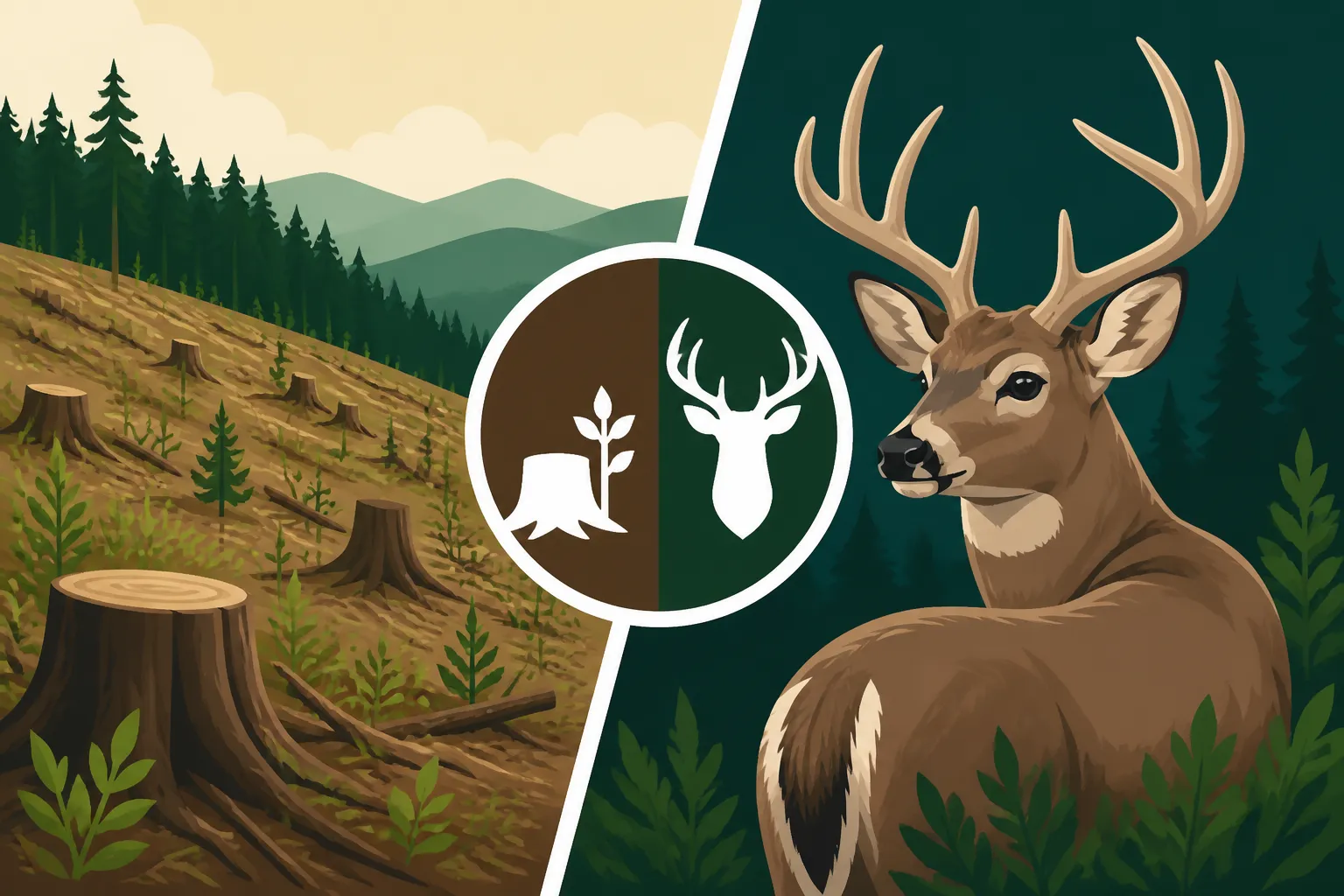
Clearcut Age and Blacktail Numbers
If you've spent any time hunting blacktail deer in Western Washington, you know the frustration of staring across a massive, recent clearcut that looks like a desolate wasteland, or conversely, pushing through a dense thicket of shoulder-high saplings and wondering if a deer could even move through there, let alone live in it. It's a common puzzle: how do blacktail deer, these elusive forest phantoms, actually use these ever-changing landscapes created by logging? Understanding the intricate relationship between clearcut age and blacktail numbers isn't just academic; it's the key to unlocking consistent success in the dense, dynamic timber country. This guide will dive deep into how blacktails utilize logged areas at different stages of regrowth and equip you with the knowledge to find these incredible deer more reliably.
Understanding Blacktail Deer Habitat in Washington
Blacktail deer are creatures of the forest edge, masters of adapting to the dense, wet, and often rugged terrain of Western Washington. Their world is one of constant change, shaped by weather, logging practices, and natural succession. Unlike their mule deer cousins of the open country, blacktails thrive in conditions that often feel impenetrable to us.
The Blacktail's Preference for Cover and Forage
When we talk about blacktail deer habitat, we're really talking about a delicate balance of food and cover. These deer are not built for long-distance migrations across open plains; they need security cover almost constantly. Think about it: a blacktail's primary defense is stealth and escape into thick brush. This means they rarely venture far from dense vegetation where they can disappear in an instant. This cover isn't just for hiding from predators, but also for thermal regulation – protecting them from harsh winter winds and scorching summer sun.
Their diet consists primarily of browse – the tender shoots, leaves, and twigs of shrubs and young trees. They also relish forbs, fungi, and various berries when available. The key here is diversity and availability. A stand of mature timber, while offering great cover, often has a very sparse understory due to the lack of sunlight reaching the forest floor. Conversely, an old clearcut that's grown into a thick, tangled mess might offer incredible cover, but if it's too dense, the desirable forage plants might be outcompeted, or just too hard for the deer to access. Blacktails are always looking for that sweet spot where a variety of food plants are readily accessible, but a quick retreat into heavy cover is just a few bounds away. Knowing this fundamental need helps us understand how they relate to the various stages of a clearcut.
The Role of Logging in Shaping Blacktail Country
Logging, for better or worse, is an undeniable force shaping the landscape of Western Washington, and consequently, blacktail habitat. While some lament the loss of old-growth forests, the truth is that managed timberlands, with their cyclical clearcutting, often create a mosaic of habitats that can be highly beneficial for blacktail deer at certain times. These clearcuts, especially on private industrial timberlands or even DNR ground, aren't just barren patches; they are the start of a new cycle of growth, bringing sunlight to the forest floor and stimulating a burst of vegetation.
However, not all logging is created equal in the eyes of a blacktail. The size of the clearcut, the speed of replanting, the species of trees planted, and even the logging methods (e.g., leaving slash piles versus burning) all play a significant role. A responsible timber company, often in partnership with wildlife biologists, might design cuts to maximize edge habitat or leave pockets of unlogged timber for thermal cover and escape routes. Hunters who understand these nuances and regularly scout areas using tools like satellite imagery and land ownership maps – many of which can be found on platforms like GoHunt – gain a significant advantage in predicting where deer will be.
The Dynamic Relationship Between Clearcuts and Blacktail Numbers
The life cycle of a clearcut, from raw ground to mature timber, is a fascinating and ever-changing environment for blacktail deer. Each stage offers different benefits and challenges, and blacktails adapt their use of these areas accordingly.
Fresh Clearcuts: Initial Impact and Sparse Use
When a clearcut is fresh, meaning it's been logged within the last year or two, it's generally not prime blacktail habitat. The ground is often disturbed, covered in heavy slash piles, and the sudden exposure can be a shock to the local ecosystem. Initial deer use might be limited to opportunistic browsing on any residual greenery or newly sprouted forbs, but the lack of substantial cover makes these areas less attractive for prolonged stays. You might find a deer or two passing through, perhaps following an old game trail that used to be under the canopy, but don't expect to find many deer bedding down here.
However, even in this stage, there are exceptions. If the clearcut is small and bordered by incredibly dense, mature timber or thick reprod, deer might venture into the edges to browse, especially during periods of low hunting pressure or at night. The slash piles themselves, while difficult to navigate, can offer some temporary hiding spots or even elevated vantage points for a deer to browse on taller plants. This is a tough time for a blacktail in these areas, as their security is severely compromised, which often leads to them seeking refuge in adjacent, older growth. It’s a classic example of why understanding habitat succession is vital when hunting in the thick timber.
Early Regrowth: The Emergence of Forage
As a clearcut enters its "early regrowth" phase, typically 2-5 years post-logging, things start to get interesting for blacktails. The ground, now exposed to ample sunlight, explodes with pioneer species. Fireweed, various grasses, clover, and a multitude of other forbs and shrubs begin to colonize the area. This is a buffet for blacktail deer, offering a tremendous amount of high-quality forage that was simply unavailable under the dense canopy of the mature forest.
At this stage, while cover might still be limited to waist-high vegetation or the lingering slash piles, the sheer abundance of food can draw deer in, especially during low light hours. You might see deer moving into these areas from adjacent timber patches to feed, then retreating to thicker cover to bed. This is a great time to focus on the transition zones – the edges where the early regrowth meets more established timber or older reprod. These edges are often travel corridors and feeding grounds. You can also gain insights into these areas by studying maps and historical imagery, possibly using a service like GoHunt, to identify zones where you might have two distinct clearcut ages meeting, creating ideal edge habitat. This combination of newly emerging forage and close proximity to thicker cover is crucial for successful blacktail hunting.
Reprod (Reproduction): Prime Blacktail Habitat
This is often considered the golden age for blacktail deer in a clearcut. "Reprod," short for reproduction, refers to clearcuts that are typically 5-15 years old, where the replanted trees have grown into dense, chest-to-head-high thickets. This stage offers the perfect combination of abundant browse and unparalleled security cover. If you've ever tried to push through a reprod stand, you know how incredibly dense it can be – it's often referred to as "dog hair" thick.
Within these reprod stands, deer find everything they need. The young conifers, along with various shrubs like salal, huckleberry, and vine maple, provide continuous browse. More importantly, the sheer density of the vegetation makes it almost impossible for predators (including human hunters) to move through silently or spot deer from a distance. Deer will bed deeply within these thickets, moving through an intricate network of deer trails that are often invisible from above or outside the stand.
Hunters often find this stage the most challenging and rewarding. It demands a slow, methodical approach, like Still-Hunting Blacktails in Wet Washington Brush. Focusing on the edges, small pockets of slightly older growth within the reprod, or areas where the terrain offers a slight opening can be productive. This is also where you'll find deer bedding down, sometimes just feet off a road, completely invisible. Learning Reading a Three-Year-Old Clearcut for Bucks becomes essential, as a stand of this age can transition quickly into impenetrable reprod.
Pole Timber and Beyond: Declining Value
As the clearcut ages further, typically into pole timber (15-30 years old) and then eventually mature timber (30+ years), its value as blacktail habitat generally begins to decline. In the pole timber stage, the trees grow taller and closer together, forming a dense canopy that starts to shade out the understory. The lush browse plants that thrived in the open sunlight now struggle, and the forest floor becomes increasingly sparse.
While these areas still offer good thermal cover and can act as travel corridors, the overall carrying capacity for blacktails decreases significantly due to reduced forage. Deer might still pass through, especially if there's a nearby water source or a younger clearcut, but they are less likely to spend extended periods feeding or bedding here. Similarly, mature timber, while offering some sanctuary and excellent thermal cover, typically lacks the dense understory and abundant browse that blacktails prefer for primary habitat. Hunters pushing through these older stands often find it quieter, with less sign, until they hit the edges of a younger, more productive area.
The following table summarizes the general characteristics of clearcut ages and their relative value to blacktail deer:
| Clearcut Age | Vegetation Characteristics | Blacktail Use & Value | Hunting Strategy Implications |
|---|---|---|---|
| 0-2 Years (Fresh) | Disturbed ground, slash, sparse new growth, exposed | Very low; travel corridors, opportunistic edge browsing | Hunt edges, trails, focus on adjacent cover areas |
| 2-5 Years (Early Regrowth) | Grasses, forbs, pioneer shrubs, low browse, limited cover | Moderate; primary feeding areas, especially at dawn/dusk | Hunt edges, approach slowly, look for movement near residual cover |
| 5-15 Years (Reprod) | Dense, chest-high to head-high conifers & shrubs, thickets | High; prime feeding, bedding, and security cover | Slow still-hunting, focus on trails, small openings, and heavy cover; try How Close You Get in Coastal Reprod |
| 15-30 Years (Pole Timber) | Taller, denser conifers; shading out understory, sparse browse | Low to moderate; travel corridors, limited feeding/bedding | Hunt transition zones, look for game trails, focus on adjacent younger cuts |
| 30+ Years (Mature Timber) | Dense canopy, open understory, limited browse | Low; thermal/security cover, less primary habitat | Focus on edges of younger cuts, deep timber pockets near food sources |
Hunting Strategies Based on Clearcut Age
Knowing how blacktails use different clearcut ages isn't enough; you need to translate that knowledge into effective hunting strategies. Each stage demands a unique approach, adapting your tactics to the cover and food available.
Targeting Early Regrowth for Feeding Deer
For those 2-5 year old clearcuts, the strategy is often about patience and positioning. These areas are magnets for feeding deer, especially during the early morning and late evening. Your best bet is to position yourself where you can observe a good portion of the clearcut, particularly along its edges where it meets older timber or reprod. Think about where deer would enter and exit, and set up downwind. This could be a natural vantage point or a simple sit-and-wait by a well-used game trail.
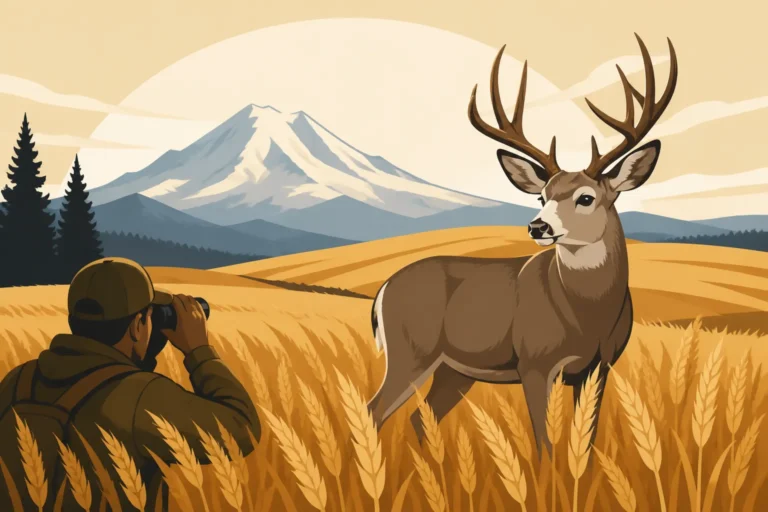
Because visibility can be good in these younger cuts, quality optics are paramount. A good pair of binoculars, like those discussed in Optics for Washington Elk and Deer Hunting, will help you pick apart the details of the brush. Look for ears, patches of hide, or the flick of a tail. This isn't usually a "still-hunt through" kind of area; it's more about observation and a precise stalk once you've spotted a feeding deer. Remember that deer are often acutely aware of predators in these open areas, so absolute stealth on your approach is essential. The slightest mistake will send them melting back into the thicker cover.
Navigating Dense Reprod for Bedded Bucks
Hunting reprod is a whole different ballgame. This is where most blacktails will be, especially during daylight hours, as it provides unbeatable security cover. It's often where the biggest bucks choose to bed, simply because they can hide so effectively. The challenge is moving through it without giving yourself away. Still-hunting becomes an art form here, requiring immense patience and attention to detail.
Your pace needs to be agonizingly slow – often taking several minutes to move just a few steps. Focus on placing each foot silently, scanning every pocket of cover before you move. Look for subtle deer trails, which will be the easiest routes of travel for both you and the deer. Pay close attention to changes in elevation, small benches, or areas where the reprod might be slightly less dense, as these can be bedding spots. When you do spot a deer, it will often be at extremely close range, giving you very little time to react. This is where practicing quick, instinctive shots becomes invaluable. Sometimes, it's not about seeing the whole deer, but just a portion of it, and trusting your ability to make the shot. This type of hunting is physically and mentally demanding, but incredibly rewarding when you finally catch a glimpse of a buck melting away in the thick cover. For more details on this challenging method, consider Still-Hunting Pace in Wet Brush.
Utilizing Mature Timber and Edges for Travel Corridors
While mature timber might not hold a ton of blacktails itself, it serves a critical function: travel corridors and sanctuary. Blacktails will use the edges of mature timber to access younger clearcuts, or travel through the darker woods from one feeding ground to another. They often feel safer moving through the relative openness of mature timber than through a wide-open, young clearcut.
Focus your efforts on the transition zones – the edges where old timber meets young clearcuts or reprod. These are pinch points where deer are forced to travel, offering excellent ambush opportunities. Look for rubs, scrapes, and well-worn trails in these areas, especially during the rut, which in Washington can vary but generally falls into specific periods, as outlined in Blacktail Rut Timing in Western Washington. Driving forest roads and spotting these transition zones from a distance is a good initial strategy, and then moving in to investigate on foot. Don't dismiss these older stands; they are often the highways blacktails use to get to their preferred dining and bedding areas.
Beyond Clearcuts: Other Factors Influencing Blacktail
While clearcuts are a significant part of the blacktail habitat puzzle, they aren't the only piece. Many other factors come into play, influencing where these deer will be found and in what numbers.
Weather and Seasonal Shifts
Washington's weather, particularly in the western half of the state, plays a massive role in blacktail behavior. Rain, fog, wind, and even early season snow can alter how deer use clearcuts and other habitats. On a rainy, windy day, deer are more likely to seek the dense thermal and security cover of reprod or mature timber. They might be less inclined to feed in exposed, early-regrowth clearcuts. Conversely, on a mild, sunny day, they might linger longer in feeding areas.
Seasonal shifts are also critical. In early archery seasons, blacktails might be more predictable, feeding in specific clearcut areas. As hunting pressure builds, they become more nocturnal and secretive, retreating deeper into the thickest cover during daylight hours. The availability of natural food sources also changes. In late summer and early fall, deer might be focused on berries or acorns, which could lead them to specific pockets of habitat regardless of clearcut age. Understanding these micro-seasonal changes will help you fine-tune your approach, complementing your knowledge of clearcut succession. Many hunters rely on detailed weather apps and services like GoHunt to predict animal movement patterns and plan their hunts accordingly.
Hunting Pressure and Human Activity
Perhaps no factor influences blacktail deer movement and numbers more than hunting pressure. Blacktails are incredibly sensitive to human activity. A clearcut that was a blacktail hotspot during archery season might become a ghost town during modern firearm season if it's easily accessible and heavily hunted. Deer will quickly adapt by becoming more nocturnal, moving into the thickest, nastiest cover they can find, or relocating entirely to areas with less pressure.
This means you often have to seek out those hard-to-reach spots, even if they're not textbook "prime" clearcuts. Look at satellite maps for clearcuts that are a mile or more from the nearest road, or those surrounded by exceptionally steep, difficult terrain. These "pressure refuges" are often where mature bucks will seek sanctuary. Remember, blacktails prioritize security above almost everything else once the season is underway. Even if a clearcut is ideal in terms of age and forage, if it's getting pounded by hunters, the deer won't be there during legal shooting light.
Edge Habitat and E-Scouting
Finally, the concept of "edge habitat" is crucial for blacktail hunting in Washington, and it ties directly into understanding clearcut age. Edge habitat is simply where two different habitat types meet – for example, where a 5-year-old clearcut transitions into a 20-year-old reprod, or where a clearcut meets a riparian zone with alder and brush. These edges are natural travel corridors and often concentrate deer because they offer both cover and food in close proximity.
E-scouting is an invaluable tool for identifying these edges and planning your approach. Using online mapping tools, you can study satellite imagery to pinpoint clearcuts of different ages, identify natural funnels, and mark potential bedding or feeding areas before you ever set foot in the woods. Look for areas where multiple habitat types converge, creating a complex mosaic. These are often blacktail magnets. When you're E-Scouting Washington GMUs Before the Draw, always pay attention to the logging history of the area. Blacktail deer density in Washington timber is often highest in these diverse, edge-rich environments. The more you understand how different clearcut ages create and influence these edges, the better your chances of finding success.
Disclaimer
This article is for general informational purposes only and does not constitute professional advice. Laws, prices and regulations vary by location and change over time. Consult a qualified professional for guidance on your specific situation.