Merriam’s Turkeys in Northeast Washington
You've heard whispers of Merriam's turkeys gobbling in Washington, but actually finding them, especially in the rugged, vast expanse of the Northeast corner, can feel like chasing a ghost. Many hunters struggle with pinpointing exactly where these majestic birds prefer to live and how their habits differ from other turkey subspecies. This guide will walk you through the unique world of Merriam's turkeys in Northeast Washington, giving you the insights and practical strategies you need to locate, scout, and successfully hunt them in this challenging yet rewarding region.
Where Merriam's Turkeys Roam in Northeast Washington
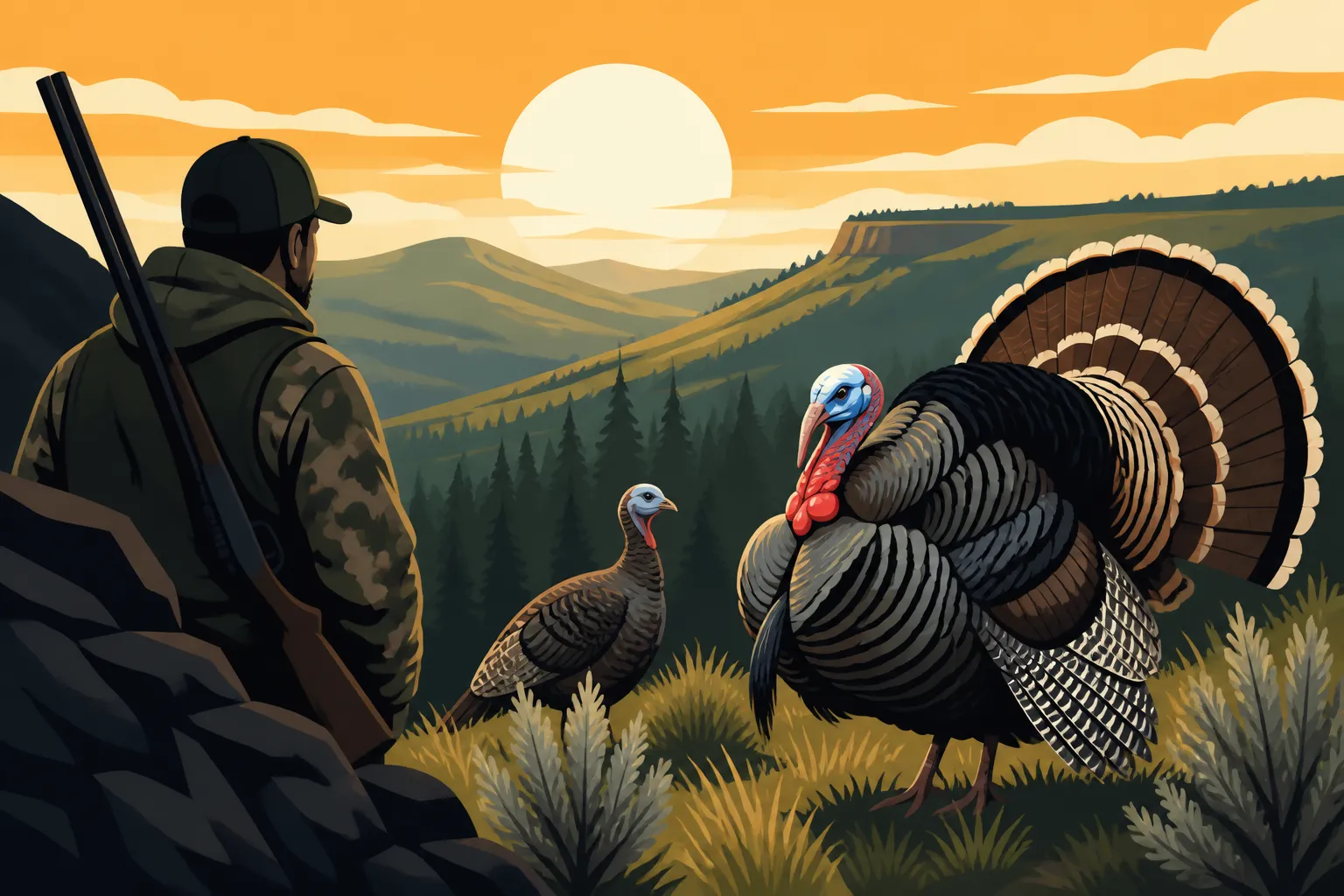
The Merriam's turkey is a magnificent bird, distinct from its Eastern or Rio Grande cousins. In Washington, they're primarily found in the northeastern part of the state, a region characterized by its impressive forests, rolling hills, and abundant water sources. This isn't your open country, short-grass prairie turkey hunting; it's a game of elevation, timber, and sometimes, sheer willpower. Understanding their historical introduction and current population strongholds is key to getting started.
The Merriam's Subspecies and Its Washington History
Unlike the Eastern or Rio Grande subspecies, Merriam's turkeys are often associated with ponderosa pine, fir, and mixed conifer forests at higher elevations. They're typically a bit smaller than Easterns, with unique white-tipped tail feathers and tail coverts that truly set them apart. These birds weren't always native to Washington; they were successfully introduced through translocation efforts, bringing them from states where they naturally occurred. The first releases in Washington took place back in the 1960s, primarily in the northeastern counties, which offered the ideal blend of habitat for them to thrive. Since then, their populations have expanded, offering hunters a unique opportunity to pursue these beautiful birds. However, the density can vary quite a bit, making local knowledge and thorough scouting absolutely critical.
Key Population Strongholds and General Management Units
When you're talking about Merriam's turkeys in Washington, your focus immediately shifts to the northeastern counties. Think Ferry, Stevens, Pend Oreille, and parts of Spokane counties. These areas boast the perfect mix of mature timber, open clearings, and riparian zones that these birds need to prosper. Specific Game Management Units (GMUs) in these areas are known for having healthy Merriam's populations, though success rates can swing widely from year to year based on weather, predation, and hunting pressure. You'll find them scattered throughout the Colville National Forest, on Department of Natural Resources (DNR) lands, and even on some private timber lands, although access rules on private property can change, so always check before you go. Colville National Forest Hunting in Washington can give you a better idea of the public land opportunities in this region. Many hunters find platforms like GoHunt incredibly useful for identifying these public land parcels and understanding the lay of the land before they even leave home. This initial e-scouting can save you days of driving around blindly.
Key Habitats and Terrain Features for Northeast Merriam's
Northeast Washington is a diverse landscape, and Merriam's turkeys are creatures of particular habits when it comes to where they spend their time. Knowing what to look for on a map, and then validating it on the ground, will drastically improve your chances. It’s not just about finding "woods"; it's about finding the right kind of woods in the right kind of terrain.
Ponderosa Pine and Mixed Conifer Forests
Merriam's turkeys thrive in diverse forest environments, but they have a distinct preference for areas dominated by ponderosa pine, often mixed with Douglas fir, grand fir, and larch. These forests provide excellent roosting trees – tall, sturdy pines with strong lateral branches that offer safety from ground predators. Look for mature stands of timber on slopes or along ridge lines. These birds also forage extensively in the understory of these forests, scratching for insects, seeds, and berries. Don't overlook the edges of these forests where they meet more open ground, as these transition zones are often hotspots for feeding and strutting. You'll often find them utilizing southern-facing slopes earlier in the spring as the snow recedes and the ground warms up, revealing fresh forage.
Openings, Clearings, and Riparian Zones
While the timber is crucial for roosting and cover, Merriam's turkeys absolutely depend on open areas for feeding, strutting, and bugging. These can be natural clearings, old logging landings, power line cuts, or even agricultural fields interspersed within the forested landscape. These open areas receive more sunlight, promoting the growth of grasses, forbs, and insects that make up a significant portion of their diet. During the spring, these are the arenas where gobblers will display for hens, making them prime locations for setting up a calling ambush.
Equally important are riparian zones – areas along rivers, streams, and creeks. These water sources are vital for all wildlife, including turkeys, and the lush vegetation often found along them provides additional food and cover. During dry periods, these areas can concentrate birds. Always keep an eye on water sources, especially during the warmer parts of the season, as turkeys will need to drink daily. Mapping platforms can help you identify these features, and GoHunt often has topographical layers that highlight water features and potential openings within dense timber. This is particularly useful when you're trying to figure out where the birds might be feeding once they've flown down from their roosts.
Elevation and Aspect Considerations
Unlike some other game animals that prefer specific elevation bands, Merriam's turkeys in Northeast Washington will utilize a wide range of elevations, often moving up and down depending on the season, snowpack, and food availability. In early spring, as mentioned, south-facing slopes are often snow-free first and warm up quickest, attracting birds to emerging vegetation. As the season progresses and temperatures rise, turkeys might move to higher, cooler elevations or denser timber for shade. Pay attention to how the terrain affects their movement. Steep ridges can act as travel corridors, and saddles between ridges can be natural funnels. Don't be afraid to put in the work climbing; oftentimes, the higher you go, the less human pressure you'll encounter. Checking Washington's winter range closures that end late hunts is also important, as these areas might not open up until later in the spring, potentially affecting where you can access birds. Washington Winter Range Closures That End Late Hunts provides more detail on these regulations.
Essential Scouting and Hunting Strategies for Northeast Turkeys
Hunting Merriam's turkeys in Northeast Washington isn't just about throwing out a few calls and waiting. It requires diligent scouting, an understanding of turkey behavior, and a willingness to cover some serious ground. These birds can be vocal, but they can also be incredibly cagey.
Pre-Season Scouting: Mapping and Boots on the Ground
Your success often begins long before opening day. E-scouting with tools like GoHunt is a fantastic starting point. Look for areas with a good mix of mature timber, open clearings, and water sources. Identify potential roosting ridges – typically high points with large trees overlooking drainages. Mark these on your map. Then, it's time for boots on the ground. Walk those areas you identified. Listen for gobblers at dawn (known as "shock gobbling" or "roost gobbling"). Look for fresh turkey sign: tracks in dusty roads or mud, droppings (larger and often more elongated for gobblers), and shed feathers. Finding dusting bowls, which are shallow depressions where turkeys clean their feathers, can indicate active areas. Listen for hens yelping and clucking; where there are hens, gobblers are usually not far behind. Focus on areas where you find evidence of active feeding and strutting, such as distinct wing drags in soft dirt. Pay attention to the types of trees they are roosting in; this information can be invaluable for future hunts.
Roosting Birds and Morning Setups
The most consistent way to locate Merriam's turkeys is to listen for them on the roost at dawn. Get to your chosen area well before first light. Position yourself where you can hear a wide area, preferably on a ridge overlooking a drainage. As the sky lightens, listen for gobblers sounding off from their roost trees. Once you hear a gobble, try to pinpoint its location. The goal is to get as close as possible without spooking the bird, then set up your decoys and position yourself to call. Remember, a gobbler will typically fly down from his roost tree within the first hour of daylight. He'll often fly towards an open area where he can strut for hens. Getting in position before he flies down is crucial.
If you can't get on a roosted bird, don't give up. Move slowly through the timber, stopping frequently to call and listen. Use locator calls like an owl hooter or a crow call to try and elicit a "shock gobble" from a bird that might not be actively gobbling on its own. Sometimes, a subtle tree yelp or soft cluck can be enough to get a gobbler to reveal himself. Always be aware of your surroundings, as these birds have incredible eyesight. Two-Man Calling Setups on Elk might seem unrelated, but the principles of positioning callers and shooters for effective ambushes can be adapted to turkey hunting, especially when trying to bring a bird into range.
Calling Strategies for Mountain Merriam's
Merriam's turkeys can be responsive to calls, but they can also be notoriously quiet or "henned up." In the mornings, after a gobbler flies down, he's often looking for hens. Aggressive calling (loud yelps, cutts, clucks) can sometimes grab his attention, especially if he's alone. However, if he's with hens, he might only gobble to gather his harem, and bringing him away from them can be extremely difficult. In this scenario, trying to call the hens in, hoping the gobbler follows, is often a more effective tactic.
Mid-day hunting requires different strategies. Gobblers tend to be less vocal once the hens have dispersed. This is a good time for "run-and-gun" tactics, moving through likely habitat and stopping to call every few hundred yards. Mix up your calls – try some soft tree yelps, followed by some louder cutting, then some purrs and clucks. A diaphragm call gives you the most versatility, but pot calls and box calls can also be very effective. Don't be afraid to experiment with different calls and volumes. When a gobbler responds, gauge his enthusiasm and adjust your calling to match. If he's coming in hot, less is often more. If he's hesitant, more enticing sounds might be needed. Sometimes, the softest purrs are what convince a wary gobbler to take those last few steps. Washington Turkey Seasons and Tags will tell you when you can actually get out there and try these calls!
Seasonal Behavior and Best Times to Hunt
Turkey behavior isn't static; it changes throughout the spring season and certainly differs between spring and fall. Understanding these shifts is vital for successful Merriam's hunting in Northeast Washington.
Early Spring: Courtship and Breeding Behavior
Early spring, typically late April to early May, is when the breeding season is in full swing for Merriam's turkeys in Northeast Washington. Gobblers are actively seeking hens, strutting, and gobbling with enthusiasm. This is often considered the best time to hunt, as gobblers are highly vocal and responsive to calls. The challenge here is that hens are also plentiful and receptive, meaning gobblers are often "henned up." If a gobbler has a harem of hens, he might gobble frequently but be reluctant to leave them to come to your calls. In this scenario, trying to move ahead of the flock and intercept them, or focusing your calling on the hens to draw them in, can be a smart play.
Snow can still be an issue in the higher elevations of Northeast Washington during early spring, affecting access and turkey distribution. Turkeys will often be found at lower elevations or on south-facing slopes where snow has melted first, revealing fresh food sources. Using satellite imagery on a platform like GoHunt can give you a real-time (or near real-time, depending on imagery age) look at snow lines and help you identify accessible, snow-free areas. This time of year, mornings are active, but mid-day can also be productive as gobblers might wander off looking for more hens after their initial morning breeding activities.
Late Spring: Post-Breeding and Dispersal
As spring progresses into late May and early June, hen turkeys begin nesting, and gobblers' behavior changes. There are fewer receptive hens, and gobblers might become less vocal and more solitary. This period can be challenging but also very rewarding. Without hens to distract them, lonely gobblers might become more eager to respond to a hunter's calls. They're still looking for companionship, but they're not tethered to a flock of hens. The key here is persistence and covering ground. You might not hear as many booming gobblers at dawn, but a subtle yelp or cluck might get a response from a silent bird.
During late spring, turkeys will also disperse more widely across their range. They might move to higher elevations as the snow melts and new food sources become available. Focus on areas with good shade and water as temperatures rise. This is a great time to implement "run-and-gun" tactics, moving through diverse habitat and calling frequently to locate a lone gobbler. Don't be afraid to try different types of calls – loud, aggressive cutting might still work, but sometimes a soft, seductive series of clucks and purrs is what finally seals the deal with a wary, late-season tom.
| Season Phase | Gobbler Behavior | Calling Strategy | Typical Location Focus |
|---|---|---|---|
| Early Spring | Highly vocal, often "henned up," strutting heavily | Aggressive cutting, yelps; try to call hens in if possible | Lower elevations, south-facing slopes, open clearings |
| Mid-Spring | Still vocal, hens nesting, might be more solitary | Mixed calling; locator calls; mid-day run-and-gun | Diverse habitat, moving with snowmelt, near water |
| Late Spring | Less vocal, often solitary, post-breeding focus | Soft clucks/purrs, patient setups; extensive scouting | Higher elevations, shaded timber, persistent calling |
| Fall Season | Flock behavior, less gobbling, focus on food | Assembly calls (hen), kee-kee runs (juveniles); locate flocks | Hard mast (acorns), agricultural edges, winter range |
Fall Hunting Considerations: Flock Dynamics
While most turkey hunters focus on the exciting spring gobbler season, Washington also offers a fall turkey season in some units, including those in the northeast. Fall turkey hunting is a completely different ballgame. Gobblers are much less vocal, and the focus shifts from calling in a strutting tom to locating flocks of birds. Turkeys in the fall are often grouped in larger flocks, consisting of hens, jakes, and sometimes mature gobblers. The primary objective is usually to scatter a flock and then use "assembly calls" – lost hen yelps or kee-kee runs (the call of a lost juvenile turkey) – to bring them back together.
Locating fall flocks often involves covering a lot of ground, looking for fresh sign, and listening for contact calls. Once you find a flock, try to break it up. Running in and creating chaos can work, or if you can quietly get close enough, a sudden push can scatter them. After they've scattered, sit tight for a while (30-60 minutes) and then start with soft, pleading assembly calls. The birds will often start calling back to each other, giving you a chance to draw one in. Waterfowl and Upland Birds After Washington's Big Game Closes touches on other fall bird hunting, but the turkey methods are unique. Fall turkey hunting is a test of patience and woodsmanship, but the reward of a wild Merriam's for the Thanksgiving table is well worth the effort.
Disclaimer
This article is for general informational purposes only and does not constitute professional advice. Laws, prices and regulations vary by location and change over time. Consult a qualified professional for guidance on your specific situation.