Where Washington’s Biggest Bears Live
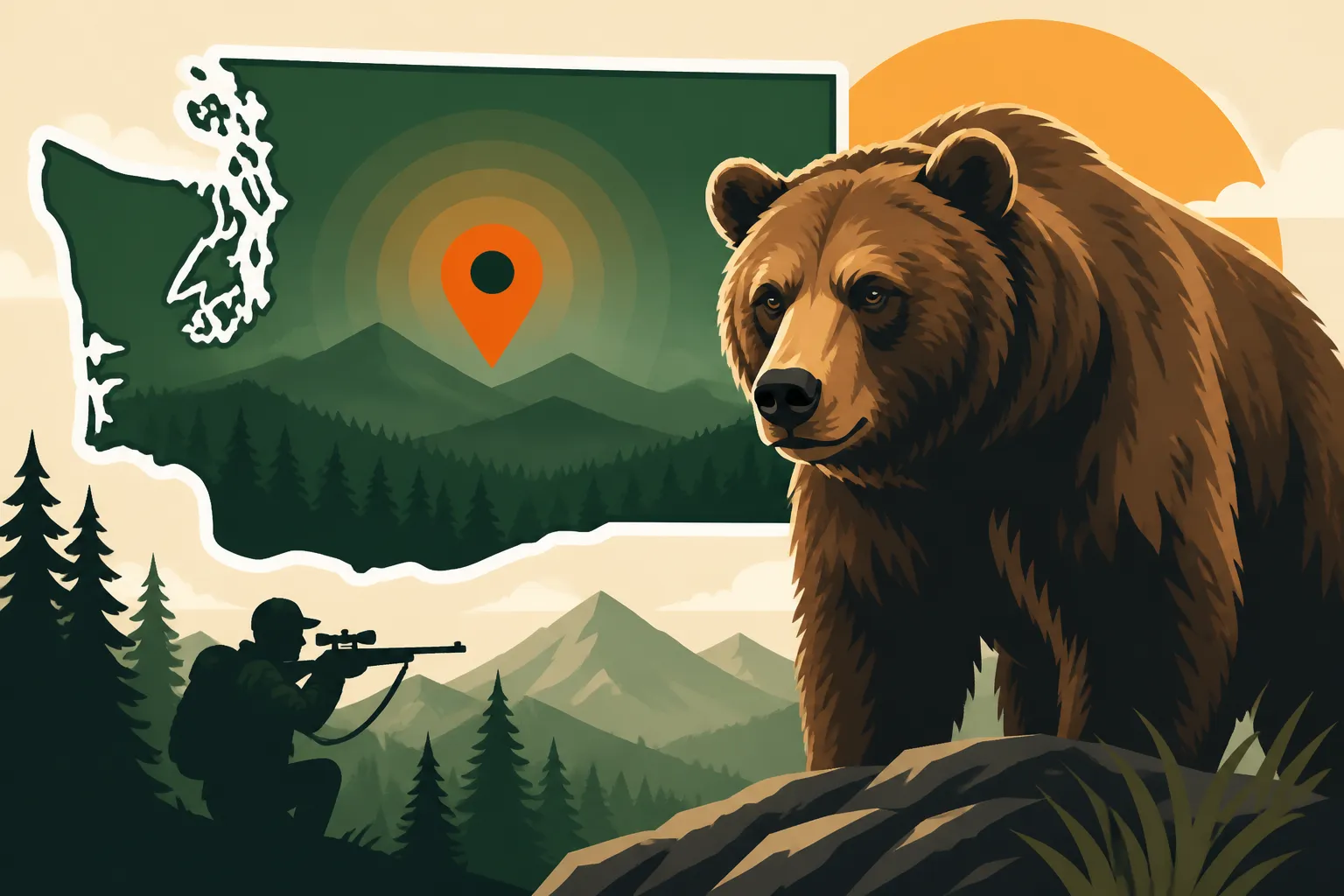
The dream of finding a truly magnificent black bear in Washington state is one many hunters chase, but it can feel like looking for a needle in a massive, forested haystack. This guide is here to cut through the guesswork, helping you understand where the conditions truly align for Washington's biggest bears and how to focus your efforts in the most promising areas.
Understanding Washington's Black Bear Landscape
Washington is truly a bear state, boasting a healthy population of black bears across much of its diverse terrain. From the dense, mossy rainforests of the Olympic Peninsula to the rugged, timbered slopes of the Cascades and the more open, mixed forests of the northeast, bears are adaptable and widespread. However, "widespread" doesn't necessarily mean "big bears everywhere." The reality is, certain ecological factors and environmental conditions contribute significantly to a bear's ability to not just survive, but thrive and pack on serious size and weight.
General Distribution of Black Bears in Washington
You'll find black bears in almost every corner of Washington where there's sufficient forest cover and food. They're incredibly common west of the Cascades, inhabiting vast tracts of timber company land, national forests, and even closer to human habitation than many realize. East of the Cascades, their distribution becomes a bit more patchy, favoring the higher elevations, the timbered breaks, and river drainages, but they are certainly present and can be quite numerous in specific pockets, especially in the northeast and parts of the Blue Mountains.
It’s easy to get caught up in the sheer number of bears across the state, and Washington's estimated population is robust. But for a hunter seeking a truly large specimen, it's not just about finding any bear. It's about finding the combination of factors that allows a bear to grow old, access consistent, high-calorie food sources, and avoid premature harvest. This often means looking beyond the areas with the highest overall bear density and towards places where conditions favor larger, older individuals.
What "Big" Really Means for a Black Bear
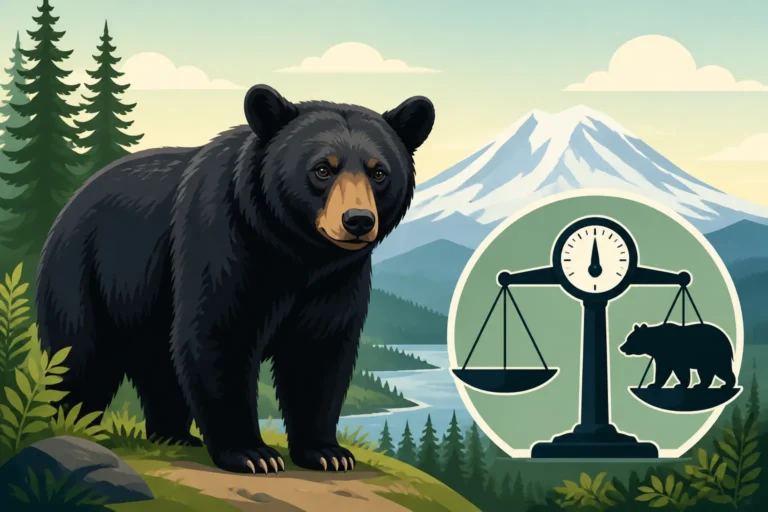
When we talk about "big" bears, it's worth clarifying what we're after. Are we talking about sheer body weight, skull size for record books, or just a generally mature, impressive animal? Often, it's a combination. Large body size usually correlates with age, and older bears tend to have larger skulls. A bear in the 300-400 pound range is considered a very solid bear in Washington, with some exceptional individuals pushing into the 500-600 pound class, though these are much rarer.
These mature bears don't just happen overnight. They need years of uninterrupted growth, plentiful food sources throughout their active seasons, and the ability to find secure denning sites. A bear that consistently finds salmon streams, berry patches, or acorns year after year, and manages to avoid hunters or other threats, stands the best chance of becoming truly massive. This longevity and consistent access to high-value food are the foundations of a trophy-sized bear.
Key Habitat Factors for Large Bears
So, if all bears aren't created equal in terms of size potential, what makes a specific habitat conducive to growing truly big bears? It boils down to a few critical elements: abundant, high-calorie food sources, a low-pressure environment that allows bears to age, and dense cover for security.
Abundant and Diverse Food Sources
Bears are opportunistic omnivores, and their diet changes significantly throughout the year. For a bear to reach a substantial size, it needs a continuous buffet of rich, caloric foods. In Washington, this means a mosaic of habitats providing different food types as seasons progress. Early spring sees them on green-up slopes, foraging on new growth. Summer brings berries like huckleberries, blueberries, and salal berries, which are absolute powerhouses for packing on fat.
As fall approaches, hard mast like acorns (especially in areas with significant oak stands) and the seasonal bounty of salmon streams become critical. Access to streams with spawning salmon is a huge factor, particularly for bears west of the Cascades, providing an incredible protein and fat boost right before denning. Areas that offer this "four-season pantry" are goldmines for growing big bears because they don't have to expend as much energy traveling long distances to find food, allowing them to conserve calories and grow.
Age, Genetics, and Low Hunting Pressure
It's a simple truth: big bears are old bears. Just like deer and elk, bears need time to grow. A young bear might be healthy, but it won't have the mass or skull size of a seven- or eight-year-old bear. So, finding areas where bears can live longer, relatively unmolested by human activity, is key. This often means remote areas, deep wilderness, or places with difficult access that naturally reduce hunting pressure. While Washington's bear seasons are generous, some areas see significantly more hunting activity than others.
Genetics also play a role, of course, but consistent access to food and the opportunity to age are the overriding factors. A prime example would be a bear that establishes a home range in a remote, dense timber canyon with year-round water, abundant berry patches, and a nearby salmon stream. If this bear also avoids encounters with hunters due to the area's inaccessibility or the hunter's lack of persistence, it significantly increases its chances of reaching trophy size.
Secure Cover and Denning Sites
Beyond food, security is paramount. Large, mature bears are often wary and will seek out dense cover to avoid detection. This could be thick regenerating timber (reprod), dense brush, or remote pockets of old growth. These areas provide sanctuary, allowing bears to feel safe while foraging and resting. The ability to retreat into impenetrable cover is a significant advantage for older bears.
Good denning sites are also crucial. Bears need safe, sheltered spots to overwinter. This could be a hollow log, a rock cave, or a dense thicket. In areas with ideal denning habitat and plenty of food, bears are less likely to be stressed and more likely to emerge healthy and strong in the spring, ready to put on more weight. Looking at maps for dense timber, north-facing slopes, and rocky areas can sometimes reveal potential denning and security cover.
Prime Regions for Bigger Bears in Washington
While a big bear could turn up almost anywhere, certain regions in Washington consistently offer the combination of factors that contribute to larger specimens. These areas often feature extensive public lands, diverse ecosystems, and sometimes, more challenging terrain that naturally filters hunter numbers.
Western Washington's Coastal and Cascade Foothills
The western side of the state, particularly the Olympic Peninsula and the western slopes of the Cascades, are renowned for their dense forests and abundant rainfall. This environment fosters lush vegetation, which means a wealth of berry crops like huckleberries, salal, and blackberries that are critical food sources. Areas like the Willapa Hills Elk Herd region, and deep into the national forests bordering the Olympic National Park, are known to produce impressive bears.
The sheer vastness of the timberland, both private and public, also offers extensive security cover. While hunter access to some private timberlands can be regulated by permits through companies like Weyerhaeuser or Hancock, there are still massive amounts of national forest land. Look for areas with a mix of regenerating clearcuts (which produce berries) and mature timber for cover, especially those with salmon-bearing streams. These streams provide an incredible food source in late summer and fall, helping bears bulk up substantially before denning. Many hunters find success by glassing green-up slopes in the spring or looking for sign along old logging roads near berry patches in the fall. You can find excellent advice on specific areas and tactics by exploring resources like Spot-and-Stalk Bear Hunting in Washington Without Bait.
Northeast Washington's Mountainous Terrain
Shifting to the eastern side, the mountainous regions of Northeast Washington, including portions of the Colville National Forest and surrounding state lands, are quietly becoming known for producing some very large bears. This area tends to have a slightly lower overall bear density compared to the westside, but the bears that do thrive here can grow quite large. The habitat is characterized by mixed conifer forests, pockets of aspen, and some agricultural interfaces.
The key here seems to be a combination of diverse food sources, including various berries, acorns from oak stands, and surprisingly, a good amount of agricultural crop depredation where bears can get easy, high-calorie meals. The lower human population density and extensive timberlands also contribute to less hunting pressure in some remote pockets, allowing bears to age. Hunters often focus on areas with dense timber adjacent to huckleberry patches or along creek bottoms in late summer and early fall. The challenge can be finding consistent access across mixed public and private lands.
The Blue Mountains and Southeast Washington
While perhaps not as widely known for trophy bears as the other regions, the Blue Mountains in Southeast Washington harbor a healthy bear population, and these bears can also reach significant sizes. The Blues are characterized by expansive national forest land (Umatilla National Forest), deeply timbered canyons, and high elevation meadows. Similar to the northeast, food sources here are diverse, including abundant berry crops in summer and fall.
The mountainous, broken terrain provides excellent security cover and relatively low hunting pressure in many of the more remote drainages. Bears here might rely more heavily on natural mast crops and berries, given the lesser extent of agricultural land compared to parts of the northeast. Targeting these deep canyons and higher elevation plateaus where food and cover are plentiful, especially during years with good berry crops, can lead to encounters with older, larger bears.
Strategies for Locating Big Bears
Knowing where the biggest bears might live is only half the battle. The other half is actually finding one. This requires a combination of diligent scouting, understanding bear behavior, and persistent hunting effort.
E-Scouting and Understanding Habitat Features
Before you even step foot in the woods, spend considerable time e-scouting. Tools like GoHunt can be invaluable for identifying potential hotspots. Look for areas with varied topography: steep, timbered slopes for cover, adjacent to open avalanche chutes or clearcuts for feeding. Identify south-facing slopes that green up early in the spring, and north-facing slopes with dense timber that might hold late-season berries or serve as bedding areas. Also, pay close attention to water sources and drainages, as bears will always be near them.
When e-scouting, imagine a bear's daily routine. Where would it feed in the morning? Where would it bed down during the heat of the day? Where would it go to drink? Look for the intersection of these critical habitat components. Areas where different types of habitat converge – for example, a clearcut full of berries bordering a dense patch of old growth next to a stream – are prime locations. For more in-depth preparation, consider resources like E-Scouting Washington GMUs Before the Draw.
Focusing on Food Sources Throughout the Season
Your hunting strategy for big bears needs to be dynamic, shifting with the changing food availability. In spring, focus on those low-elevation green-up areas and south-facing slopes where new grasses and forbs emerge first. Bears are often concentrated here after emerging from their dens, seeking easily digestible food.
By late summer and early fall, your focus should shift dramatically to berry patches. Huckleberry fields in the Cascades and Olympics can be incredibly productive. In areas with oak trees, focus on acorn drops. And if you're hunting near a salmon stream, dedicate significant time to scouting the banks and adjacent timber for bear sign. Bears will patrol these areas, especially as salmon begin to spawn. Understanding Bear Diet Through the Washington Seasons can help you pinpoint the best locations at different times.
Persistence and Patience in Remote Areas
Big bears, by their nature, are often found in more remote, less-pressured areas. This means you'll likely need to put in more effort to reach them. Backpacking into wilderness areas or hunting deep into large national forest blocks can significantly increase your odds. These remote areas offer the solitude and security that older, larger bears prefer, allowing them to go about their business with less disturbance.
Persistence is key. Don't expect to see a giant bear on every ridge. You might need to cover a lot of ground, set up multiple glassing spots, and spend many hours patiently observing. Consider using a spot-and-stalk approach, working slowly through prime habitat, and being prepared to make a long hike. When you find sign, don't just dismiss it; really work the area to understand what the bear is doing. Learning to identify and understand Reading Cougar Sign in the Snow can also give you insights into other large predator behavior, which sometimes overlaps.
Table: Washington's Prime Big Bear Regions Comparison
| Region | Primary Habitat Types | Key Food Sources | General Hunting Pressure | Potential for Large Bears | Access Notes |
|---|---|---|---|---|---|
| Olympic Peninsula | Dense rainforest, old growth, clearcuts | Huckleberries, salmon, salal | Moderate to High in accessible areas, Low in remote | High | Mix of National Forest and permit-access timber. |
| Western Cascades Foothills | Mixed conifer, clearcuts, river bottoms | Huckleberries, salmon, diverse berries | Moderate to High near roads, Low in backcountry | High | Extensive National Forest, some private timber. |
| Northeast Washington | Mixed conifer, aspen, agricultural edges | Berries, acorns, agricultural crops | Moderate | Moderate to High | Mix of National Forest, DNR, and private land. |
| Blue Mountains | Mixed conifer, deeply timbered canyons | Huckleberries, diverse berries | Moderate, Low in wilderness | Moderate to High | Umatilla National Forest, Wenaha-Tucannon Wilderness. |
Ultimately, finding where Washington's biggest bears live comes down to understanding the critical habitat requirements for a bear to thrive and grow old, and then committing to hunting those areas with a thoughtful strategy. It's a challenging but incredibly rewarding pursuit, offering a true test of a hunter's skill and patience in some of Washington's most wild country.
Disclaimer
This article is for general informational purposes only and does not constitute professional advice. Laws, prices and regulations vary by location and change over time. Consult a qualified professional for guidance on your specific situation.