Elk Calf Survival and Predation
As a hunter in Washington, you've probably spent countless hours wondering why some elk herds seem to struggle to grow, even in prime habitat. It's a frustrating puzzle, seeing fewer calves than you'd expect, and it often boils down to a complex interplay of factors, with predation being a significant piece of that puzzle. This guide aims to shed some light on the critical period of elk calf survival and the various predators that impact their chances of reaching adulthood in Washington's diverse landscapes.
The Critical Early Weeks: When Elk Calves are Most Vulnerable
Imagine a tiny, spotted elk calf, barely able to stand, tucked away in the dense undergrowth of western Washington or a secluded draw on the east side. Those first few weeks are a gauntlet for these vulnerable youngsters, a period when their survival rate is highly susceptible to the many dangers lurking in the wild. This isn't just a tough start; it's often the make-or-break period for whether a new generation of elk will thrive or falter.
The First Few Days and Weeks
Elk calves are born incredibly well-camouflaged, often without much scent, an evolutionary advantage meant to help them hide from predators. A cow elk will typically drop her calf in a secluded spot, often in thick timber, dense brush, or tall grass, and leave it bedded down while she feeds nearby. She'll return periodically to nurse, but for the most part, the calf relies on its stillness and natural camouflage to avoid detection. This strategy works well against predators that rely heavily on sight or smell to actively hunt, but it's not foolproof. The challenge is that these calves are born relatively small and lack the speed and stamina to outrun danger immediately. Their legs are long and gangly, and coordination takes a little time to develop.
During these initial weeks, any disturbance can be fatal. A cow might be forced to abandon her calf if continually pressured, or a calf might inadvertently move into the path of a predator. Weather also plays a cruel hand; cold, wet springs can lead to hypothermia, especially if a calf gets separated from its mother for too long. These environmental stresses can weaken a calf, making it an easier target for even less effective predators.
Mother Cow's Role and Protection
The cow elk plays a crucial, albeit subtle, role in calf survival beyond just providing milk. Her choice of calving grounds is paramount. She'll instinctively seek out areas with good cover, proximity to water, and sometimes, areas where other cows are also calving, forming a loose defense perimeter. There's safety in numbers, even if it's just a few cows in a general vicinity. However, a cow's ability to protect her calf is limited. She can be incredibly aggressive towards smaller threats like coyotes, charging and kicking with surprising force. But against larger, more persistent predators like a bear or a pack of wolves, her options are often limited to drawing the predator away from the calf, which can sometimes backfire by revealing the calf's location or putting her own life at risk.
You'll often hear discussions among hunters about "productive" units versus those with low calf recruitment. A big part of that discussion revolves around how well the cows can protect their young and how many of those calves actually make it through summer. Sometimes, a unit with plenty of elk can still have poor recruitment if predation pressure is too high or the calving habitat is subpar.
Who Are the Predators? Washington's Cast of Characters
When we talk about elk calf survival, we inevitably talk about predators. Washington is home to a diverse array of carnivores, and each plays a role, to varying degrees, in the annual mortality of young elk. It's a natural part of the ecosystem, but understanding which predators are having the most impact in a specific area can help us better understand herd dynamics.
Cougars: The Silent Hunters
Cougars are perhaps the most efficient and consistent predators of elk in Washington. They are ambush hunters, incredibly adept at stalking and killing prey much larger than themselves. Elk calves, with their smaller size and limited defensive capabilities, are prime targets. A cougar's hunting strategy relies on stealth and a quick, powerful attack, often targeting the neck or spine. They are solitary animals, meaning they don't hunt in packs, but their individual effectiveness is very high.
The impact of cougars on elk calf survival can be significant, particularly in areas with high cougar densities or limited escape cover for calves. If you've ever scouted an area and found cougar tracks or scat near a known elk calving ground, you know that uneasy feeling. Their presence alone can increase stress on cow elk, potentially impacting their health and the calf's development. Understanding Cougar Hunting in Washington After the Hound Ban can offer insight into their behavior and how management strategies sometimes aim to mitigate their impact on prey populations.
Bears: Opportunistic Omnivores
Washington's black bears are highly adaptable omnivores, and while their diet largely consists of berries, nuts, insects, and vegetation, they are certainly not above taking advantage of an easy meal. Elk calves, especially during their first few vulnerable weeks, represent just such an opportunity. Bears are powerful animals, and a sow with cubs can be particularly aggressive in seeking out protein sources.
A bear might not actively "hunt" in the same way a cougar does, but if it stumbles upon a bedded calf, it will almost certainly take it. Their keen sense of smell can lead them to a hidden calf, even if the cow has done her best to conceal it. The impact of bears on calf survival tends to be more localized and opportunistic rather than a sustained predation pressure across entire herds. However, in specific areas, especially those with high bear densities coinciding with good calving habitat, their contribution to calf mortality can be notable. Understanding Where Bears Feed in Early Fall can help you understand their seasonal movements and diet.
Wolves: Pack Hunters with Growing Impact
The reintroduction and natural expansion of wolf populations in Washington, particularly in the eastern and northern parts of the state, have added another significant layer to the elk calf predation equation. Wolves are highly social pack hunters, and their strategy often involves cooperative hunting, which can be incredibly effective against even mature elk, let alone vulnerable calves. A wolf pack can systematically cover large areas, and their stamina and intelligence make them formidable predators.
The impact of wolves on elk calf survival is a hot topic, and data collection is ongoing. In areas where wolf packs are well-established, studies have shown a noticeable increase in calf mortality due to wolf predation. This can lead to declining calf-to-cow ratios, which directly affects the long-term health and growth of elk herds. It's an ecological balancing act, and understanding Washington Wolves and Big Game is crucial for anyone interested in the state's wildlife management.
Coyotes: The Persistent Scavengers
Coyotes are ubiquitous across most of Washington and are highly adaptable canids. While they primarily target smaller prey like rodents, rabbits, and fawns, they are opportunistic enough to take an elk calf, especially a weakened or very young one. A single coyote might struggle to bring down a healthy, vigorous calf, but pairs or small groups can be more effective.
Their impact on elk calf survival is generally considered less significant than cougars, bears, or wolves on a landscape scale, but they contribute to the overall predation pressure. If a calf is born weak, sick, or separated from its mother, it becomes an easy target for coyotes. They also play a role in scavenging, cleaning up carcasses, but will readily predate if the opportunity arises.
Predator Impact Summary on Elk Calves
To help visualize the roles these predators play, here's a quick overview:
| Predator Type | Primary Hunting Strategy | Key Impact on Calves | Relative Threat Level |
|---|---|---|---|
| Cougar | Ambush, solitary stalk | Direct predation, highly efficient | High & Consistent |
| Black Bear | Opportunistic, scent-driven | Opportunistic kills, localized impact | Moderate & Variable |
| Wolf | Pack hunting, persistent chase | Significant impact in established territories | High & Growing |
| Coyote | Opportunistic, small pack | Targets weakened/separated calves | Low-Moderate |
Environmental Factors and Their Role in Calf Survival
Predation isn't the only player in the survival game for elk calves. The environment itself, with its fluctuating conditions and habitat quality, can be just as brutal, often weakening calves and making them more susceptible to predators in the first place. It's a complex web where everything is connected.
Weather and Climate Conditions
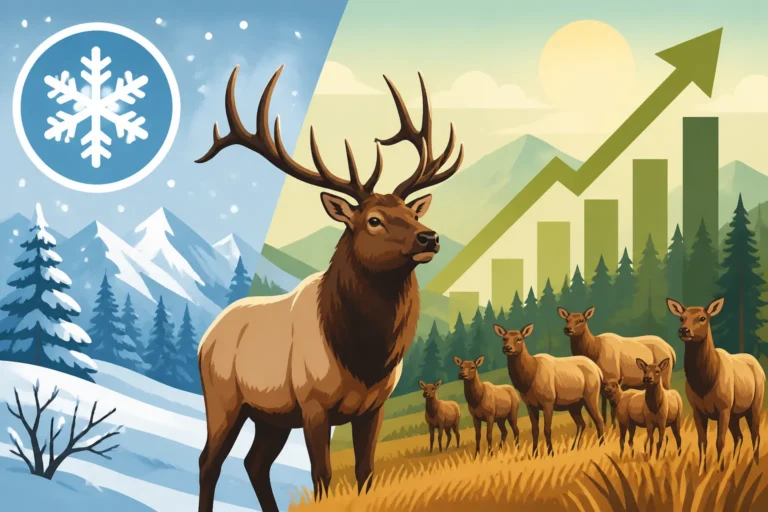
Think about a late, heavy spring snow in the Blue Mountains, or a prolonged, cold rainstorm in the Olympic Peninsula during calving season. These aren't just minor inconveniences for newborn elk calves; they can be deadly. Calves are born with limited fat reserves and are very vulnerable to hypothermia, especially if they get wet and cold. A cow's milk production can also be impacted by severe weather if she's struggling to find adequate forage.
Droughts, on the other hand, can reduce the quality and quantity of forage for pregnant and lactating cows. A cow that isn't in peak physical condition will likely produce a smaller, weaker calf, less able to withstand the rigors of its early life. Moreover, drier conditions can make it harder for calves to find dense cover for hiding, exposing them more to visual predators. The ability to monitor Washington Emergency Season Closures sometimes highlights how severe weather can drastically alter conditions for wildlife and hunters alike.
Habitat Quality and Nutritional Value
The old adage "you are what you eat" holds true for elk, especially for mother cows. High-quality habitat with abundant, nutritious forage is paramount for healthy calf production and survival. Cows need to enter the winter in good condition, sustain themselves through the lean months, and then find rich feed during gestation and lactation. If the habitat is poor – perhaps overgrazed, choked with invasive species, or lacking the necessary variety of plants – the cows will be less healthy, and their calves will suffer the consequences.
Good calving habitat also means adequate cover. This isn't just about hiding from predators; it's also about thermal regulation, especially during hot summers or cold snaps. Thick timber, dense brush, and tall grasses provide shade and shelter, helping calves conserve energy. Without these critical elements, calves are forced into more open, exposed areas, increasing their risk from both environmental stressors and predators. When you're E-Scouting Washington GMUs Before the Draw, paying attention to potential calving grounds – areas with dense cover near water and good forage – can give you a leg up in understanding herd dynamics.
Understanding the Data: Why Calf Survival Matters to Hunters
As hunters, we often focus on mature bulls and bucks, but the health of an elk herd is fundamentally tied to its calf survival rates. It's the engine of population growth, and understanding what influences it helps us appreciate the big picture and make more informed decisions about where and how we hunt. Resources like GoHunt are becoming increasingly important for visualizing this type of data, helping hunters connect the dots between habitat, predation, and harvest success.
Calf-to-Cow Ratios: A Key Indicator
Wildlife biologists use various metrics to assess the health of an elk population, and the calf-to-cow ratio is one of the most important. This ratio, often expressed as the number of calves per 100 cows, provides a snapshot of recruitment – how many young elk are successfully joining the adult population each year. A healthy, growing herd typically needs a certain number of calves surviving per 100 cows just to maintain its population, let alone grow it.
If calf-to-cow ratios consistently drop below a sustainable threshold, it's a red flag. It indicates that the herd isn't reproducing or surviving well enough to replace older animals lost to hunting, old age, disease, or other causes. This data helps wildlife managers make critical decisions about permit allocations, season lengths, and even habitat improvement projects. As a hunter, checking the Washington Big Game Pamphlet Release each year will often include these population metrics, which can be an eye-opener.
Disease and Other Mortality Factors
While predation is a major component, it's not the only biological factor contributing to calf mortality. Diseases, particularly those affecting the respiratory or digestive systems, can wipe out significant numbers of young animals. Calves have developing immune systems, making them more susceptible to pathogens that might not seriously affect adult elk. Certain parasites can also weaken calves, leaving them vulnerable to other threats.
Accidents are another often-overlooked factor. Calves can fall into ravines, get caught in fences, or be hit by vehicles, especially as they start to move around more actively. While individually these might seem minor, cumulatively they add to the overall mortality rate. Understanding Washington Wildlife Disease Surveillance efforts helps track these issues, providing a more complete picture of what our elk herds are facing.
Ultimately, elk calf survival is a delicate balance of favorable environmental conditions, effective maternal care, and a dynamic interplay with predator populations. As hunters, appreciating these complexities helps us understand the resilience and vulnerabilities of the game we pursue and informs our advocacy for sound wildlife management.
Disclaimer
This article is for general informational purposes only and does not constitute professional advice. Laws, prices and regulations vary by location and change over time. Consult a qualified professional for guidance on your specific situation.