Reporting a Limping Elk to WDFW
It's a sight that can stop you dead in your tracks: an elk, majestic and powerful, struggling with a noticeable limp. Whether it's a slight hitch in its gait or a severe, obvious injury, witnessing an animal in distress can be heartbreaking, especially for those of us who care deeply about Washington's wildlife. This guide will walk you through exactly why and how you should report a limping elk to the Washington Department of Fish and Wildlife (WDFW), helping you understand the impact your observation can have on herd health and management.
Why Reporting a Limping Elk Matters
When you see a limping elk, your first thought might be concern for that individual animal. While that's absolutely valid, your report to WDFW actually serves a much larger purpose, contributing to the health and management of entire elk herds across Washington. It's about being an active participant in wildlife conservation, not just a spectator.
The Spread of Elk Hoof Disease
One of the most significant reasons WDFW tracks reports of limping elk is to monitor and understand the spread of elk hoof disease (EHD). This isn't just a minor ailment; it's a serious bacterial infection that can cause severe lameness, affecting an elk's ability to forage, escape predators, and even survive the harsh Washington winters. Imagine trying to navigate dense timber or escape a cougar when every step is agony. When you report a limping elk, especially one showing severe symptoms, you're providing crucial data points to wildlife biologists who are actively trying to map the prevalence and distribution of this debilitating illness. These reports help them understand where the disease is concentrated, how quickly it might be spreading, and what potential impacts it could have on the long-term health and populations of Washington's elk herds. For a deeper dive, you might find more information on Elk Hoof Disease Symptoms and What Causes Elk Hoof Disease helpful in understanding this threat.
WDFW's Role in Disease Surveillance
WDFW relies heavily on public observations, especially from hunters and outdoor enthusiasts, for its disease surveillance efforts. They can't be everywhere, all the time. Each report of a limping elk, particularly if it's exhibiting classic EHD signs, adds another piece to a complex puzzle. This collective data helps WDFW assess the overall health of specific herds, like the Willapa Hills Elk Herd or the Yakima Elk Herd, and identify potential outbreaks before they become widespread crises. Your report isn't just about one limping animal; it's about helping wildlife managers make informed decisions regarding herd health, habitat management, and even hunting season structures. Without these eyes on the ground, critical information about diseases and injuries affecting our state's elk would go unnoticed, making it much harder for WDFW to fulfill its mission of preserving Washington's diverse wildlife populations. It's a fundamental part of Washington Wildlife Disease Surveillance.
How to Report a Limping Elk to WDFW
Reporting a limping elk might seem intimidating, but the process is straightforward, and the more detailed information you can provide, the more valuable your report becomes to WDFW. Don't worry about getting every single detail perfect; just do your best to gather as much as you can.
What Information WDFW Needs
When you contact WDFW, they'll want to gather specific information to make your report actionable. Think of yourself as a detective, gathering clues. The most critical piece of information is the exact location of the elk. GPS coordinates are ideal, but if you don't have them, describe the location as precisely as possible using landmarks, road names, trail numbers, or nearby town names. Mapping apps like GoHunt are excellent for this, allowing you to quickly drop a pin and capture precise coordinates, even if you're offline. Beyond location, try to note the date and approximate time you observed the elk.
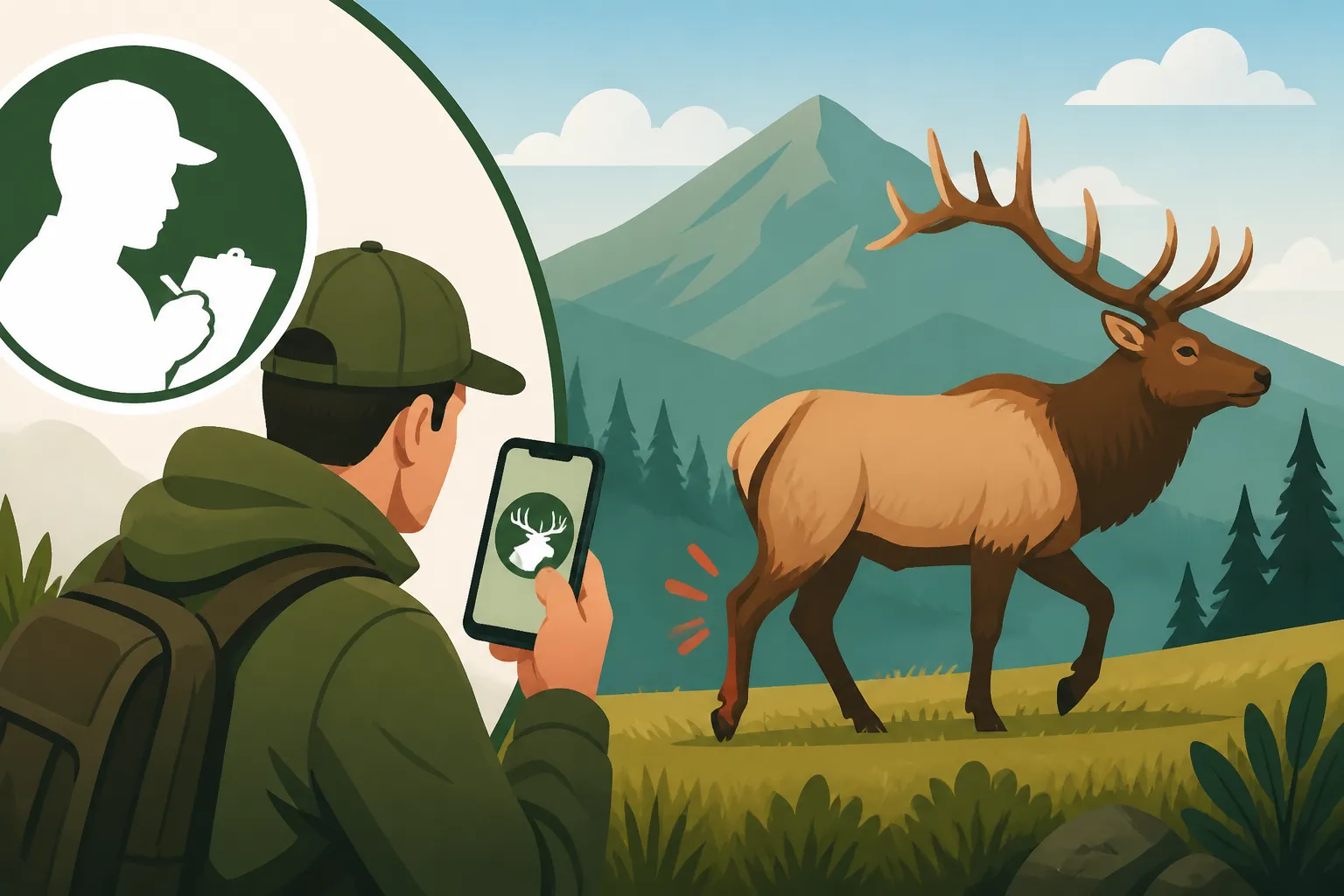
Next, a detailed description of the elk itself is crucial. Was it a bull, a cow, or a calf? If it was a bull, could you estimate its antler size or point count? What was its overall body condition – did it look healthy otherwise, or was it thin and weak? Most importantly, describe the severity and nature of the limp. Was it a slight hobble, or was the animal putting no weight on a leg? Which leg seemed affected? Did you notice any visible injuries like open wounds, swelling, or deformed hooves? Finally, describe the elk's behavior. Was it alone or with a herd? Was it trying to feed, or did it seem lethargic and isolated? Was it actively moving, or standing still? The more specifics you can recall, the better WDFW can assess the situation.
The Reporting Process Step-by-Step
Once you have your information, there are a couple of primary ways to get it to WDFW.
- Call WDFW's Enforcement Program: For urgent or time-sensitive observations, especially if an animal appears to be in immediate distress or danger, calling is usually the fastest method. You can reach WDFW Enforcement during business hours, but if it's after hours or a weekend, you can contact the Washington State Patrol communications center, which can then relay the information to a duty officer. Always prioritize safety if approaching any injured animal; wild animals can be unpredictable and dangerous, especially when in pain.
- Submit an Online Report: WDFW also has an online reporting form specifically for wildlife observations, including those related to elk hoof disease. This is often the best route for non-urgent observations. Look for sections related to "Wildlife Observations" or "Hoof Disease Reporting" on their official website. The online form will guide you through entering all the necessary details, including uploading photos or videos if you managed to capture any (which can be incredibly helpful!). Make sure you fill out all the fields as accurately as possible. While you might be focused on your next hunt using tools like GoHunt, remember to take a moment to report these observations.
Regardless of the method you choose, make sure to include your contact information. WDFW may need to follow up for clarification or additional details, and your input could be vital to their investigation.
What Happens After You Report an Elk?
It's natural to wonder what becomes of your report. You've taken the time to observe and notify WDFW, so what's the next step? It's important to understand that WDFW is managing a vast amount of territory and wildlife, and their response will depend on various factors.
WDFW Response and Follow-Up
Upon receiving your report, WDFW staff will log the information into their database. This data helps them track disease prevalence, identify problem areas, and analyze trends over time. Depending on the severity of the elk's condition, the reported location, and existing resources, WDFW may decide to investigate further. For instance, if there are multiple reports of severely affected elk in a localized area, it might trigger a more intensive field investigation by biologists or enforcement officers. They might visit the site to confirm observations, collect samples if an animal is found deceased, or assess the wider herd's health.
However, it's also realistic to understand that WDFW cannot respond to every single limping elk report with an immediate field deployment. Their resources are finite, and they must prioritize based on the potential impact to the broader population or specific management goals. You might not receive a direct call back or see immediate action, but rest assured, your information has contributed to their ongoing efforts. Every data point, even seemingly small, helps paint a clearer picture of Washington's wildlife health. This information contributes to larger reports and plans, such as those that inform Washington Big Game Pamphlet Release and how WDFW conducts Washington Wildlife Disease Surveillance.
Ethical Considerations for Hunters
As hunters, encountering a limping elk can present a unique ethical dilemma. If you're out during a general season, perhaps during Washington's Archery Deer and Elk Dates or Washington Modern Firearm Deer Seasons, and you see an elk that is clearly suffering from an injury or severe disease like EHD, you might wonder if it's appropriate or ethical to harvest it, provided it's legal within your tag and unit regulations. Many hunters believe that taking a severely diseased or injured animal is a humane act, preventing prolonged suffering and potentially removing a source of disease from the population.
However, always ensure you are within the legal parameters of your tag and the specific GMU you are hunting. Don't let empathy override legal requirements. For example, if you have a spike-only tag and encounter a limping branch-antlered bull, you cannot legally harvest it, even if it's clearly suffering. In such cases, the best course of action is to report it to WDFW. You also need to consider your ability to successfully and cleanly harvest the animal. An injured animal might react unpredictably, and a poor shot could lead to further suffering. This is where your skills in Shot Placement on a Quartering Elk and Blood Trailing in Thick Understory become crucial. If you choose to harvest an animal you suspect is diseased, always follow WDFW's guidelines for carcass handling and consider having the meat inspected, or at least be aware of the risks involved, particularly with certain diseases that can impact meat quality. Your actions reflect on the entire hunting community, so make ethical and informed decisions. Remember that all harvests must be accounted for in your Washington Harvest Reporting Requirements.
Here's a quick summary of what WDFW needs when you report a limping elk:
| Information Type | Key Details | Why It's Important |
|---|---|---|
| Location | GPS coordinates (preferred), landmarks, road names, nearest town, GMU | Pinpoints the animal for potential follow-up and mapping disease spread |
| Date & Time | Exact date and approximate time of observation | Helps establish a timeline and context for the observation |
| Elk Description | Sex (bull, cow, calf), approximate size, antler points (if bull), overall body condition | Identifies the animal and helps assess herd segment impacts |
| Limp/Injury Details | Which leg is affected, severity of limp, visible wounds, swelling, hoof deformities | Crucial for diagnosing potential causes like EHD or injuries |
| Behavior | Alone/with herd, lethargic/active, feeding/isolated, reaction to your presence | Provides insight into the animal's health and potential distress level |
| Your Contact Info | Name, phone, email | Allows WDFW to follow up for more details if needed |
Disclaimer
This article is for general informational purposes only and does not constitute professional advice. Laws, prices and regulations vary by location and change over time. Consult a qualified professional for guidance on your specific situation.