Where Washington Moose Live
It can feel like finding a needle in a haystack when you’re dreaming of seeing, let alone hunting, a moose in Washington. These magnificent animals are elusive, and unlike deer or elk, they aren't widespread across the state. This guide will walk you through the primary habitats where Washington's moose herds have established themselves and are slowly expanding, giving you a much clearer picture of where to focus your attention.
The Selkirk Mountains: Washington's Moose Stronghold
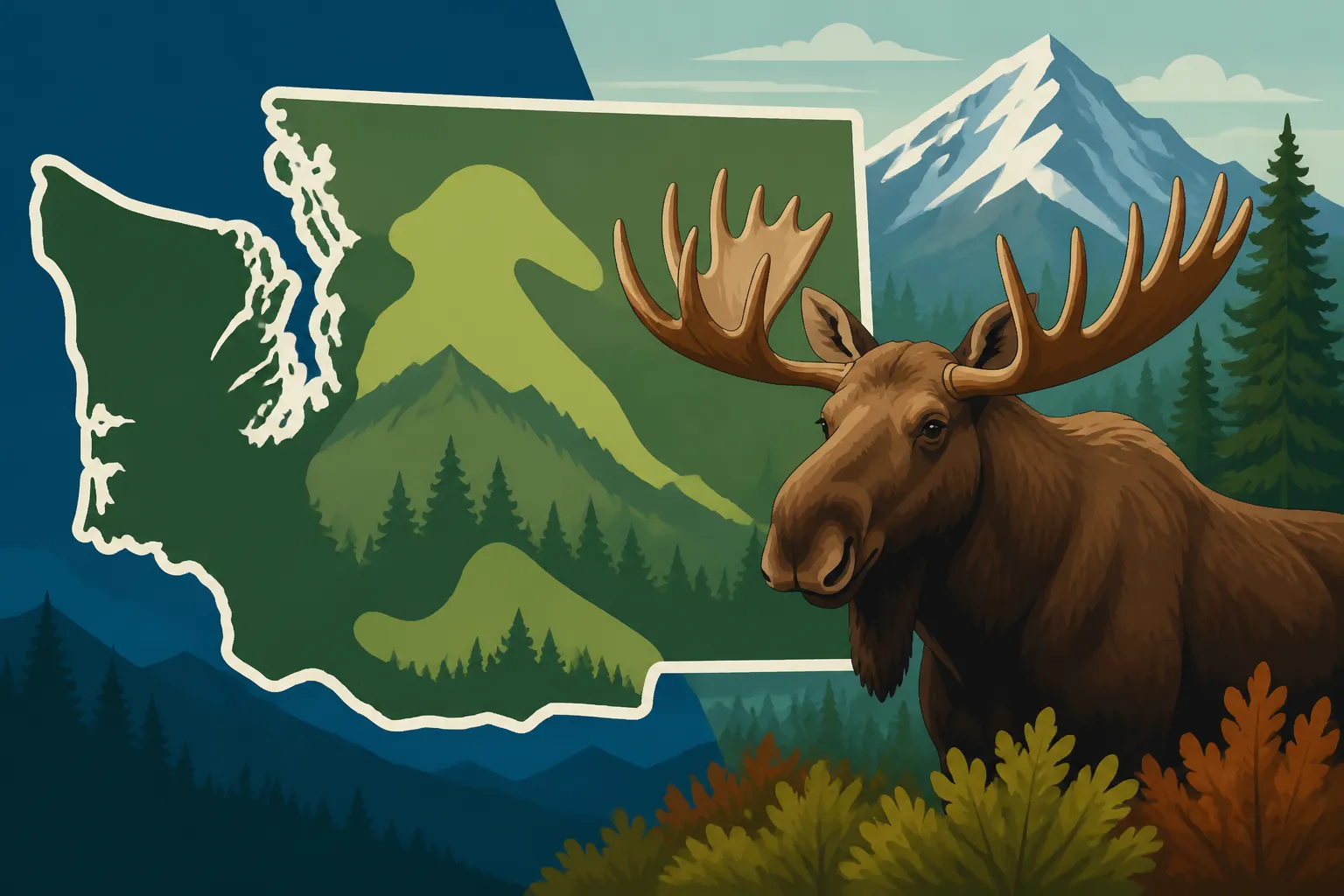
When you talk about moose in Washington, you're almost always talking about the Selkirk Mountains. This rugged, forested mountain range in the very northeast corner of the state, bordering Idaho and British Columbia, is the undeniable heartland of Washington's moose population. It’s where they first naturally re-established a significant presence and where you have the highest likelihood of encountering them.
Pend Oreille County's Prime Habitat
Within the Selkirks, Pend Oreille County stands out as the core of Washington's moose country. Imagine vast tracts of timberland, interwoven with a maze of rivers, streams, and countless small wetlands. This isn't your open eastern Washington sagebrush or western Washington clearcuts; this is dense, mixed conifer forest with a strong component of deciduous trees and shrubs. Moose absolutely thrive in these environments because it offers everything they need: ample browse, cool water, and thick cover.
The landscapes here are characterized by rolling hills, steep drainages, and plenty of marshy areas. Look for areas near the Pend Oreille River and its tributaries, or around smaller lakes and beaver ponds. These aquatic environments are crucial for moose, providing not only water but also important food sources like aquatic vegetation. Early successional forests, those areas that have been recently logged or burned and are now regenerating, are also prime feeding grounds, offering a bounty of young willows, alders, and aspens – all moose favorites. If you're using tools like E-Scouting Washington GMUs Before the Draw, pay close attention to the aquatic features and recent logging activity in these areas.
Why the Selkirks Became a Moose Haven
The Selkirks offer a perfect storm of conditions that allowed moose to flourish. Historically, moose were present in Washington but their numbers dwindled significantly. However, a natural expansion from robust populations in Idaho and British Columbia, coupled with ideal habitat conditions, led to their resurgence in the Selkirks. The relatively low human population density compared to other parts of the state means less disturbance, and the habitat mosaic of wetlands, dense forests, and regenerating clearings provides both sustenance and security.
The elevation ranges from lower river valleys up to subalpine regions, giving moose options for seasonal movements, though they tend to stick to lower, wetter areas for much of the year, especially during hot summers. Washington Moose in the Selkirks often remain fairly localized, so if you find sign, there's a good chance they're not far off. The sheer scale of public land here, much of it within the Colville National Forest, also provides vast, undisturbed territory for these large herbivores to roam.
Expanding Horizons: Moose Beyond the Selkirks
While the Selkirks remain the hotspot, moose aren't content to stay put. Over the last few decades, their population has grown, and with that growth comes natural expansion into adjacent and even somewhat distant regions of Washington. It's a testament to their adaptability and the improving habitat conditions in certain areas.
Northeast Washington's Growing Herds
Beyond Pend Oreille County, moose have firmly established themselves across much of northeastern Washington, particularly in areas like Stevens and Ferry counties. These areas share many characteristics with the Selkirks, featuring mixed forests, numerous lakes, and river systems such as the Kettle River and the Columbia River drainage. While perhaps not as densely populated with moose as the core Selkirk range, these counties represent significant expansion areas.
You'll find moose here utilizing similar habitats: riparian zones along creeks and rivers, wetlands, and regenerating timberlands. As you move west through Ferry County towards the Okanogan, the habitat becomes a bit drier and more open in places, but moose still find niches, especially in the moister drainages and higher elevations. When looking at GMU maps or planning hunts with resources like GoHunt, don't overlook these areas. They might offer opportunities for those willing to do a bit more legwork, and Moose Population Growth in Washington shows a clear trend of this expansion.
Isolated Sightings and Potential New Ranges
What's really exciting for moose enthusiasts is the increasing number of sightings in other parts of the state, hinting at further expansion. There have been sporadic reports and even confirmed individuals popping up in the North Cascades, and occasionally even further south in the central Cascades. These aren't established, breeding populations yet, but they show the potential for moose to colonize new territories.
These occurrences often involve young bulls dispersing from established herds in search of new turf, or perhaps individuals wandering in from British Columbia. For hunters or wildlife watchers, finding a moose in these fringe areas would be an incredibly rare and special event. It's worth noting that these areas often present different challenges, such as steeper, rockier terrain in the high Cascades, but the presence of abundant water and specific types of browse could still make them viable long-term habitats. Hunting Washington's Wilderness Areas in places like the Pasayten or Glacier Peak wilderness could potentially put you in contact with these pioneering individuals, though it's certainly a needle-in-a-haystack scenario.
Moose Habitat Preferences: What They Look For
Understanding where moose live goes beyond just naming counties; it's about understanding the specific environmental factors that draw them in. Moose are highly specialized creatures, and their survival depends on finding exactly what they need in terms of food, water, and cover.
Browse: The Moose Menu
Moose are primarily browsers, meaning they eat twigs, leaves, and shrubs rather than grass. Their diet changes throughout the year, but they heavily rely on deciduous species. Think willow, aspen, birch, and dogwood. These species are particularly abundant in riparian areas, wetlands, and newly disturbed forest areas like recent clearcuts or burns where young shoots are thriving. In winter, they'll turn to conifers like fir and cedar, but these are less preferred and often only eaten when other browse is scarce.
The sheer volume of food a moose needs is staggering, which is why they prefer areas with dense, readily available browse. A good patch of willow thicket along a stream can sustain a moose for a long time. This is also why Reading Clearcuts and Reprod for Blacktail Bucks might give you some insight into areas that also appeal to moose, as deer often use similar young forest habitats, though their diets differ.
Water and Wetlands: Essential for Survival
Perhaps even more critical than specific browse species is access to water, particularly wetlands. Moose love water. They spend a lot of time in and around lakes, ponds, swamps, and slow-moving rivers. This isn't just for drinking; aquatic plants are a major part of their summer diet. They'll submerge their heads, sometimes their entire bodies, to feed on vegetation beneath the surface. These plants are often rich in sodium, a vital mineral that can be scarce in their terrestrial diet.
Wetlands also provide thermal refuge during hot summer days, allowing them to cool down and escape biting insects. The dense cover around these areas offers security from predators. Hunters often find success focusing their efforts around these water sources, especially during the warmer months. GoHunt's mapping features can be invaluable for identifying these prime wetland areas and planning your approach.
Cover: Security and Seclusion
Despite their massive size, moose are surprisingly shy and seek out dense cover for security. Thick conifer stands, dense brush, and regenerating forests provide places to bed down, escape the elements, and hide from predators and humans. They aren't animals that typically hang out in wide-open spaces for long. When you do see them in the open, it's usually when they are moving between patches of cover or feeding aggressively in a productive area.
The mosaic of dense cover interspersed with feeding areas is ideal. This allows them to feed openly but retreat quickly when disturbed. This need for solitude is a big reason why Backcountry Camps in Washington Wilderness and other remote areas where human presence is minimal are so important for moose. Their sensitivity to disturbance means that finding truly wild, untrammeled country is often key to finding these animals.
Population Trends and Challenges
Washington's moose population, while still relatively small compared to other states like Maine or Alaska, has shown remarkable growth over the last few decades. This expansion is a conservation success story, but it also brings unique challenges.
Growth of the Selkirk Moose Herd
The primary driver of Washington's moose resurgence has been the robust growth of the Selkirk Moose Herd Growth. From a handful of animals decades ago, estimates now place the statewide population in the thousands. This growth has allowed for limited hunting opportunities through special permits, reflecting healthy recruitment and survival rates in their core range. However, moose are slow to reproduce, typically having only one or two calves, so population increases are gradual.
The continued health of these herds relies on careful management, including habitat protection and monitoring for diseases. Unlike elk, which can be susceptible to hoof disease in western Washington, moose have their own set of potential health challenges, though these haven't dramatically impacted Washington's population to the same extent yet.
Habitat Fragmentation and Human-Wildlife Conflict
As moose expand into areas with more human presence, challenges arise. Habitat fragmentation due to development, road construction, and logging practices can reduce the amount of suitable, undisturbed habitat. While logging can create new browse, extensive, dense road networks can increase human disturbance. Collisions with vehicles are also an increasing concern as moose venture into areas near highways.
Moose, especially bulls during the rut, can be unpredictable and aggressive, leading to potential conflicts with hikers, campers, and landowners. While rare, these incidents highlight the need for public education and careful management as these large animals become a more common sight in certain landscapes. Understanding these dynamics is crucial, whether you're a hunter hoping for a Washington Moose Permit Applications or simply an outdoor enthusiast wishing to observe them.
A Table of Washington Moose Hotspots
To help you visualize where Washington's moose call home, here's a breakdown of key regions:
| Region | Primary Counties | Typical Habitat | Moose Presence | Key Features |
|---|---|---|---|---|
| Selkirk Mountains | Pend Oreille | Dense mixed forest, wetlands, riparian zones | High density, stable, core population | Rivers, beaver ponds, extensive public land (Colville NF) |
| Northeast Expansion | Stevens, Ferry | Mixed forest, lakes, river systems, regrowth | Moderate density, growing, spreading population | Kettle River, Columbia River drainages, diverse terrain |
| North Cascades | Okanogan, Whatcom | High elevation forests, river valleys | Sporadic sightings, individual dispersals | Steep terrain, potential for future establishment |
| Central Cascades | Chelan, Kittitas, Snohomish | Isolated valleys, subalpine basins | Very rare sightings, highly transient | High mountain wilderness, very limited suitable areas |
This table provides a quick reference for understanding the general distribution and characteristics of moose habitat across the state. Remember, moose are creatures of habit within their home ranges, but they also have the ability to roam widely, particularly young bulls. Keep your eyes peeled and respect their space if you're lucky enough to encounter one!
Disclaimer
This article is for general informational purposes only and does not constitute professional advice. Laws, prices and regulations vary by location and change over time. Consult a qualified professional for guidance on your specific situation.