Roosevelt Bull Antler Shape
Many hunters, especially those venturing into Washington's dense, mossy forests for the first time, often find themselves perplexed by the unique characteristics of Roosevelt elk antlers. Unlike their Rocky Mountain cousins, Roosevelts grow racks that can be a puzzle to judge, both in terms of identifying their specific features and understanding their growth patterns. This guide will help you unravel the distinct antler shape of a Roosevelt bull, offering insights into what makes them so special and how to better spot these magnificent animals in their natural habitat.
The Distinctive Anatomy of Roosevelt Elk Antlers
Roosevelt elk, predominantly found in the lush, wet environments of Western Washington, Oregon, and Northern California, have evolved antler characteristics distinctly different from the Rocky Mountain elk. While both are impressive, a Roosevelt bull's rack tells a story of its habitat and genetics, favoring mass and density over the expansive spread often seen in the Rockies. Understanding these nuances is key to appreciating and identifying them in the field.
Mass and Density Over Sheer Length
One of the most striking features of a Roosevelt bull's antlers is their sheer mass and density. Instead of exceptionally long main beams that sweep back and outward, Roosevelts tend to grow thicker, heavier beams that don't always reach the same incredible lengths as a prime Rocky Mountain bull. Imagine the difference between a finely-honed rapier and a broad, heavy sword – both formidable, but built for different purposes. This density is often most noticeable in the lower part of the main beam, near the burr, where they can appear quite robust before they even begin to branch.
This focus on mass means that even a bull with a modest number of points can carry a significant amount of bone, making its rack look incredibly substantial. It’s not uncommon to see a Roosevelt with relatively short main beams but with circumferences that would make a Rocky Mountain hunter gasp. This characteristic is a testament to the rich, albeit dense, foraging available in their coastal and mountain rainforest habitats. When you’re glassing a bull in the thick timber of the Olympic Peninsula, that heavy beam pushing through the salal is often your first clue it’s a Roosevelt. You might want to refer to our guide on Roosevelt Elk of Western Washington for more context on their habitat.
Unique Tine Configuration and Palmation
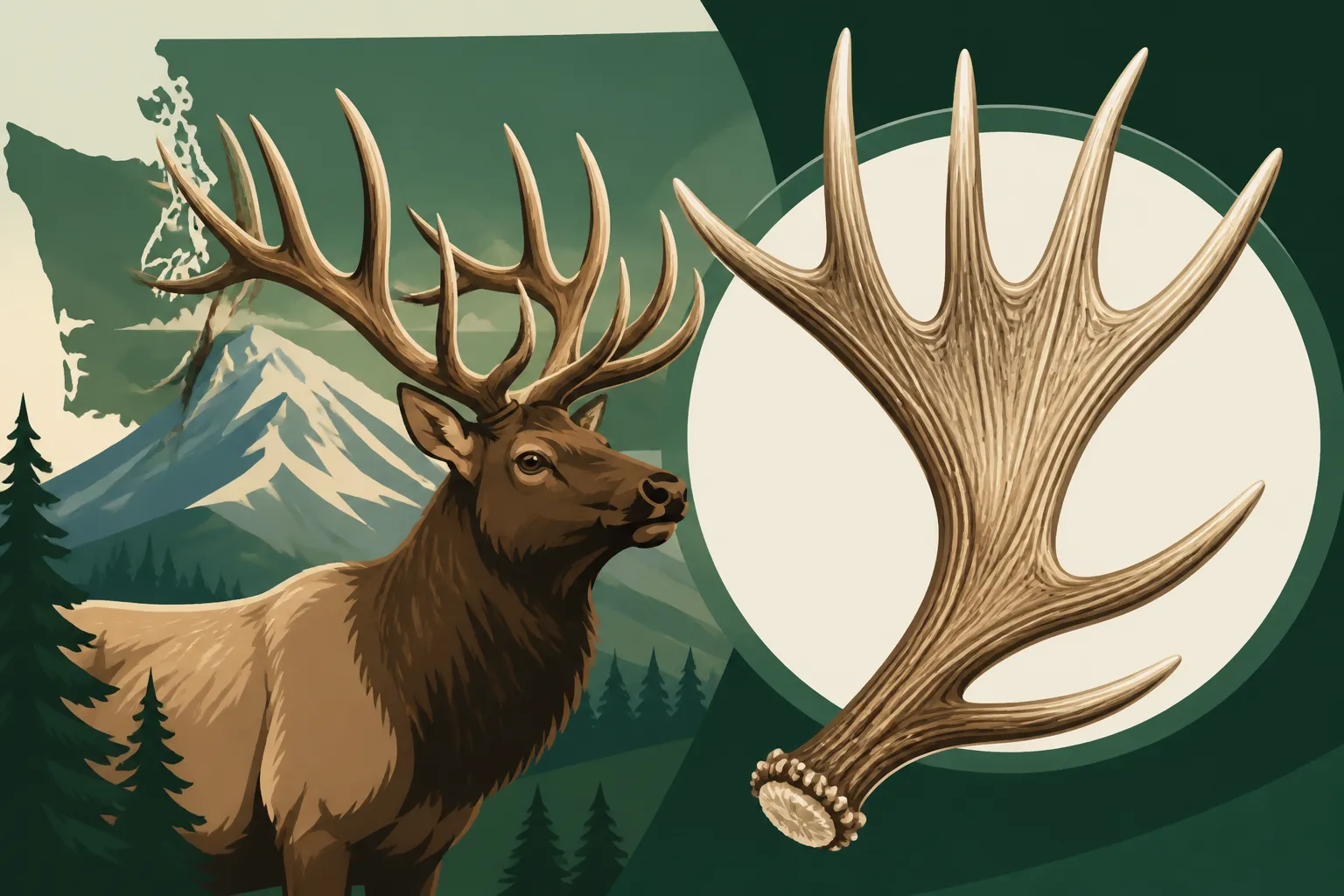
Beyond mass, Roosevelt elk antlers exhibit a distinct tine configuration and a propensity for palmation, especially in their upper points. While Rocky Mountain elk often display long, symmetrical tines, Roosevelt tines can be shorter, thicker, and often more irregular. The G-4 (fourth point) and G-5 (fifth point) can sometimes show a unique flattening or webbing effect, known as palmation, giving the top of the antler a broader, almost hand-like appearance. This isn't always present, but when it is, it's a dead giveaway for a Roosevelt.
This palmation, combined with the general robustness of the tines, contributes to a very "busy" looking top end of the rack. Instead of distinct, separate points, you might see several shorter points emerging close together, or even fusing slightly at their bases. The royal tines (G5 and G6) might form a complex crown, sometimes almost resembling a small club or a collection of dagger-like points rather than the elegant, sweeping tines of their eastern counterparts. This dense growth at the top is a hallmark feature and can make Judging Antler Points Before the Shot a unique challenge.
Factors Shaping Roosevelt Antler Development
Antler growth in any elk species is a complex interplay of genetics, age, nutrition, and environmental conditions. For Roosevelt elk, the specific challenges and opportunities presented by their unique Western Washington habitat profoundly influence the shape and size of their antlers. It's a testament to their resilience and adaptability.
Genetics and the Age Factor
Like all animals, a Roosevelt bull's potential for antler growth is hardwired into its DNA. Genetics dictate the basic framework, how many points it's likely to grow, and the overall shape and mass potential. Some bulls are simply born with the genes to grow larger, more impressive racks, while others, despite optimal conditions, may never reach the same trophy potential. This is true for all elk, but within the Roosevelt subspecies, specific genetic lines might favor that characteristic mass and palmation we discussed earlier.
Age, however, is arguably the most significant factor in realizing that genetic potential. A young bull, say a 2-year-old spike or a 3-year-old raghorn, is still funneling much of its energy into body growth. Its antlers will be relatively small, often thin, and may not show the mature characteristics until later. Roosevelt bulls typically reach their prime antler growth between 6 and 10 years of age, sometimes even older in areas with less hunting pressure. During these peak years, their bodies are fully developed, and a greater proportion of resources can be dedicated to producing those impressive, dense racks. It's during these years that hunters see the full expression of a bull's genetic potential.
Nutritional Impact from the Coastal Environment
The lush, wet environment of Western Washington provides a distinct nutritional profile that impacts Roosevelt antler growth. While the region boasts abundant vegetation, the quality and availability of crucial minerals can vary. The consistent rainfall and moderate temperatures ensure a longer growing season for plants compared to the arid east, but the nutrient content of these plants is paramount. Elk need a significant intake of protein, calcium, and phosphorus, among other minerals, to grow large, healthy antlers. If you're doing your homework on specific areas, resources like GoHunt can be incredibly helpful for researching historical data and understanding the nutritional potential of different GMUs.
Areas with rich, diverse forage, like those found in productive river bottoms or recently timbered areas with good regrowth, will generally produce bulls with larger antlers sooner. Conversely, bulls in overpopulated areas or those with poor forage quality might have stunted antler growth, even at maturity. Factors like a harsh winter or a particularly dry summer can also impact the quality of feed and, subsequently, the antler growth for the following year. A bull that suffered from a significant illness, such as Elk Hoof Disease Symptoms, might also show reduced antler development in the years following, as its body prioritizes healing over bone growth. Understanding Antler Growth and Nutrition is crucial for appreciating the complexities.
Environmental Stressors and Anomalies
Beyond genetics and nutrition, environmental stressors and other factors can lead to antler anomalies in Roosevelt bulls. Injury to the pedicle (the bony base on the skull from which the antler grows) or to the antler in velvet can result in deformed or atypical growth. A broken antler during the growing phase might cause the remaining antler to grow abnormally or compensate, sometimes resulting in a larger, more twisted appearance on the uninjured side.
Diseases or parasites can also divert essential nutrients, impacting antler size and symmetry. While less common, certain mineral deficiencies in the soil can lead to softer, less dense bone structure or unusual growths. These anomalies, while not ideal for a "perfect" score, often make for a truly unique and memorable animal. Every gnarly point or extra drop tine tells a story of the bull's life in the rugged Washington wilderness.
Tracing the Progression of Roosevelt Bull Antlers
Watching a Roosevelt bull's antlers develop over its lifetime is fascinating. From their first innocent spikes to the towering, dense crowns of a mature monarch, each stage brings new characteristics that help define them. Recognizing these stages and their typical features is crucial for hunters aiming to target specific age classes or simply to better understand the animals they pursue.
From Spikes to Mature Branch-Antlered Bulls
A Roosevelt bull's antler journey begins with "buttons" in its first year, followed by its first true antlers, typically "spikes," at around 1.5 years old. These are simple, unbranched antlers, often short and straight, though some may have small forks at the very tips. As the bull matures into its second year (2.5 years old), it usually becomes a "raghorn," developing its first branches, often a two-point or three-point on each side. These early racks are thinner and lack the mass of older bulls.
The progression continues, with increasing points and mass each year, until the bull reaches maturity. A truly mature Roosevelt bull, typically 5.5 years and older, will display heavy, dark antlers with significant mass, especially near the bases. The main beams will be robust, and the characteristic palmation or dense clustering of points in the upper rack will become more pronounced. These are the bulls that represent the pinnacle of antler growth for the species. Many hunters specifically look for these characteristics, especially in areas with a "branch-antlered" rule. For those interested in pursuing them, understanding the general Washington Elk Herds and Where They Live can provide valuable context for trophy potential.
The Signature Crowns and Webbing
One of the most defining aspects of a mature Roosevelt bull's antlers is the development of a "crown" or "club" at the top. While Rocky Mountain elk often have long, distinct G5 and G6 tines, the Roosevelt's upper points tend to cluster more tightly and can exhibit that distinctive palmation or webbing. This creates a more solid, sometimes almost prehistoric-looking mass at the end of the main beam. It’s not about individual tines standing tall and separate; it’s about a collection of stout points and bone mass creating a formidable cap.
Imagine a hand with fingers slightly splayed and thickened – that's often the impression a Roosevelt crown gives. This webbing can extend between the G4, G5, and even G6 points, adding incredible character and visual weight to the top of the rack. These crowns, coupled with the overall thick main beams, contribute significantly to the impressive scores for Roosevelt elk, emphasizing mass and width rather than exceptional length. The overall silhouette of a mature Roosevelt rack is often wider and more "bushy" at the top than the more open, sweeping racks of Rocky Mountain elk.
Common Antler Deformities and Wear
It’s rare to find a wild Roosevelt bull with a perfectly symmetrical, unblemished rack, especially as they age. They live in incredibly dense forests, constantly navigating thick brush, rubbing trees, and sparring with other bulls. These activities lead to common antler deformities and wear. Broken tines are frequent, particularly on sparring bulls, where points can snap off during territorial disputes. Main beams can get scarred and gouged from rubbing on trees.
Sometimes, a bull might develop a "freak" antler, where one side is significantly different from the other due to an injury early in the velvet stage or even a past injury to a leg or body that affects antler growth on the opposite side. It's a fascinating phenomenon; an injury to a bull's left leg, for instance, might result in a deformed right antler. These unique characteristics, while not always desirable for traditional scoring, add immense character and make each bull truly individual. Knowing When Bulls Shed Their Antlers can help you understand the annual cycle of these changes.
Field Judging Roosevelt Bulls Effectively
Field judging any animal is a skill that takes time, practice, and a keen eye. For Roosevelt elk, the challenges are amplified by their dense habitat and unique antler characteristics. It’s not always about finding the longest tines; it’s about appreciating the mass, width, and overall bone structure that defines a trophy Roosevelt.
Estimating Score and Spread with Confidence
When you're trying to estimate the score of a Roosevelt bull, you really need to shift your focus from sheer length, which is often the primary driver for Rocky Mountain elk. For Roosevelts, mass is paramount. Look for heavy, dark main beams that carry their mass well from the base all the way through the branches. The circumference measurements, which contribute significantly to the Boone and Crockett score, are where many Roosevelts really shine. Pay attention to the width and thickness of each tine, not just its length. A bull with shorter, fatter tines can outscore one with longer, thinner ones. You might also find it helpful to look into Boone and Crockett Minimums for Roosevelt Elk to get a clear picture of what constitutes a record book bull.
The spread is another factor, and while not as emphasized as mass, a good, wide spread adds to the aesthetic appeal and overall score. Roosevelt elk can have impressive spreads, but they often don't have the same dramatic outward sweep as Rocky Mountain elk due to their habitat. The "inside spread" measurement is taken at the widest point between the main beams. Because of the density of their habitat, estimating this can be tough. Practice estimating the width of a bull relative to its body, especially its ears when alert. Using optics like good binoculars or a spotting scope is critical. Resources like GoHunt can offer fantastic aerial views and topographic maps that help you understand the terrain, which in turn helps you gauge distances and sizes more accurately when E-Scouting Washington GMUs Before the Draw.
Overcoming the Challenges of Dense Habitat
Hunting Roosevelt elk often means hunting in some of the densest, wettest, and most rugged terrain Washington has to offer. This presents unique challenges for field judging. Unlike the open country of Eastern Washington, where you might have minutes to study a bull, in the Roosevelt's domain, you often get mere seconds. The bull might appear and disappear through thick timber, giving you only glimpses of its rack. This is where patience, good glass, and knowing what to look for quickly become invaluable.
When hunting in areas like the Olympic Peninsula, you're frequently glassing into deep shadows or through a maze of Douglas fir and alder. Instead of clear, full-body views, you'll often see only parts of the antlers. Focus on those key characteristics: the heavy main beams, the dense clustering or palmation of the top points, and the overall impression of mass. Listen to the sounds of the forest; a large bull moving through thick brush will sound different than a deer. Position yourself to get the clearest possible view, even if it means crawling to a better vantage point. This is often an art form, as discussed in Archery Elk Hunting in Washington's September Season.
Ethical Considerations and Washington's Rules
Beyond just judging the size, ethical considerations are always paramount when hunting. This includes ensuring you are absolutely certain of your target and that it meets any legal requirements for the unit you're hunting in. Washington has specific rules, such as spike-only units or branch-antlered requirements, which apply to general season tags. You need to be 100% confident in your judgment before taking a shot, not just for ethical reasons but for legal compliance. Misidentifying a spike as a branch-antlered bull, or vice-versa, can lead to serious legal consequences. Our guide on Washington's Minimum Rifle Caliber Rule is a good resource to review before heading out.
Furthermore, consider the health of the herd. While taking a trophy bull is a rewarding experience, understanding the balance of age classes within the herd contributes to sustainable hunting. Organizations like WDFW collect data on harvested animals, and your accurate harvest report helps them manage the elk population effectively. Always ensure you have the proper licenses and tags for the specific GMU and season you are hunting. Getting Washington Record Book Bulls is exciting, but doing it legally and ethically is always the top priority.
| Characteristic | Roosevelt Elk Antlers | Rocky Mountain Elk Antlers |
|---|---|---|
| Main Beams | Tend to be thicker, heavier, and darker in color. | Often longer, more slender, with a graceful sweep. |
| Mass/Circumference | Significantly higher, carrying bulk throughout. | Good mass, but typically less overall density than Roosevelts. |
| Tine Length | Can be shorter, stouter, and sometimes irregular. | Usually longer, more symmetrical, and well-defined. |
| Upper Points/Crown | Often exhibit palmation or dense, club-like clustering. | Typically distinct G5/G6 tines, less palmation. |
| Spread | Can be wide, but often appears more vertical and compact. | More likely to have a wide, sweeping, impressive spread. |
| Color | Typically darker, sometimes almost black, due to habitat. | Lighter, more varied shades of brown. |
Disclaimer
This article is for general informational purposes only and does not constitute professional advice. Laws, prices and regulations vary by location and change over time. Consult a qualified professional for guidance on your specific situation.