Bear Damage to Timber Plantations
It's incredibly disheartening for anyone who has invested time, money, and sheer physical effort into a timber plantation to walk through it and find young trees stripped bare, girdled, and essentially destroyed. We've all seen the signs of wildlife in the forest, but when it's your future timber crop being systematically eaten, it's a whole different kind of frustration. This guide is here to shed some light on why black bears might be targeting your valuable saplings in Washington and what steps you can take to protect your forestry investment.
Understanding Bear Damage to Timber Plantations in Washington
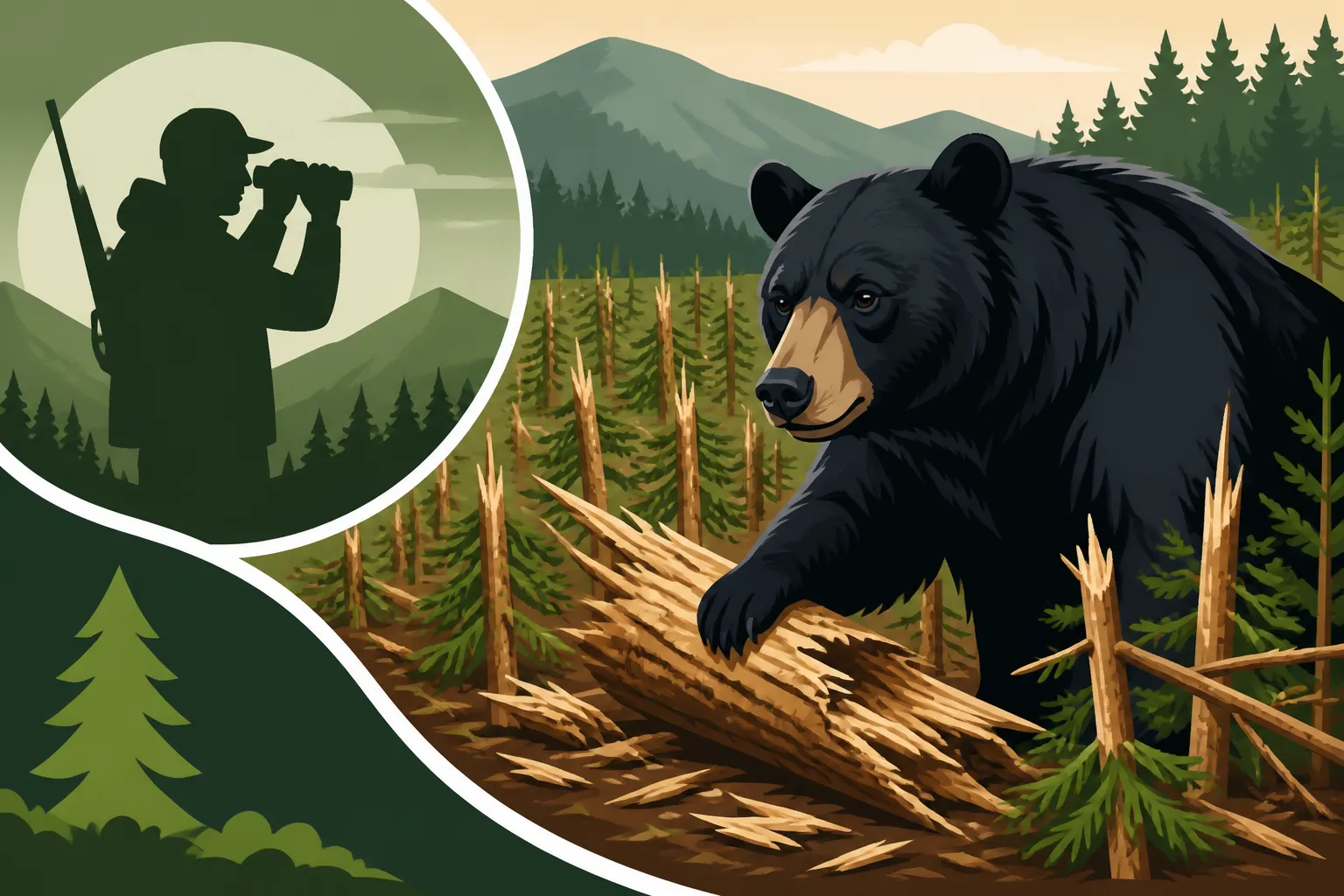
When we talk about "bear damage" in the context of timber, we're not talking about a bear scratching its back on a mature cedar or breaking a few branches while climbing. This is a very specific type of damage, primarily to young, thriving conifer trees like Douglas fir, western hemlock, noble fir, and even Ponderosa pine, particularly in Western Washington. Bears aren't typically "eating" the wood itself; rather, they're after the nutrient-rich cambium layer and the soft sapwood just beneath the bark.
Imagine the trunk of a young tree, perhaps 10 to 30 years old, with a smooth, relatively thin bark. A bear will use its claws and teeth to strip away sections of this bark, often in vertical strips or patches. Once the bark is off, they consume the underlying sapwood. This girdling action, if it extends all the way around the trunk, effectively severs the tree's ability to transport water and nutrients, leading to its death. Even partial girdling can severely weaken a tree, making it susceptible to disease, insects, or breakage in future windstorms. For a landowner, whether you're managing a few acres or thousands, this isn't just a nuisance; it's a direct attack on your long-term income and the ecological health of your forest. The loss of these trees means years of growth are wiped out, requiring costly replanting and delaying future harvests.
The financial implications can be staggering. Reforestation is expensive, and waiting for new trees to mature pushes back any potential revenue by decades. Beyond the direct economic loss, there's also the ecological impact. A healthy, diverse forest provides critical habitat for countless species, and widespread tree mortality from bear damage can disrupt these ecosystems. It's a complex problem, and one that requires a nuanced understanding of both forestry and wildlife behavior.
Why Bears Target Young Trees: The Nutritional Angle
It might seem counterintuitive for a large omnivore to eat trees, but there's a very specific biological reason and seasonal timing behind this behavior. Black bears, especially after emerging from their long winter's nap, are driven by a powerful need to replenish their energy stores. When they first wake up in early spring and early summer in Washington, the bounty of berries, succulent grasses, and salmon isn't quite available yet. The forest floor might still be sparse, and other traditional food sources are simply not abundant enough to meet their caloric demands.
This is where the cambium layer and sapwood of young conifers come into play. These tissues, particularly in the spring, are bursting with readily digestible carbohydrates and sugars that have been stored over winter and are now being mobilized for the tree's spring growth. For a bear, it's like finding a sugary, fibrous snack that's easy to access and relatively abundant. They'll often target trees that are rapidly growing, as these tend to have thicker, juicier sapwood. This behavior is most pronounced from April through July, before the huckleberries ripen and salmon runs begin in earnest. You'll notice the damage tapers off once natural food sources become plentiful. If you want to dive deeper into what bears are eating throughout the year, check out our guide on Bear Diet Through the Washington Seasons.
The specific type of trees targeted also matters. Douglas fir seems to be a particular favorite, but western hemlock and other conifers can also suffer. The size of the trees typically ranges from 4 to 12 inches in diameter at breast height – old enough to have a decent amount of sapwood, but young enough to have bark that's still relatively easy to strip. Larger, older trees with thicker, furrowed bark are rarely affected by this type of feeding. Understanding this seasonal motivation is key to predicting when and where damage might occur, which in turn helps in developing effective mitigation strategies.
Identifying Bear Damage Versus Other Forest Critters
When you find damaged trees, it's crucial to correctly identify the culprit. While bears are significant, other animals can also leave their mark on timber, and misidentification can lead to ineffective management solutions. Bear damage has some very distinct characteristics that, once you know what to look for, are hard to mistake.
Distinctive Characteristics of Bear Damage
Bear damage typically involves vertical strips of bark pulled down the trunk. You'll often see distinct claw marks running parallel to the stripped area, sometimes quite deep into the wood itself. The chewing marks on the exposed sapwood will be relatively wide, reflecting the size of a bear's incisors. Bears often strip bark from the ground level up to a few feet, or even higher if they stand on their hind legs or climb a bit, but usually not to the very top of a tall sapling. The exposed wood, once the cambium and sapwood have been eaten, will be noticeably scraped and often have residue from the bear's teeth. These wounds are typically fresh, moist, and sticky with sap when the damage first occurs, then dry and darken over time.
Differentiating from Other Wildlife Damage
Here's where things can get tricky if you're not paying close attention. Deer and elk can also damage trees, but their methods are different:
- Deer Browse: Deer typically nip off the tips of young shoots and branches, especially in winter when other forage is scarce. The ends of the branches will show a ragged, torn appearance because deer lack upper incisors and must pull and twist the vegetation. This is very different from the stripping action of a bear. If you're wondering more about deer in your area, consider checking out Blacktail Deer Hunting in Western Washington Timber.
- Elk Rubbing: Elk, particularly bulls during the rut, will rub their antlers on young trees to remove velvet or mark territory. This damage is usually higher on the trunk, often several feet off the ground, and leaves deep scrapes and gouges from the antlers. The bark might be shredded, but you won't see the wide chewing marks or the systematic sapwood consumption characteristic of bear damage.
- Rodent/Beaver Damage: Smaller mammals like voles or rabbits might gnaw on the bark of very young seedlings close to the ground, leaving small, irregular chew marks. Beavers, of course, chew through entire trees, leaving characteristic conical cuts and felling them near water sources. Neither of these will resemble the extensive stripping and sapwood feeding of a bear.
Here’s a quick comparison to help you identify the culprit:
| Damage Type | Typical Culprit | Appearance of Damage | Location on Tree | Key Identifying Marks |
|---|---|---|---|---|
| Bark Stripping | Black Bear | Vertical strips of bark removed, sapwood exposed and scraped. | Ground level to several feet up. | Wide chewing marks, distinct claw marks. |
| Browse | Deer, Rabbit | Nipped or raggedly torn branch tips, missing buds/leaves. | Lower branches, accessible height. | Ragged cuts (deer), clean cuts (rabbit). |
| Antler Rubbing | Elk, Deer | Shredded bark, deep gouges, branches broken. | Mid-trunk, 3-6 feet off ground (elk). | Antler scrapes, no chewing. |
| Girdling | Vole, Mouse | Irregular gnawing on bark, completely encircling trunk. | Base of seedling, snow line. | Small, irregular chew marks. |
| Felling/Chewing | Beaver | Tree cut down, conical chew marks on stump. | Near water bodies. | Large, distinct tooth marks. |
Correct identification is paramount because the remedies for each type of damage are entirely different. What works for deer browse won't deter a hungry bear.
Mitigation Strategies: Protecting Your Investment from Bear Damage
Once you've confirmed that bears are indeed the problem, the next step is to implement strategies to protect your timber. This isn't always a simple fix, and often requires a multi-pronged approach that can include non-lethal methods, habitat management, and, importantly, population management through regulated hunting.
Non-Lethal Deterrents and Habitat Management
For smaller, high-value plantations, some landowners explore non-lethal deterrents, though their effectiveness can be limited or temporary over large areas. These might include:
- Electric Fencing: A robust electric fence can deter bears, but it's often cost-prohibitive and labor-intensive for extensive timber properties. It's more practical for nurseries or very small, specific plots.
- Repellents: Chemical repellents, often capsaicin-based, are sometimes tried, but they require frequent reapplication, especially in Washington's wet climate, and their long-term efficacy against a truly hungry bear is questionable.
- Alternative Food Sources: Some forest managers attempt to plant alternative food sources like berry bushes to draw bears away from vulnerable trees. While this can contribute to a healthier ecosystem, it's rarely a complete solution to severe timber damage. Making sure natural food sources are abundant can reduce the likelihood of bears resorting to sapwood, but it's not a guarantee.
Habitat management can also play a role. Maintaining a diverse forest with a good mix of age classes and tree species can offer more natural food options for bears, potentially reducing their reliance on conifer sapwood. However, this is a long-term strategy that doesn't offer immediate protection for currently vulnerable plantations.
Population Management Through Regulated Hunting
For many timber companies and landowners facing significant, recurring bear damage, regulated hunting is often considered the most effective long-term solution. When local bear populations exceed the carrying capacity of the land or become overly reliant on timber as a food source, strategically reducing their numbers through hunting can alleviate the pressure on young trees.
In Washington, black bear seasons are carefully managed by the Washington Department of Fish and Wildlife (WDFW) with specific season dates and harvest guidelines. Many timber companies, recognizing the economic impact of bear damage, work with hunters to provide access to their lands. Sometimes, landowners will actively seek out hunters to help manage bear numbers in specific areas prone to damage. Using resources like GoHunt, hunters can research bear distribution and potential habitat, making them better equipped to assist landowners or manage populations on public lands adjacent to private timber. We have a lot of information on bear hunting tactics, including Spot-and-Stalk Bear Hunting in Washington Without Bait, which could be helpful.
It's important to remember that this isn't about eradicating bears. It's about maintaining a healthy balance. Properly managed bear populations are vital to Washington's ecosystems. However, when those populations are causing significant economic harm to timber resources, targeted hunting, in cooperation with WDFW regulations and permits, can be a valuable tool. If you're a landowner with timber damage, reaching out to your local WDFW biologist can provide specific guidance and information on potential bear management programs or opportunities for hunters to access your land. Furthermore, understanding the nuances of private land access, like Timber Company Permits in Western Washington, can be crucial for both hunters and landowners looking to collaborate on management efforts.
Dealing with bear damage to timber plantations is a complex issue, requiring careful observation, correct identification, and a willingness to explore various management tools. By understanding the underlying reasons for the damage and working within established regulations, landowners can take meaningful steps to protect their forests and the vital resources they provide.
Disclaimer
This article is for general informational purposes only and does not constitute professional advice. Laws, prices and regulations vary by location and change over time. Consult a qualified professional for guidance on your specific situation.