Washington Moose Population Numbers
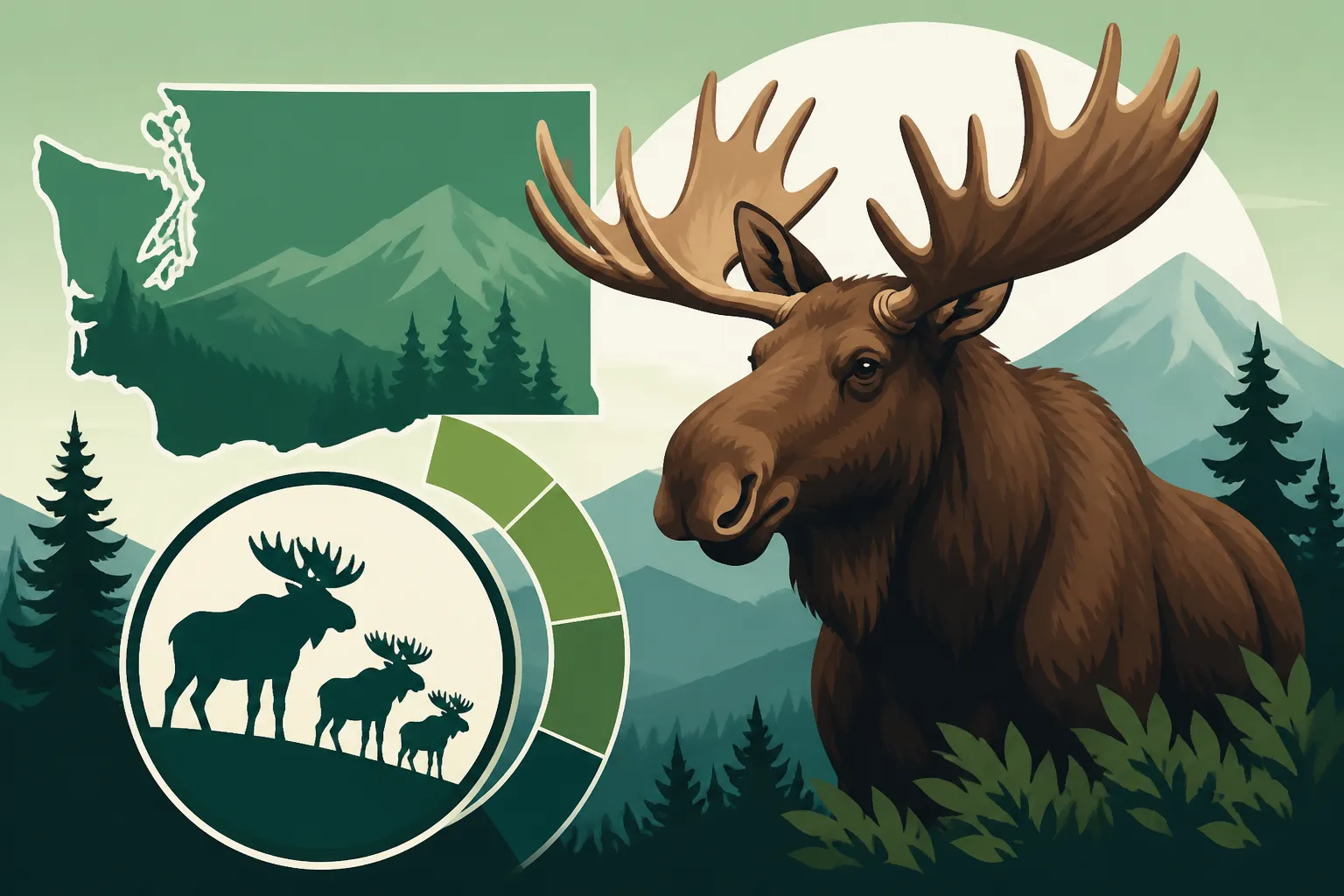
For many Washington hunters, the idea of pursuing a moose feels like a distant dream, almost a myth. It's frustrating to know these magnificent animals roam parts of our state, yet encountering one, let alone drawing a tag, feels impossibly rare. This guide is here to pull back the curtain on Washington's moose populations, delving into where they live, how their numbers are tracked, and what the future might hold for these incredible creatures.
The Elusive Washington Moose: A Recent Resurgence
It might surprise some, but moose haven't always been a prominent fixture in Washington's wildlife landscape. While they've certainly been here for centuries, their populations saw significant declines in the past due to factors like overhunting and habitat loss. For a long time, sighting a moose in Washington was akin to spotting a ghost – a rare, almost legendary event. However, thanks to natural migration from neighboring states and dedicated conservation efforts, their numbers have been slowly, but steadily, increasing over the last few decades. It's a true testament to the resilience of wildlife and the importance of healthy ecosystems.
A Brief History of Moose in Washington
Back in the day, historical records and anecdotal accounts suggest that moose were present in Washington, primarily in the northeastern corners of the state. However, as settlement expanded and land use changed dramatically through the 1800s and early 1900s, moose populations dwindled to near non-existence. They were largely considered extirpated from much of their historical range. The real turning point, the one that excites modern hunters and wildlife enthusiasts, began in the mid-to-late 20th century. Moose from healthy populations in Idaho and British Columbia started to naturally expand their range, pushing westward and southward into suitable habitat within Washington. This slow, natural recolonization has been the primary driver of their return, rather than specific reintroduction programs. It's a quiet success story unfolding right before our eyes, demonstrating how interconnected our wild spaces truly are.
Where Washington Moose Primarily Live
When we talk about moose in Washington, one region immediately springs to mind: the Selkirk Mountains. This mountain range, stretching across northeastern Washington into Idaho and British Columbia, is the undisputed stronghold for moose in our state. The dense forests, abundant wetlands, and high-elevation meadows provide ideal habitat. You'll find them in areas like the Colville National Forest, where the mix of mature timber, brushy clearcuts, and riparian zones offers both food and cover. While the Selkirks are the main event, scattered sightings and small populations have also been noted in other parts of eastern Washington, particularly in the Kettle River Range and even occasionally further south into the Blue Mountains. These are generally isolated individuals or small family groups, not the robust herds seen in the Selkirks. Their expansion, however, hints at the potential for future population growth if suitable habitat remains available and connected. You can learn more about specific herd locations in Washington Moose in the Selkirks.
Factors Influencing Moose Presence
Moose are particular about their living arrangements, and Washington offers pockets of prime real estate. They thrive in areas with a specific mix of mature coniferous forests for cover, especially during deep snow or hot summers, and wetland or riparian areas for forage. They love to browse on willow, aspen, and various aquatic vegetation. That's why those low-lying, swampy areas near streams and lakes, especially those bordered by dense timber, are often moose magnets. Access to clean water is also crucial, not just for drinking but for cooling off and foraging on submerged plants. The availability of these key habitat components directly dictates where moose can establish and sustain a population. Changes in forest management, such as extensive clear-cutting without adequate riparian protection, or the impacts of large wildfires, can significantly alter the quality of moose habitat, sometimes for better, sometimes for worse.
Understanding Moose Population Dynamics
It's natural for hunters and wildlife enthusiasts to wonder, "Just how many moose are there in Washington?" It's not an easy question to answer precisely, given their elusive nature and the rugged terrain they inhabit. However, wildlife agencies work hard to gather data, employing various methods to get the best possible estimates. These efforts help inform management decisions, including setting permit numbers for those coveted special hunts. Without a clear picture of population trends, it would be impossible to sustainably manage such a sensitive species.
How Washington Estimates Moose Numbers
Counting moose isn't like counting deer in an open field; they're big, they're shy, and they live in thick cover. The primary method used by wildlife agencies in Washington to estimate moose populations is aerial surveys. These often involve flying fixed-wing aircraft or helicopters over known moose habitat during late winter when snow cover makes the dark-colored moose more visible against the white background, and deciduous trees have dropped their leaves, reducing canopy obstruction. Biologists systematically fly transects, counting moose and sometimes classifying them by age and sex. This data is then extrapolated to estimate the total population within a given area.
Beyond aerial counts, other indicators play a role. Public sightings, especially those reported through official channels, can provide valuable supplementary information about range expansion or areas of increasing activity. Harvest data from permitted hunts, including age and sex ratios of harvested animals, also offers insights into the health and structure of the population. By combining these different data sources, biologists can build a more comprehensive, albeit still challenging, picture of Moose Population Growth in Washington.
Current Population Trends and Challenges
Overall, Washington's moose population has been on an upward trend for several decades, a truly positive story in wildlife conservation. While specific numbers fluctuate year to year, the general trajectory has been one of growth and expansion from their core Selkirk range. However, this growth isn't without its challenges. Habitat fragmentation due to development, severe wildfire events that alter forest structure, and climate change impacts can all play a role.
Disease can also be a silent threat. For instance, Moose Ticks and Winter Survival is a real concern. Heavy tick infestations, particularly in milder winters, can lead to significant blood loss, weakened immune systems, and even direct mortality, especially in calves and yearlings. Predator pressure from wolves and cougars, while a natural part of the ecosystem, can also influence calf survival rates, especially in areas where moose populations are still establishing. Understanding these complex interactions is crucial for long-term population health and ensuring these majestic animals continue to thrive.
Comparison with Other Western States
While Washington is celebrating its moose resurgence, it's important to remember that our moose populations are still relatively small compared to some other western states like Idaho, Montana, and especially Alaska, which boast truly robust, expansive moose populations. In those states, moose hunting is often a general season opportunity or involves significantly higher permit numbers. Washington, by contrast, operates with an extremely limited special permit draw, reflecting the still-developing nature of our herds.
For hunters looking to learn more about specific management strategies and population data, resources like GoHunt often compile information across states. They can be invaluable for understanding the broader picture of moose management in the West, and how Washington fits into that regional context. This comparison highlights why Washington's tags are so difficult to draw – we're still in a sensitive growth phase.
The Selkirk Moose Herd: A Success Story
The Selkirk Mountains are truly the crown jewel of Washington's moose country. It's here that the story of moose re-establishment and growth is most evident, offering a glimmer of hope and excitement for those who dream of glimpsing or even hunting these incredible animals in our state. This region represents the future of moose in Washington, showcasing what's possible with good habitat and sound management.
The Heart of Washington's Moose Country
The Selkirk Mountains, straddling the border with Idaho and British Columbia, offer a near-perfect mosaic of habitats that moose find irresistible. Think deep, dark timber that provides essential thermal cover during extreme weather, especially for calves trying to escape the sun in summer or the biting winds of winter. Interspersed with these forests are sprawling wetland complexes, beaver ponds, and riparian corridors choked with their favorite browse: willow, red osier dogwood, and various aquatic plants. This rich diversity of forage ensures a year-round food supply. The rugged, often difficult-to-access terrain also provides a degree of natural refuge, allowing moose to exist with less human disturbance than in more populated areas. This combination of robust habitat and relative isolation has allowed the Selkirk herd to become the primary source for Washington's expanding moose population.
Conservation Efforts and Their Impact
The growth of the Selkirk moose herd is not accidental; it's a direct result of ongoing conservation efforts and favorable natural conditions. Wildlife agencies in Washington have focused on monitoring these populations closely, managing habitat to ensure food and cover remain abundant, and regulating harvest very conservatively. The limited number of special permits issued annually ensures that hunting pressure remains minimal and sustainable, allowing the population to continue to grow and expand. Furthermore, efforts to manage timber resources in a way that creates a mosaic of habitat – including mature stands, regenerating clearcuts, and protected riparian zones – directly benefits moose. Understanding how different forest practices impact moose is crucial, and agencies are constantly refining their approaches. The commitment to understanding and protecting this herd has allowed for this incredible success story.
Moose Ticks and Winter Survival
While the Selkirk moose herd is thriving, it's not without its vulnerabilities. One of the most significant emerging threats, as briefly mentioned earlier, is the winter tick. These aren't just any ticks; Dermacentor albipictus can infest a single moose with tens of thousands of individuals. In a bad year, particularly following a mild winter where more ticks survive, moose can become so infested that they scratch off large patches of hair, leading to significant hair loss, sometimes referred to as "ghost moose" due to their pale appearance. This hair loss reduces their insulation, making them susceptible to hypothermia, especially if a late-season cold snap hits. The blood loss from thousands of feeding ticks can also lead to anemia and severe debilitation, making moose more vulnerable to predators or simply succumbing to the elements. Monitoring the prevalence of these ticks and understanding how they interact with changing winter conditions is a critical aspect of ensuring the long-term health of the Selkirk herd and, by extension, all Moose Ticks and Winter Survival across Washington.
What This Means for Washington Hunters
For many, the dream of drawing a Washington moose tag is akin to winning the lottery. It's a testament to the rarity and special nature of these animals in our state. While the populations are growing, the opportunities remain incredibly limited, making every tag drawn a once-in-a-lifetime experience for most.
The Reality of Washington Moose Permits
Let's be blunt: Washington Moose Permit Applications are submitted by thousands of hopeful hunters each year, but the number of available permits is extremely low. We're talking about a handful of tags for the entire state, often in the single or low double digits. This creates incredibly long odds. Unlike deer and elk general seasons, moose are strictly a special permit hunt, designed to carefully manage harvest and allow populations to continue their recovery and expansion. The low permit numbers reflect the conservative approach necessary to sustain a species that is still considered sensitive in Washington. For those interested in the actual figures, you can often find details on Washington Moose Permit Numbers and Washington Moose Draw Odds through wildlife department publications or specialized hunting platforms. It's a tough draw, but the reward is immense.
Contributing to Moose Conservation
Even if you don't draw a moose tag, there are still ways you can contribute to their conservation. Supporting wildlife agencies through your license purchases is a fundamental way. Additionally, consider getting involved with conservation organizations that focus on habitat preservation and management in northeastern Washington. Reporting moose sightings, especially those of sick or injured animals, to the state wildlife agency provides valuable data for biologists. Being a responsible outdoor recreationist – packing out what you pack in, adhering to fire restrictions, and respecting road closures – all contribute to maintaining healthy habitats for moose and all wildlife. Every little bit helps ensure these magnificent animals continue to roam Washington's wild places.
Finding Information for Moose Hunting
If you're serious about the long shot of drawing a moose tag, or simply want to stay informed about their populations, diligent research is key. The Washington Department of Fish and Wildlife (WDFW) website is your primary source for regulations, permit application details, and harvest reports. The annual Big Game Hunting Seasons and Regulations pamphlet will outline the available hunts, dates, and GMUs.
Beyond official sources, platforms like GoHunt provide valuable tools for researching special hunt draw odds, unit information, and historical data, often offering a more consolidated view of application strategies. They can help you sift through the complexities of hunt choices and increase your understanding of potential areas. E-Scouting tools, which let you virtually explore potential hunting units from home, are also incredibly useful for understanding habitat, access points, and terrain. Knowing how to use resources like E-Scouting Washington GMUs Before the Draw can give you an edge in understanding the limited opportunities available.
| Moose Population Characteristic | Selkirk Mountains | Kettle River Range | Blue Mountains (Occasional) |
|---|---|---|---|
| Population Status | Stronghold, Growing | Scattered, Stable | Very Rare, Transient |
| Primary Habitat Type | Coniferous Forest, Wetlands, Riparian | Mixed Forest, Mountain Brush | Mixed Forest, River Bottoms |
| Typical Elevation | Mid to High | Mid to High | Mid to High |
| Major Forage Sources | Willow, Aspen, Aquatic Plants | Willow, Aspen, Subalpine Fir | Willow, Aspen |
| Key Challenges | Winter Ticks, Habitat Fragmentation | Habitat Connectivity | Lack of Consistent Habitat |
| Hunting Opportunity | Extremely Limited Special Permit | Extremely Limited Special Permit | No Specific Opportunity |
Disclaimer
This article is for general informational purposes only and does not constitute professional advice. Laws, prices and regulations vary by location and change over time. Consult a qualified professional for guidance on your specific situation.